
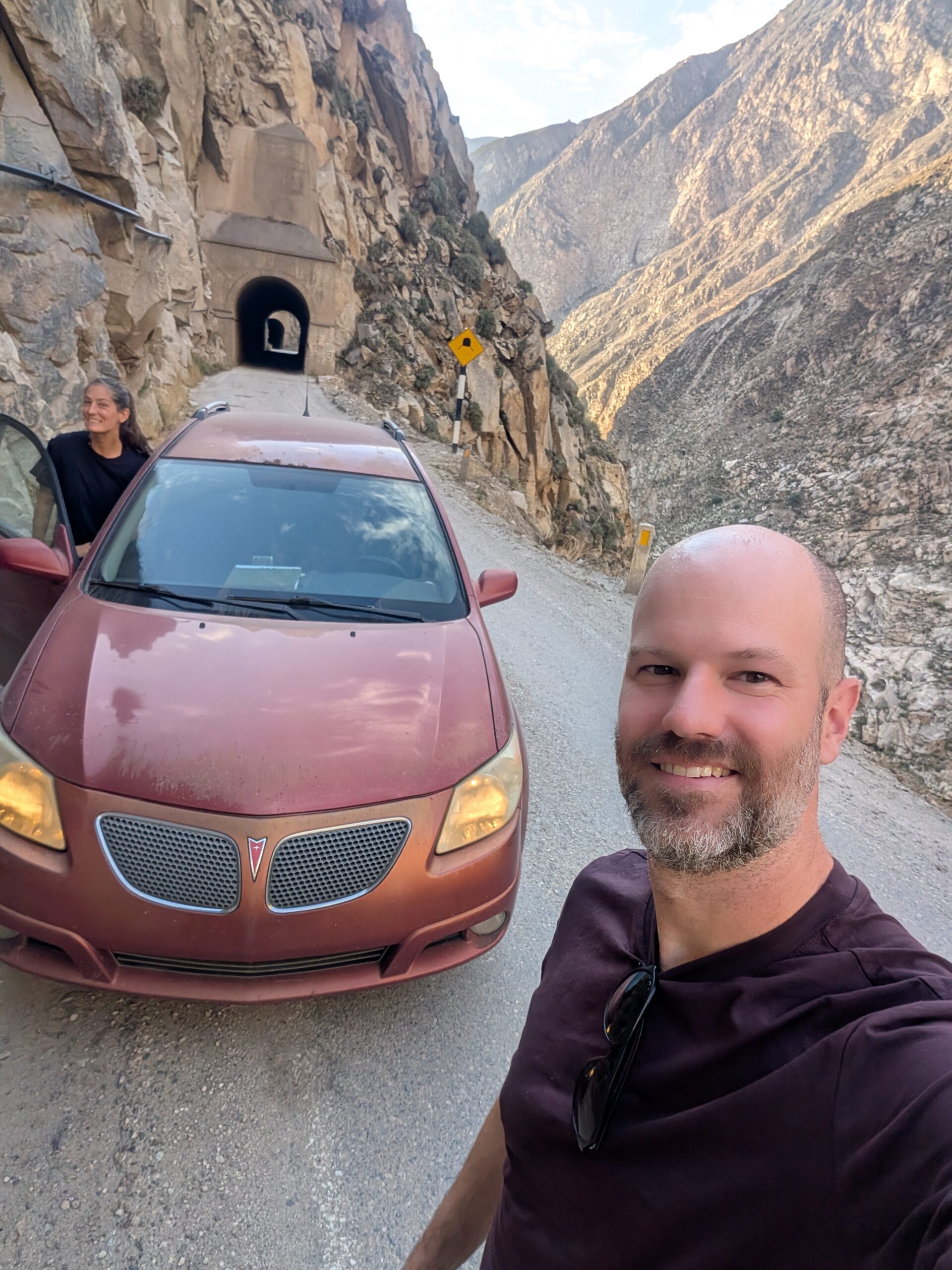
Most overlanders travel through the Americas in big 4WDs or campers; we did it in a 2005 Pontiac Vibe, a perfectly normal car, and without limiting ourselves in any way. Roads in South and Central America are generally in acceptable condition across most countries (we didn’t go to Brazil, however).
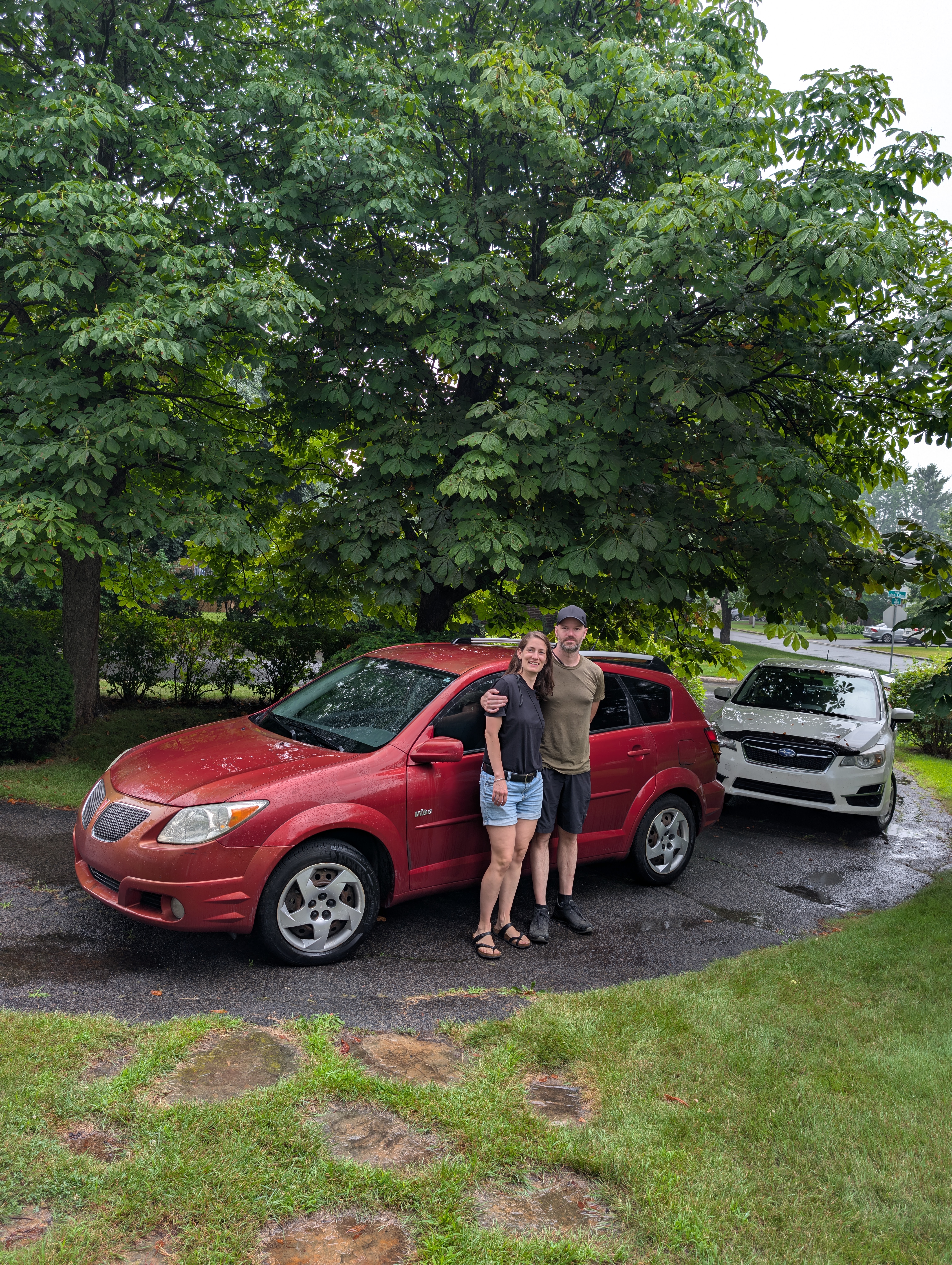
First off, traveling in a “normal” car has several advantages:
- cheap to buy;
- low fuel consumption;
- easy and inexpensive to repair;
- doesn’t attract attention (we had zero trouble with police or locals throughout the entire trip);
- easier to sell once you reach your destination (if you’re doing a one-way trip);
- cheaper to ship across the Darien Gap (see Passing a vehicle from Panama to Colombia or the opposite (across the Darien gap));
- lighter, so easier to extract if you get stuck.
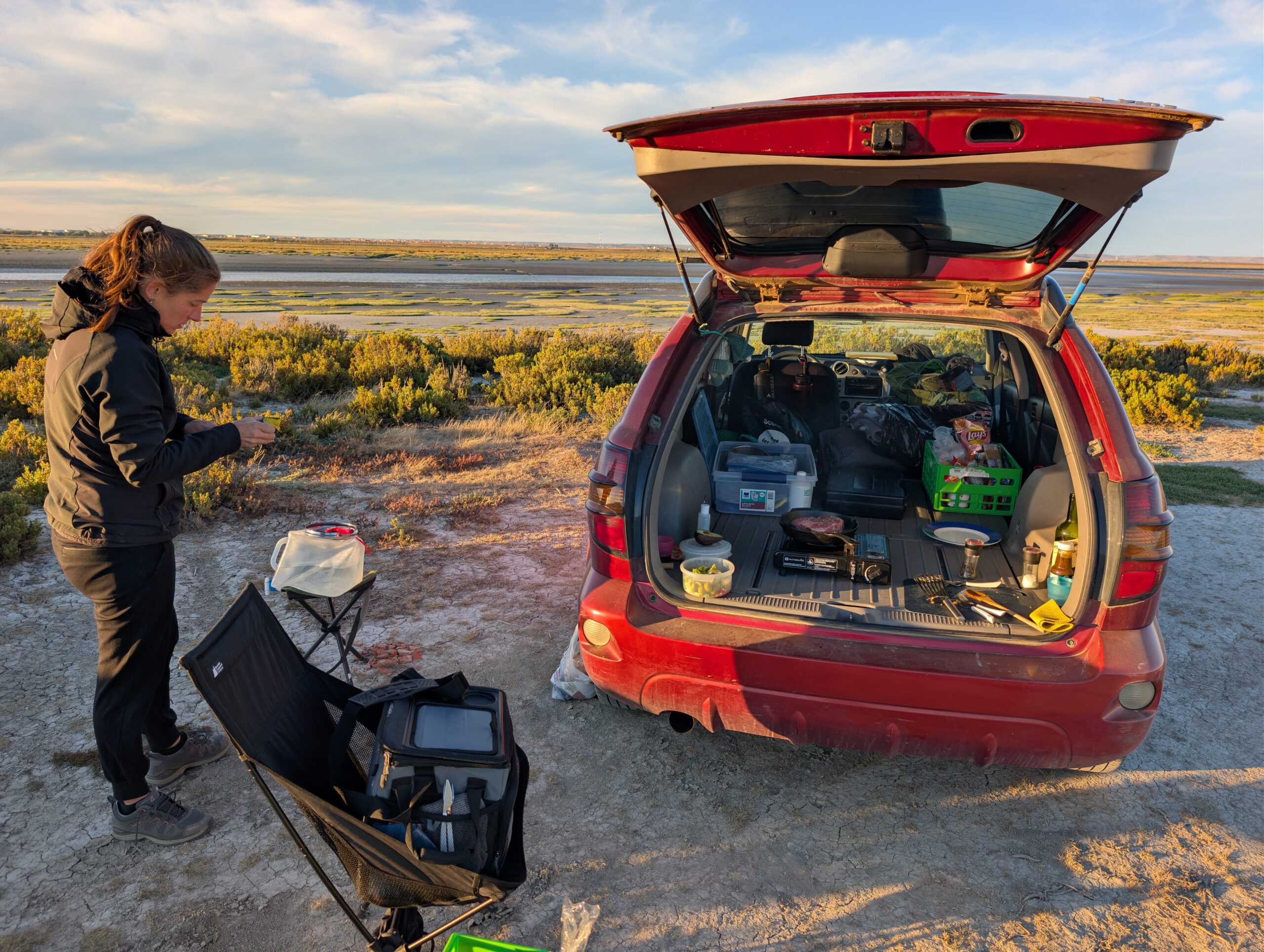
Getting there does take some preparation. Here are a few tips to be ready for most situations:
- Pick a reliable, common brand — meaning Japanese or Korean. Our Pontiac Vibe was actually a rebadged Toyota Matrix and shared most of its parts with the Toyota Corolla, an extremely robust and popular vehicle throughout the Americas.
- Avoid Subarus, as they’re rare in South America (except in Chile). Their AWD might seem appealing, but if you break down, good luck finding parts.
- Don’t pick a vehicle that’s too recent. Very modern cars are mechanically and electronically complex, parts are harder to source, and they require expertise you won’t find in a small village in the Andes.
- Make sure you have decent ground clearance — roads are often rough. Mid-trip, we had our car lifted by an inch (2.5 cm), a fairly cheap operation that local mechanics are used to. After that, we cleared everything without scraping.
- Bring a real spare tire, not just a puncture repair kit like modern vehicles often come with. Tires can literally blow out. A patch is useless if your tire is split open.
- It gets hot — A/C is a must.
- Fit winter or all-terrain tires. We did the trip on summer tires, but better grip in dirt and mud would have spared us several scares and one off-road excursion.
- Pack the following gear:
- a tow strap in case you get stuck;
- a shovel;
- traction boards;
- a fire extinguisher and a warning triangle;
- some wire to tie up your exhaust if it breaks loose (North American cars are rusty…).
- It’s always a good idea to carry an extra jerry can of gas. Stations are frequent, but they can run dry (especially in Bolivia).
- If you leave gear strapped to the outside of the car, secure it with zip ties to make theft less convenient.
- If your car only has a rear license plate (as is the case in Quebec and a few US states), make a laminated copy of the plate and mount it on the rear (moving the original to the front, so agents see it first when passing checkpoints). Police pulled us over countless times because we had no front plate. It never ended in a bribe, but the fewer reasons they have to stop you, the better.
- Automatic or manual? My preference is manual: more robust, more reliable, and better control in poor road conditions. Either way, you can fake a kind of traction control by working the throttle and brake at the same time to lock up the differential if a wheel spins.
- Swap your headlight bulbs for high-output LEDs. When you’re driving at night, it helps spot the guanacos standing in the middle of the road.
- Pick a vehicle roomy enough to sleep in if needed. In the mountains and in Patagonia, weather conditions can be harsh.
Finally, 2WD or 4WD, ask locals about road conditions. If you see small cars heading the same way you are, it’s usually a good sign. The iOverlander app is also a huge help — get a subscription and contribute your own impressions on campsites and roads.
Happy adventuring!
You were well prepared.