The quest for Durian

The title of a science-fiction novel I’m writing recounting the search by a brave group of space explorers for a mysterious planet.

No durians!No, I’m kidding, it’s just a post about this strange fruit and my attempt at trying it. It all started in the Singapore metro when I noticed a sign, that on top of advising the riders that it was prohibited to smoke, eat or carry inflammable goods also banned durian. Curious, I documented myself on the thing as soon as I got to my hostel and realized it was a fruit. A fruit? That you can’t have with you in the metro? I must try it. Upon discussing it with my Singaporean friends they informed me that it was indeed a delicacy, but a smelly one with a peculiar “love it or hate it” taste. So smelly and incommoding to some that for this reason it was banned from public transportation. Regrettably, all my attempts at finding some provided futile in Singapore, as it was not the season.

From that point on, the durian would come back and haunt me from time to time. It was a recent afternoon while walking in Chiang Mai, Thailand, with Jesse that I told him about this coveted fruit and its strange properties and instantly he was convinced that we should attempt to find some. So we asked at a nearby Thai restaurant where we could find it in town and the lady kindly directed us to the produce market on the outskirts of the old city.

Once at the market, it took us some time before we could lay our eyes on some prepared durian but eventually we spotted it. In fact, we had seen the entire fruit numerous times before, but since we had no idea on how to prepare it, not even sure we would like it and not forgetting that its about the size of melon, we figured it would be more reasonable to get its precut in small quantity. Not a whole lot we found and it was very expensive. According to a expatriate also purchasing some there, also not of the best quality, but we had not walked this far to come back durian-less. So we purchased the smallest piece we could find, some rice, some meat skewers and ate that small dinner on the curb and had the durian for dessert.
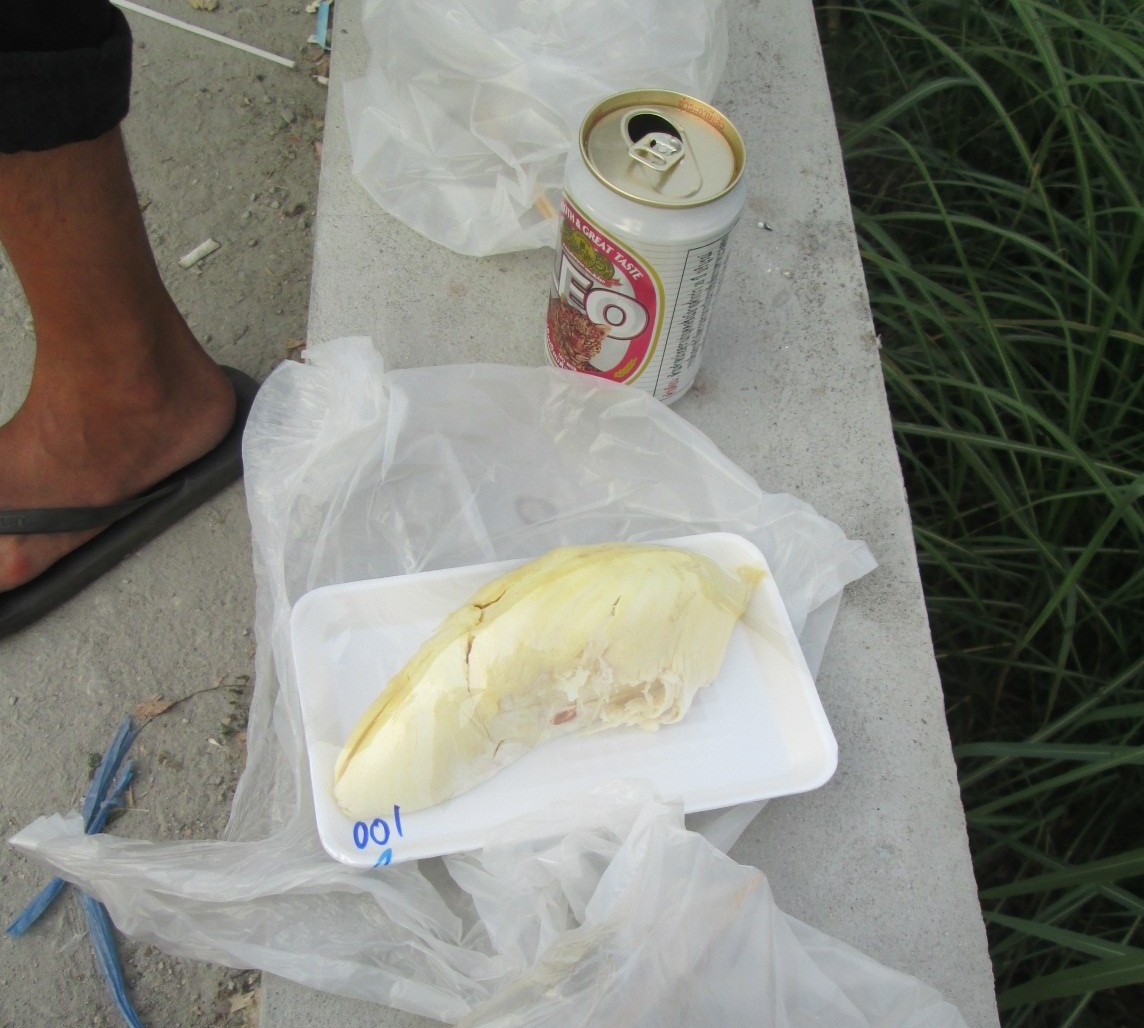
Finally, durian!
Finally, durian!

To our great surprise, it was delicious. Tasty but with a lot of character. To quote the British naturalist Alfred Russel Wallace: “A rich custard highly flavoured with almonds gives the best general idea of it“. Satisfied by our durian experience, we decided to leave some for later so I wrapped the rest back in its plastic tray, put it in a plastic bag which I tied in a knot and stuffed the package in my backpack. It was not that smelly anyway, so we started to wonder what all the fuss was really about. Back at our hostel, I moved the durian to a drawer and we headed out for a night out in town.

When we came back the whole dorm was filled with the strong stench of the fruit. An odor akin to smelly feet but with a touch of sweetness. There it was, the famous durian smell we laughed, but since it was nothing unpleasant to our noses we went to bed (without much consideration for our roommates). The next morning, we decided to make it up to those who had to endure the smell the whole night so I pulled the durian out of its packaging and offered some to everyone in the common area, including the owner of the hostel, who upon seeing the fruit cried: “So that’s what it was! The Thai cleaning lady has been telling me all morning that there was a durian in the room.” And then he kindly refused our offer as he was not really a fan but warned us that the next time, we should keep it outside.

To our delight, the durian was even tastier that morning than it was the day before.


La politesse japonaise

Merci pour le conseil

Elle mérite son propre article, car il ne m’a jamais été donné de côtoyer une société aussi polie et respectueuse et franchement, je ne crois pas qu’il en existe qui puissent les supplanter. Peu importe l’endroit, les Japonais sont toujours présents, serviables et souriants. Même livré à eux mêmes, leur étique de travail fait en sorte que peu importe la tâche à laquelle ils s’adonnent, il est garanti qu’elle sera bien faite et ce au premier essai. Les villes sont d’une propreté telle qu’il y est très difficile de trouver des poubelles (Melissa a formulé l’idée de développer une application pour les indiquer aux touristes), les Japonais ramènent leur déchets à la maison comme le prescrit de nombreux signes dans les parcs. Avec raison dans le fond, contrairement à nous qui erronément pensons que nos emballages usés et restes de nourriture ne sont plus notre responsabilité.

Je fis l’expérience du savoir vivre de ce pays dans le plus inattendu des endroits: au Mister Donut. Les deux seuls préposés furent si serviables que Melissa et moi nous sommes sentis franchement inconfortables d’avoir eu droit à un service cinq étoiles pour le seul achat de cafés et de beignes. Pour donner quelques exemples, ne parlant pas anglais, les employés firent leur possible pour s’assurer que nous ne manquions de rien, ils nous apportèrent lait et sucre sans même que nous le demandions et lorsque l’un nous renversa un peu de liquide sur nos mains et la table, plus vite que son ombre l’un d’eux accouru avec des serviettes. Lorsque nous quittâmes l’endroit, nous eûmes droit à la révérence Japonaise avec un “Good bye, thank you” maladroit mais chaleureux et ce n’était pas parce que nous étions manifestement touristes, les autres clients ayant eu droit à la même qualité de service.

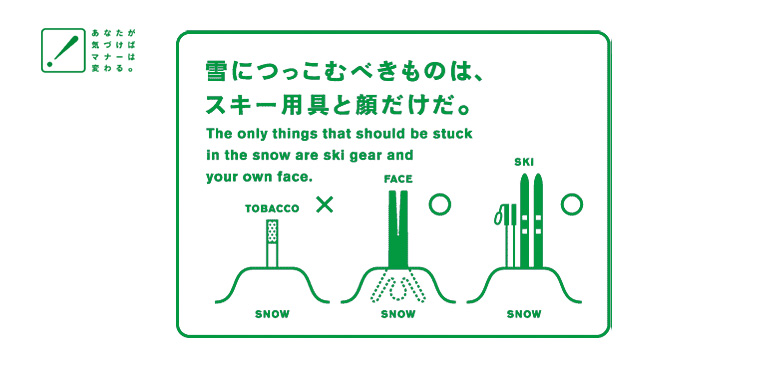
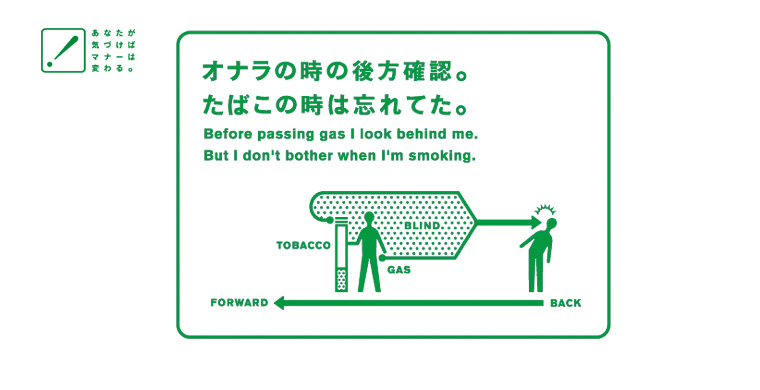
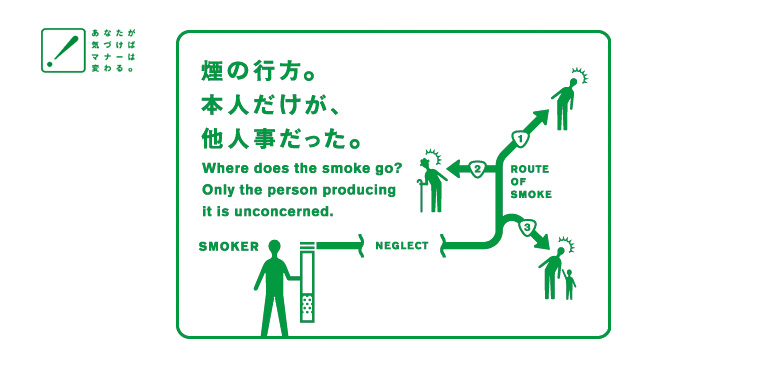
Les Japonais ont encore une fois mis la barre haute. Pour votre divertissements voici une sélection de signes que l’on peut trouver un peu partout au Japon. Pour la collection entière, rendez-vous ici.

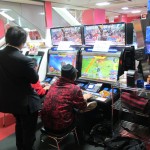
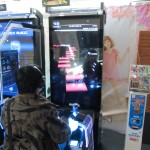
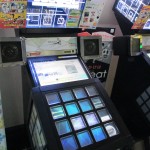
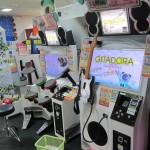
Arcade is not dead!

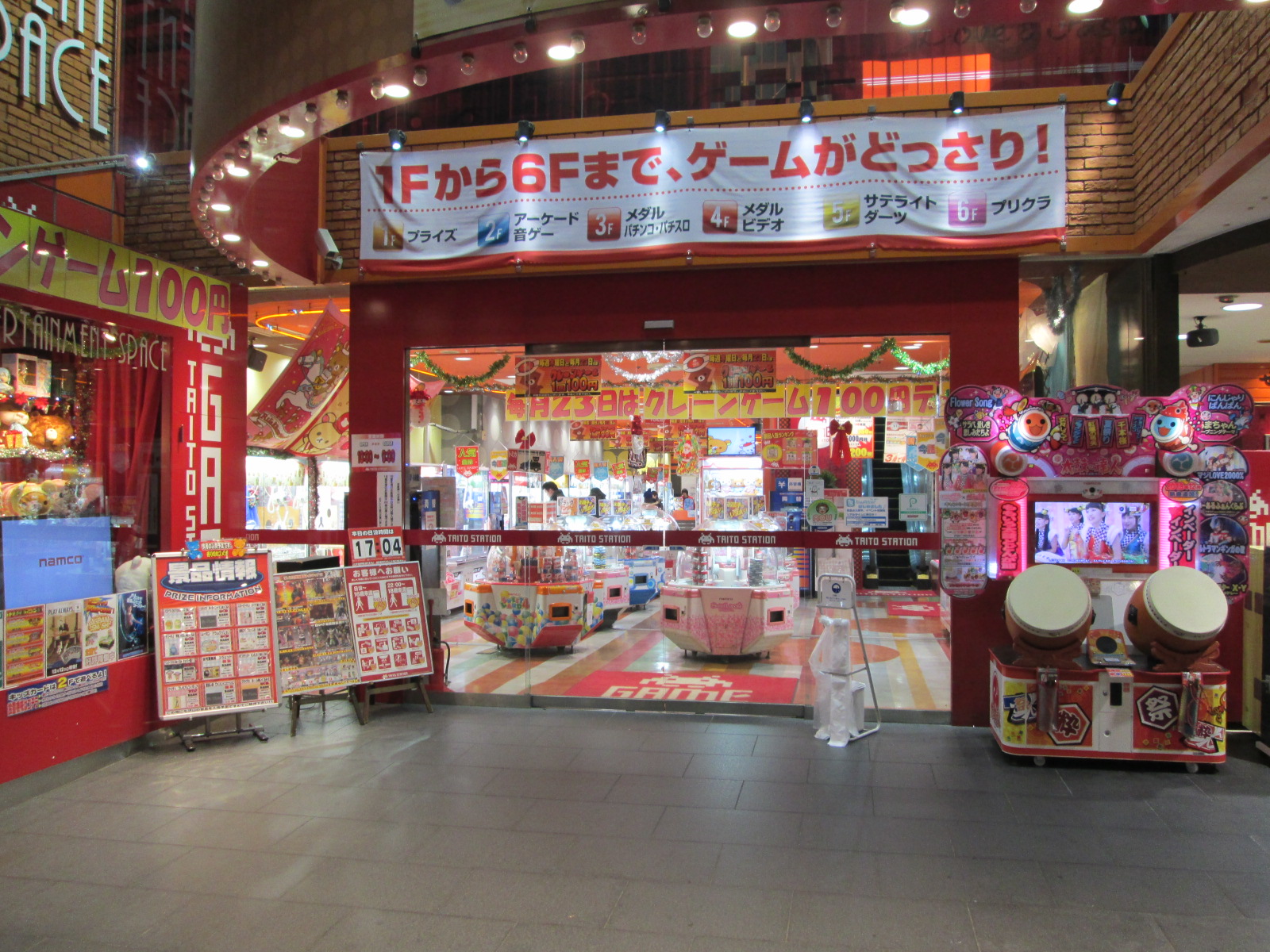
And in fact, it is thriving in Japan. Where the few machines that are still to be found in America have not really evolved past the Street Fighter era, the Japanese have been putting their very fertile imagination into developing systems that are very much 21st century.

An entrance to an arcade. How colorful and appealing!

Video games

The variety of games that could be played was mind-boggling. Some of them I was not even able to figure how they worked.

UFO games

The general goal was to nudge or pick up something in order to make it fall inside a conduct. Still a common sight in America where in most cases cuddly toys can be won, the Japanese, true to themselves, have pushed the concept much further than we have. Most arcades had entire floors devoted to UFO games, where things ranging from food to anime characters could be won.

UFO game

Cutifying yourself

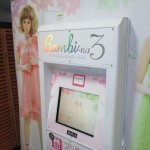
Worry not ladies, the Japanese arcades also has something for you too : photo booths big enough for you and all your friends that apply some digital imagery trick to make you look cuter. Bambi eyes (western looking eyes), skin defect correction, makeup or black and white, whatever fits your mood of the day. Once satisfied with the result, the machine lets you pick a background and a layout, sends the photos to an e-mail account and then prints stickers so you can show the world how kawaii (cute) you are.

Pachinko

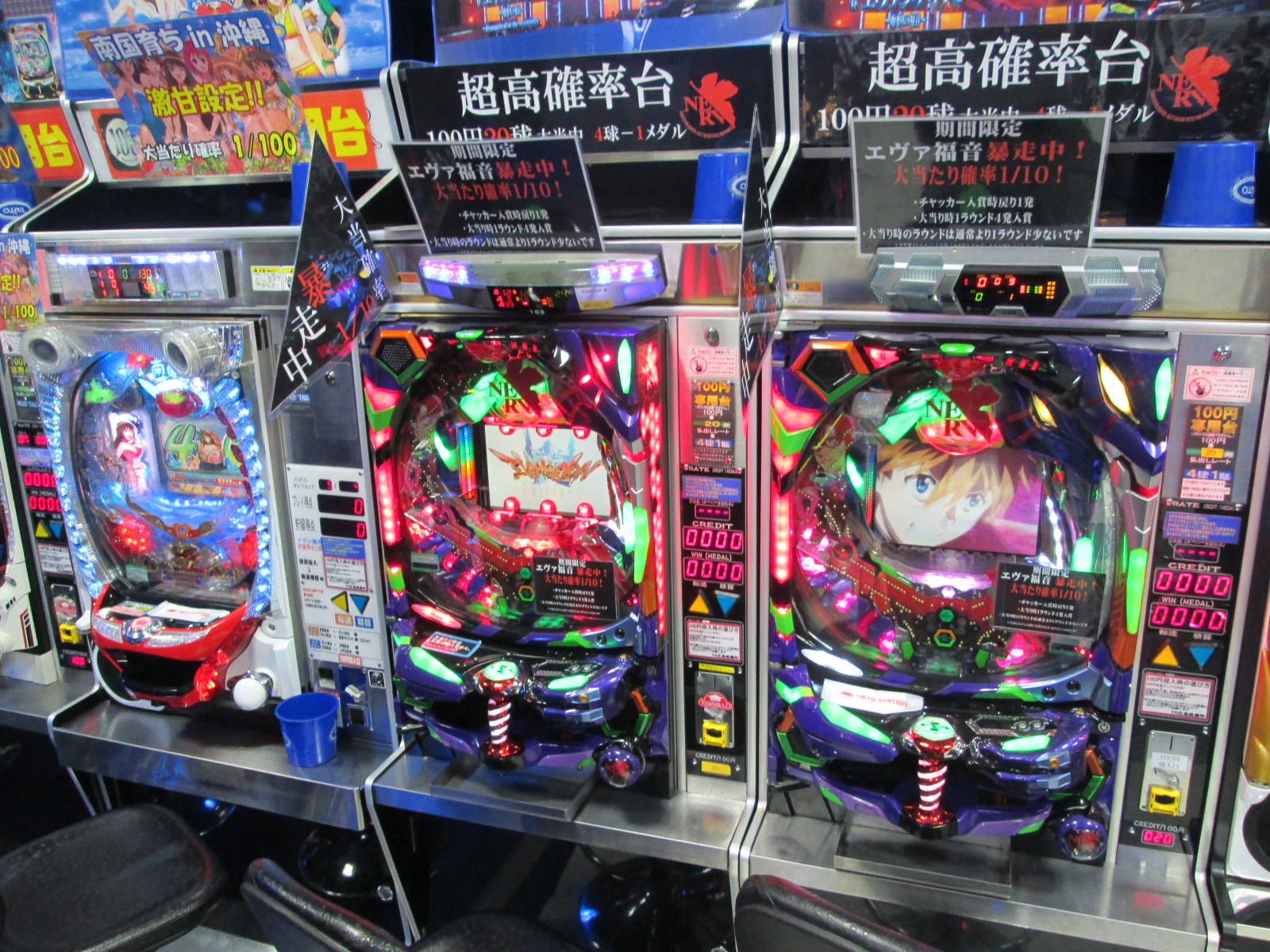
While looking at people playing pachinko and not understanding the point, I figured there had to be more to this game. After reading the wikipedia article on it, I realized that no, it’s just a Japanese twist on the retarded zombie slot-machine. Basically, it is played with little metal balls that fall randomly on a vertical pinball machine like surface and if one enters a specific hole, points are won and … you get more balls. In Japan, gambling for money is illegal so when you poor brain can no longer take pachinko or you get an angry call from your wife, you take your balls to a different store where they can be used to redeem prizes or cash.

Pachinko!
Pachinko!

The peeing game

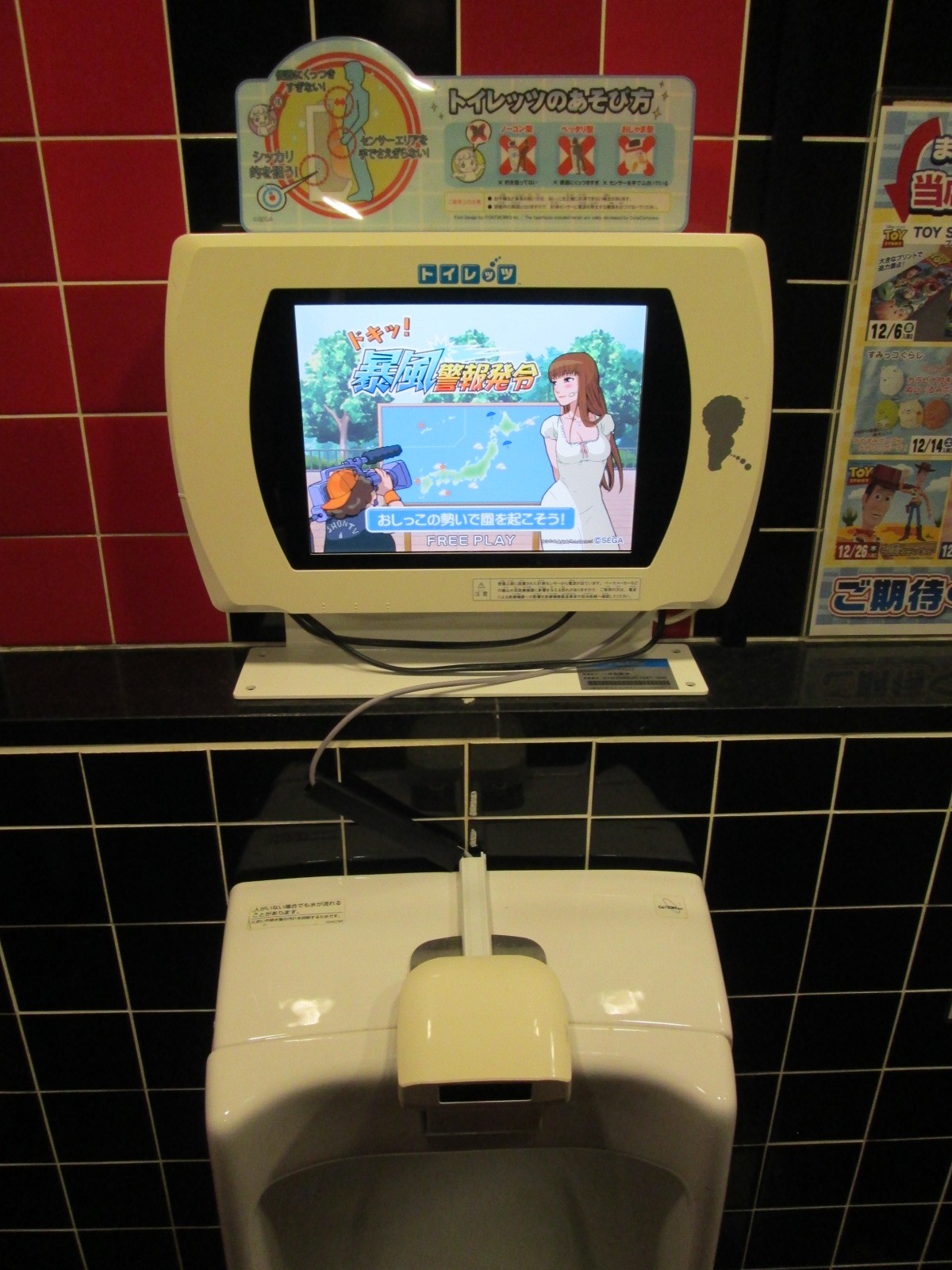
The one machine that struck me as being very original and weird was one that I found in a place where I least expected it: above a urinal. An infrared sensor starts a timer upon the first squirt of urine and the longer you relieve yourself, the more points you score and the more the sexy looking anime lady on the screen undresses herself. Brilliant.

Peeing game

Case against proprietary software on government systems

This has been sitting as a draft for more than two years now so I figured I should publish it.

The modern government is an information processing entity where public servants and software collaborate to serve the people. If you take away any of those two components, governments cease to operates. So it is crucial that government maintains control over its processes to shield itself from interference by outside interests; it is at the basis of sovereignty and part of what makes its area of jurisdiction a country.

You wouldn’t hire foreigners as public servants, so why would you trust your software to outside interests?

Software was introduced into governments by individuals who had no idea of what software was in the first place. It was and is still purchased, managed and used like off the shelf physical goods, but it was already too late when people figured out that replacing a vehicle fleet is a lot less work than migrating from on operating system to another.

Nowadays, companies like Microsoft could make every developed country’s government grind to a halt very easily or severely compromise it. Take the US patriot act for instance, which lets the government request any data from companies based in the US if they deem it necessary even if that data does not belong to an american entity. Another yet even more disturbing example uncovered by Edward Snowden is Microsoft handing out the keys to its encryption systems to the NSA thus actively collaborating in their espionage projects.

The European Union is starting to come to grips with this reality and is moving towards drafting rules and regulations that will make the interaction between software corporations and governments more open and directed towards giving their citizens security and value; unless this initiative gets killed by a lobby. This has obviously positioned open-source software as a preferred choice, prompting changes such as a migration to Ubuntu by the French Gendarmerie Nationale and the creation of Trustedbird by the french department of defense and British Telecom, a more secure fork of Mozilla Thunderbird (an e-mail client) whose code they intend to contribute back to the main Thunderbird tree for everyone to benefit from.

The procurement process in its current form cannot consider open-source technologies as it depends on active bids by companies. Software developed by volunteers is systematically left out for a lack of an imperative to market itself using conventional challenges. A few consulting firms on open-source technologies are trying to turn the tide but they only advertise the tip of the iceberg when it comes to all the available open-source solutions. There has been litigation lately in Quebec following decisions from the government to award a contract to Microsoft without a call for tenders based on criteria purposely crafted to exclude other vendors. A similar conflict occurred more recently when another governmental organization decided to procure MS Office licenses using the same scheme. This begs the question of whether the procurement process is really providing the government with the best value for its dollars.

I could go on detailing how companies are consciously locking governments in their own system by not following industry standards (Internet explorer has systematically been failing the ACID test) and violating anti-trust laws but I believe the previous paragraphs have been sufficient at getting my point across. I have nothing against Microsoft, IBM, or any other software corporation, they make quality products that are most often superior to the open-source equivalent (things would be the other way around if governments took part in helping developer communities improve their software). In fact, they themselves are  increasingly embracing the open development model because they have figured out that it provides them with the best value. Individuals and private businesses are free to spend their money in whatever manner they want, but government are not. They are not profit making machines or fashion following teens; they exist to bring security and prosperity to their citizens and basing information processes on closed-source software is an hindrance towards the achievement of those goals.

The lobby is strong so it is unlikely that change will come from atop. And even down at the individual level, most are incapable of dissociating Windows from a computer as Microsoft has made it certain in concert with the rest of the industry that every new computer around will be provided with a license of that operating system for very cheap (again sparking anti-trust lawsuits), thus never giving the user a real choice. Apple is starting to grind away at Microsoft’s market share thanks to the visibility it gets from its massively popular IPods and IPhones, but at the root, this company is not a whole lot different than its main competitor and in some cases practices even worse methods of locking customers in such as with their closed platform policies.

Nuts for coconuts, the amazing ways of consuming this exotic fruit

The coconut at the stage we are most familiar with

We know coconuts as the principal ingredient of a piña colada, we know coconuts as the tasty filling of a bounty chocolate bar, we know coconuts as the crucial part of a good curry, we know coconuts for their awesome taste but otherwise, we remain pretty ignorant about its many uses and life cycle.

Allow me to enlighten you with my recent experience with this incredible fruit and the knowledge I gathered from the locals in the Carribean. While not scientifical, I sincerely hope you will remember this little piece should you ever become stranded on a lonely tropical island. Otherwise, just take it as a little how-to guide for the next time you find yourself around a lot of coconuts.

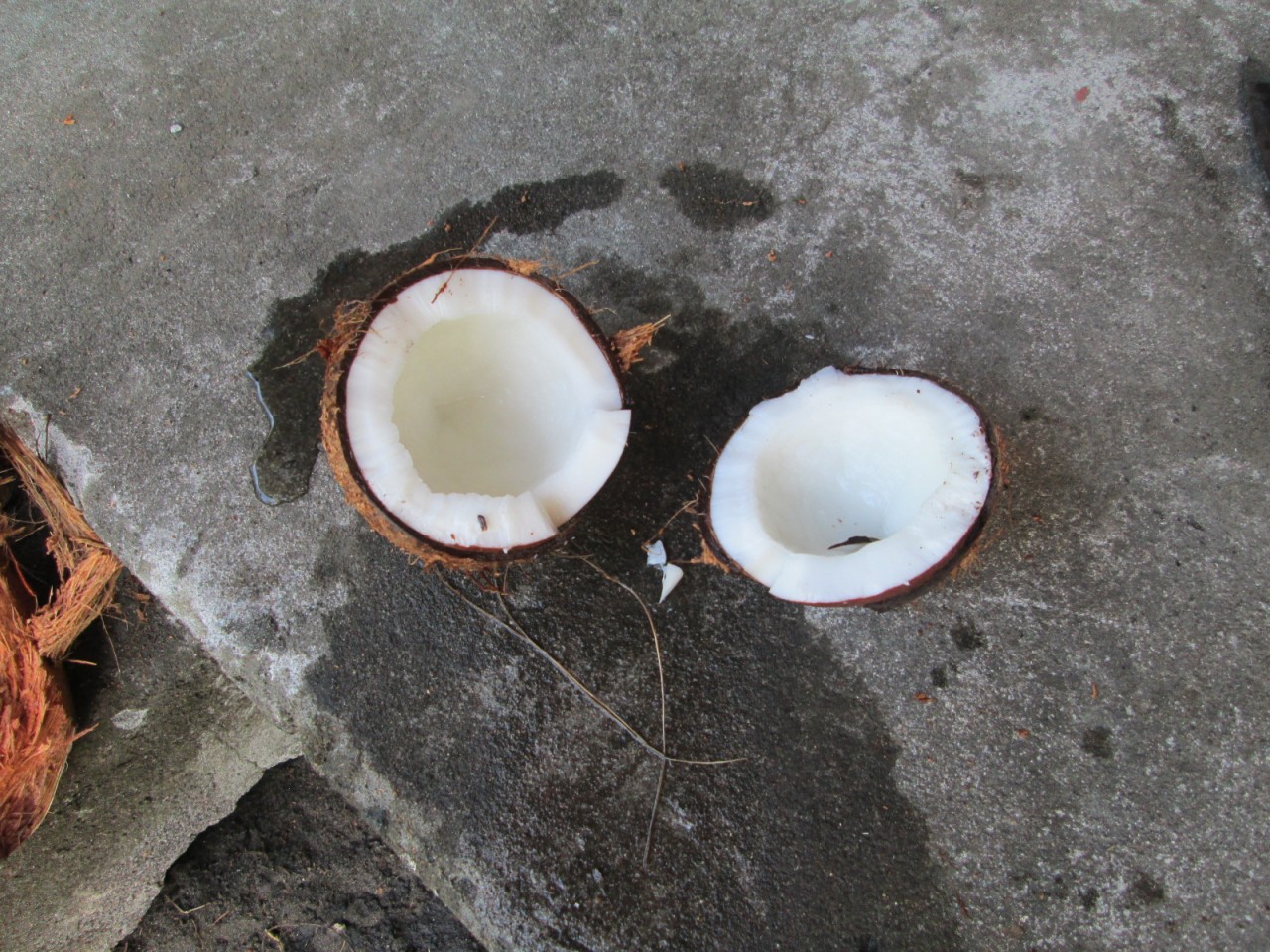
An opened coconut

Coconuts as their name implies, are the nuts (or fruit (technically a drupe)) of the coconut palm tree. They grow everywhere around the carribean coast of Costa Rica and as far as I know, their extend is very large and in some cases, their productivity can turn them into a nuisance. There is no season for these trees, they just constantly produce all throughout the year, with every batch taking a couple months to mature. Coconuts are large fruits and do not biodegrade very easily. So much so that locals have to get rid of them (and their leaves) using bonfires.

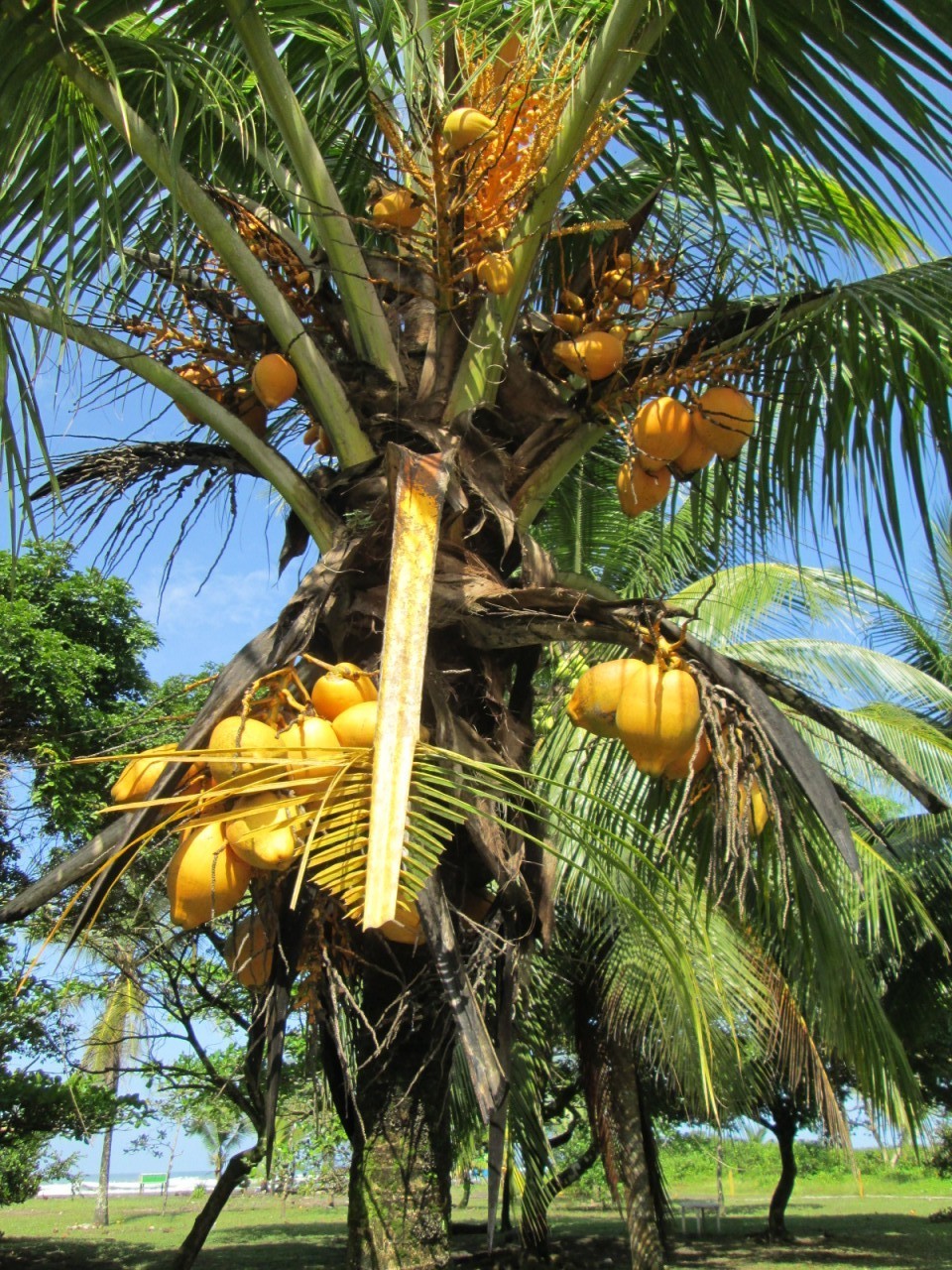
A yellow coconut palm

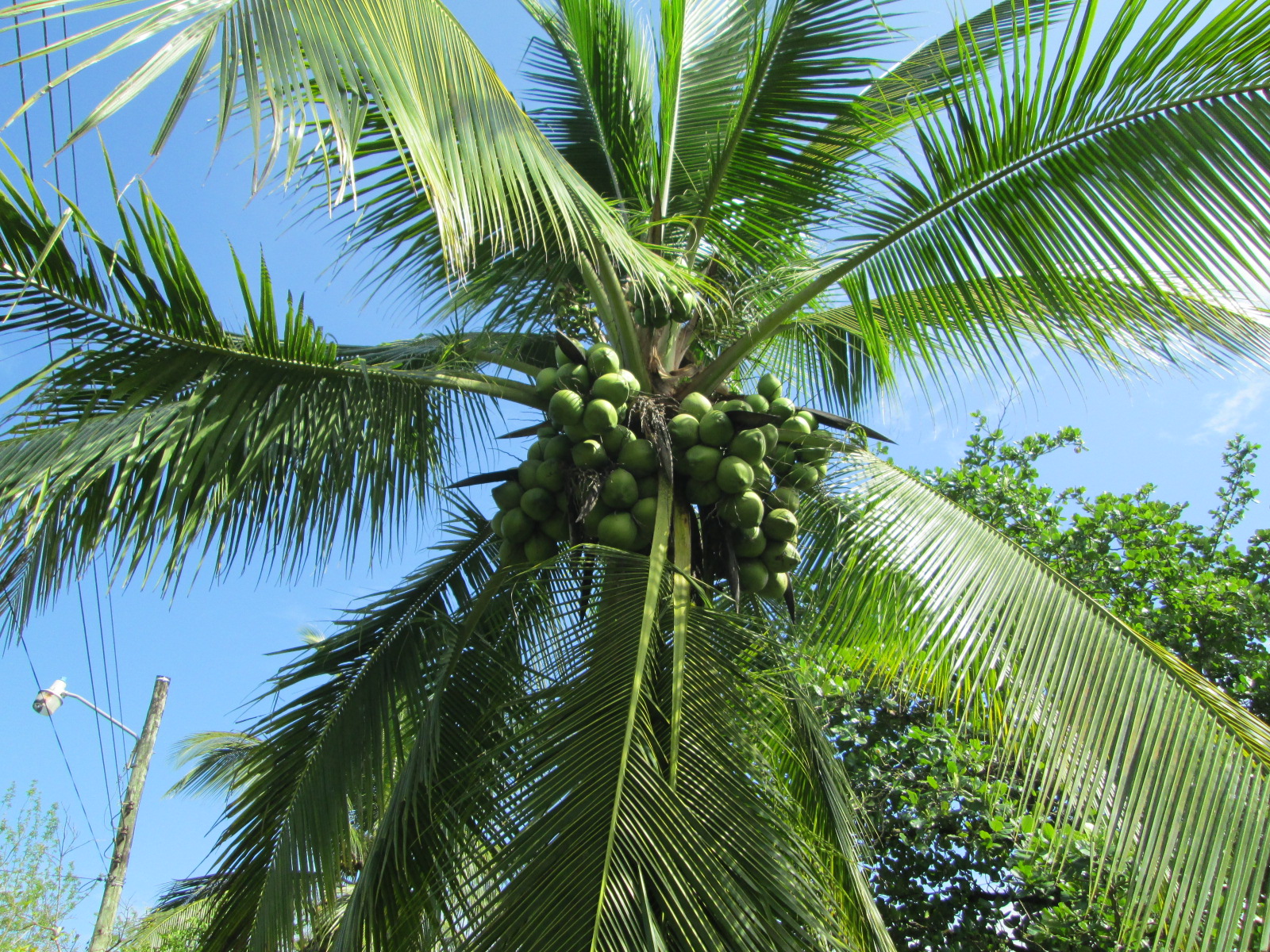
Coco palms come into a few varieties which are mainly differentiated by the colours of their nuts: yellow, green, or something in between. If you are after pipa, you will prefer the green variety for its sweetness but when they age, the differences in flavor dissapear and the nuts all turn the same brown.

The pipa

A green coconut palm, preferred for pipa

There is a couple of vendors yelling “pipa fria” around you but cannot quite figure out what they are selling? Its coconut water, or “pipa”. A young coconut before it becomes ripe has a lot of water in it, easily 150 ml I would say. This water is sweet, very rich in minerals and feels very healthy to drink, if you can get past the weird taste (it’s somewhat of an acquired thing). Mike, another volunteer at the association has aptly called pipa “the gatorade of the jungle”: some local guides will not bring any water bottles on patrols, they will just reach up for a pipa or two.

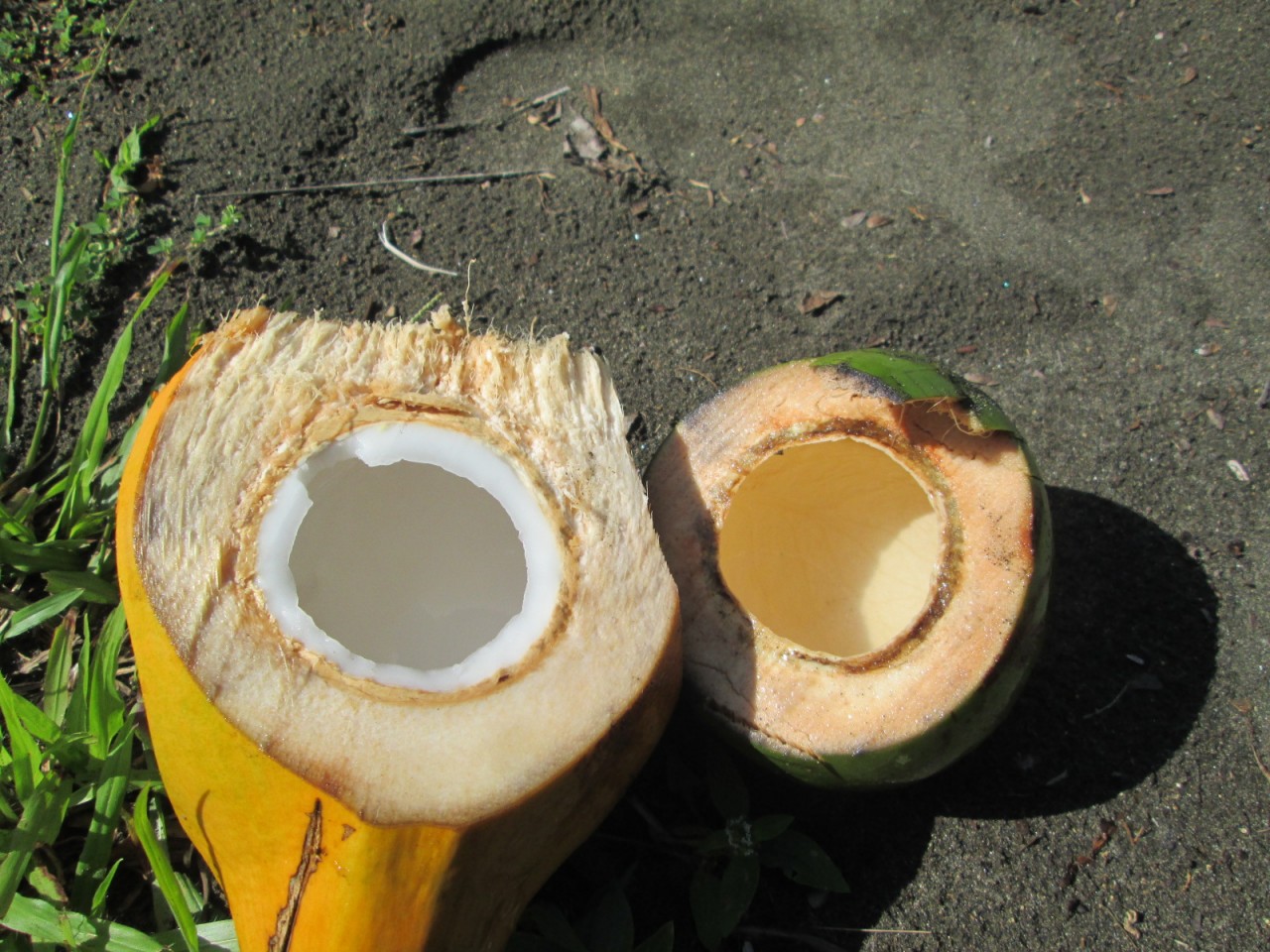
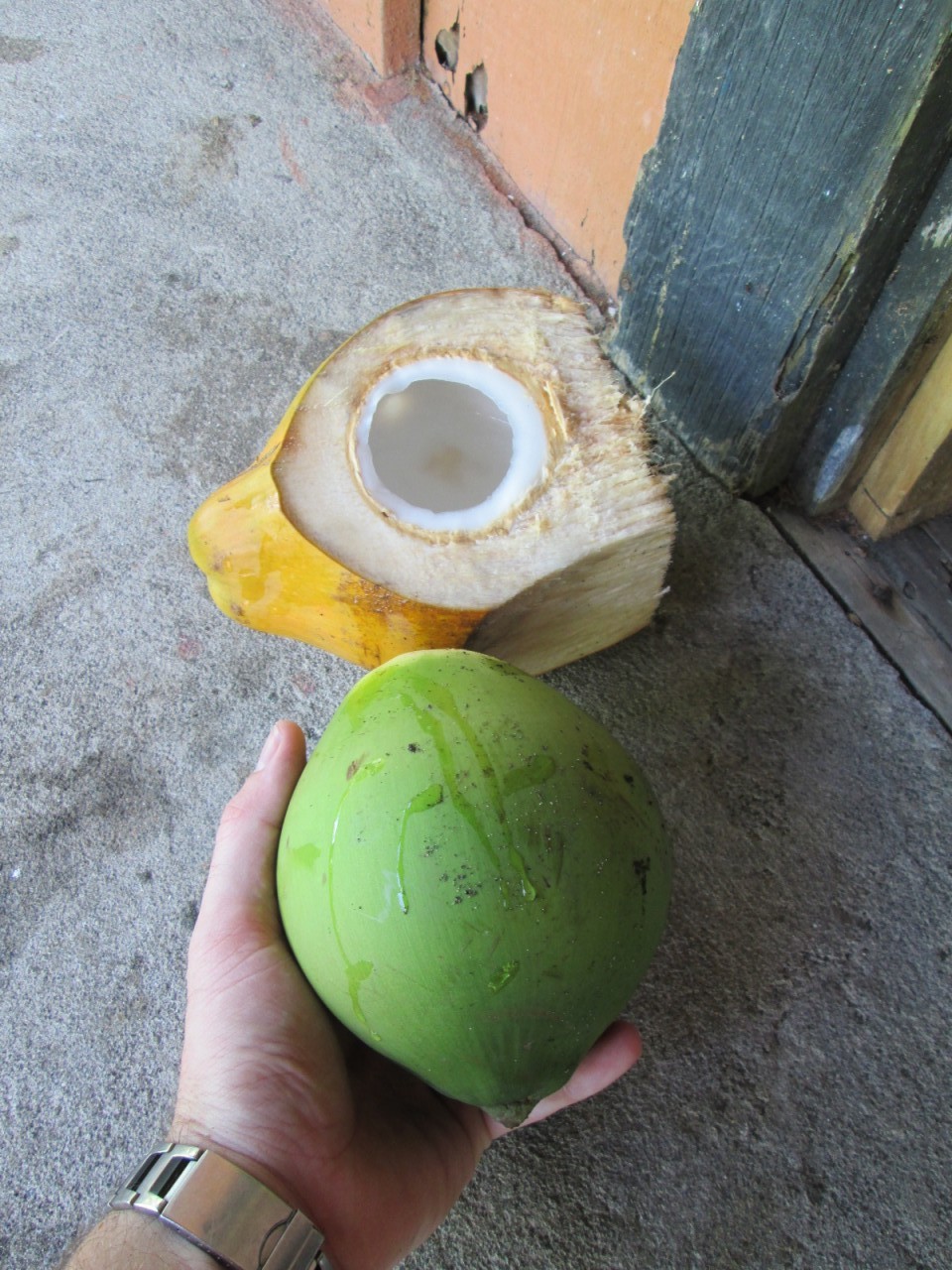
A yellow “coco tierno” alongside a green pipa

The pipa is probably the stage of the coconut that is easiest to consume. Vendors in the street will slice the top off, put in a straw an refrigerate pipas but in nature, you just grab, smash and drink. Grab a pipa from the palm, smash it one or two times against the trunk until the nut cracks and drink the dripping water. It’s a bit messy but even though it is sweet, pipa will not get your hands all sticky.

The older pipa (or half-coconut)

Size comparison of a more mature coconut to a young pipa (which I am holding)

As they age and ripe, pipas grow bigger, thicker, and get harder to crack open. Should you succeed tough, you get rewarded with sweeter coconut water and a gelatinous substance called “coco tierno” (tender coco) that covers the inside surface. Coco water serves as a suspension for the endosperm of the nut and as it matures, will form this deposit. This substance is what is later going to become the white hard flesh of a ripe coconut and while the taste is somewhat different, it definitely hints towards that flavor.

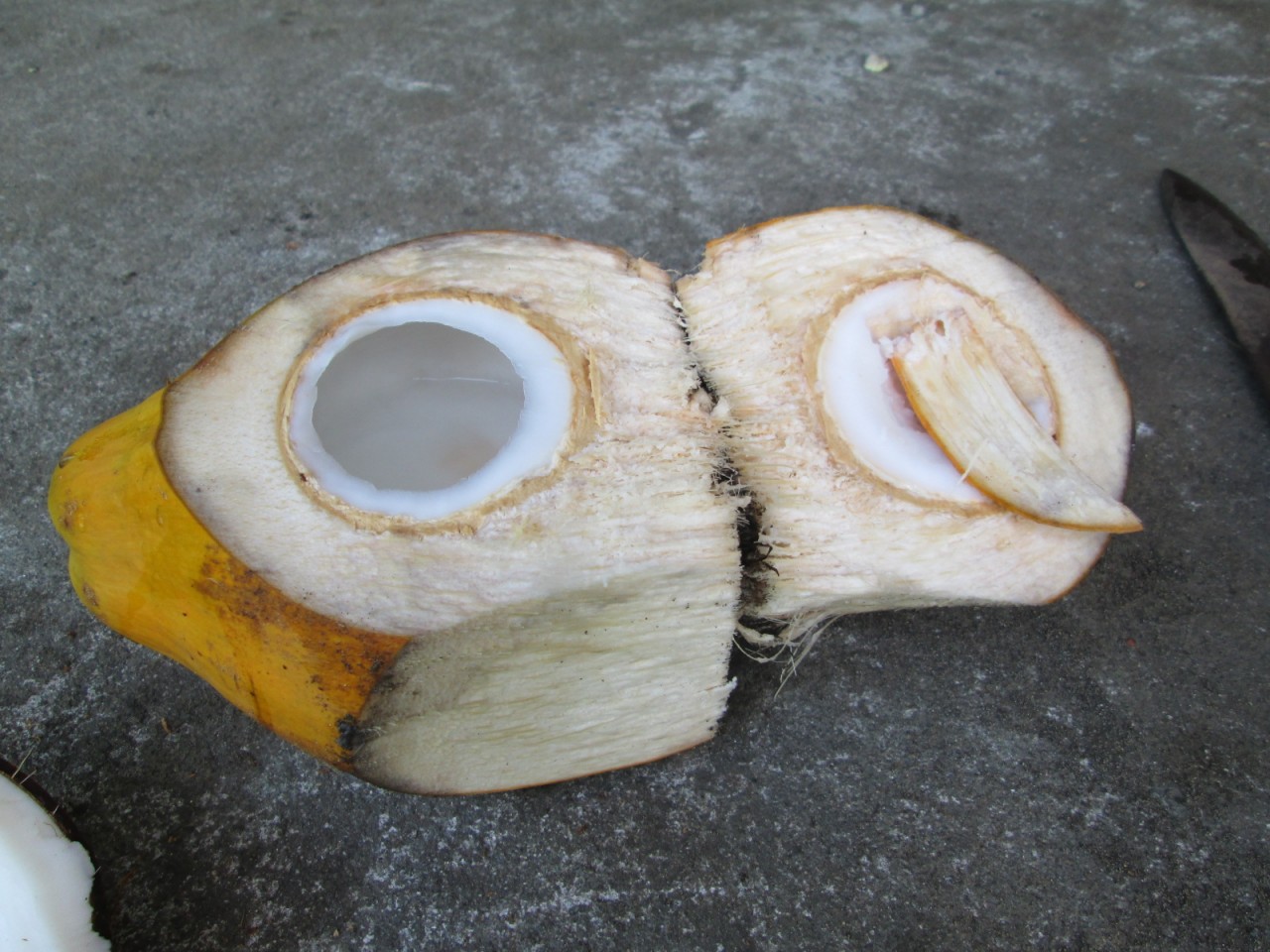
The white gelatinous flesh can be scooped using a slice from the skin, notice the presence of shell

This tasty flesh can be scooped using a broken piece from the shell or a slice from the skin of the husk but in order to access it the nut has to be split in half. Without the proper tools (a machete), this is quite a challenge and requires a lot of smashing around and prying. At this stage, the very hard shell which we are used to crack with a hammer has started forming.

The nut (as we know it)

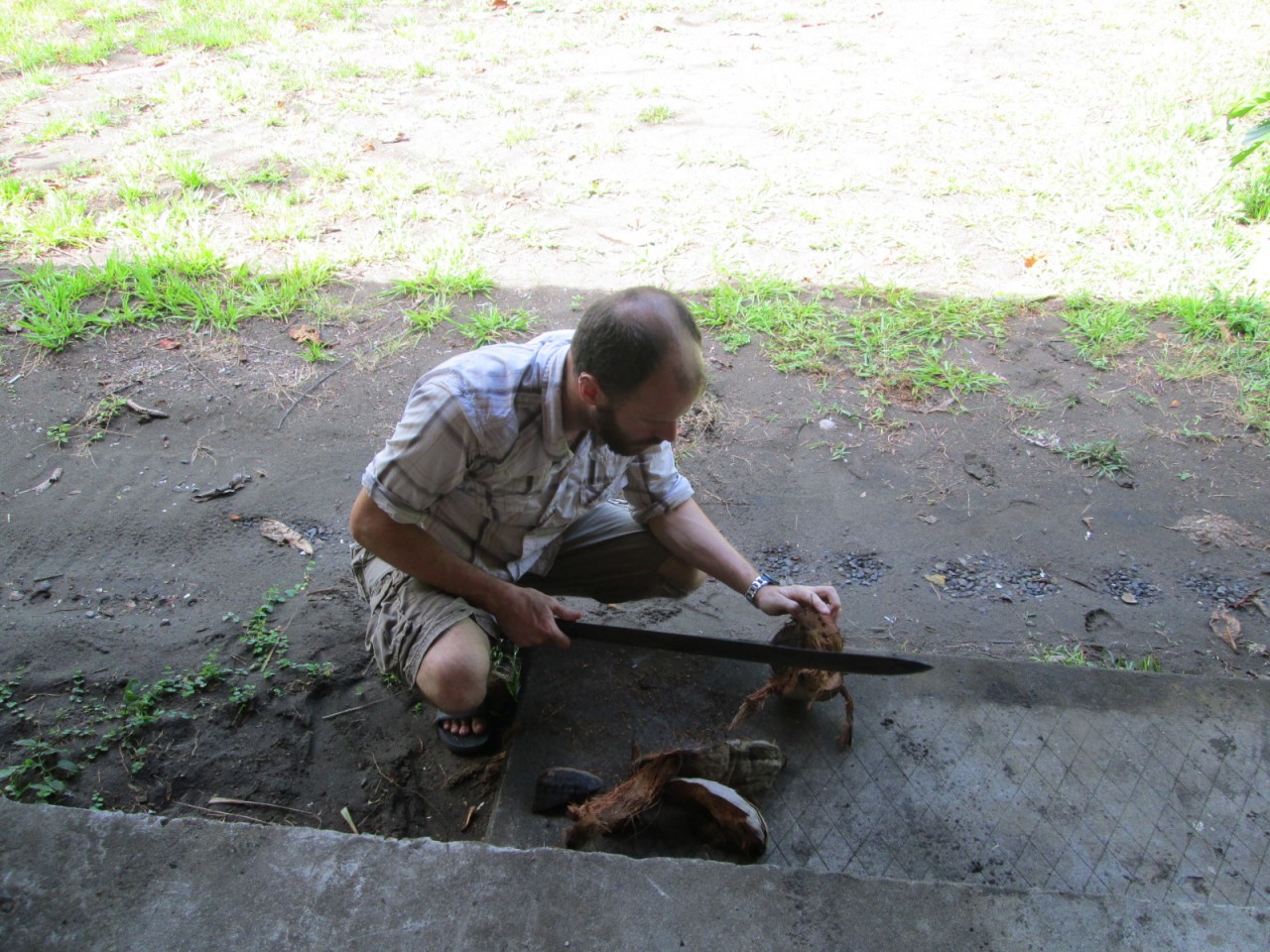
The tool of choice when working with coconuts: the machete

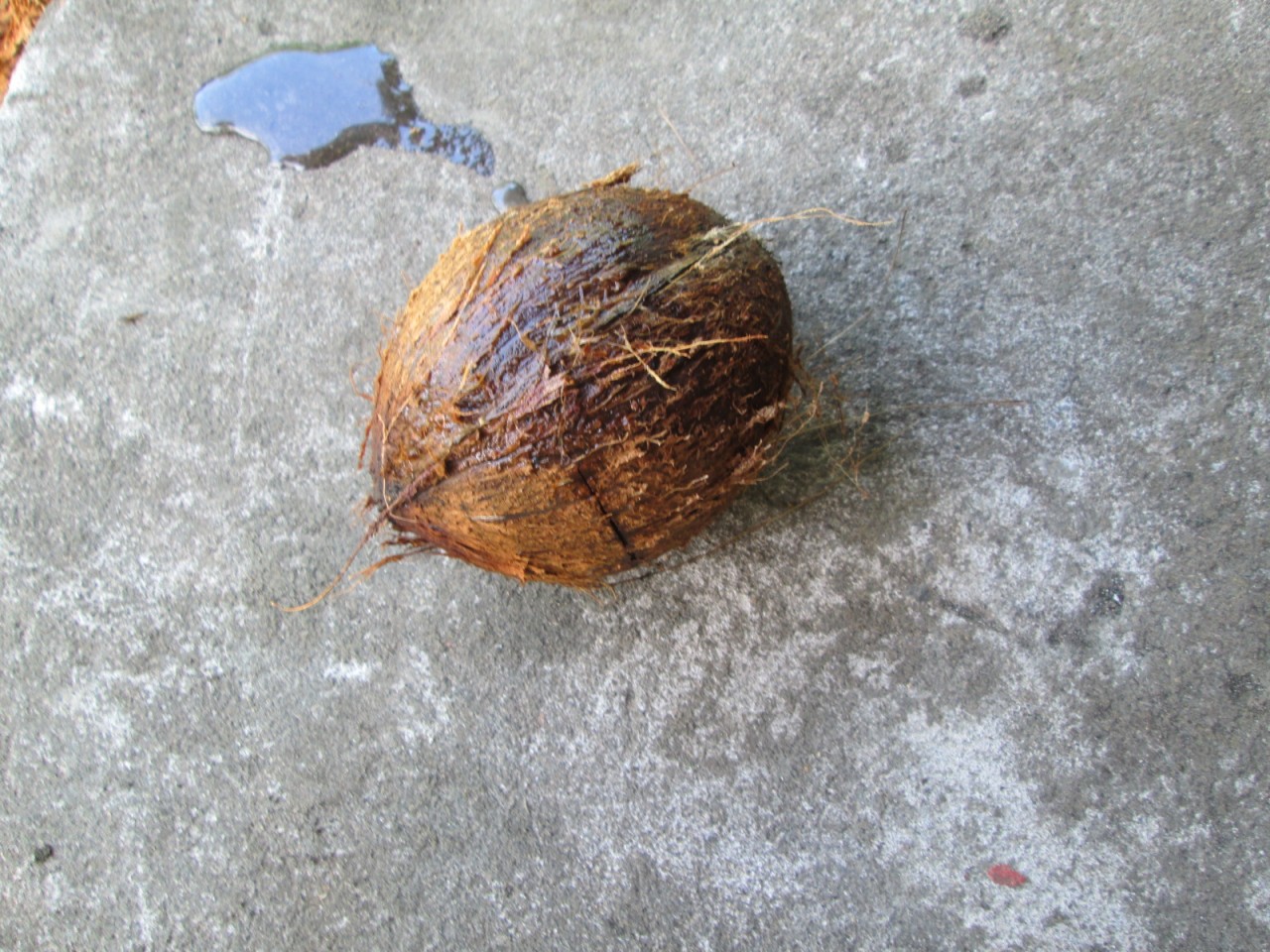
Now we come back into known territory, the ripe and mature nut is what we are used to finding in northern hemisphere supermarkets. What we are not familiar with however is how incredibly hard it is to get to the nut itself. Covered by a dry husk made of a thick skin and very fibrous material, this one it truly a “tough nut to crack”. Once open, little coconut water remains, most of it has coalesced into the very flavorful flesh we are all so fond of.

A ripe coconut with the husk removed

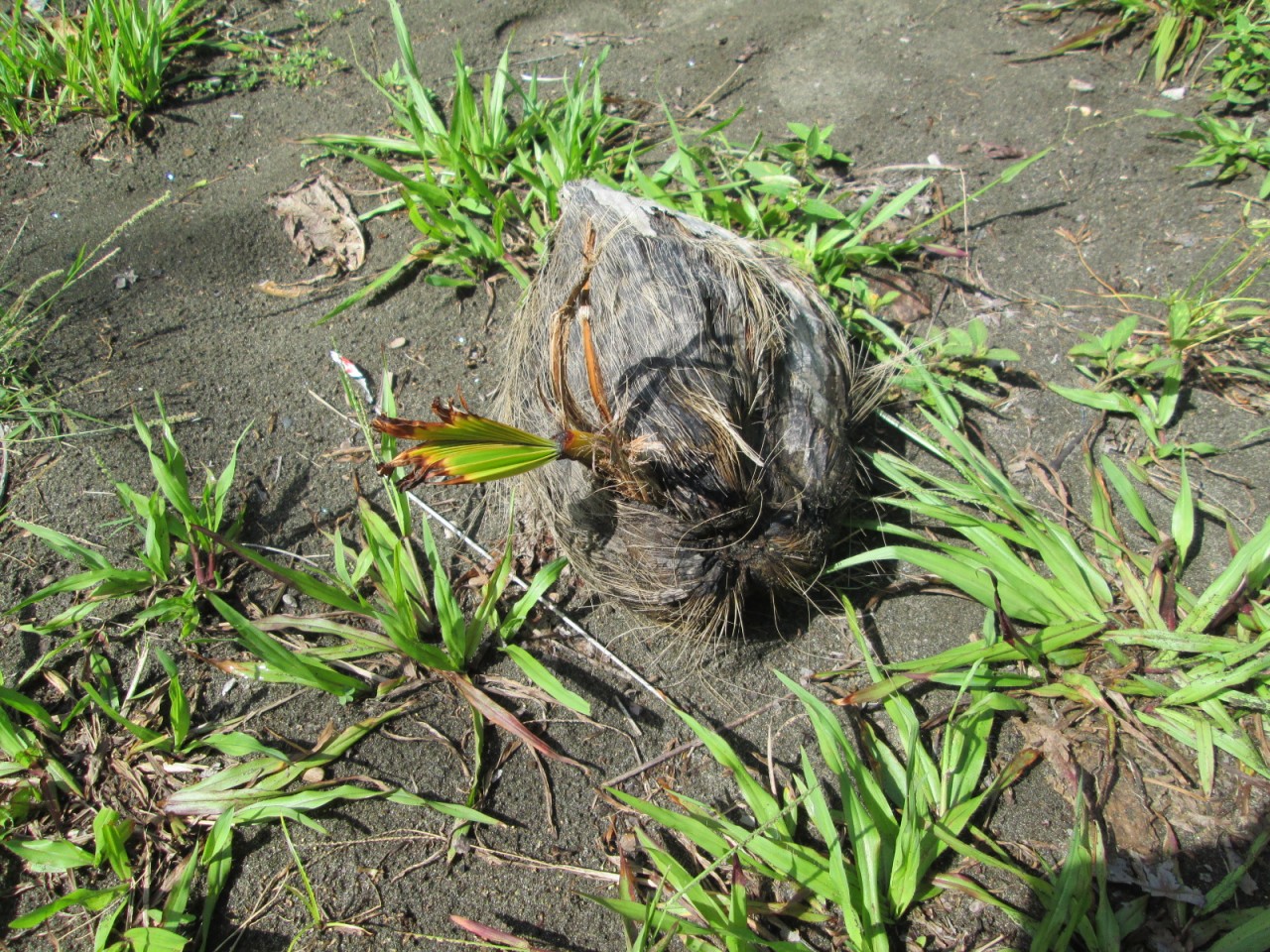
When on the ground and in the presence of humidity, the nut will obviously start to germinate. From one end of the nut, leaves will burgeon and from that same end a root system will emerge, all feeding on what is inside the nut and turning the flesh and water into a coconut sponge. Very rich, this sponge when be pressed will ooze oil (good for cooking) or can simply be eaten. Be careful, common wisdom has that eating too much of this will give you diarrhea.

A germinating coconut

These nuts are nature’s own small ships, known to have traveled by sea for thousand kilometers to land on a small remote island and populate it with this awesome tree. I did not get into the great many uses of the husk (textile), shell (jewelry, combustible) and the tree (lumber) itself, I did not cover the great many culinary, medicinal and industrial applications of this plant as well. I admit to be

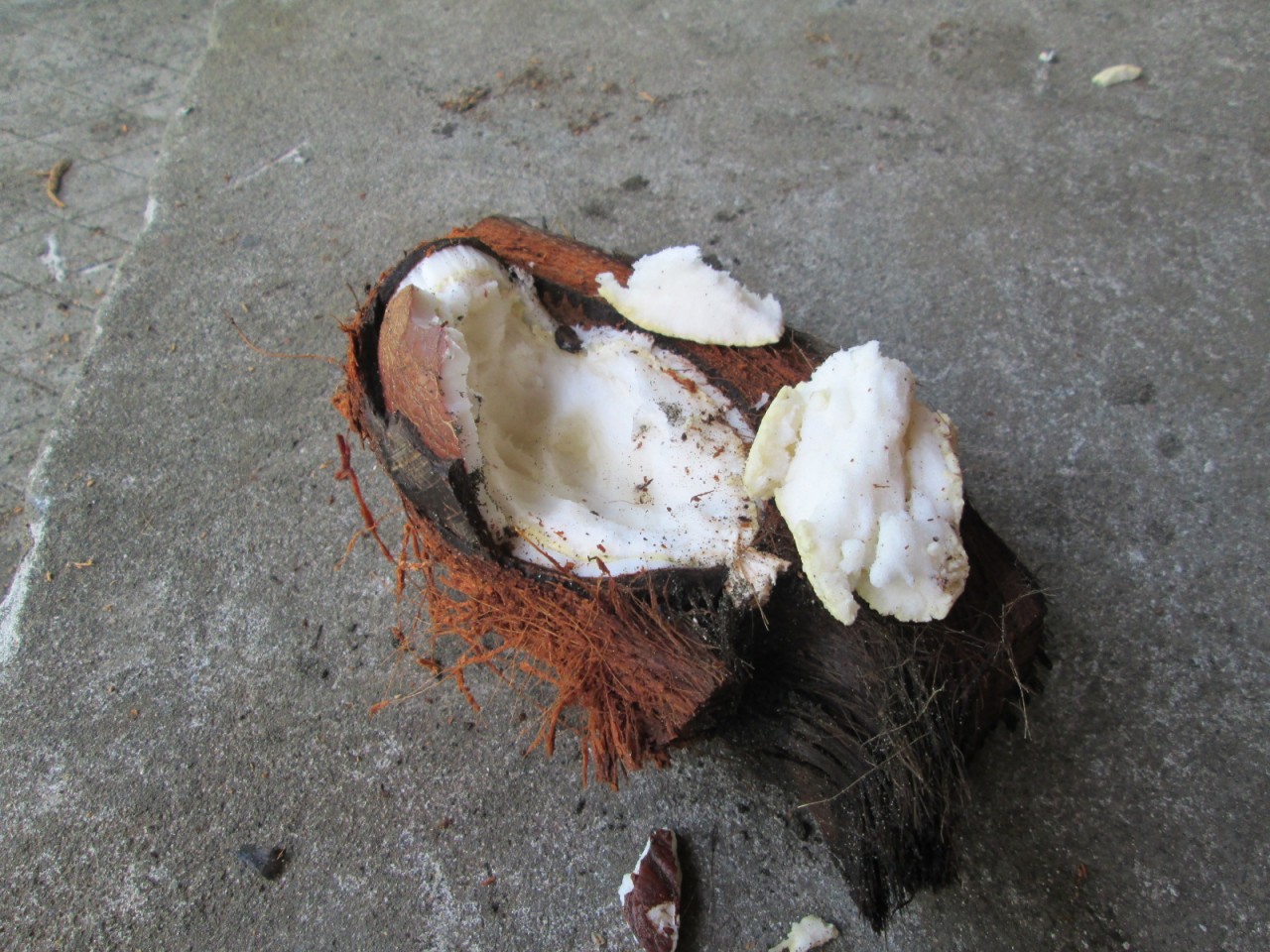
Coconut sponge

wholly ignorant in this matter: the list of use cases for the coconut palm and its fruits seems virtually endless, I just know how to eat them raw.

Now we need to figure out how to grow these in Canada.