Aimer un endroit, c’est y revenir pas deux, mais trois fois.
Utila est une île au Honduras dont le principe touristique est simple: la plongée (et la fête, pour ceux qui le désirent).
J’ai abouti là pour la première fois en 2013 avec en tête d’y rester une ou deux semaines pour y faire un petit cours de plongée. J’y suis finalement resté plus de deux mois. En 2016, j’y suis retourné avec deux de mes cousins pour y passer près de 1 mois à faire mes cours de plongée technique. M’y revoilà près de 8 ans et une pandémie plus tard avec mon frère (désireux de tenter la plongée) et un ami (déjà certifié).
Se rendre à Utila n’est pas une mince affaire. Oui, des grands transporteurs offrent des vols directs vers les tout-inclus de l’île d’à côté (Roatan), mais les horaires de vols étaient loin de faire notre affaire. Nous avons donc opté pour une succession de vols qui à l’allée nous donnaient une petite journée et une nuit à Houston au Texas.
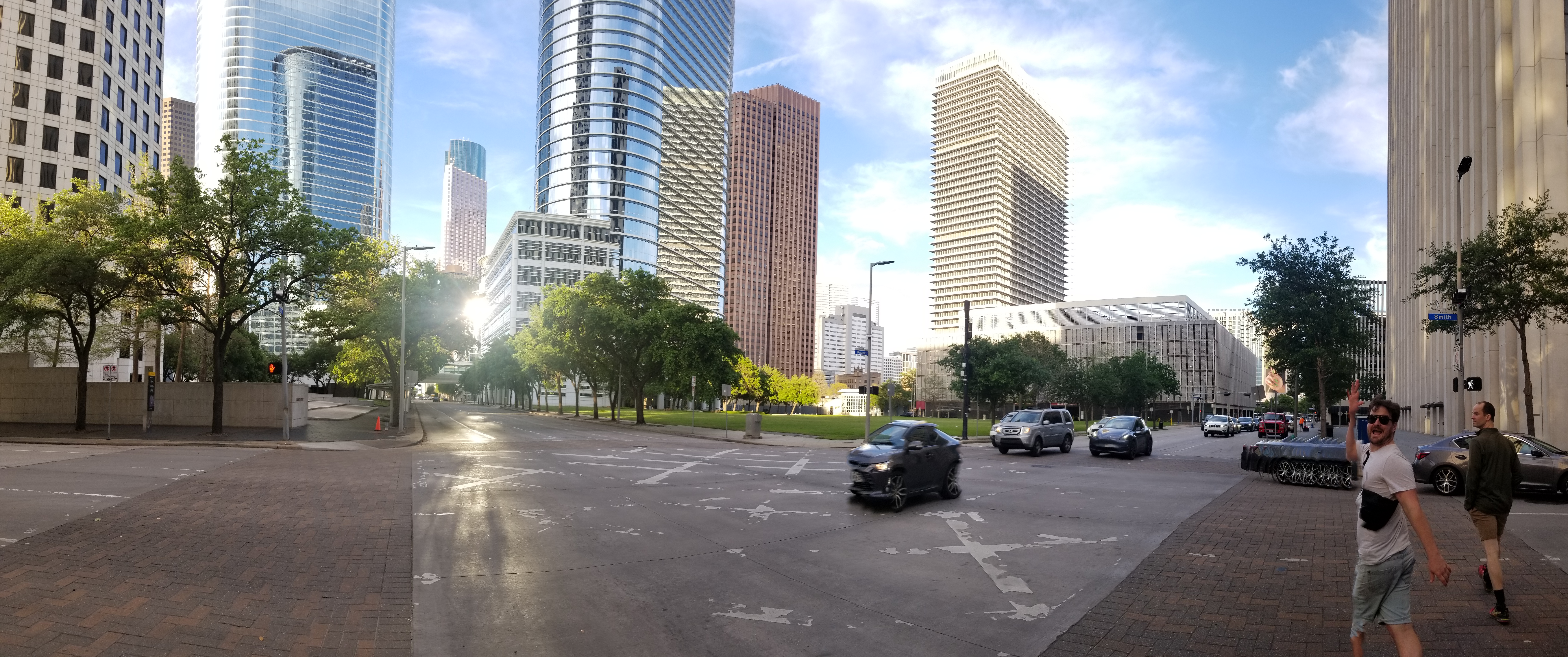
Je suis un fervent adepte des escales prolongées. Tant qu’à moisir quelques heures dans un aéroport dans l’attente du prochain départ. Pourquoi ne pas se donner un peu plus de temps pour aller explorer un endroit dans lequel nous ne nous serions pas arrêtés ? Les villes dans le monde ne sont pas faites égales; certaines étant définitivement plus intéressantes que d’autres. Cependant, j’ai pour dire que si plusieurs millions d’humains décident de s’installer à un endroit, il doit certainement y avoir quelque chose à voir ou faire.
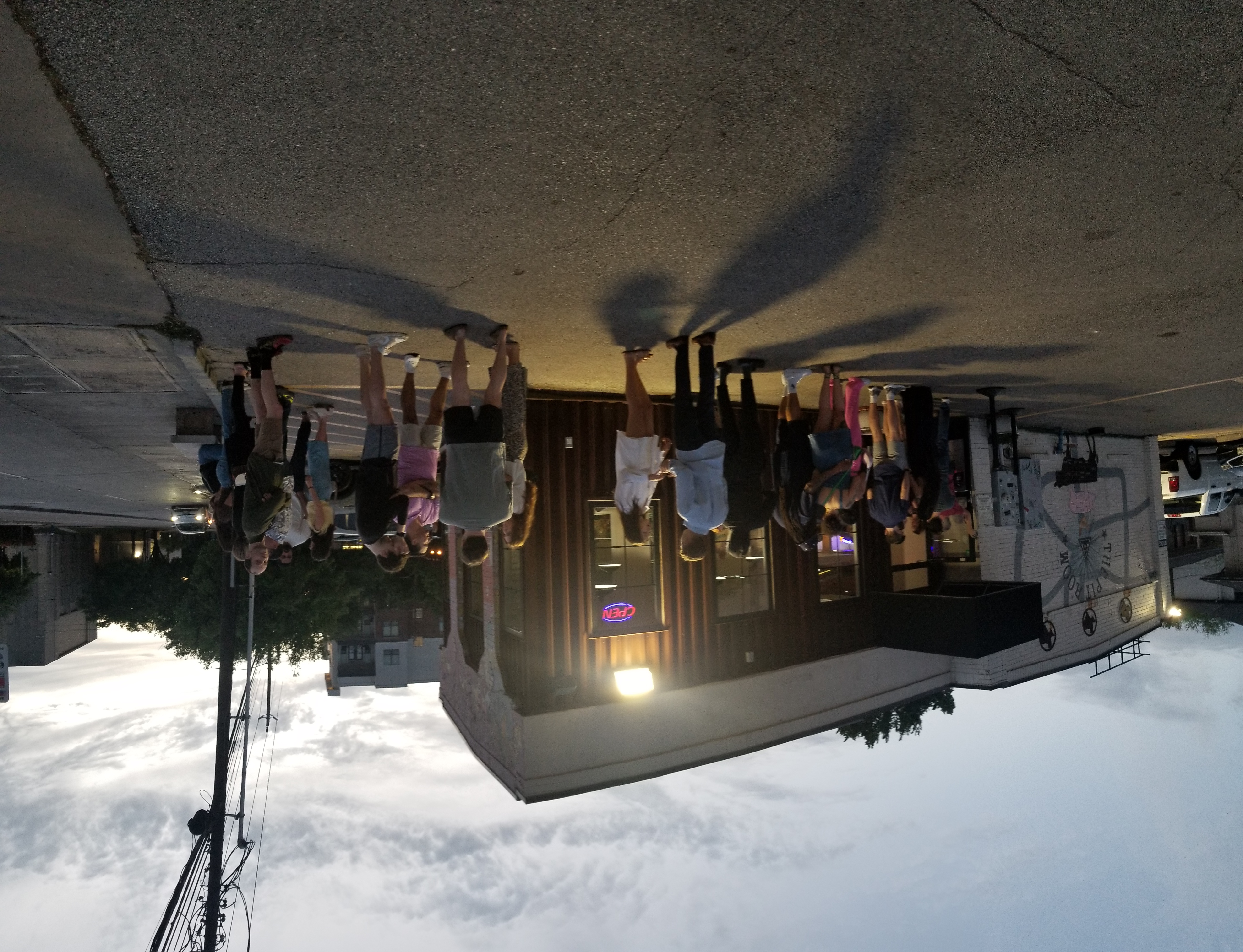
Nous avons donc déambulé dans Houston quelques heures avant de nous arrêter dans un classique restaurant de BBQ texan. À en juger par la file dehors, l’endroit était réputé. Il faisait bon dehors et ça sentait l’été (selon les barèmes canadiens). Comme de fait, certains Houstoniens nous ont confirmé que nous étions dans la meilleure période pour visiter leur ville. Les arbres étaient verts et la température parfaite. Plus tard vers l’été, le soleil calcine tout.
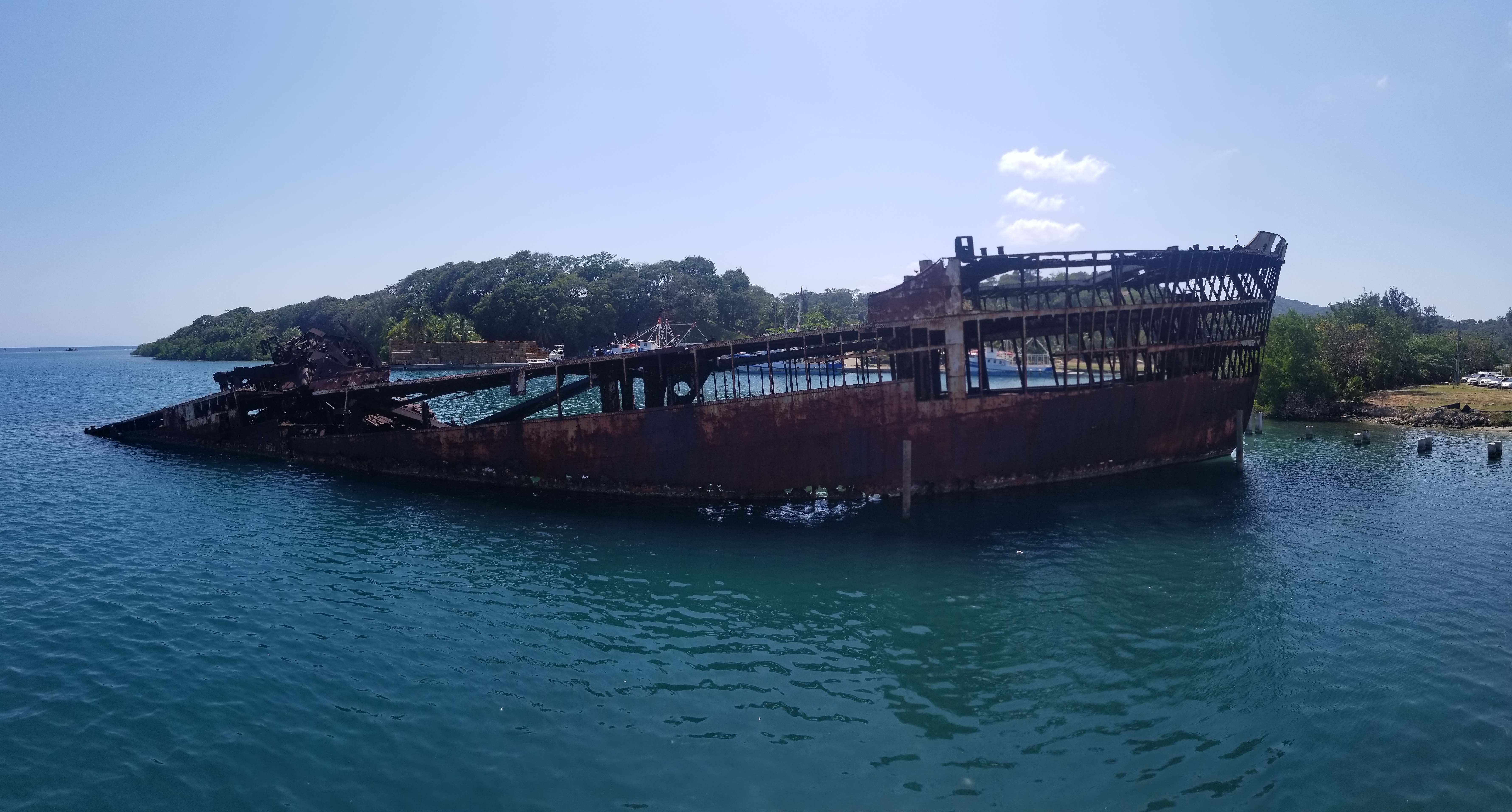
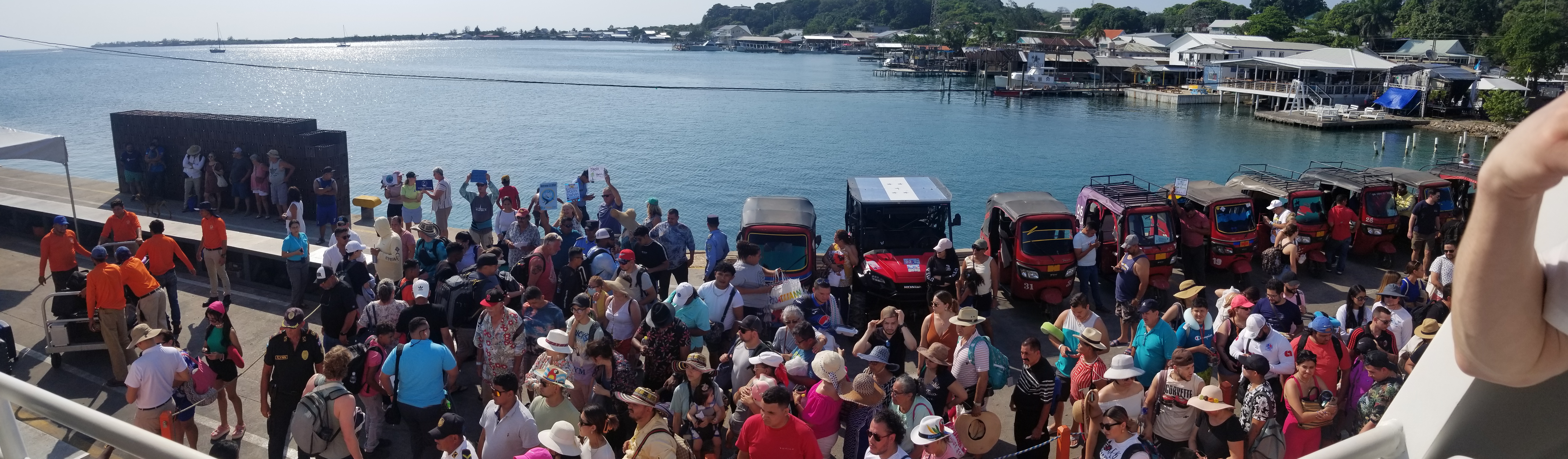
De retour à l’aéroport tôt le lendemain main, un vol nous a amené à l’île de Roatan depuis laquelle nous avons sauté dans un ferry vers Utila. La mémoire est une faculté qui oublie, certes, mais elle est aussi une faculté qui déforme. Mon souvenir de la rue principale et de l’emplacement des principaux centres de plongée était encore juste, mais ma conception spatiale du centre de plongée et de ses installations ne cadrait plus vraiment avec l’emplacement des choses dans la réalité. Rien de mal à tout ça quand on est touriste, ça ne fait que donner l’opportunité de redécouvrir un peu…
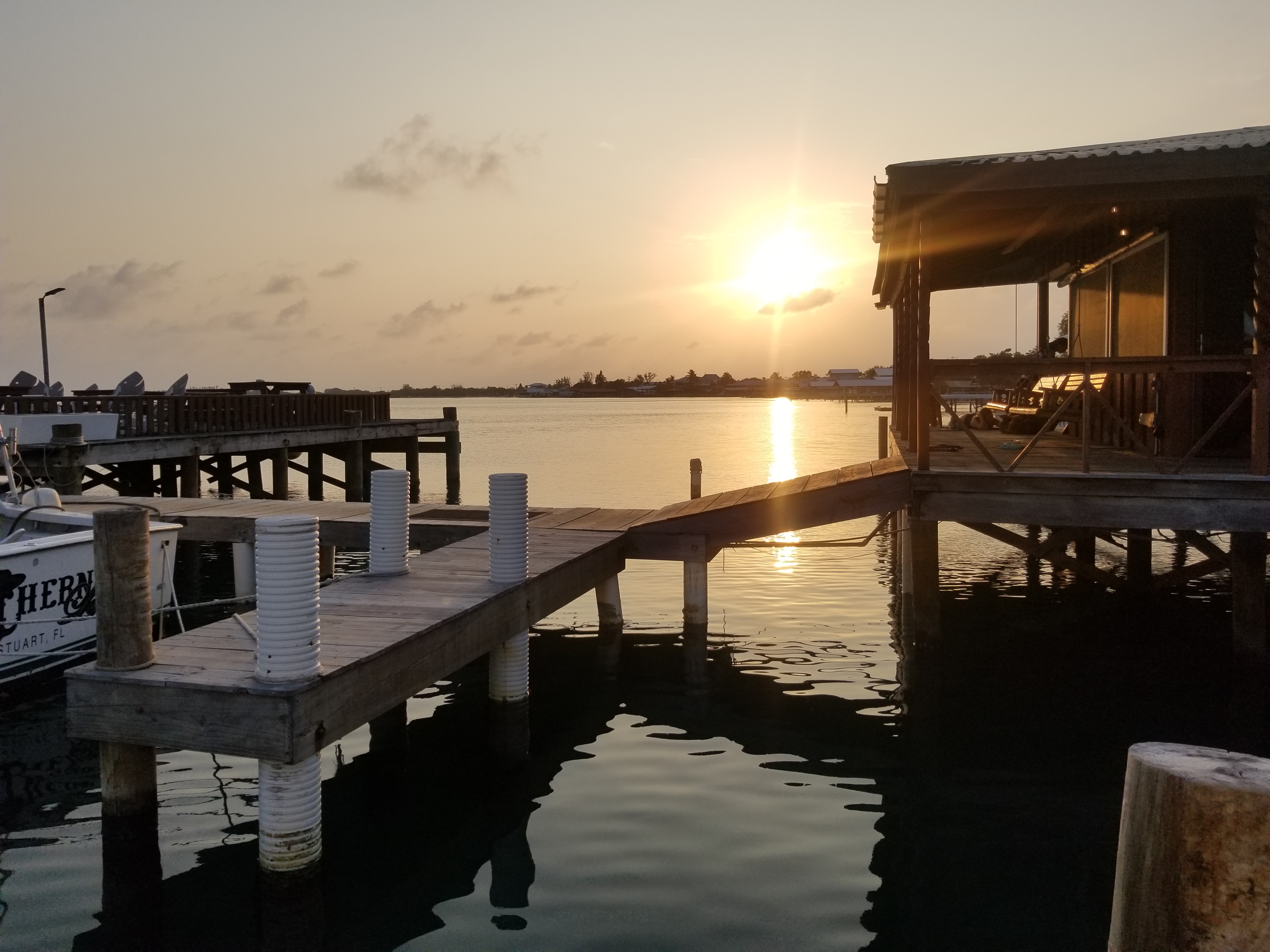
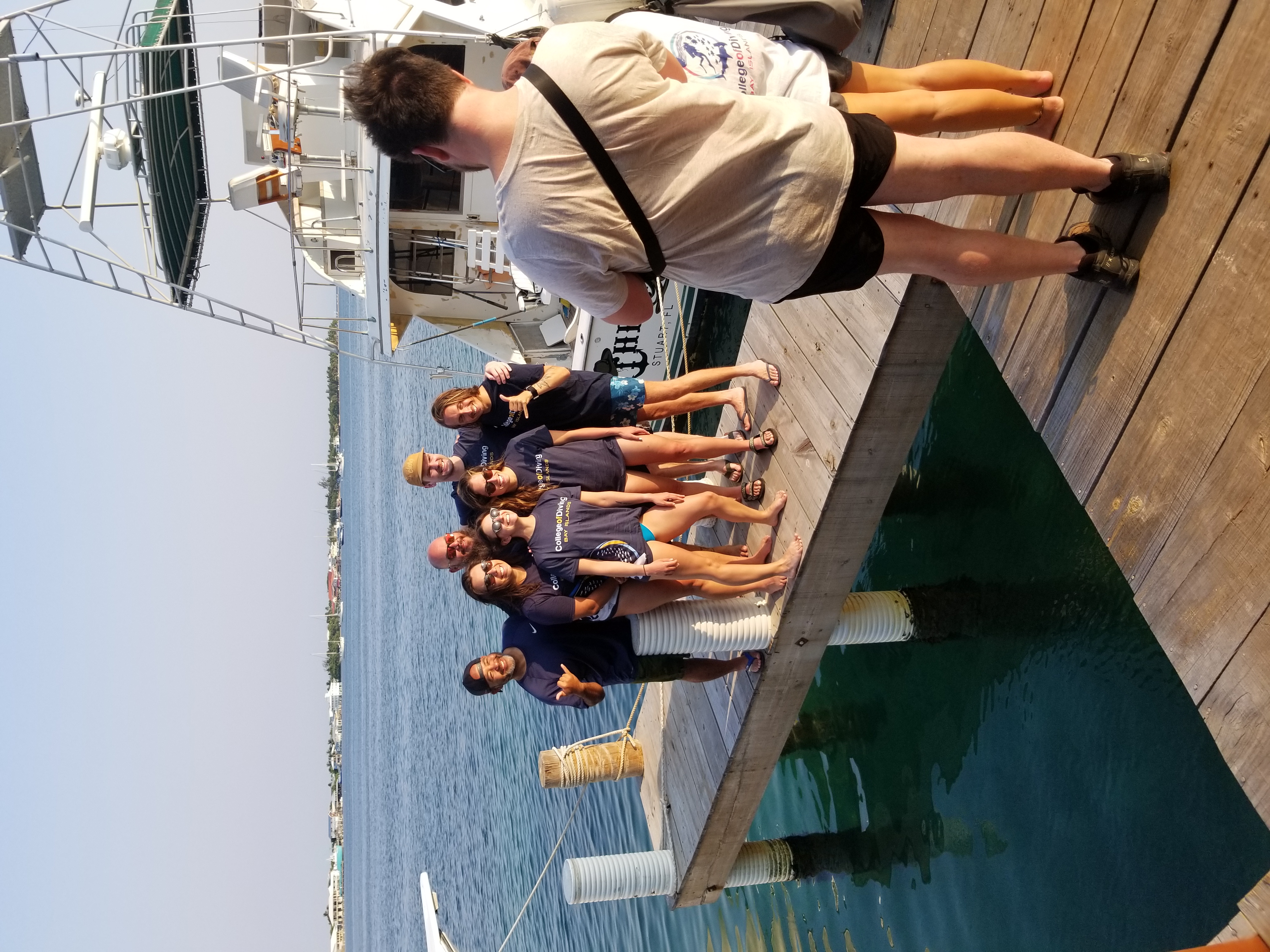
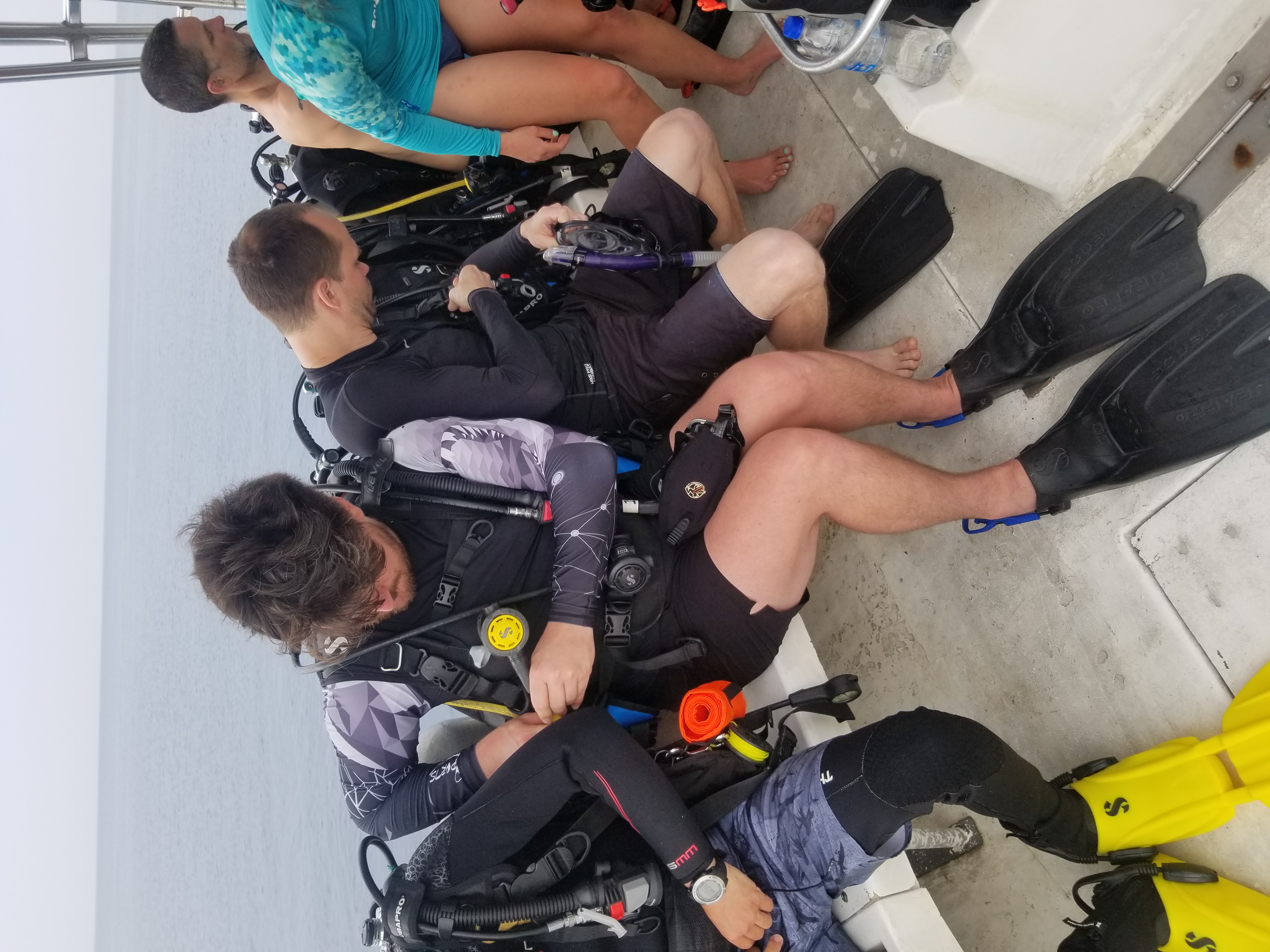
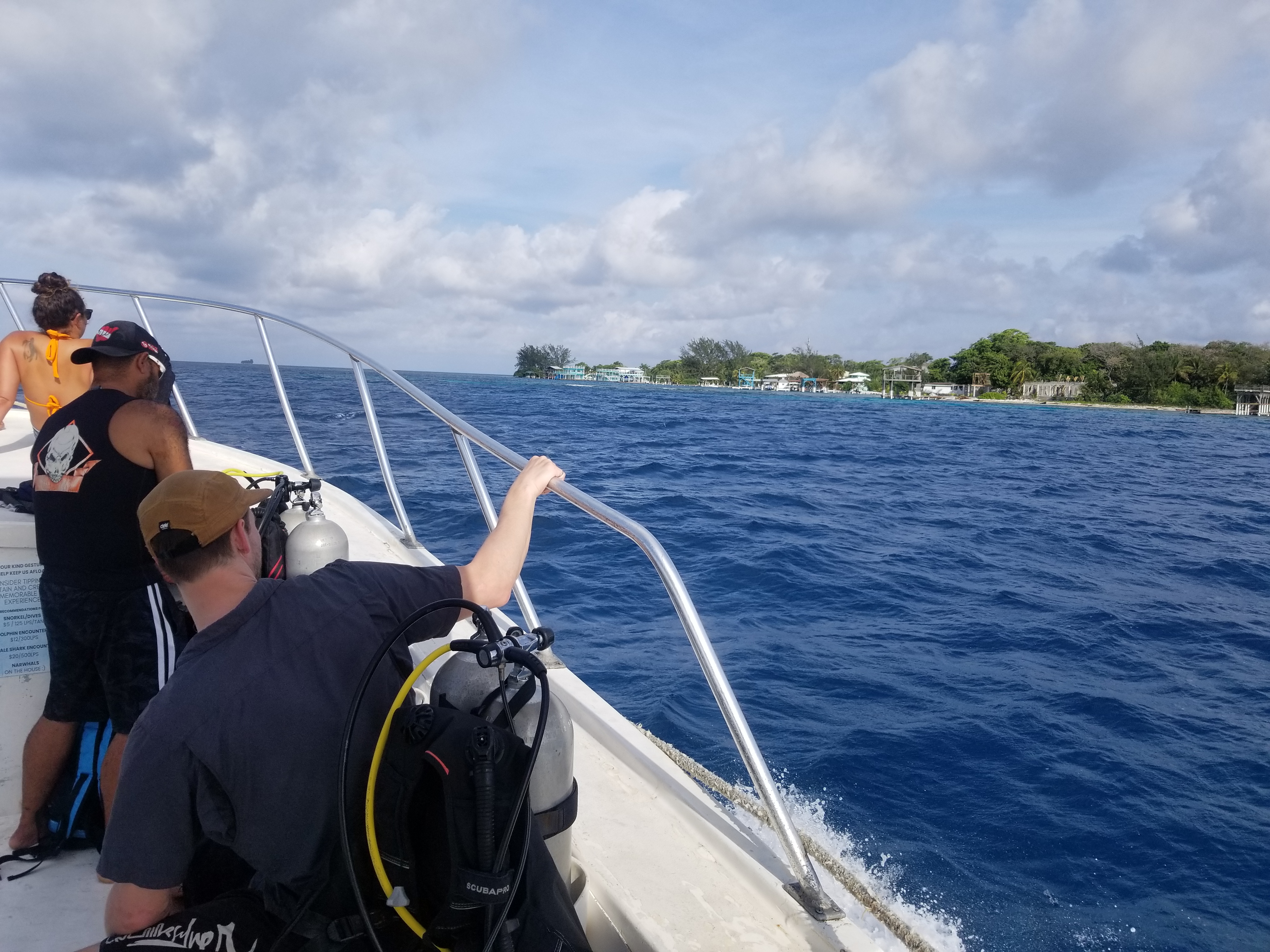
À partir du lendemain de notre arrivée, mon frère débutait ses cours tandis que moi et mon ami allions plonger sur une base quotidienne. Une fois ses formations complétées, mon frère allait nous rejoindre dans notre délire. La devise d’Utila, c’est drink and dive et nous lui avons fait honneur durant toute la durée du séjour. Certaines de nos connaissances sont déjà venues ici dans le passé pour tâter l’atmosphère de l’endroit sans y plonger. Tous furent déçus et avec raison. Ici, pratiquement tout tourne autour de ce sport et les conversations entre visiteurs ne concernent que ce qui a été vu ou vécu en respirant de l’air sous pression. Ceci dit, il y a moyen de passer un bon moment tout en restant hors de l’eau. Pour peu que l’on cherche, il existe quelques petits endroits reclus et paradisiaques sur l’île, mais il faut des poches profondes pour bien en profiter.
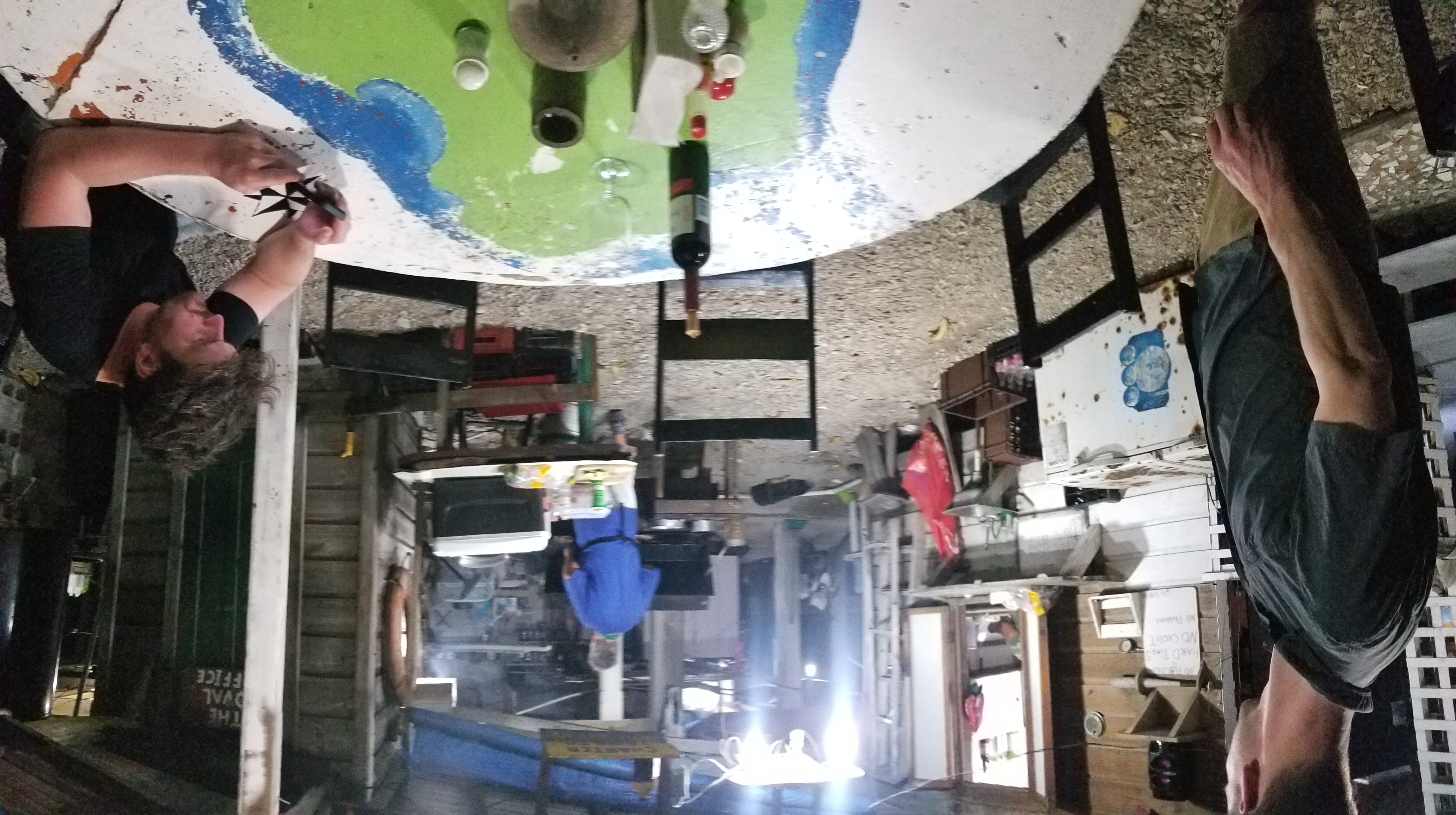
Nous tenions à vivre l’expérience backpacker, mais avec un peu plus de budget nourriture, nous avons pu nous distancer le temps de quelques repas de la gastronomie hondurienne, qui à l’image du reste de l’Amérique Centrale, tourne autour de la malbouffe à base de poulet frit, de riz, de fèves, de plantain, de portions de viandes trop cuites. Il y a sur Utila une poignée de bons restaurants, dont RJ’s, qui sert des grillades de poissons et de viandes locales tout à fait délicieuses. Mention spéciale à la sauce forte maison, qui goûte le soleil et dont Ron (le R de RJ’s) lui même nous a gracié d’une bouteille lors de notre troisième visite.
Question environnement, j’ai été malheureusement marqué par la dégradation notoire du récif entre ma première visite il y a 11 ans et celle-ci. Plusieurs spécimens de coraux étaient blanchis et l’abondance générale de ces organismes était notoirement moindre plus on se rapprochait de la surface de l’eau. Les coraux étant à la base des complexes écosystèmes que sont les récifs, les différents poissons et autres créatures aquatiques qui en dépendent étaient à leur tour moins nombreux. Les plus gros organismes (raies, barracudas, mérous, etc.) se nourrissant des plus petits, se faisaient également plus rares…
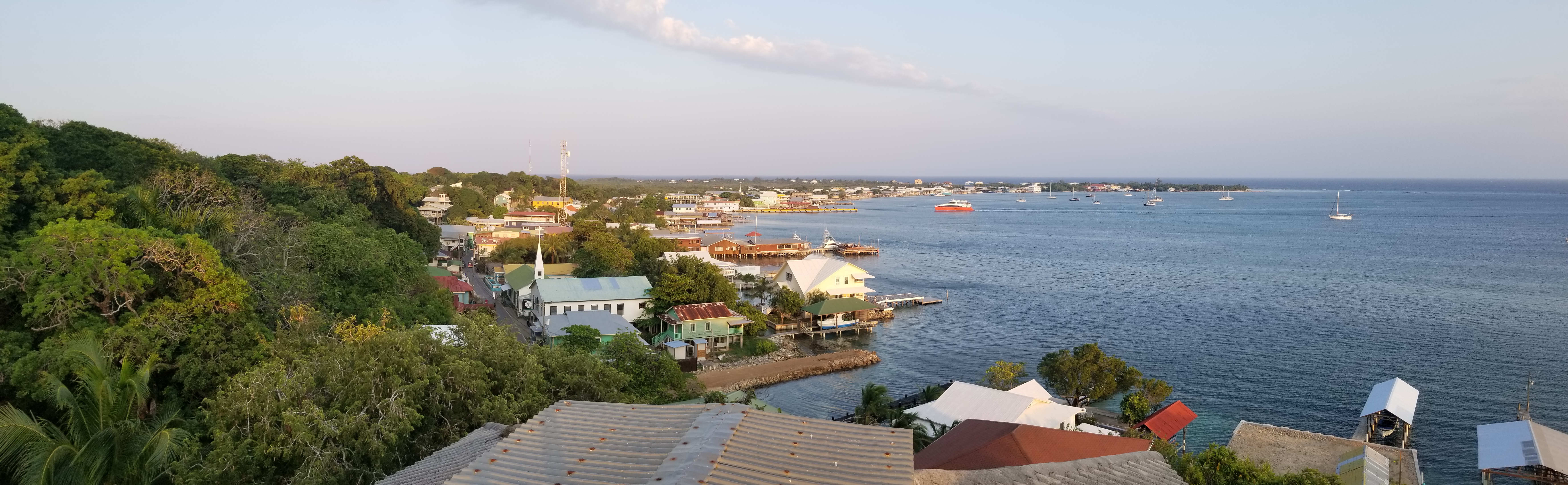
À l’inverse de la nature autour de l’île, le noyau urbain d’Utila s’était quand à lui embelli. Les caniveaux ont été récemment bétonnés, des routes supplémentaires ont été pavées et la gestion des ordures largement améliorée. La circulation routière (composée principalement de motos, de 4 roues et de voiturettes de golf) semblait moins dense et définitivement ralentie sur les plus grosses artères par des dos d’ânes. Utila a prit du gallon en terme de qualité et cela se voyait (et se ressentait dans le porte monnaie). Oui, l’endroit possède encore son lot de bâtiments délabrés, mais il s’est construit pas mal de neuf.
Curieusement, dans tous ces mois passés sur l’île, je ne m’étais jamais vraiment aventuré hors de la ville. Une tentative en août 2016 avait avortée en raison de la chaleur accablante et l’assaut implacable des moustiques. L’un d’entre nous a suggéré la location d’une voiturette de golf et l’idée s’est concrétisée la dernière journée. Aussitôt sur la route, nous nous sommes dirigés vers Pumpkin Hill, point culminant de l’île. À mesure que la pente augmentait, la voiturette largement sous-motorisée s’est mise à ralentir jusqu’à ce qu’elle commence à reculer en pleine route de terre pentue. J’ai écrasé le frein pour me rendre compte avec horreur que celui-ci était n’allait pas contribuer à ralentir notre descente. Tout de suite, j’ai crié aux deux autres de débarquer du véhicule par les côtés et j’ai enfoncé l’accélérateur. Ces deux manoeuvres ont suffit à stopper la voiturette. En la poussant pour les quelques dizaines de mètres restant, nous sommes finalement parvenus à terminer la montée. On a eu chaud…
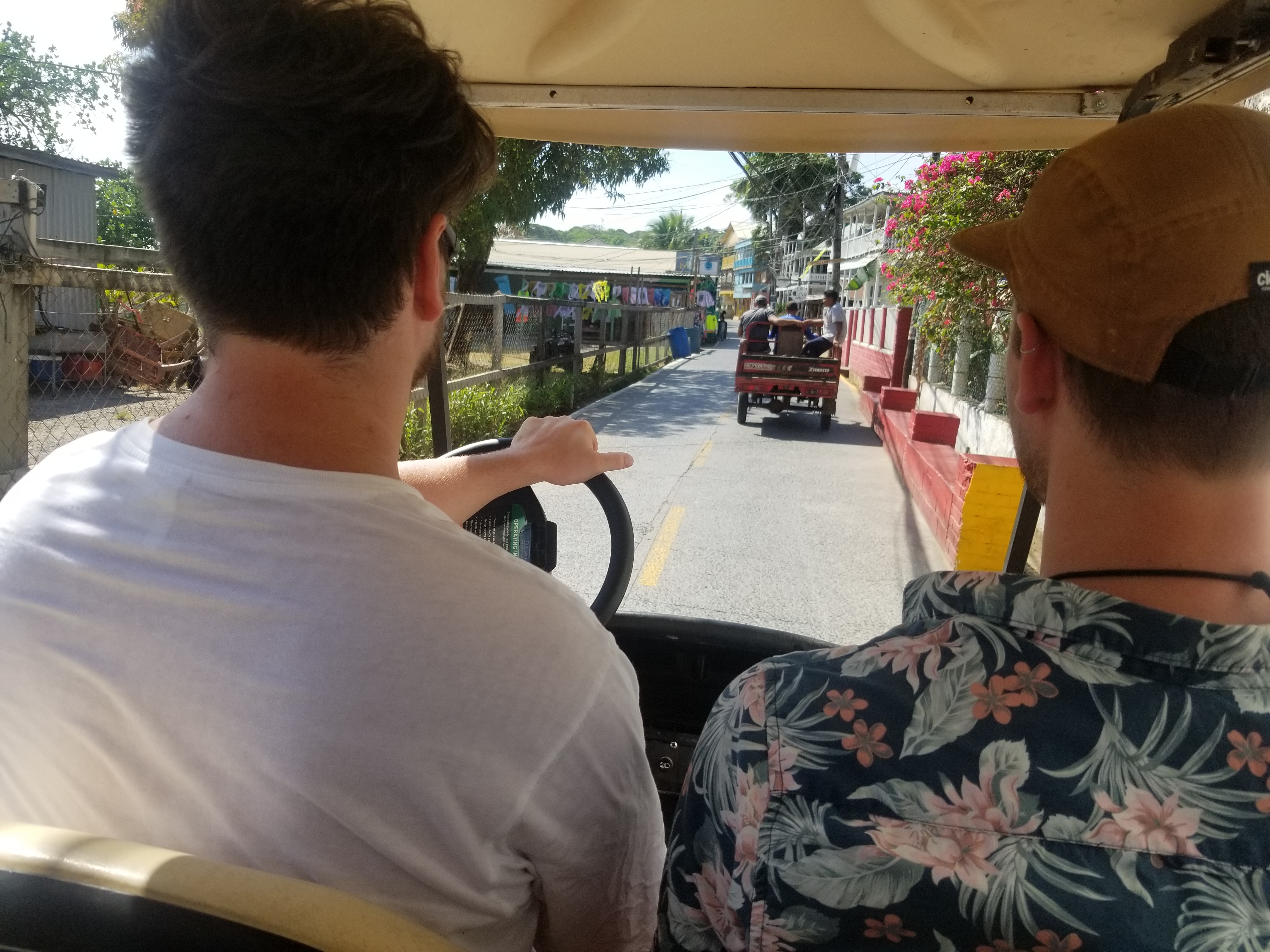
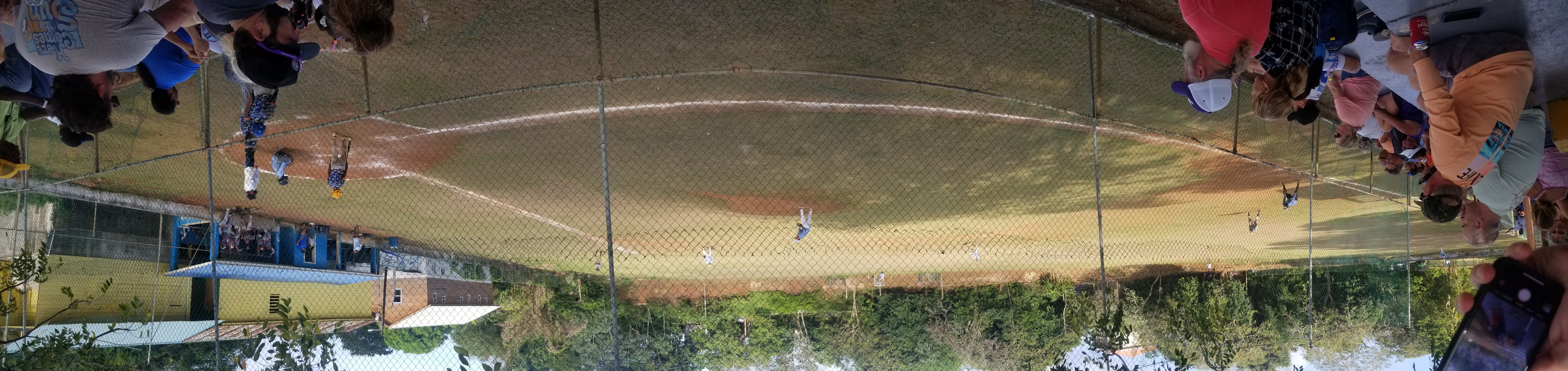
Fort heureusement, le reste de la journée s’est déroulé sur le plat et sans avarie. On s’est promené une partie de la journée dans les petits rangs d’Utila et ses quartiers bien nantis avec de magnifiques villas côtières. À cour d’endroits à visiter, on a terminé l’après-midi dans les estrades du stade de baseball local. Deux équipes de l’île s’affrontaient et il y avait bonne ambiance.

On est finalement restés entre nous une bonne partie de la semaine (mention spéciale au balcony bar). Les voyages à plusieurs ne se prêtent pas vraiment à la socialisation. Tout de même, nous aurons quand même tissés des petits liens avec deux Mikes (l’un du Canada et l’autre des É-U).
Exténués de nos vacances pas trop reposantes, nous avons pris le premier ferry du matin. Nicolas allais vers Roatan pour prendre l’avion de là, mais moi et mon frère avions une petite nuit à San Pedro Sula avant notre prochain vol. San Pedro étant à 4 -5 heures d’autobus de La Ceiba, ville côtière où aboutit le ferry depuis Utila, c’était potentiellement se compliquer la vie mais bon, on allait pouvoir explorer un peu du vrai Honduras.
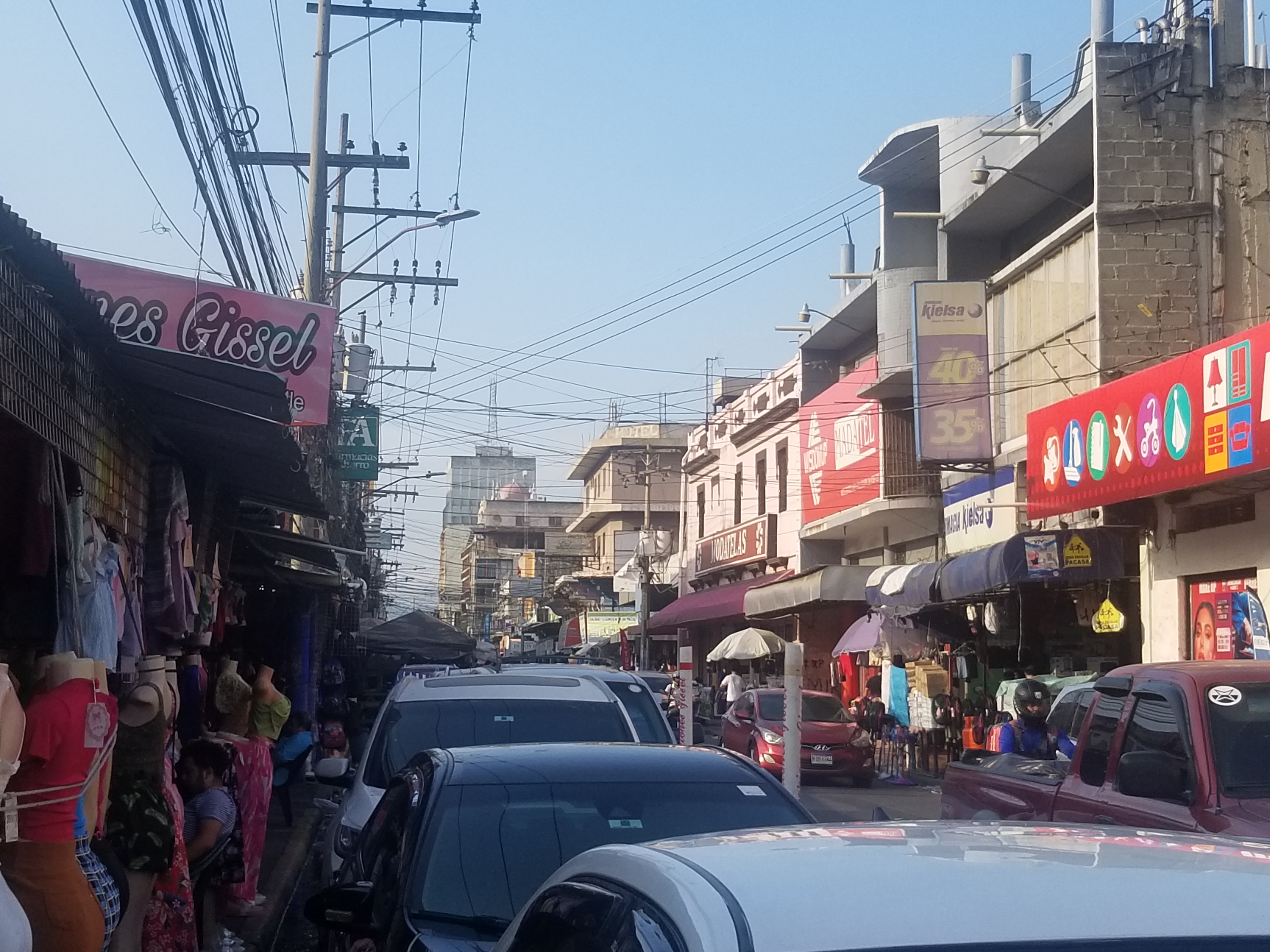
San Pedro Sula est une grande ville d’Amérique Centrale pas trop intéressante, mais elle a l’avantage d’être authentique. Débarqués en milieux d’après midi (en passant, je crois avoir vu une partie d’éclipse depuis l’autobus), on aura eu amplement le temps de faire un tour du centre-ville et de déambuler dans les rues autour de notre auberge. L’ambiance y était définitivement différente et souvent on nous suivait du regard. Certains se sont même aventurés à nous lâcher quelques gringos! plutôt irrespectueux. C’était à priori sans danger, mais je ne me souvenais pas de ce genre d’ambiance à mon passage en 2016. Qu’est-ce qui a changé depuis … le fait que tout le monde a maintenant le regard rivé sur un téléphone qui leur fait miroiter l’apparent bonheur de gens plus riches qu’eux ? L’envie est à la source de bien des maux.
Le vols du retour était plutôt audacieux. De San Pedro Sula, nous avions 1h d’escale à Panama puis un retour direct à Montréal. Au final tout se sera déroulé sans entraves. Notre compatriote de voyage qui avait choisi de passer par Roatan (ce vol était substantiellement plus cher lorsque nous avons acheté nos billets) aura finalement été retardé de 24h.
La veille de notre retour retour, je me suis demandé si après trois visites, j’allais avoir encore le goût de revenir à Utila … mon instinct me disant que c’était peut être la dernière fois que je visitais l’île. Oui nous allons probablement passer par là dans un futur périple et j’aimerais faire visiter l’endroit à Audrey, mais elle ne plonge pas et Utila quand on ne plonge pas … Il y a tant à explorer dans le monde et bien franchement, je suis peut-être dû pour aller visiter d’autres fonds marins (NdR: je relis ces lignes quelques semaines plus tard avant de publier et j’ai peut être parlé trop vite).