El Salvador – San Salvador

I had been in Central America before, but having spent too much time in Utila, I had to sacrifice some destinations. Sadly, little El Salvador, too much out of the way and with little (obvious) appeal, was booted off the list first. Only for a time though, because I knew I would be back and when I did, I would make El Salvador a priority.

So a couple years later, here I was, in the airport with a plane ticket to San Salvador. In itself, it was not what motivated me to come back to Central America (a tec diving course in Utila is what did), but I had nonetheless made it my first destination. Normally, I would start the story on arrival at a new country but this time, its different. When checking in for my flight, the machine had asked me if I wanted to be on the “flexible passengers list” to which I had replied yes and named a price of 300$USD. That list is basically those passengers that are willing to give up their seats and for what price if the flight gets overbooked. So guess what, my flight was indeed overbooked, but when I showed up at the counter to offer my spot, the Delta employee told me they were offering a 1000$USD credit with the company if I wanted to give up my seat and take the next flight, to which I happily replied : “Of course”. The next flight was only four hours away and my original layover being a good 10 hours in Atlanta, waiting there or here in Montreal made no difference whatsoever to me. The 1000$USD however, will be put to good use, but I’ll let my girlfriend figure that one out.

So onto San Salvador, obviously the capital of El Salvador to which I arrived very late in the evening as it was pouring outside. On the taxi ride to hostel, I dusted off my Spanish discussing with the taxi driver and getting travel advice, which he happily provided. El Salvador, he told me, had everything one could hope for as a travel destination even though it is small. He was aware of the reputation his country had for being one the most dangerous places on the continent, but he assured me those days were over and things had gotten a lot safer lately. Anyway, this all had gotten me very excited and I went to bed feeling quite glad to be there and eager to get out and explore the city for the coming days.

San Salvador's central market
San Salvador’s central market

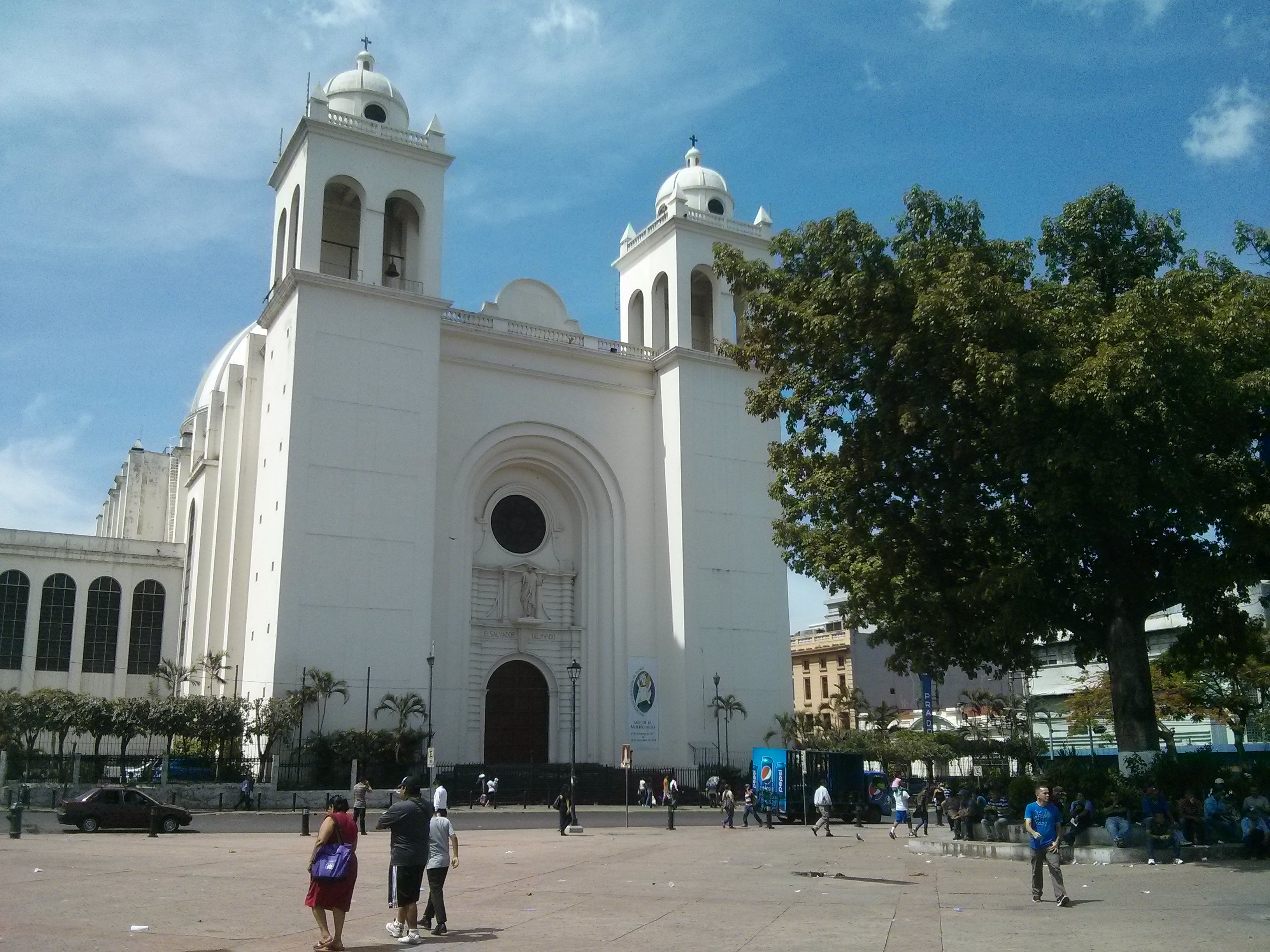
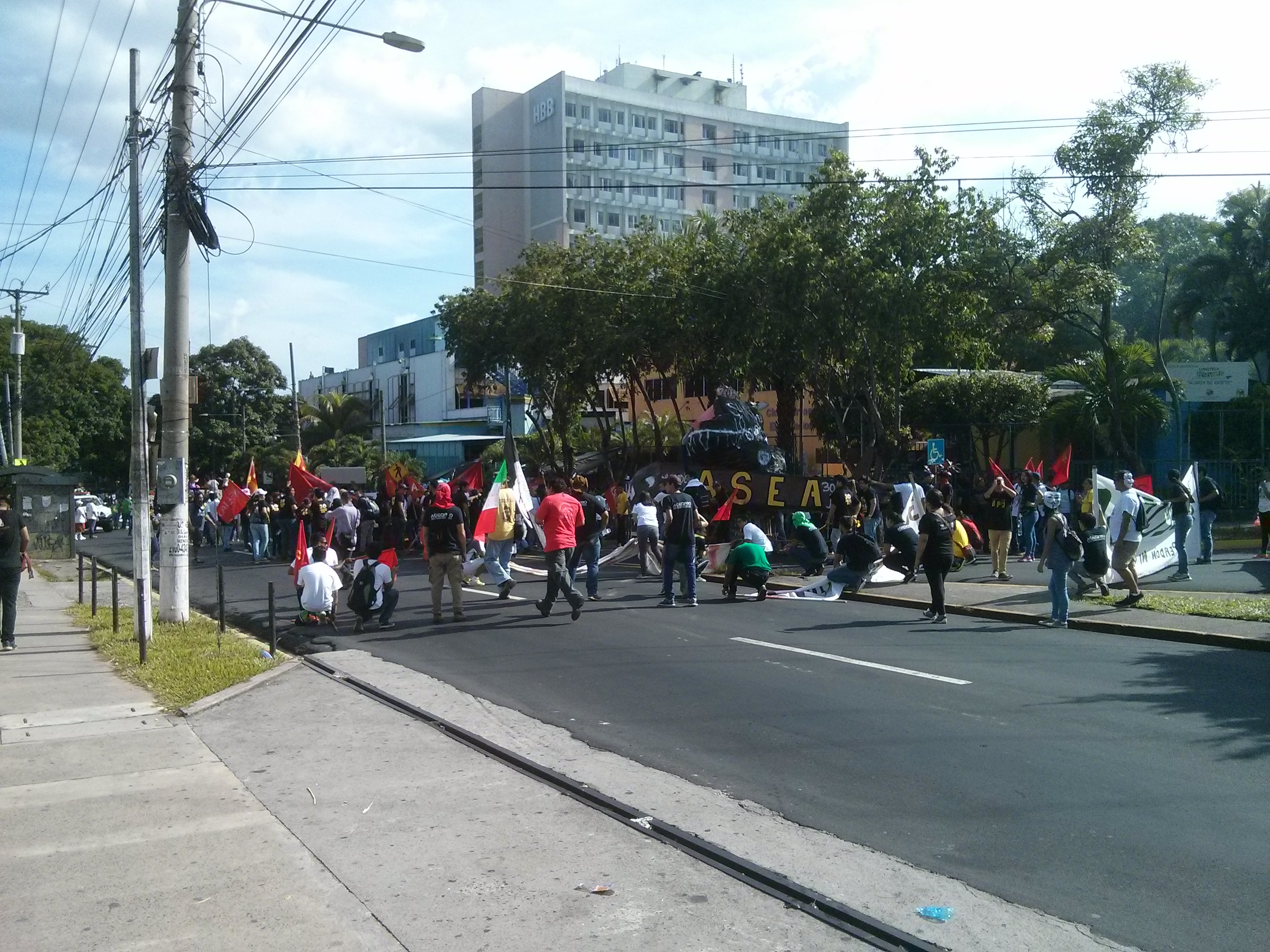
San Salvador's cathedralFirst morning, I was up somewhat late because of a pretty hefty sleep debt that I had to repay and the extremely powerful snoring of one of my roommates. So after a quick coffee, I set out and walked around for the better part of the day, only coming back when the sun was starting to set. During those couple of hours, I walked through a shopping mall (to see what the Salvadoreans are up to on a Saturday), the central market, checked out the main cathedral, encountered a very loud (with explosives the likes of which I had not seen since my time in the army) protest commemorating the murder of some university students by a repressive government in the 70s, attempted to visit the university but got turned back by guards and finally made my way back home walking through the back streets. The evening was spent having drinks and discussing politics (Brexit, Brexit and Brexit), travels and such with Felix, a German traveler passing through the country on his way from Guatemala to Nicaragua. El Salvador is definitely not on most’s people’s list.

Protest in San Salvador

Sorry for jumping subjects, but while taking a break I just had a 20 minute conversation with a Japanese man in … Spanish. Evidently, his English was not up to task so we defaulted to that language as for having spent a year here working in economic development, he was quite proficient in it, slightly more so than me. I would never have thought of that happening in my lifetime :)

So back to San Salvador. Just like any other Central American capital and even more so in some cases, it’s polluted, chaotic, loud and ugly. It has been invaded by those fast food chains that are so familiar to us to a point where they occupy prime land, are multiple stories high in pristine buildings all fenced off and guarded by armed security guards, making them the nicest infrastructure in an otherwise run down city. Speaking of security guards, they’re everywhere, standing in front of most commercial or official buildings with shotguns and pistols at the ready. As for the fast food joints, evidently, Salvadoreans, given how overweight they tend to be, enjoy their presence a lot. I entered a McDonald’s to see what was up on the menu and could not help but noticed how expensive it was, even more so than in Canada. It’s somewhat of a pity because Salvadorean cuisine appears to be much more rich and varied than it’s regional counterparts. The city is dotted with small kiosks and comedores offering a large variety of snacks and plates, only outnumbered by pupuserias, small stands serving pupusas, a national dish comprising of small tortillas filled with anything from black beans to cheese, tomato sauce and coleslaw. Plus, a single dollar will buy enough for a proper meal.

San Salvador stood out of the other national capitals of the region for its inhabitants were much more friendly and it was entirely devoid of gringos. As a matter of fact, I did not see any on my walk the first day save for two that were having a beer on a pricey terrace in the center. It did not feel dangerous and I could be out at night without fearing too much for my life. Not that I really wanted to party and come late (altough no occasion presented itself), but it’s nice to be able to go out at sundown for some pupusas.

The second day I had to wake up extra early to go diving with El Salvador Divers. Evidently, that drink with my German buddy extended itself to some whisky which I had brought from Canada so I went to bed late and was welcomed with, again, the earth-shaking snoring of my bunk mate. In total, I must have accumulated four hours of sleep and by pure luck I opened my eyes in time for my pick-up to go diving, as I had put my earphones on to use them as earplugs and had overslept my alarm. Since it was the rainy season here, there is no diving in the pacific as coastline waters are clouded with runoffs for the whole summer. Instead, we went to lake Ilopango, an ancient volcanic crater. At 80 square kilometers, it must have been quite an eruption and in fact, geologists do think so as well (it’s downfall has been found in the ice records). Nowadays though, it’s a somewhat quiet volcanic lake surrounded by villas. The top layers of the water were quite opaque because of recent raining but the visibility at the bottom was excellent. Both dives were made along a black volcanic rock cliff, which made for spectacular and unusual environment for me. Back at the hostel, I caught up on my sleep with a huge nap and woke up just in time to go to the Modern art museum. I hurried there but on showing up at the gate, I was told by the (armed) security guard that it was exceptionally closed for fumigation. Disappointed, I walked off and soon encountered huge traffic, which was inordinate I thought for a Sunday night. I traced it back to its source and came upon la feria Consuma, a festival it seems devoted to shopping. For a 1.50$, I bought my way inside a interesting piece of local life and did some people watching for some time before I headed home to study for my tec course.

El TuncoI had wanted to spend only two days in San Salvador but feeling there was a bit more to explore, I extended my stay by one night and took off early to get to El Tunco, a famous surfing beach some 40 kilometers away on the coast. Getting there took slightly longer than expected as I did not make the bus connection that I was supposed to and ended up at the wrong terminal, but eventually, I found the right bus and an hour later was dropped of at the beach. Not that I had some expectations about the place, but I was left somewhat dissapointed as all there was to it was hotels and restaurants and everything appeared to be geared towards surfing. The beach, or lack thereof, was a small stripe of rocks about a meter wide. I have to admit though, it must have been quite the spot as the waves where immense and fairly close to the coast. I had taken my bathing suit with me just in case I had wanted to rent a board, but this place was way out of my league.

La Libertad
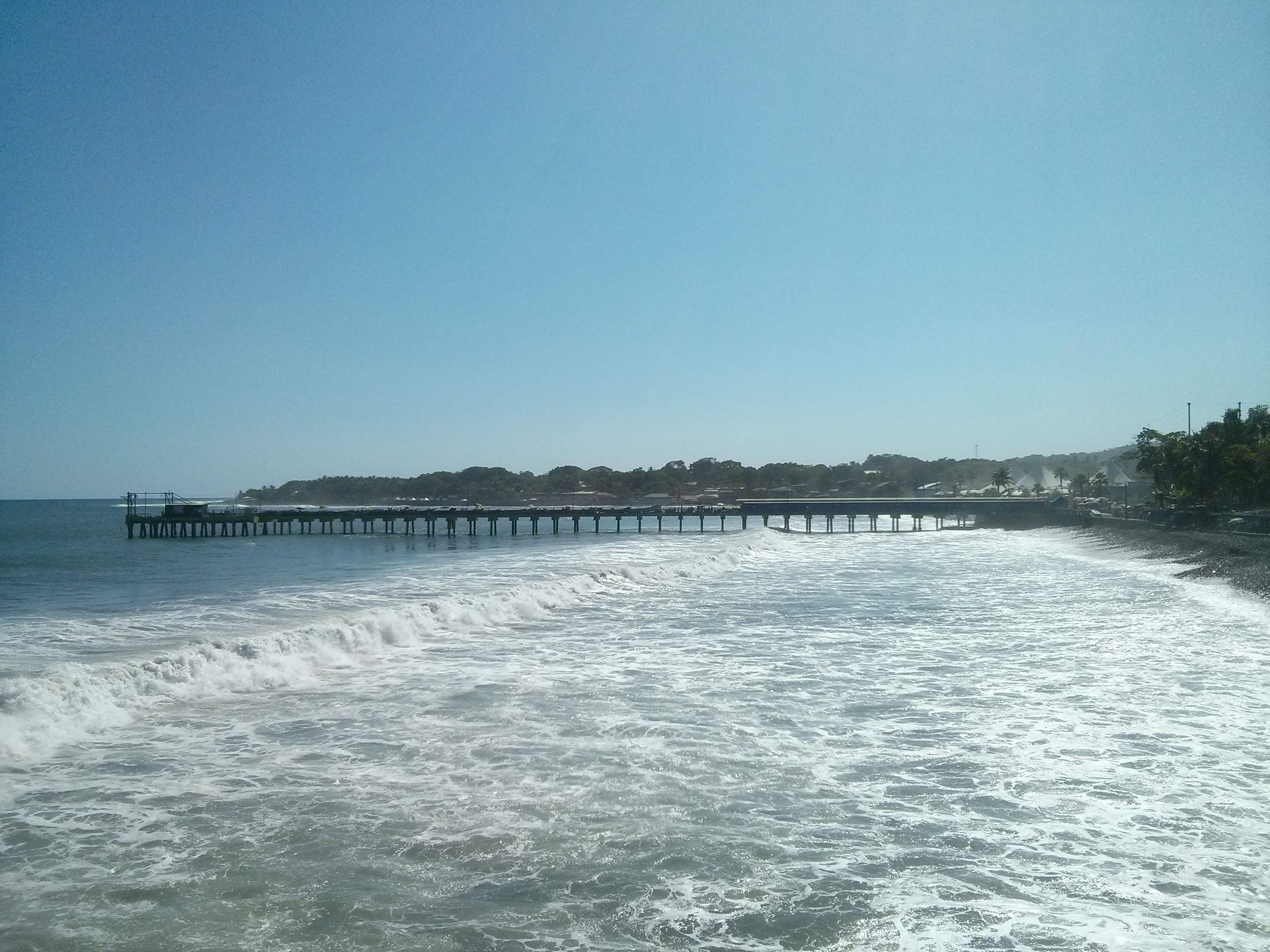
La Libertad

Having had enough of El Tunco, I caught a bus back to La Libertad, a port town through which I had passed on my way to my first destination. My Lonely Planet guide (from 2010) described the town as sketchy but a lot must have changed in the recent past as I would describe it as quite the opposite. It was lively: the seafront was packed with restaurants and a huge wharf featuring a bustling fish market, some ceviche stands and fishermen working on their boats after a day out at sea. Passed the restaurants, there was a nice paved walk (by Salvadorean standards) which ended at another surfing beach, where I sat for a good hour having a beer and watching some pretty talented surfers negotiating breaks several meters high. I would have stayed longer, but buses in El Salvador don’t run late so I caught the 17h30 back to the capital, had some pupusas and spent the rest of the evening on my computer.

The day after, I checked out, went back to the art museum for a quick visit; took a bus; stopped at the right place to catch another bus that would take me to the terminal; waited for a while without seeing that bus; decided to walk to the terminal; while walking, finally saw the bus but omitted to ask where it was going (the same bus routes do not necessarily take you to the same place); ended up at the opposite end of the town. Normally, I would have hoped off before, but since I was carrying all my belongings, I did not want to be left in a random neighborhood and having to walk to find my way. Some ladies told me to wait until we would come across a proper bus stop so I could catch the right bus going in the opposite direction. After an hour lost circling around town, I finally arrived at the terminal where I could catch transportation to Santa Ana, my next destination. Time wasted in transportation is part of traveling and even though I’ve been at it for quite some time now, I don’t seem to get better at negotiating my way around public transport.

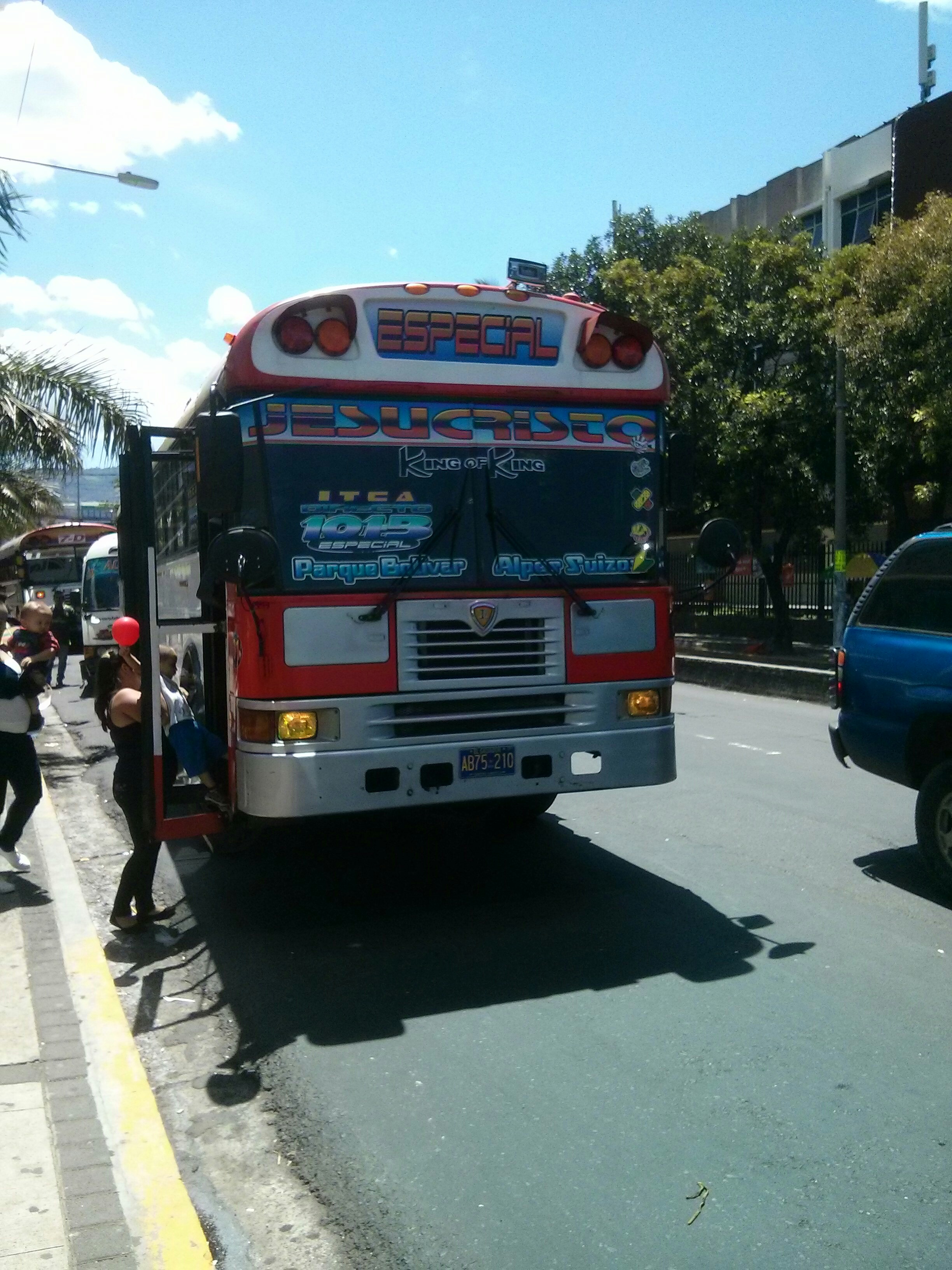
Pimped up bus!
Pimped up bus!


Beuchat / Uwatec Aladin PRO manuel/notice

English version here
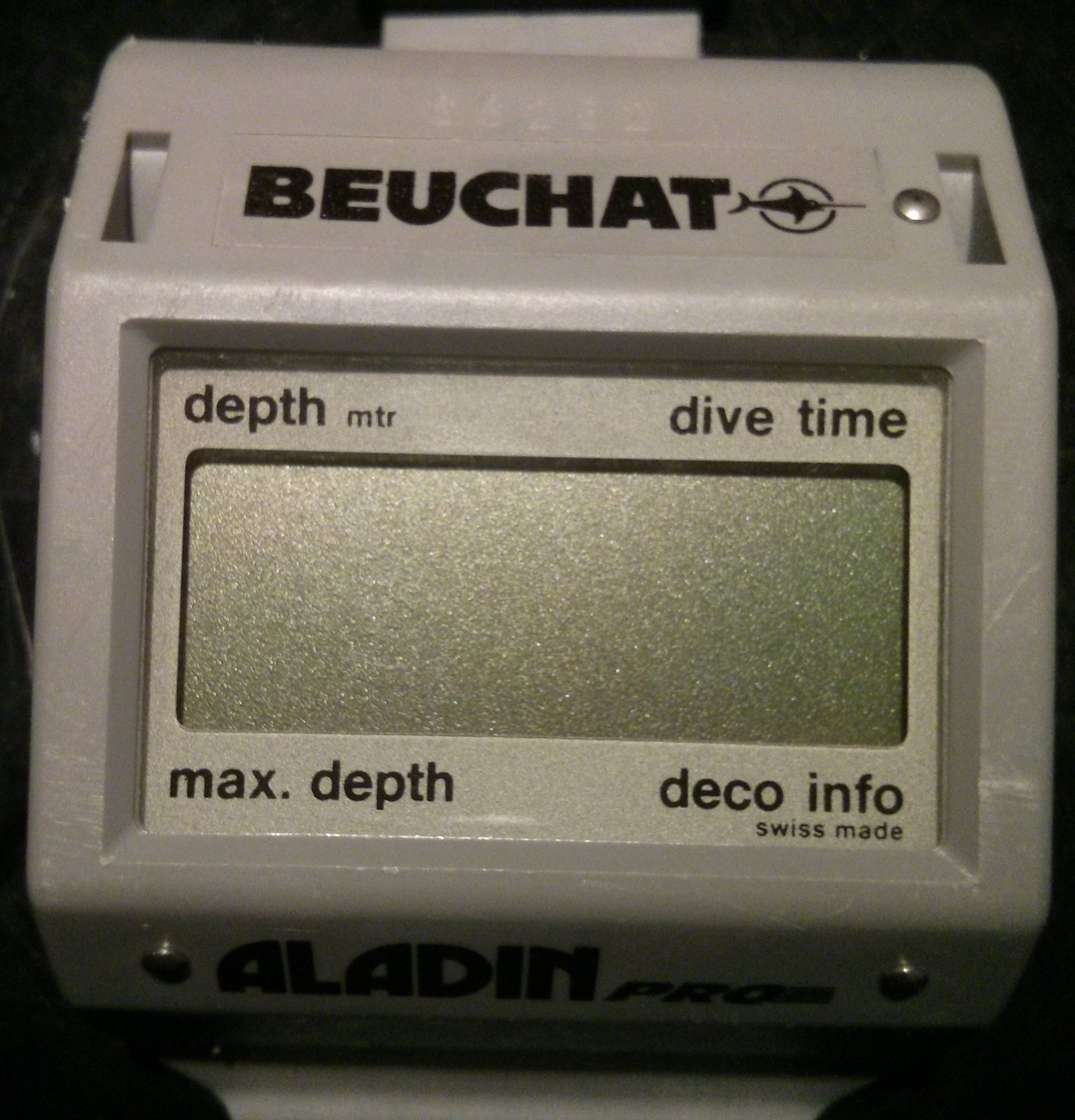
Beauchat/Uwater Aladin PRO dive computerEn achetant du matériel usagé sur les petites annonces, j’ai mis la main sur un ordinateur de plongée Beuchat (plus tard acheté par Uwatec [aujourd’hui ScubaPro]) Alading PRO gris à trois boutons. Après un peu de recherches, j’ai appris que cet ordinateur a été commercialisé pour la première fois en 1988 et qu’encore aujoud’hui il était utilisé par certains et louangé comme une pièce d’équipement fiable, simple et sans fioritures. Évidemment, impossible de trouver un manuel, mais après quelques heures de recherches, Philibulle de plongeur.com, m’a graciseusement donné sa transcription personnelle en français.

Télécharger manuel pour ordinateur de plongée Aladin PRO (français)

Beuchat / Uwatec Aladin PRO manual

Version française ici
Beauchat/Uwater Aladin PRO dive computerWhile buying some used kit on the classifieds, I was handed a grey Beuchat (later Uwatec [today Subapro]) Aladin PRO 3 button diving computer from the mid-nineties. Through a bit a research, I learned that it had first came out in 1988 and was still to this day revered by some in the diving community as a sturdy, reliable no-frills device. Obviously, the manual was no longer available for download and it’s only after asking someone (many thanks Geoff Nelson) on an old thread on scubaboard that I finally got it.

Download Aladin Pro Dive Computer Manual (English)


Printable recreational dive log sheet template

Having filled up the last page of my store bought dive log, I decided it was time I started printing my own log sheets. I wanted a template that could fit in a small binder (half letter (5.5″ x 8.5″) or A5), where there was enough space on the page to log two dives and that gave me ample space for comments while providing the standard diving data fields. Unfortunately, I could not find anything that suited my needs so I decided to put together my own.

Click here to download

Dive log demo

Printable dive log sheets full page

It features the following built in fields:

  • dive number
  • dive start time
  • visibility
  • air and bottom temperature
  • site
  • location
  • depth
  • air or nitrox (EANx)
  • gas consumed
  • weight
  • time under
  • safety stop
  • boat or shore dive
  • fresh or salt water dive
  • notes
  • buddy or divemaster signature and number

The layout is compact and text has been kept to a minimum: you write the units yourself. Once it has been printed (on good paper stock and double side preferably), cut the sheets in half along the dotted line, punch holes if you want to store them in a binder and go log some dives.

For those interested in the source, here it is. Suggestions for improvements are welcome!

Conquering Greece – Day 2 : Nikiti to Florina

  • Weather: Cloudy
  • Departure: 14h00
  • Arrival: 20h30
  • Date: 01/08/15
  • Distance: 360km

Nikiti to Florina

The night had been so hot I had trouble sleeping and would wake up intermittently drenched in sweat and grasping for air. That being said, it was extremely nice of Félix to have given me a place to rest. So when morning finally came, I made my way to the dive shop, signed the paperwork got my equipment and departed again to the dive site: a shore dive in a camping site that is owned by the Bulgarian Orthodox church.

Underwater, it was nothing very different than the other dive I had done in the Mediterranean: weeds, soft corals, sponges and small fishes. Thankfully though, the other guy on my team had a good level so we decided to spice things up with a “free fall” jump from the top of a wall at 12 meters of depth down to the bottom at 30, a huge sand plain. In the course of the dive, we crossed three very apparent thermoclines and went from a top water temperature of nearly 30C to 15C at the bottom.

Packing up after diving

Out of the water, I packed my things quickly and jumped on the bike to try and make it as far as possible. Edessa was my objective. Except for the part where I cut through the mountains around Polygyros, the road was uninteresting. Boring roads have an advantage, you go fast on them. Their accessibility and efficiency makes them preferred trade routes, which has the consequence of attracting businesses who congregate on their side. However, Greece’s economical situation being what it is, lots of them have closed shop and left vacant the building they once occupied. Added to that, the government, lacking the funds to properly keep nature at bay, has let the roads become overgrown, hiding road signs and lampposts in dense green foliage. This and the fact that it was Saturday all contributed in making the outskirts of cities look as if they came straight out of a post-apocalyptic future. No one in sight, nature retaking control, old abandoned vehicles and stray dogs. I was a lone ranger traveling the country in search of redemption.

Out on the Greek open road

Since I was making good on time, I changed plans and pushed my day’s objective 100 km further to Florina, a city at the very north of Greece and some kilometers from the border with Macedonia. As I was going up the mountains, the view got nicer and even with a forced stop due to scattered thunderstorms, I arrived in Florina with a bit of daylight to spare. Exhausted, I settled for the first affordable hotel, dropped my things and grabbed a gyros. That day, I had only eaten two cans of coke, three slices of bread and bag of chips. Amazing how the body behaves differently when kept on adrenaline. Anyway, Florina appeared to be a nice and lively small city, with restaurants and bars full of people. Despite the grim economical outlook, the Greeks keep on living.

While sitting in the square, I got approached by another traveler looking for conversation. I had planned that night to go back to my hotel room and catch up on my writing, but instead spent hours talking with Alban (from Albania). He was studying in Germany and decided to leave for the summer and hitchhike through Europe. Along his journey he had met refugees from all the wars in the middle east going the other way trying to reach Germany. No writing was done that night.