Après vérification du prix des billets, des contraintes logistiques et de la météo dans toute l’Eurasie, notre choix s’est arrêté sur Prague en République Tchèque.
Bien que cette capitale soit dans le circuit européen classique, ni moi ni Audrey n’y étions allés jusqu’à maintenant. Malgré un peu de froid et de pluie, la température était plutôt de notre côté tout comme la période de l’année. Nous n’étions pas dans les marchés de Noël et pas non plus dans le chaos estival européen.
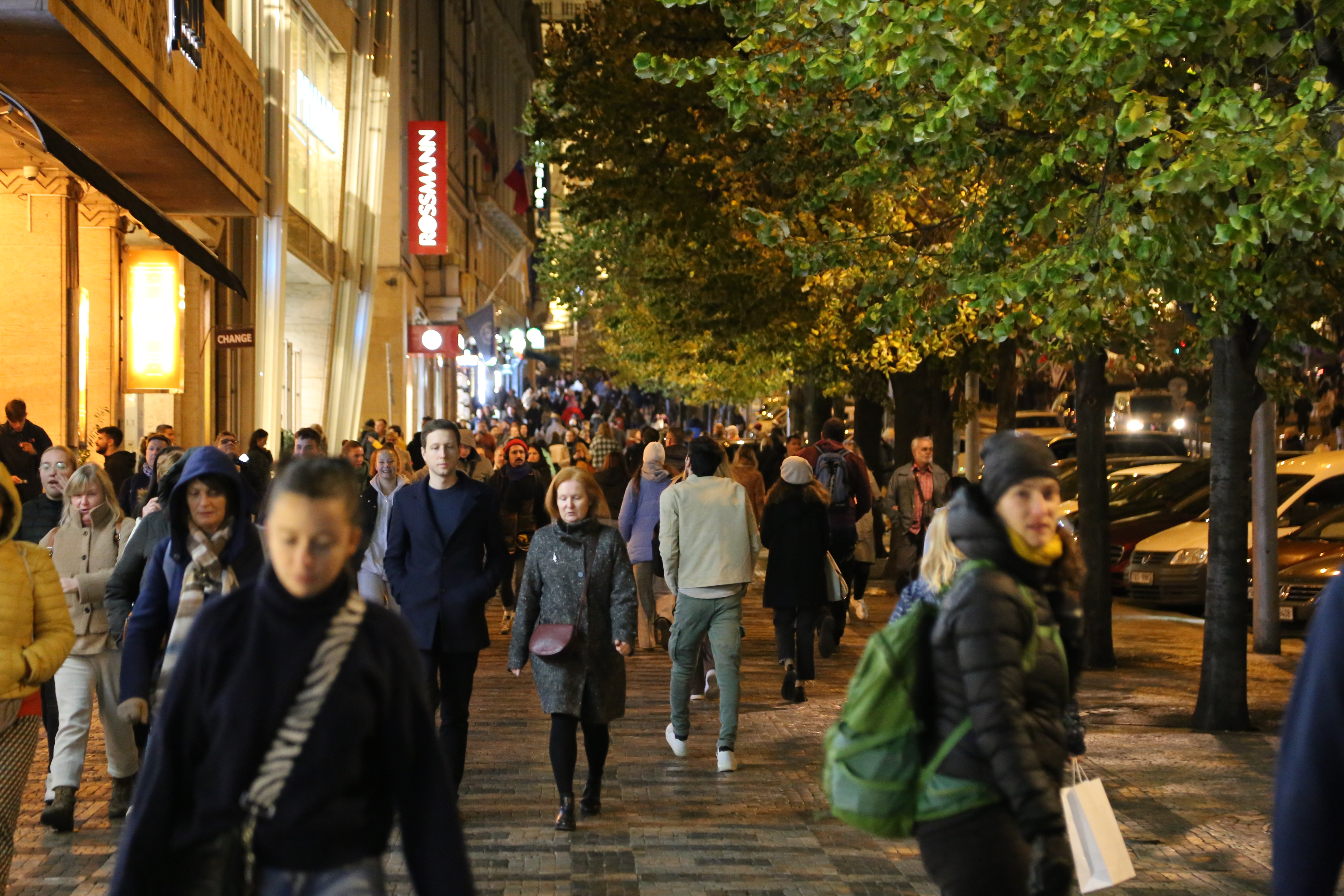
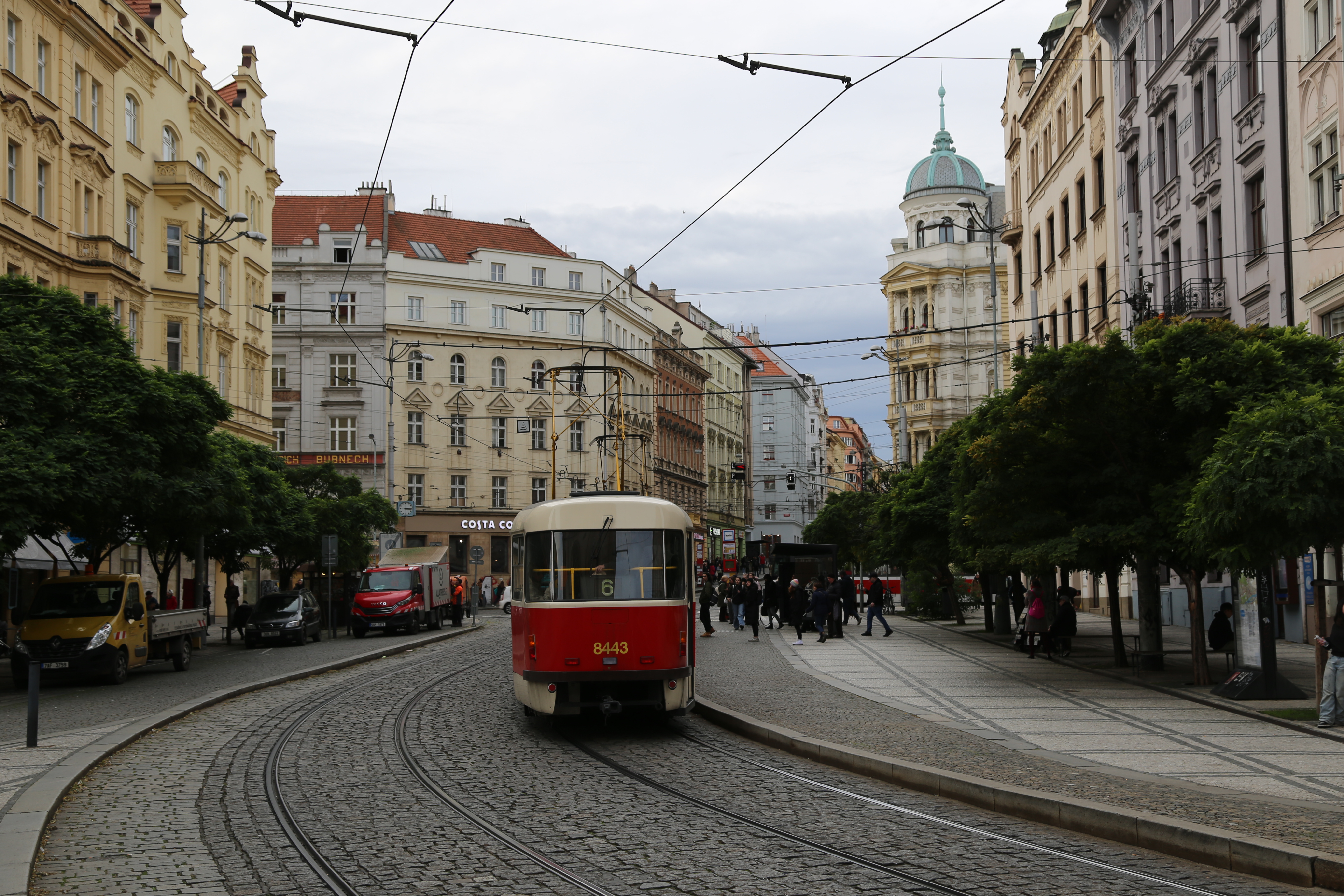
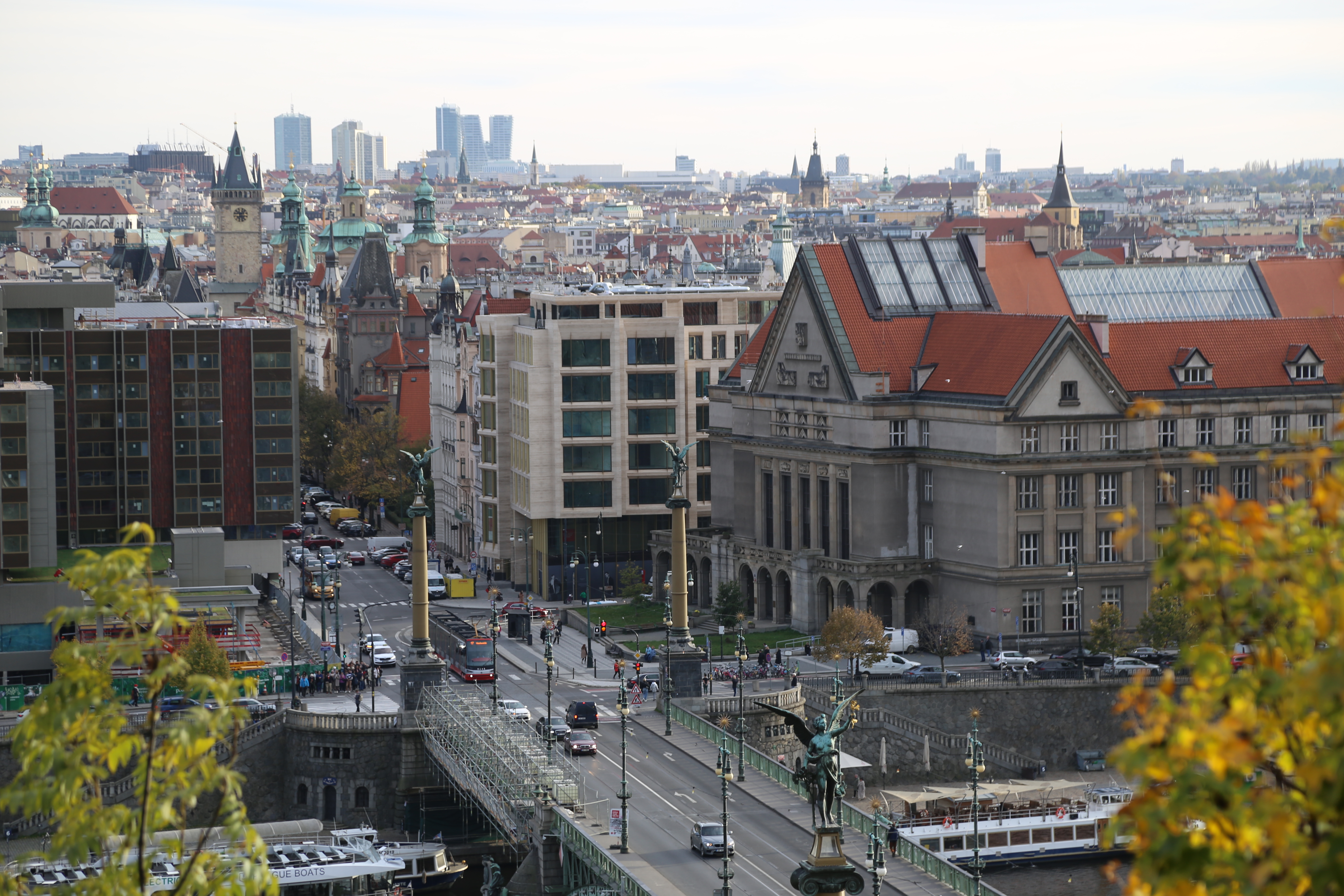
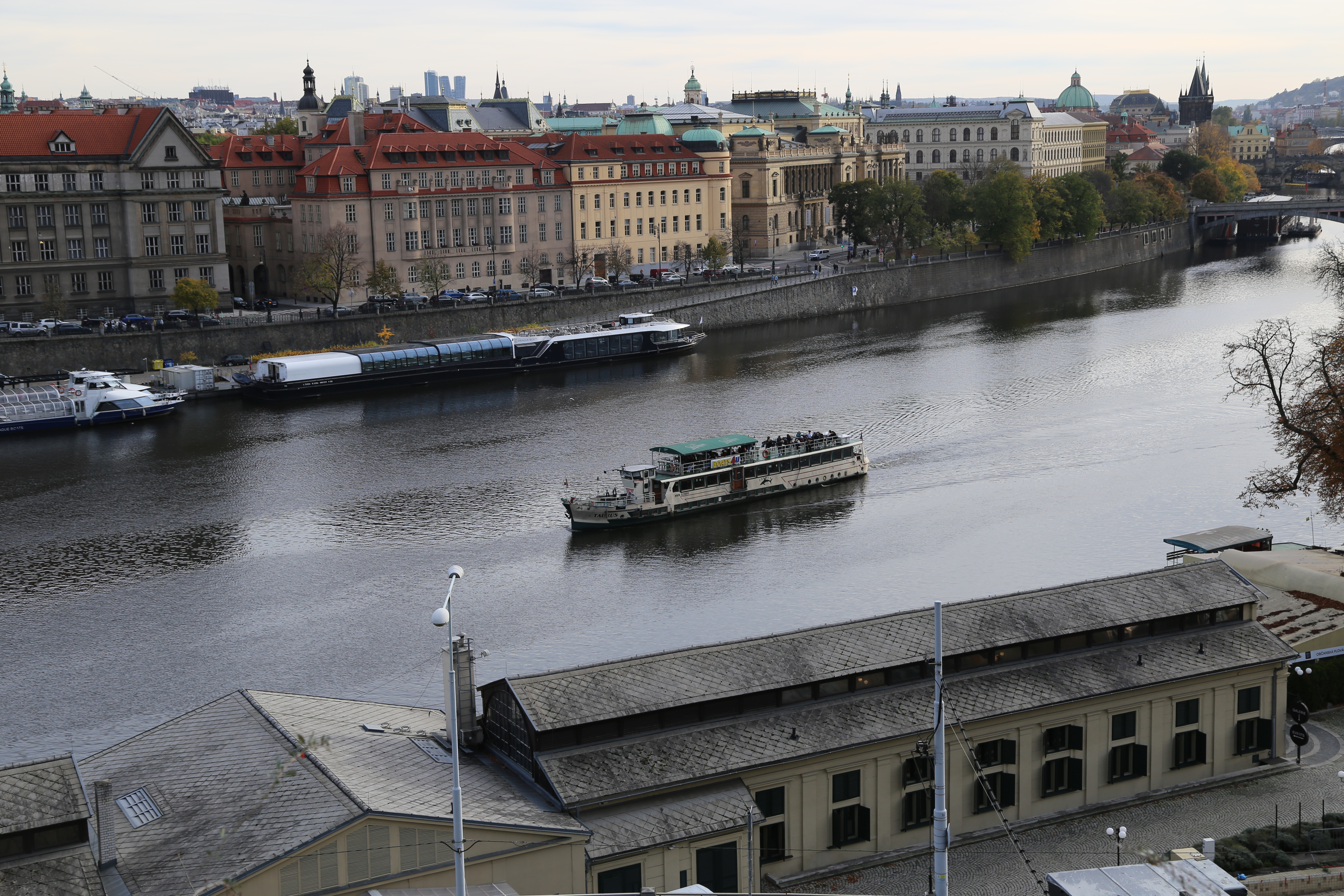
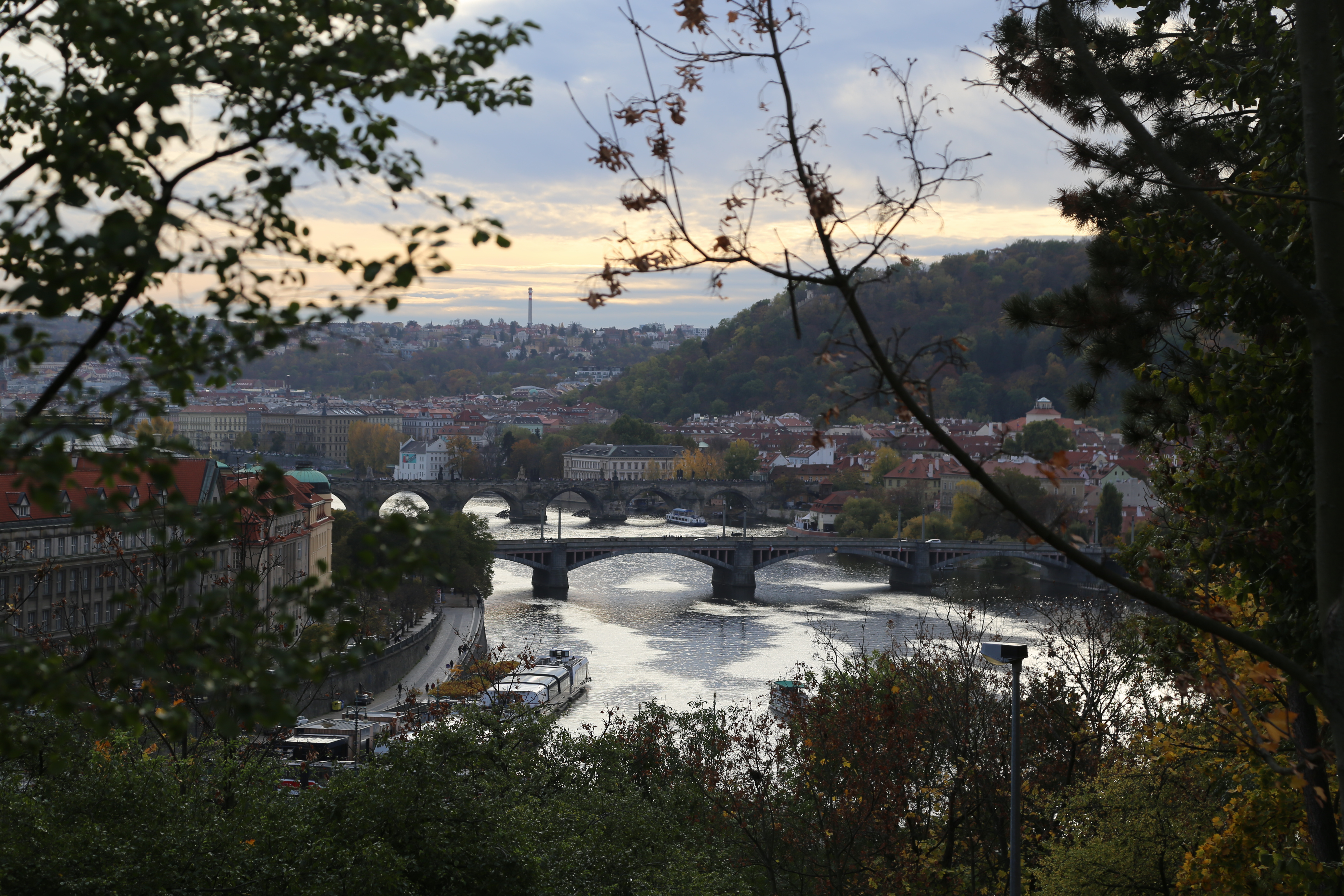
Magnifique, décidément européenne mais avec sa propre touche d’originalité, nous y avons même rallongé notre séjour de 4 à 5 nuits. Prague est une ville d’ampleur faite de nombreux quartiers, certains plus classiques, d’autres plus éclectiques. Toutefois, ce qui nous a saisi, c’est l’abondance d’espaces verts et pas des parcs manucurés, de belles étendues d’arbres matures traversées par des sentiers. La ville, spécialement sa banlieue, semble construite à même la forêt.
Autant dire qu’il fait bon s’y promener.
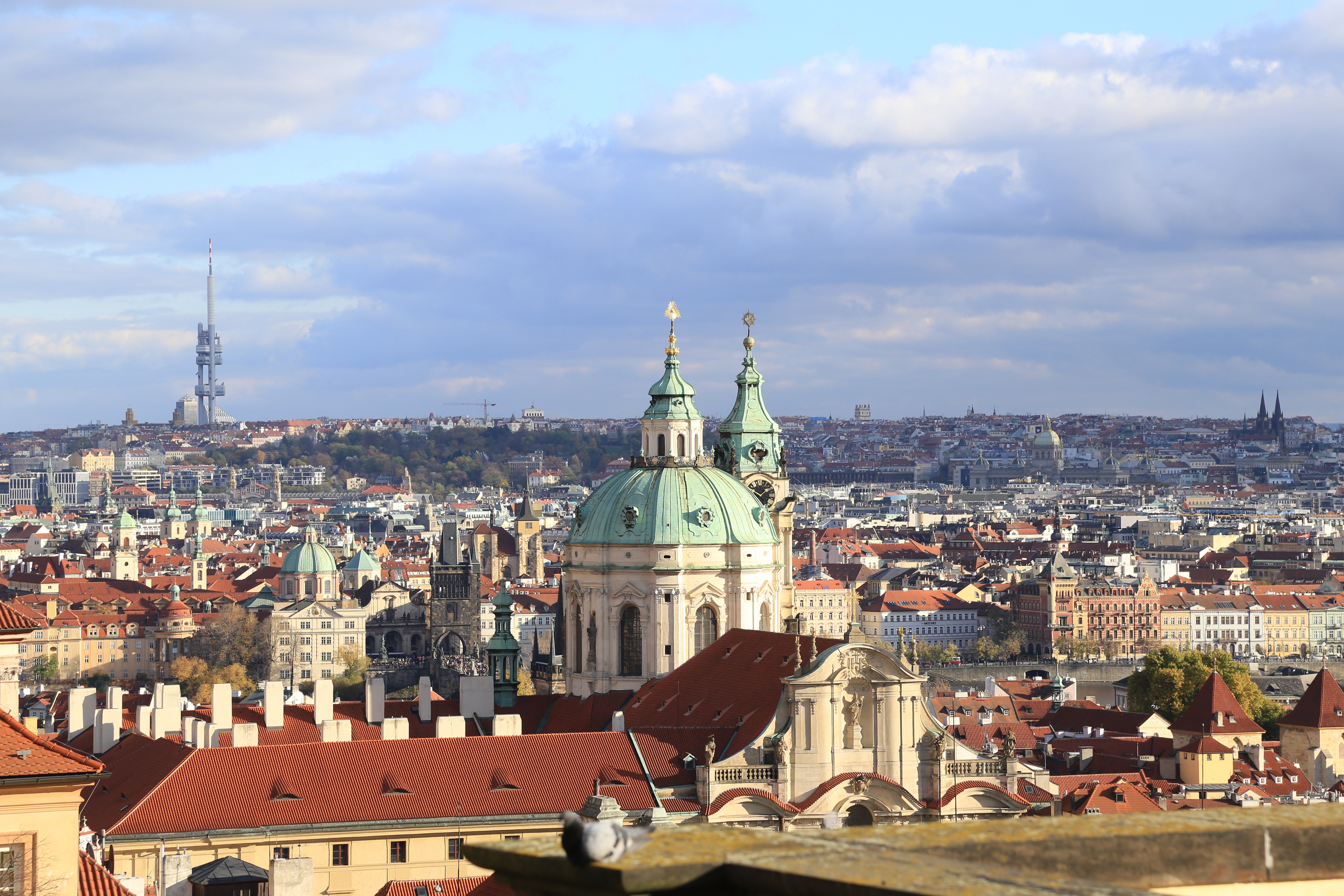
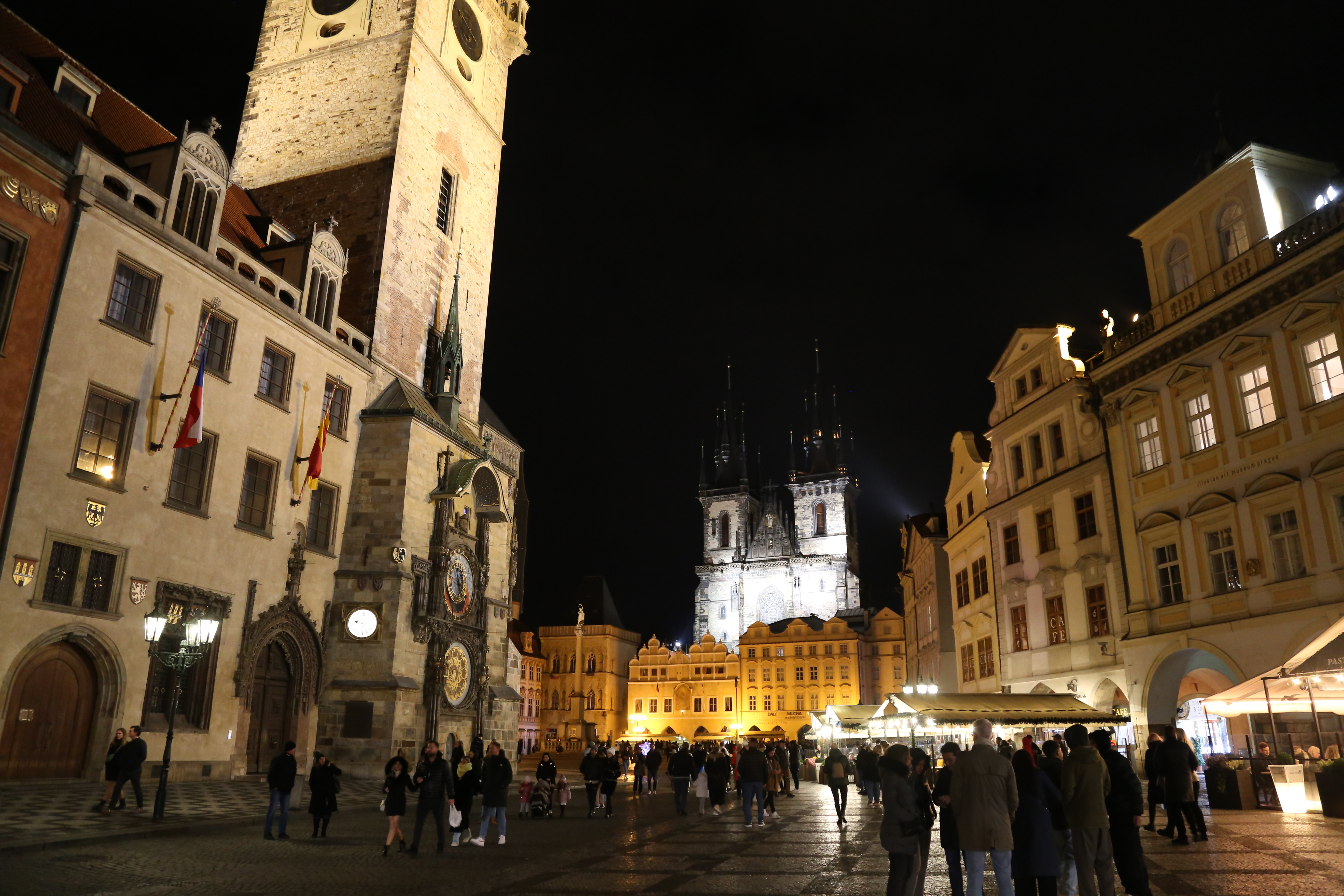
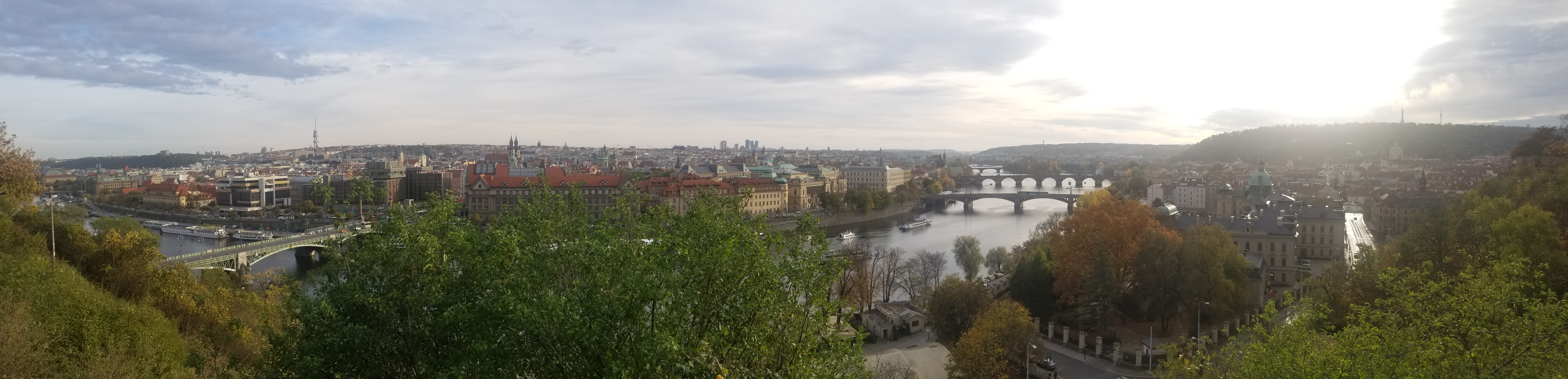
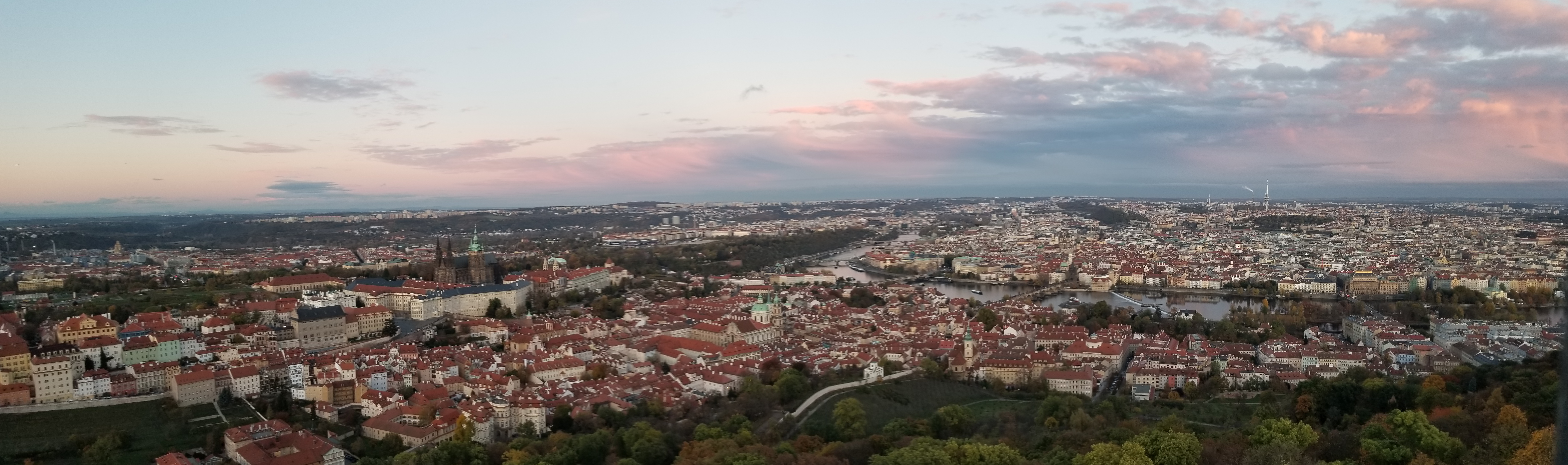
La vielle ville est sans grande surprise majoritairement occupée par de la boutique de souvenirs et autres restaurants chers (c’est la norme). Elle reste cependant tout à fait impressionnante, surtout depuis ses ponts, qui donnent des coups d’oeils sur l’imposant chateau, les rives du fleuve et d’innombrables bâtiments centenaires. Pour peu qu’on se donne la peine d’en sortir, on est récompensé par de la belle architecture, d’intéressants commerces, de fantastiques restaurants (et bars) et de la verdure. À chaque heure, Audrey s’exclamait devant la beauté de l’endroit (architecture, verdure et restaurants …. c’est son truc).
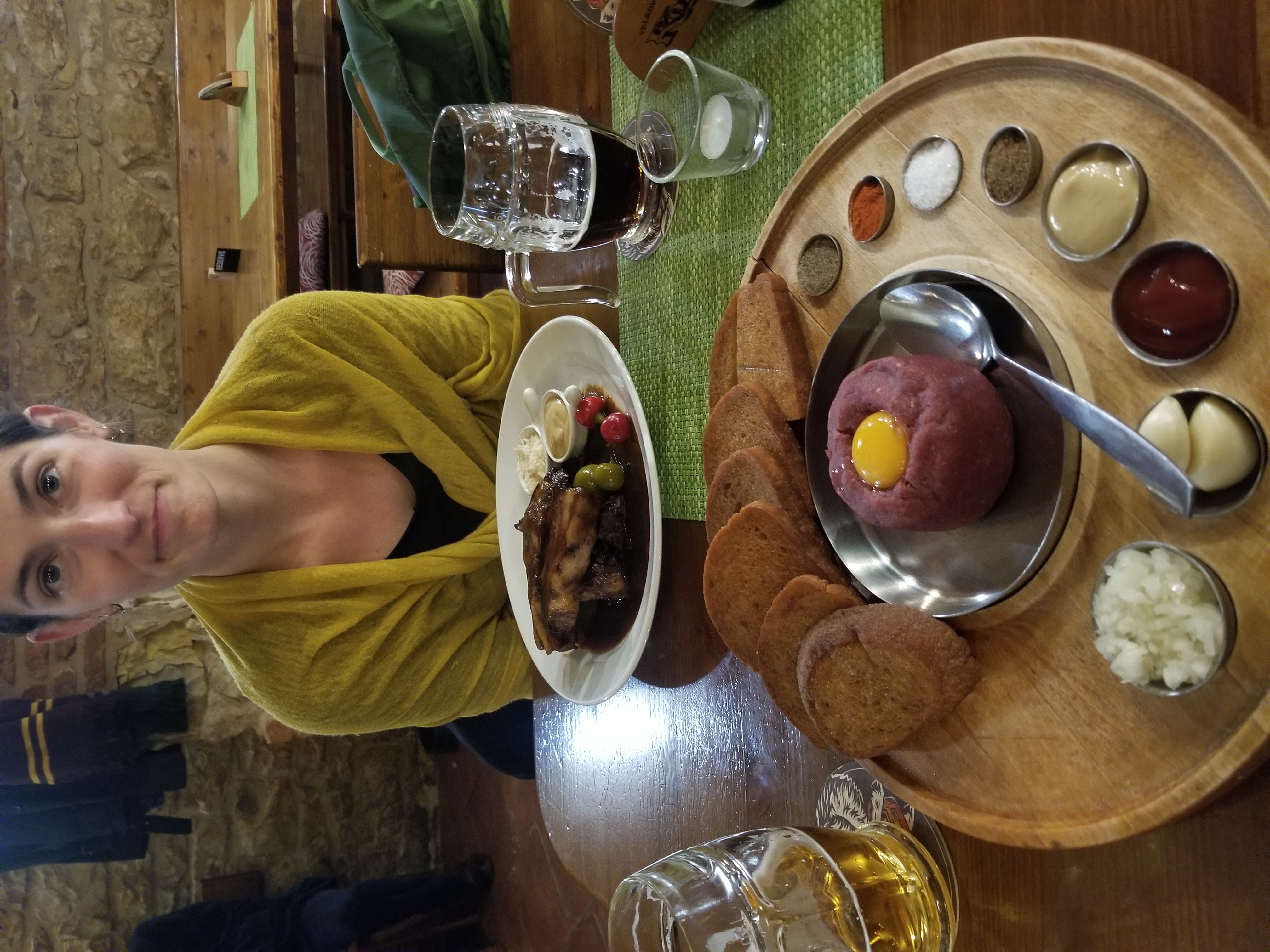
Ce tartare m’a plutôt incommodé
Du nord au sud et d’est en ouest, nous avons donc marché Prague des heures durant pour en découvrir tout ses petits coins. Le soir venu, nous prenions place dans l’un des innombrables bars de la ville (j’en ai jamais vu autant) pour l’apéro et après, le resto en mode bouffe tchèque (de viande, de féculents et sauces). Heureusement que les microbrasseries avec un peu d’originalité sont parvenues à prendre racine dans la culture de la bière tchèque, car la bonne vielle pilsner, on finit par se tanner.
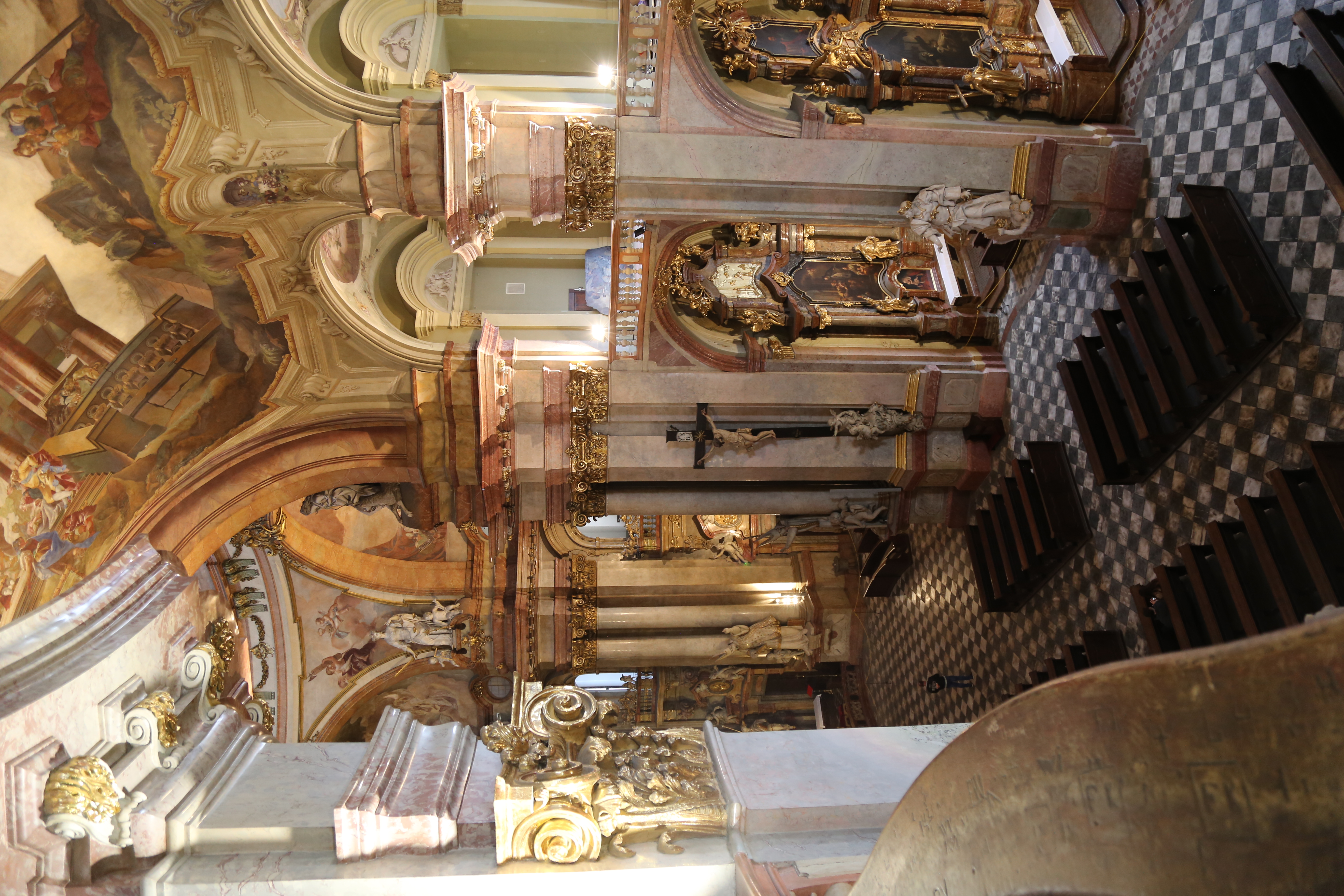
Mis à part une petite visite du chateau, pas de musées ni de ces fameux concerts / opéras. Avoir eu plus de temps, peut-être qu’on aurait dépensé les demies-journées nécessaires. Or, nous étions à Prague pour la ville et les villes se vivent à pied.
Toujours à la fin d’un voyage il y a un moment où Audrey et moi regardons les vols de départ à l’aéroport et rêvons de spontanément choisir une destination et s’y envoler. Malheureusement , ceci se ferait en dépit de nos obligations personnelles et professionnelles au Québec. Rallonger ses vacances à la toute dernière minute, ce n’est possiblement donné qu’aux retraités et encore.
Afin d’émuler un brin l’expérience, nous avions choisis de ne pas planifier notre prochaine destination après le Turkménistan et de voir ce qui s’offrait à nous sur le tableau des départs à Istanbul. Dans les faits, notre idée était déjà un peu faite, car cédant à la curiosité, nous avions un peu regardé le genre de destination couvert par l’aéroport.
Le sultanat d’Oman est passé très proche d’être l’élu de notre prochaine aventure mais au retour du Turkménistan, Audrey avait émis la volonté d’aller quelque part ou nous pouvions marcher librement et où la femme n’était pas aussi scrutée. Je la comprends.
Dans un petit coin plus tranquille de l’aéroport, nous avons posés nos sacs, j’ai ouvert mon ordinateur, me suis connecté à internet et nous nous sommes mis au travail. 30 minutes plus tard, les billets étaient achetés et les réservations faites. Il fallait changer d’aéroport, mais ce n’était qu’un tout petit tracas.
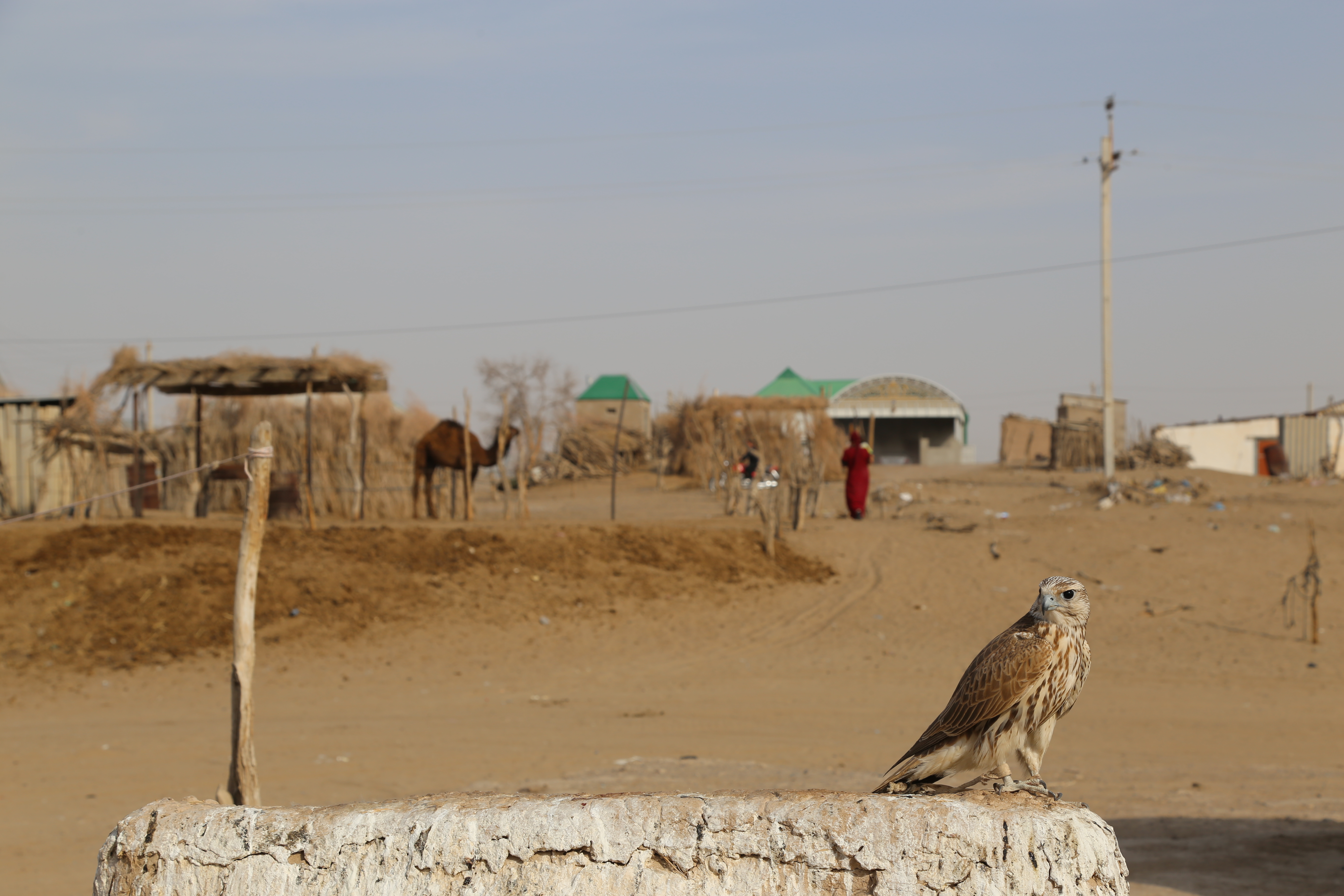
Réveillés de bonne heure, nous nous sommes enfilés un déjeuner rapide pour ensuite reprendre la route vers Ashgabat. Deux arrêts à d’autres cratères (l’un rempli d’eau et l’autre d’un peu de boue) et une tentative infructueuse de trouver un ami de Voldymyr pour qu’il nous présente ses faucons de chasse ont fait que l’on est arrivé quand même tard en ville. À peine de le temps de faire le plein de souvenirs et l’on nous reconduisant à notre hôtel. Nous avions un petit deux heures avant de rejoindre notre guide au restaurant. Cette fois-ci, pas de chauffeur, nous tenions à nous y rendre à pied. Un peu à reculons, elle a acquiescé à notre demande (Ashgabat est truffée de caméra de toute manière, alors les touristes peuvent s’y promener seuls).
Il n’y paraît par sur la carte, mais la ville est absolument immense. Malgré un départ hâtif, il nous a fallu terminer le trajet en taxi pour être à l’heure. Le repas a été fort agréable et bien arrosé, notre guide partageant en fascinants détails sa vie au Turkménistan et ses quelques tentatives infructueuses de quitter le pays pour s’établir ailleurs. Le retour, nous sommes parvenus à le couvrir à pied sans trop de problème vu que nous n’avions plus de contrainte temporelle.
J’aurais adoré rester une ou deux journées de plus ici pour explorer la ville un peu plus en autonomie. Or, notre vol de retour vers Istanbul quittait vers 4h du matin. Voldymyr est passé nous prendre à notre hôtel après une petite sieste d’une heure pour aller nous conduire à l’aéroport en forme d’aigle. Demain matin, il reprenait son travail de technicien à l’usine d’embouteillage d’eau. Les adieux furent sincères et accompagnés d’un généreux pourboire pour nous deux accompagnateurs qui, il faut le dire, ont fait un excellent travail.
Ici se termine donc une aventure débutée en 2017. Le Turkménistan, dernier pays de l’Asie Centrale et non le moindre était maintenant visité. Dans certains aspects tout à fait particulier, il était néanmoins tout à fait asie-centralesque (pour reprendre les mots de Audrey); sa visite, une expérience inoubliable aura été ponctuée de moments de nostalgie ou nous nous remémorions nos nombreuses journées passées dans cette région de l’autre bout du monde, unique, riche et fascinante.
Je m’attendais en quelque sorte à une expérience analogue à la Corée du Nord. Les effigies du président à tout va et l’omniprésence de la propagande n’ont pas manqués de nous rappeler le régime politique dans lequel nous nous trouvions, mais au delà de ça, la société turkmène peut se vanter d’être bien plus accueillante. Au lieu de monuments et de musées à saveur belliqueuse et rancunière, tout est toujours dans le positif. Le Turkménistan veut être votre ami. Pourquoi ne s’ouvre-t-il pas davantage au monde dans ce cas ? C’est peut-être là qu’on tombe réellement dans les dessous plus sombre de la dictature: les élites veulent garder le pouvoir.
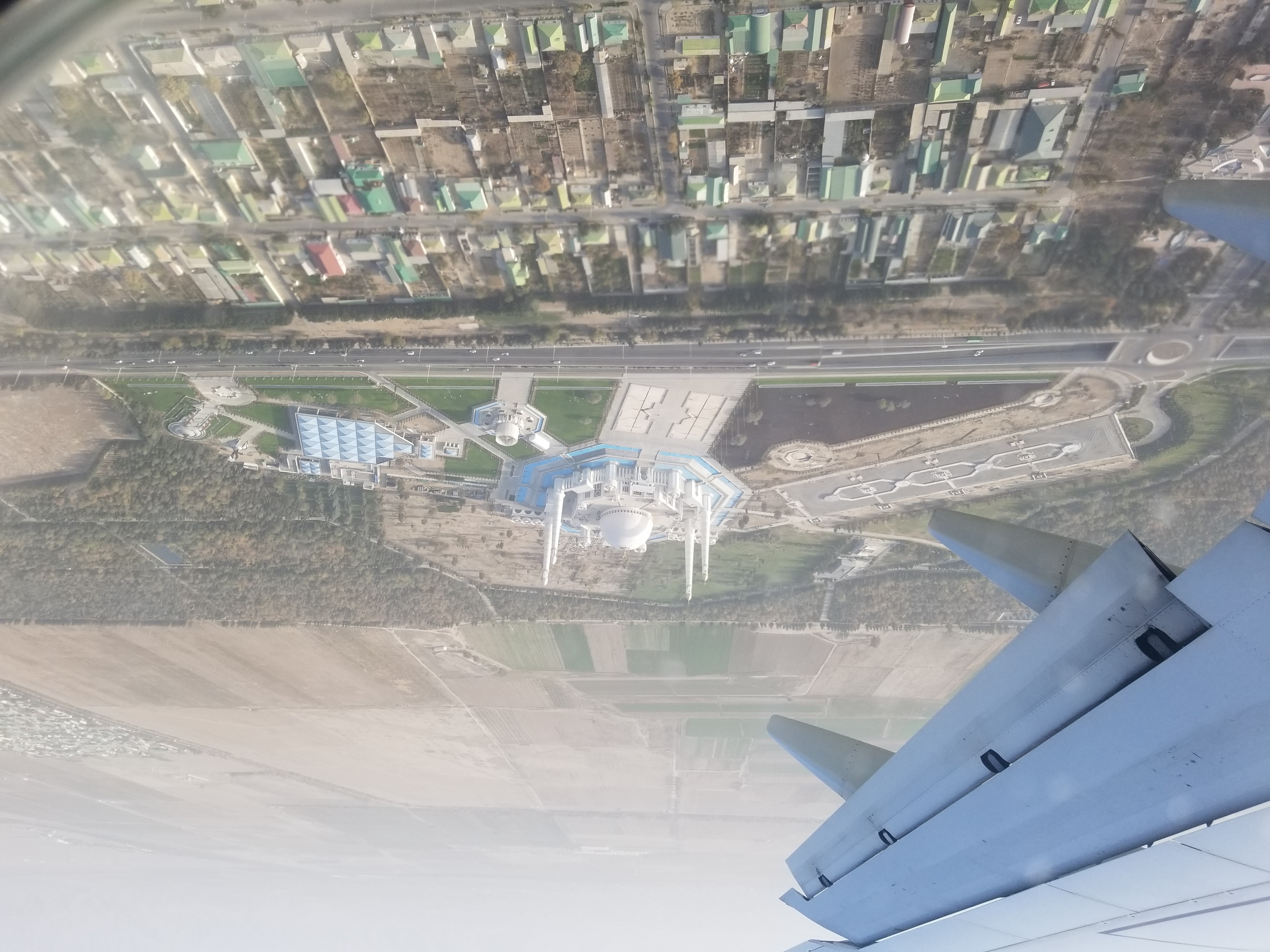
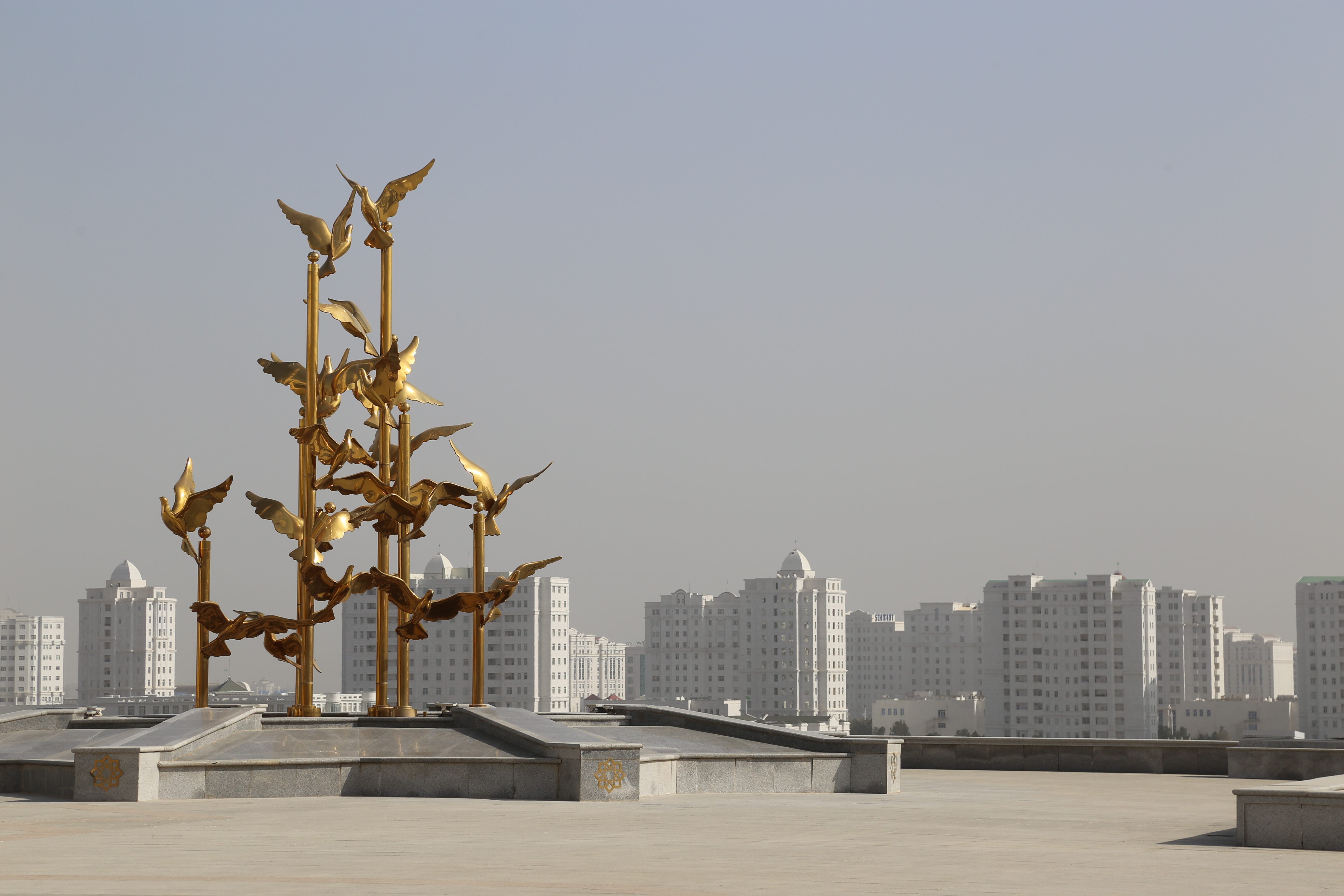
Volodymyr nous attendait à la sortie de l’aéroport d’Ashgabat. Encore une fois, j’ai été très impressionné par sa devanture d’aigle déployant ses ailes (forme qui pourrait compliquer un futur projet d’extension). En après-midi, nous allions quitter pour Darvaza mais avant, une nouvelle dose de monuments et de places dans la capitale.
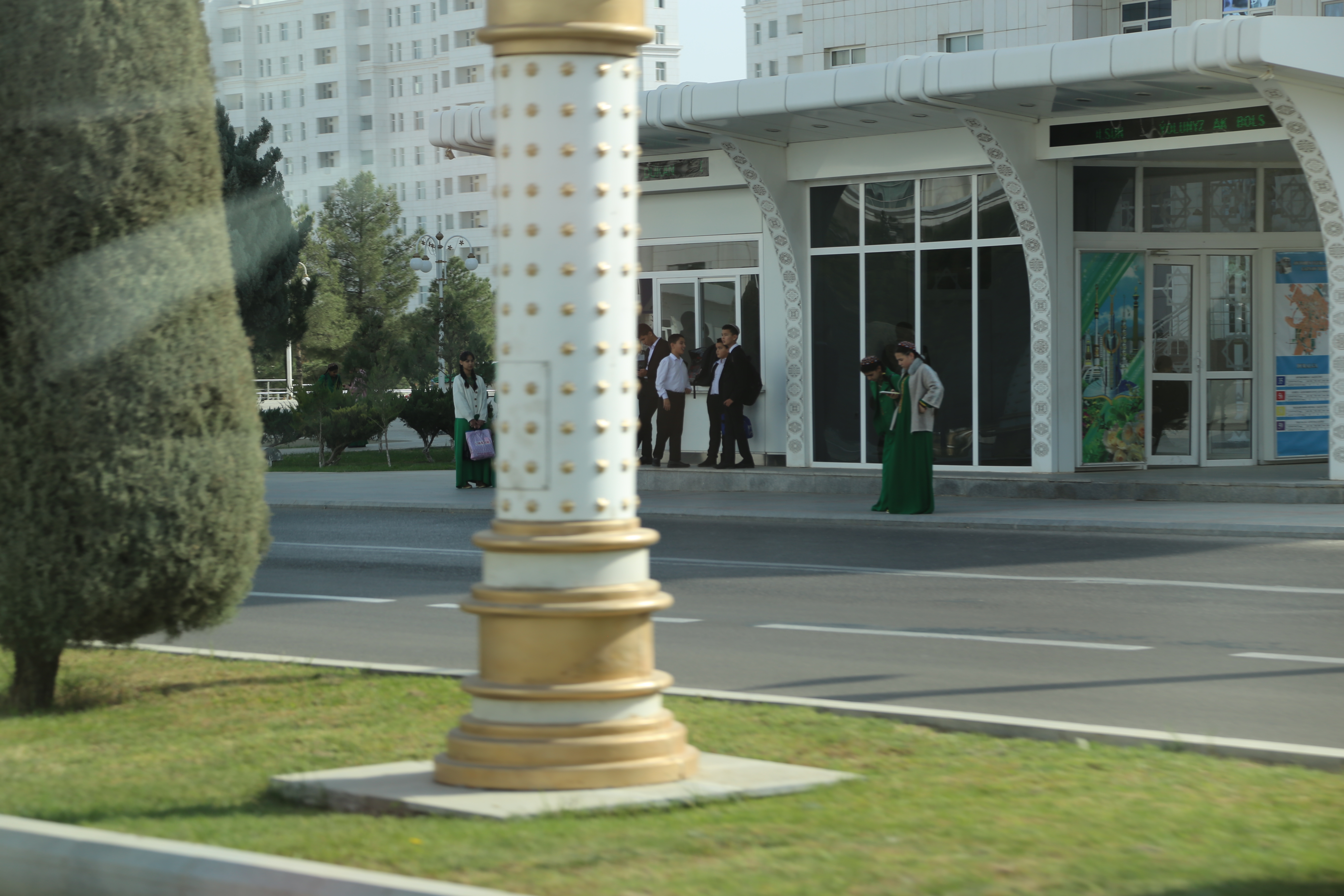
Un arrêt de bus, remarquez les uniformesVue depuis le palais des marriages
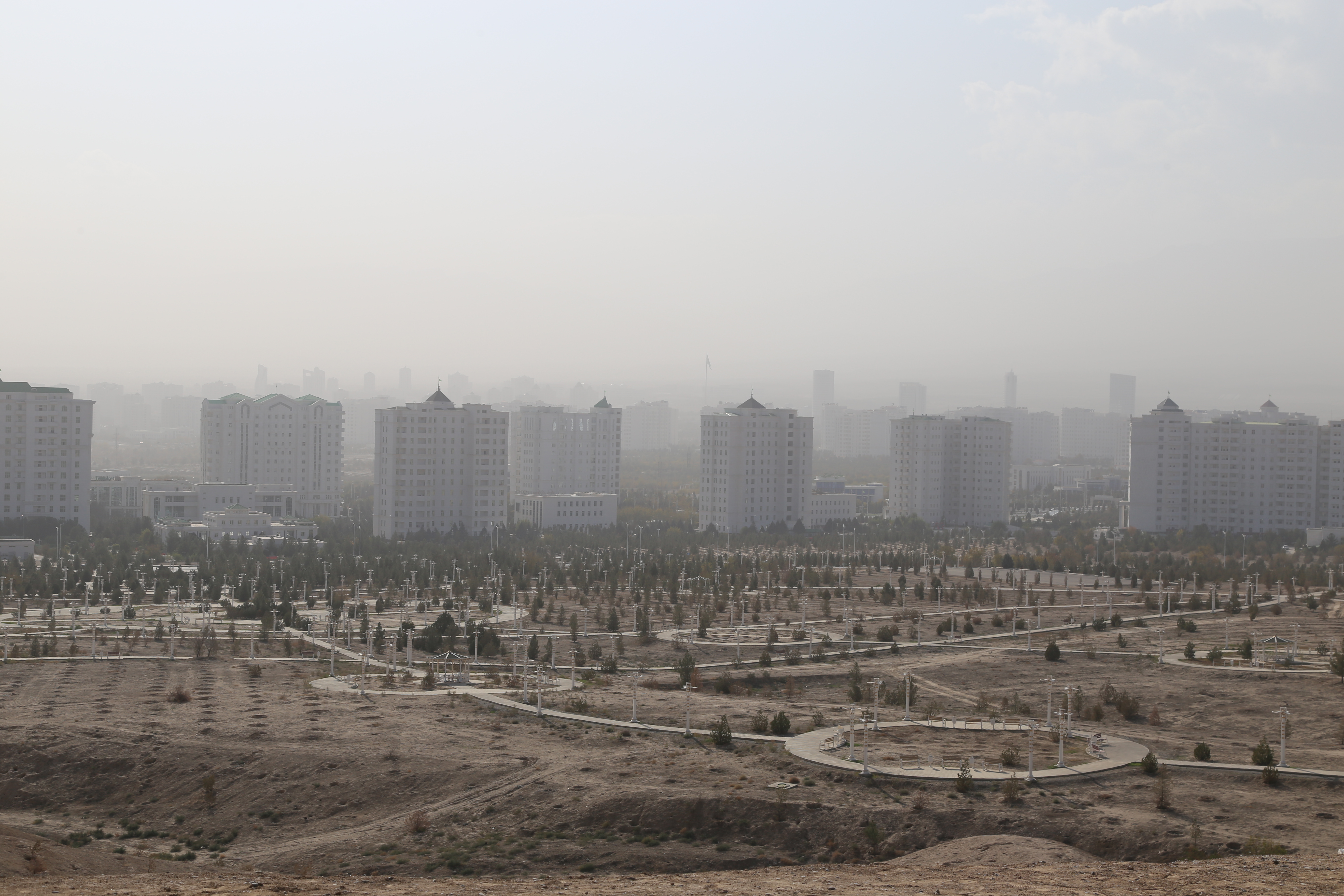
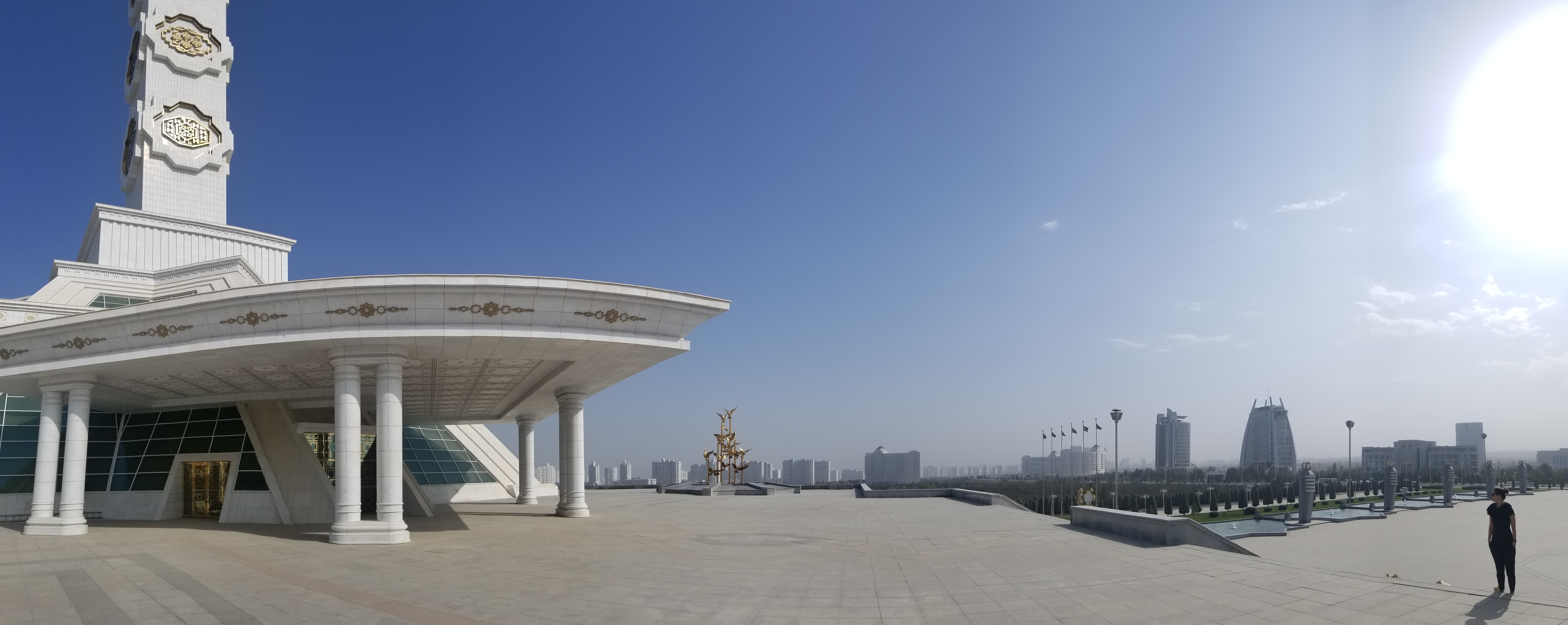
Le palais des marriages et l’endroit dans la ville où tous les couples, après avoir faits leurs voeux, viennent signer le registre civil. Il domine le paysage et vous le constaterez, est d’une forme tout à fait inusitée. Apparemment, il contient des restaurants et des salles de banquets somptueusement décorées. Mes efforts pour convaincre Nadin d’y entrer auront été vains.
Le palais des marriagesVue depuis le palais des marriages
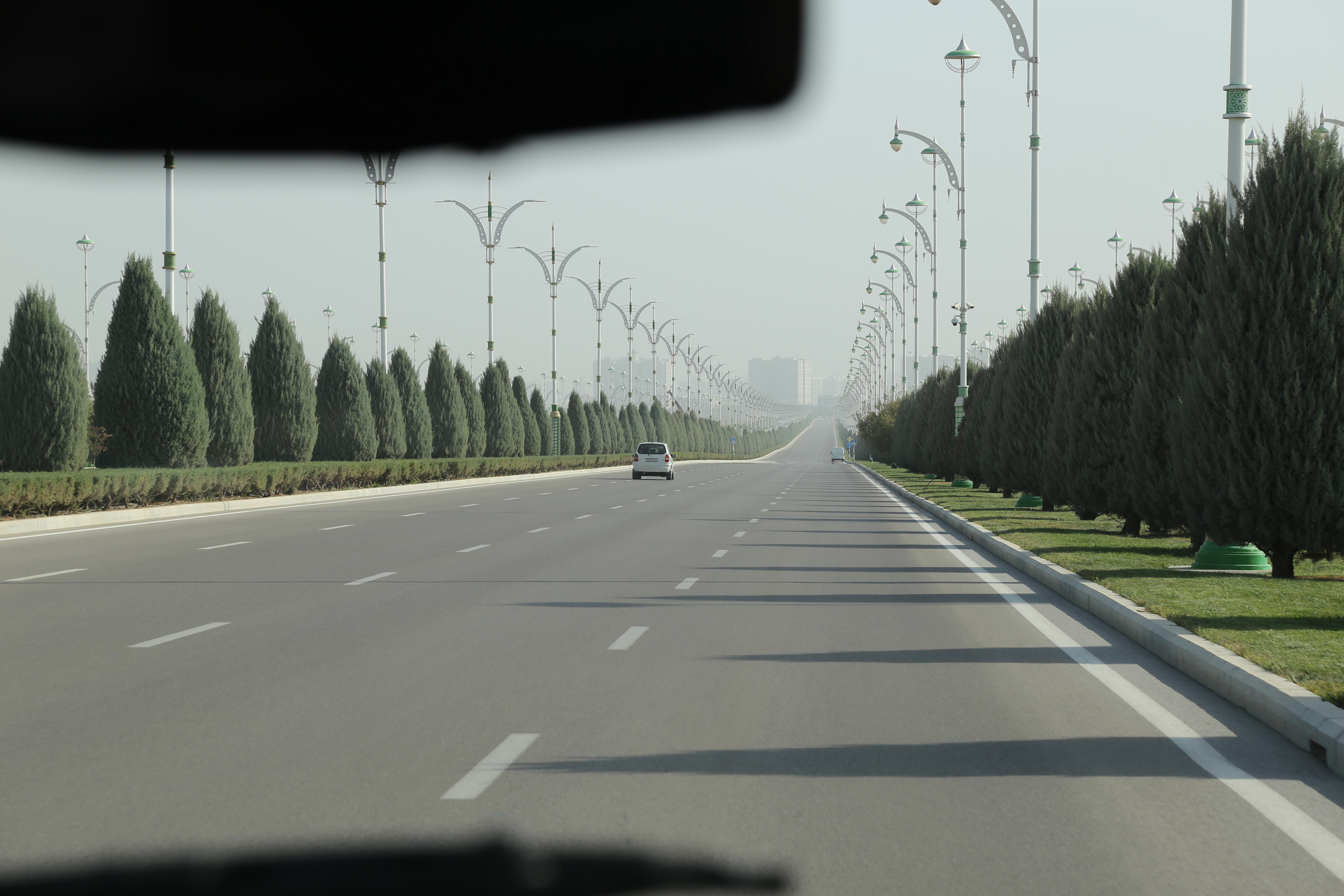
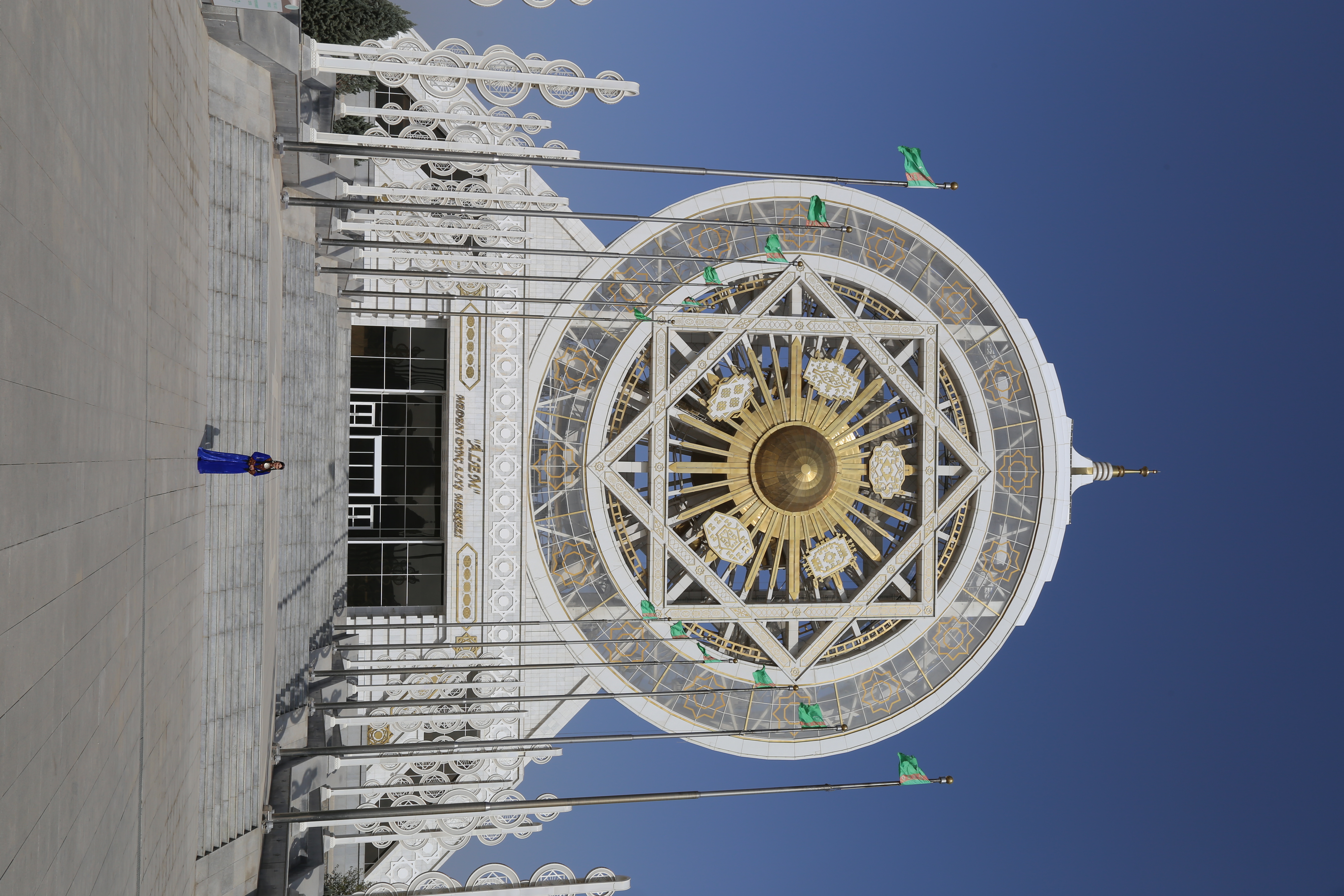
Quelques grands boulevards vides plus loin, l’on trouve le Centre culturel d’Alem. En son centre, la plus grande roue intérieure au monde … en panne depuis un certain temps. La place qu’il surplombait, absolument massive, donnait sur le parlement turkmène.
Place devant le Centre culturel d’Alem
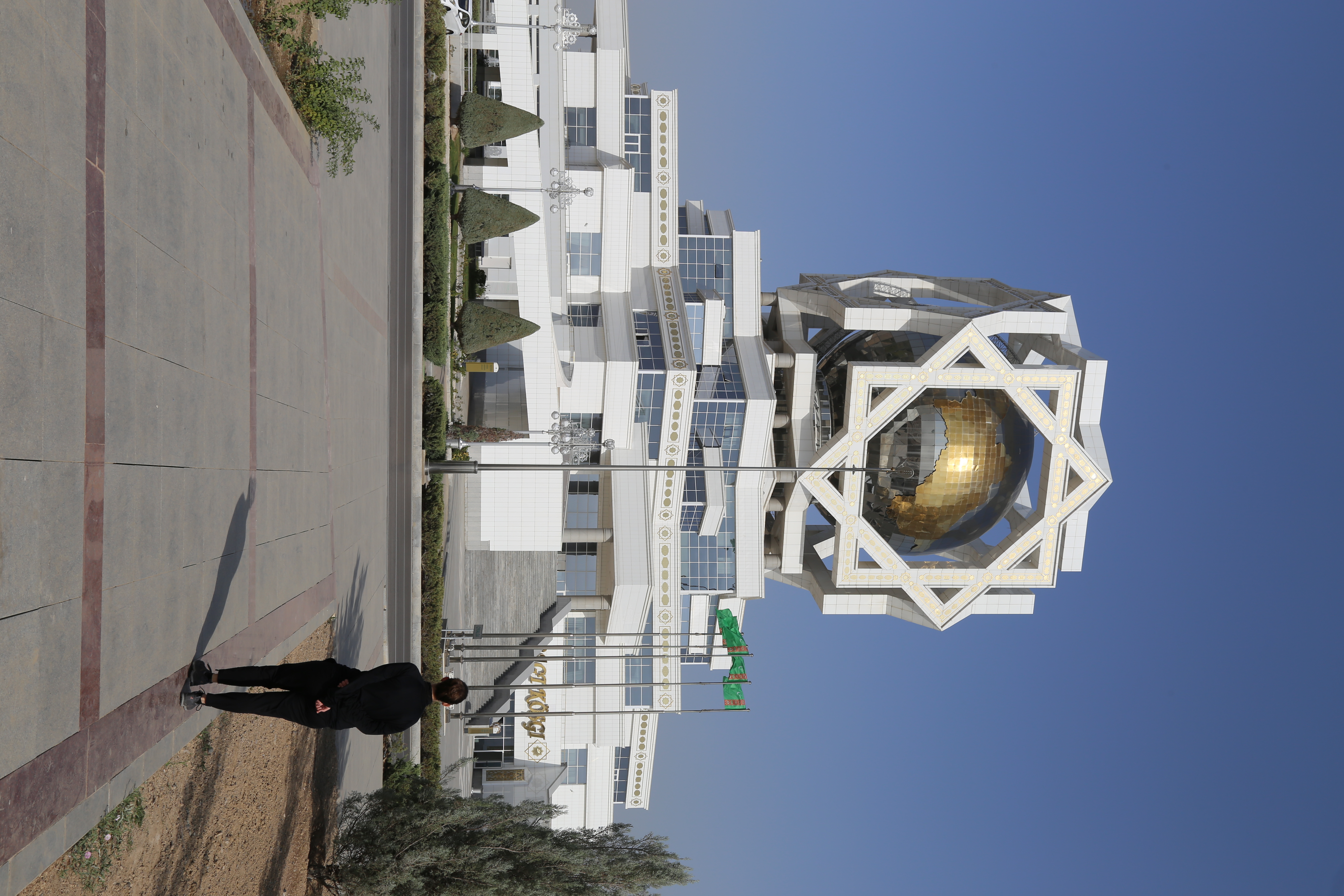
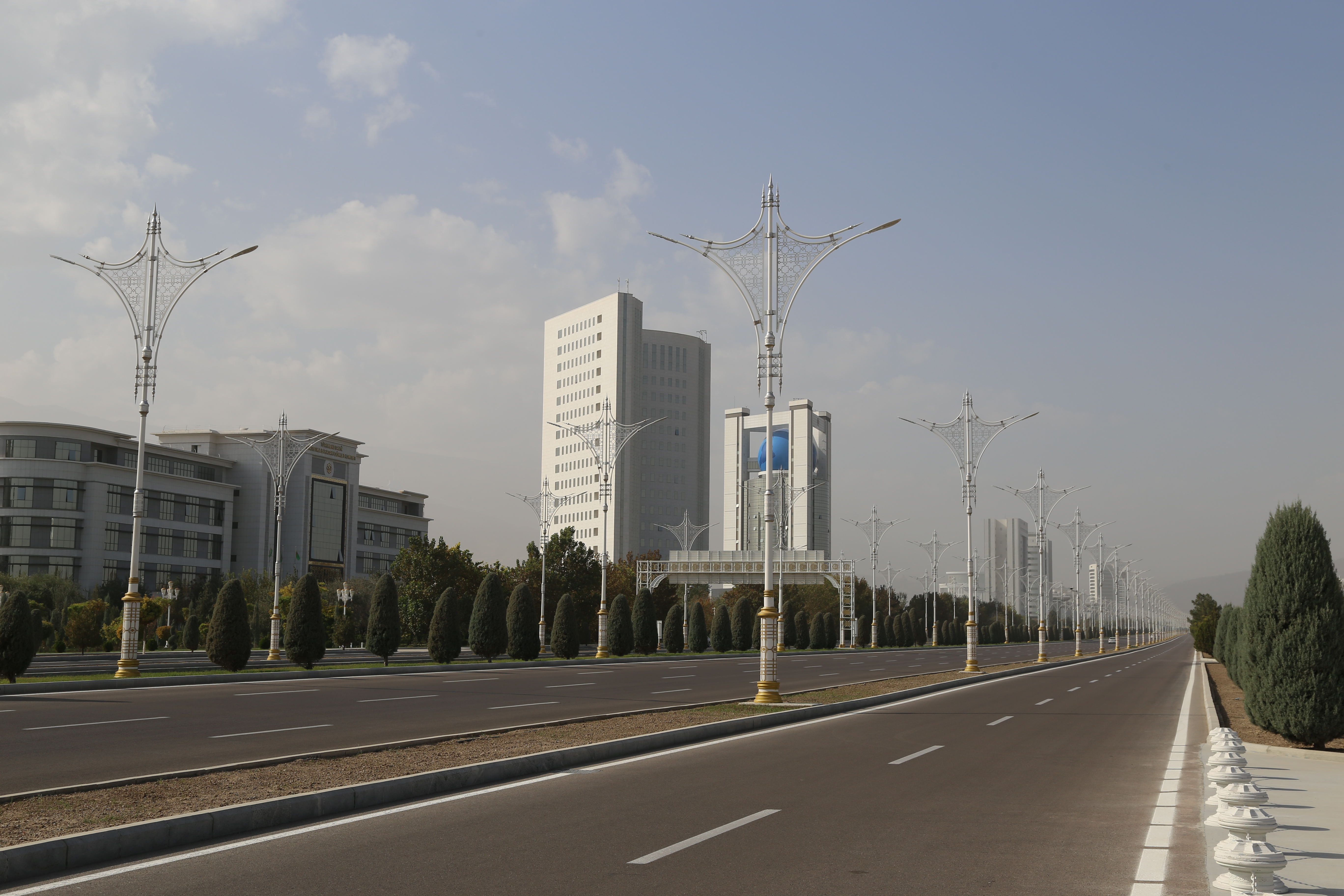
Le boulevard sur lequel était situé ce monument était en fait le principal axe gouvernemental de la capitale, on y retrouvait toute sorte de ministères et de bâtiments officiels. Mentions spéciales au ministère de l’éducation, en forme de livre ouvert et au ministère des affaires étrangères, coiffé d’un large globe terrestre.
Grand boulevard de ministères à Ashgabat, éducation et affaires étrangères sont visibles.
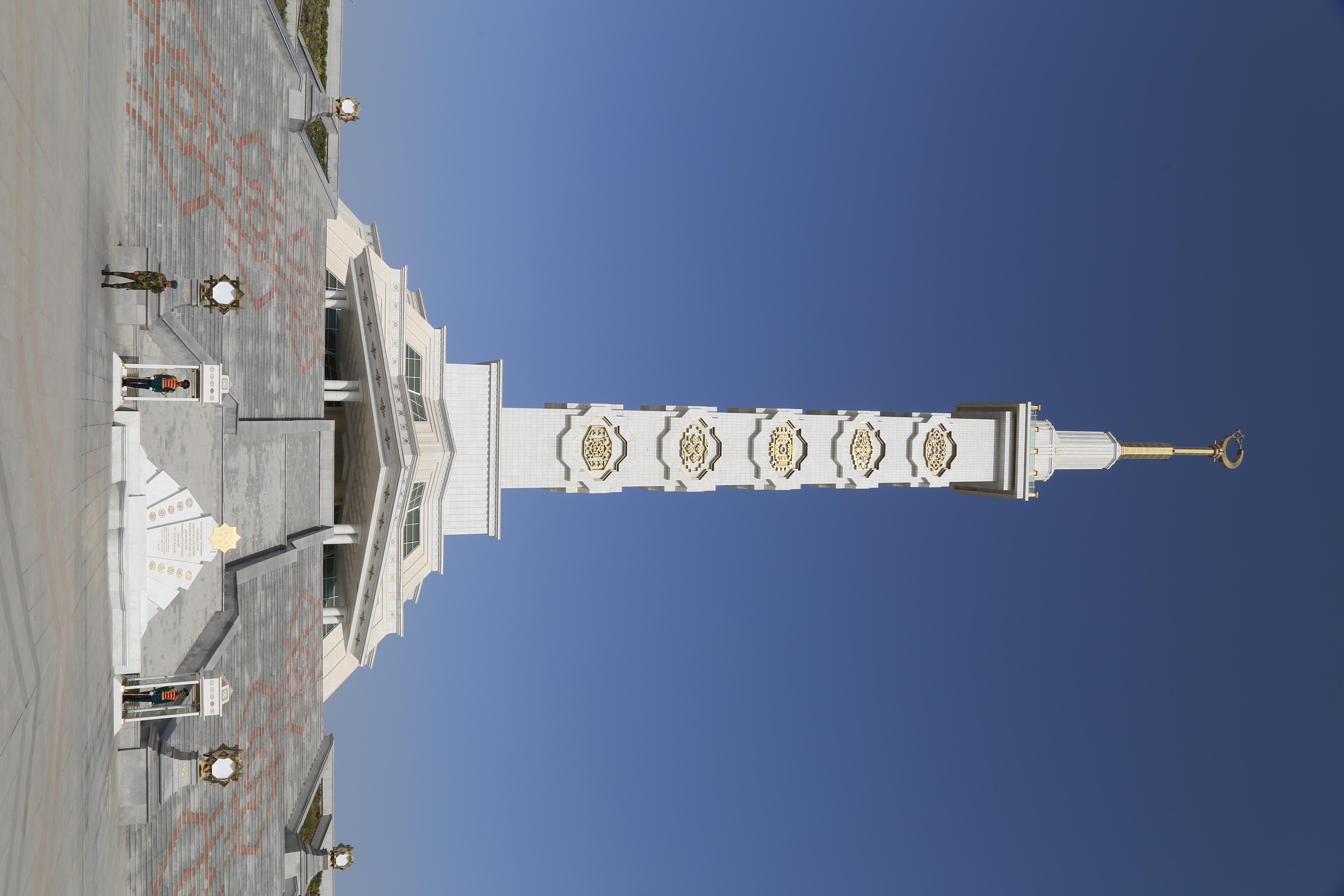
Devant le monument de la constitution (dont l’intérieur n’était encore une fois, pas accessible) se trouvait un bâtiment sosie du parlement: le sénat. Comme pour beaucoup de monuments, des soldats montaient la garde devant. Ces soldats sont souvent de jeunes hommes en service militaire. Combien de touristes ont-ils vu passer ce jour ? Je ne serais pas surpris si nous avions été les seuls visiteurs.
Monument de la constitution
Après un copieux repas de plov, Volodymyr nous a ramassé. Pendant que nous étions à Turkmenbashi, il avait préparé toutes les victuailles pour notre expédition vers le cratère de Darvaza. Pour s’y rendre, il fallait un bon 4h de route sur une chaussée aux standards de l’Asie Centrale, c’est à dire dans un état désastreux. Notre guide et notre chauffeur n’ont pas manqués de s’excuser pour les bosses et le louvoiement entre les cratères. Je leur ait répété plusieurs fois qu’on était habitué et que comparé à la route Khorog – Dushanbe (3 jours pour faire 150 kilomètres), celle-ci n’était vraiment pas si mal.
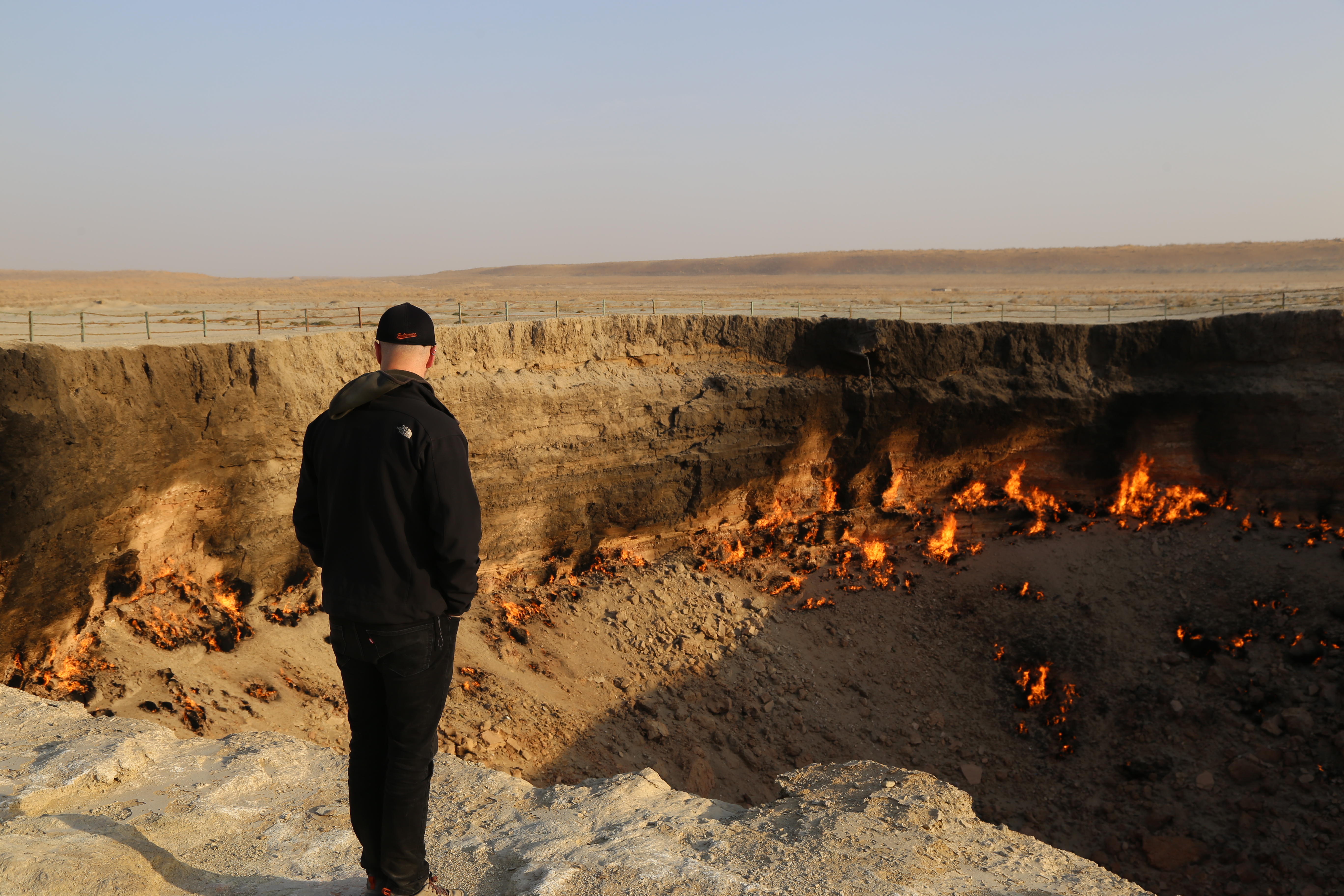
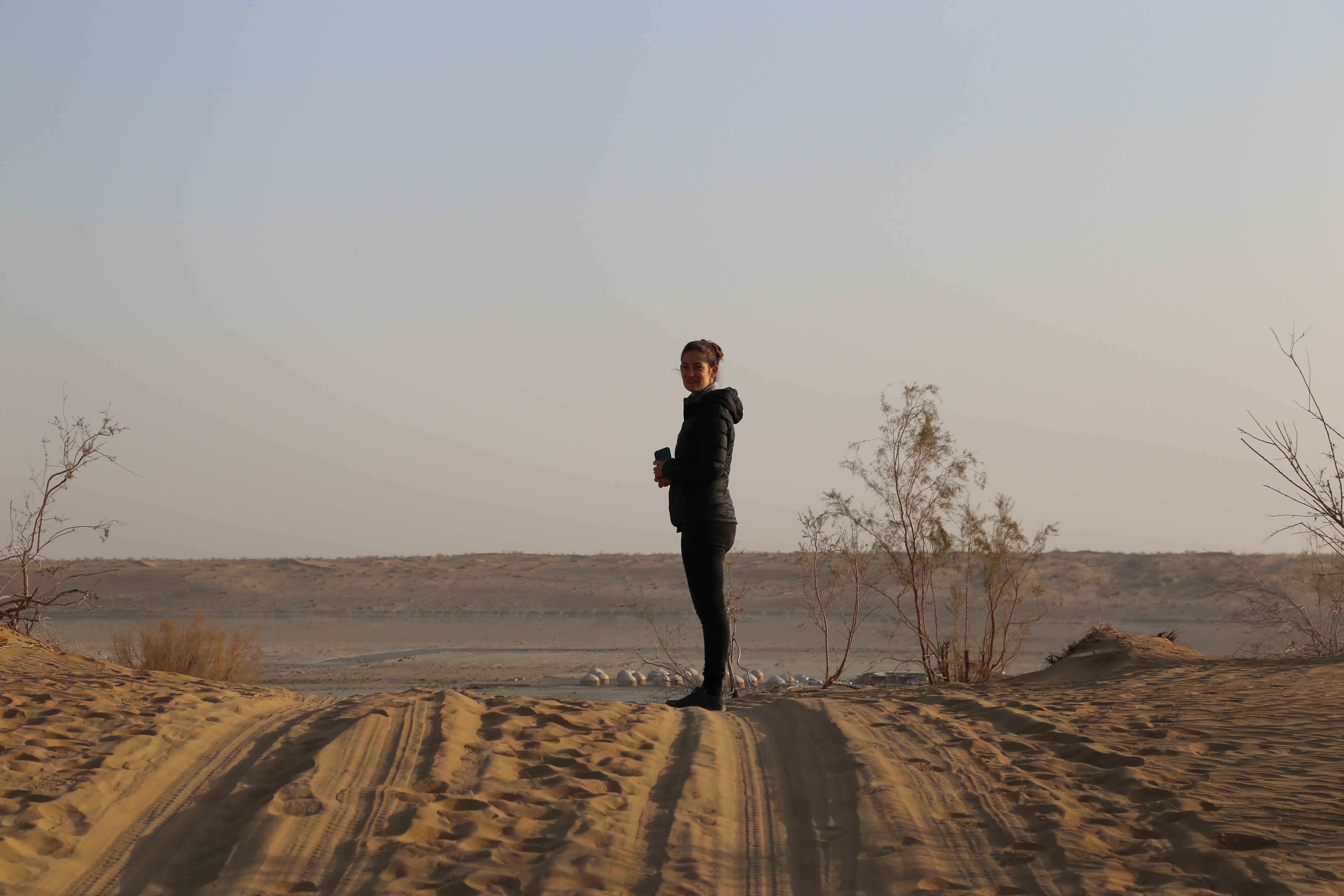
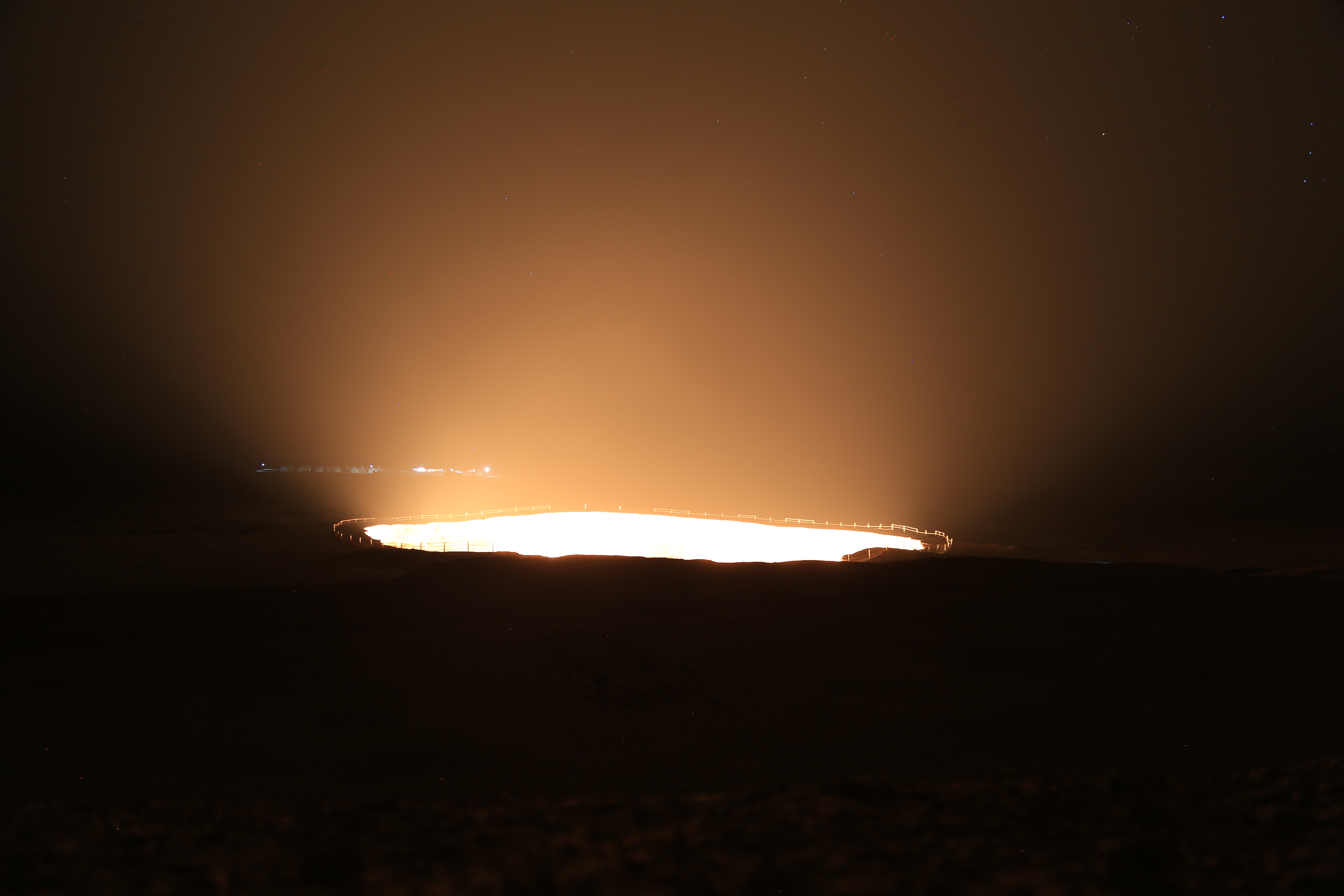
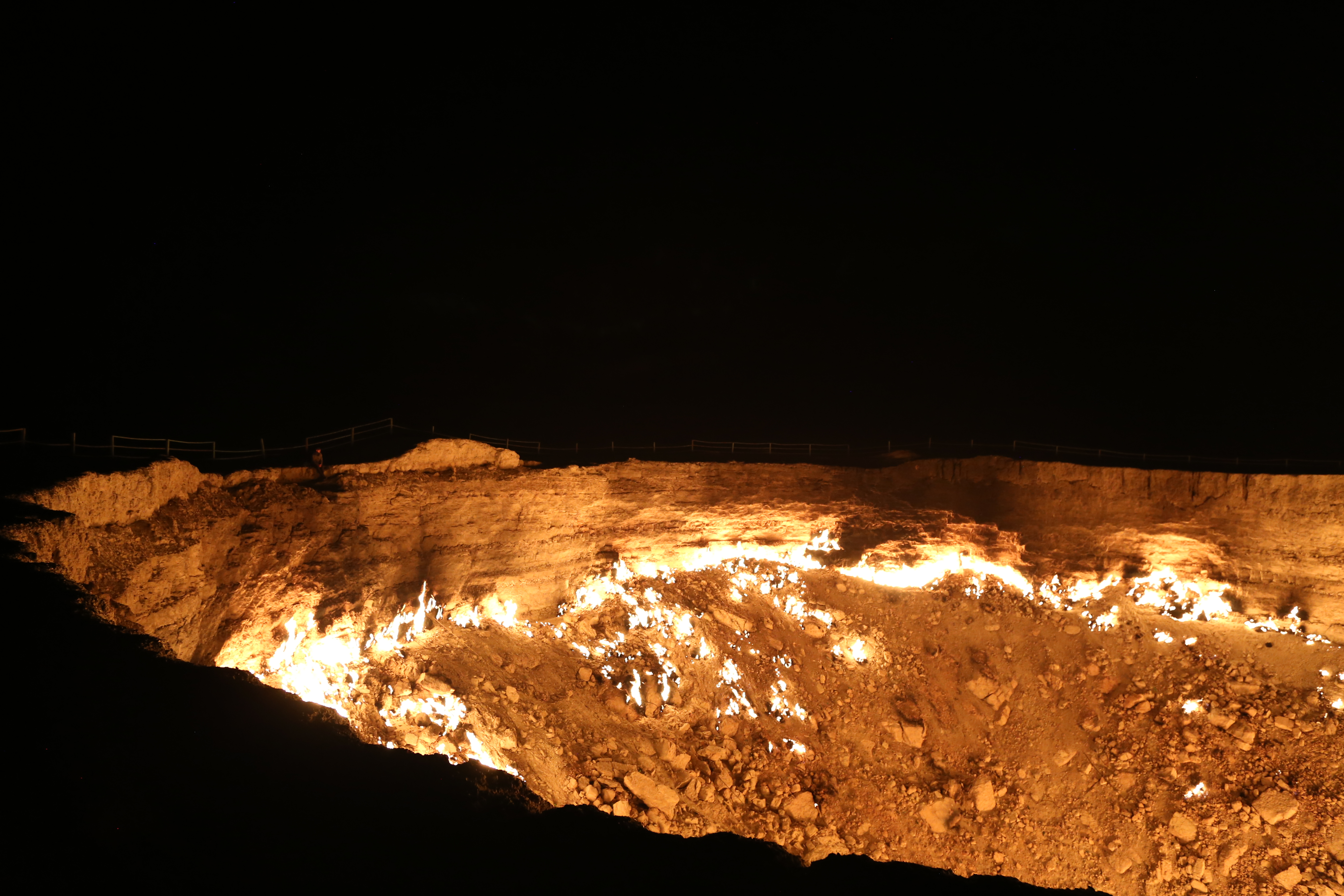
La nuit bien engagée alors que le 4×4 se baladait à vive allure dans les dunes, nous avons vu une lueur poindre à l’horizon. Il y a 50 ans, les Russes, en prospectant la région pour des combustibles fossiles, ont fait exploser un puit de gaz naturel. Devant l’importante fuite et le risque posé pour un village avoisinant, ils y ont mis feu. Croyant qu’après quelques mois, le gaz allait s’être consommé, ils ont quitté la zone. Le puit brûle encore aujourd’hui et a été adéquatement surnommé: Les portes de l’enfer. Après Ashgabat, c’est probablement l’un des endroits les plus fameux du pays.
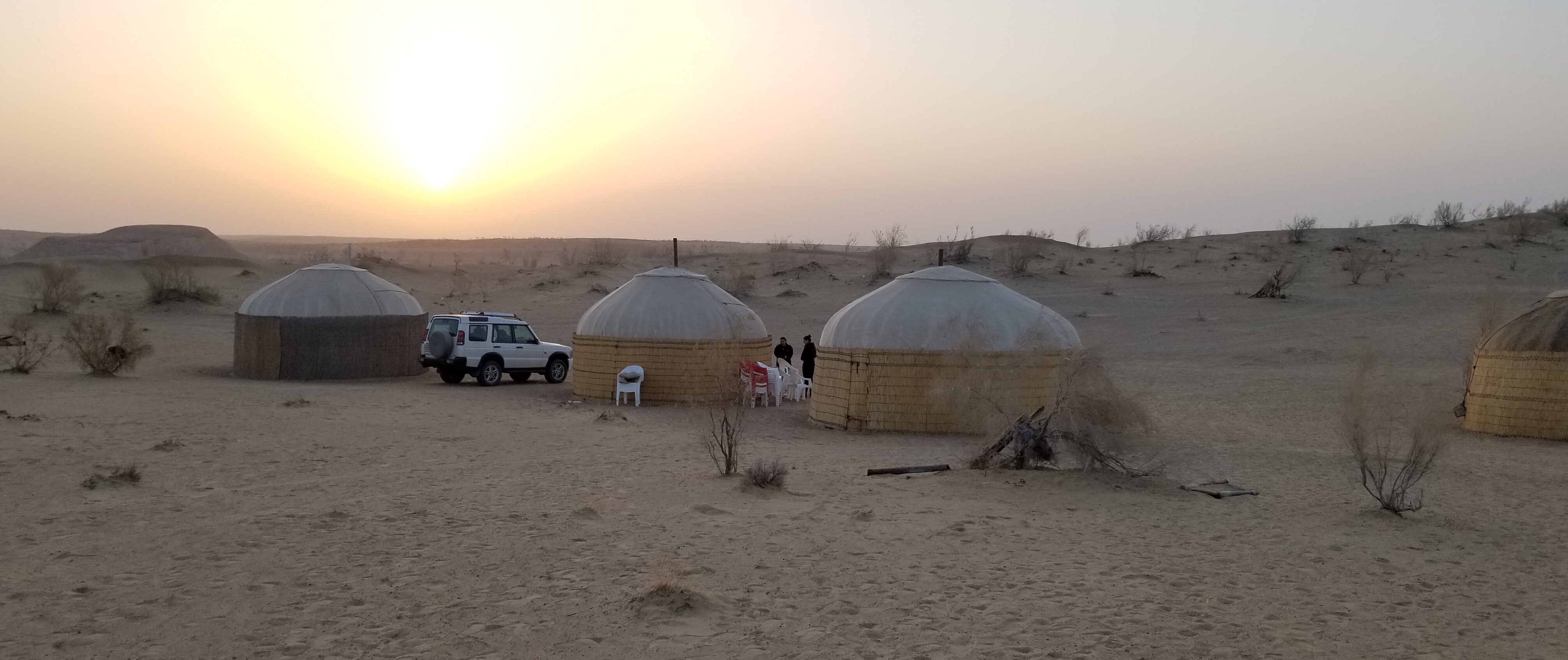
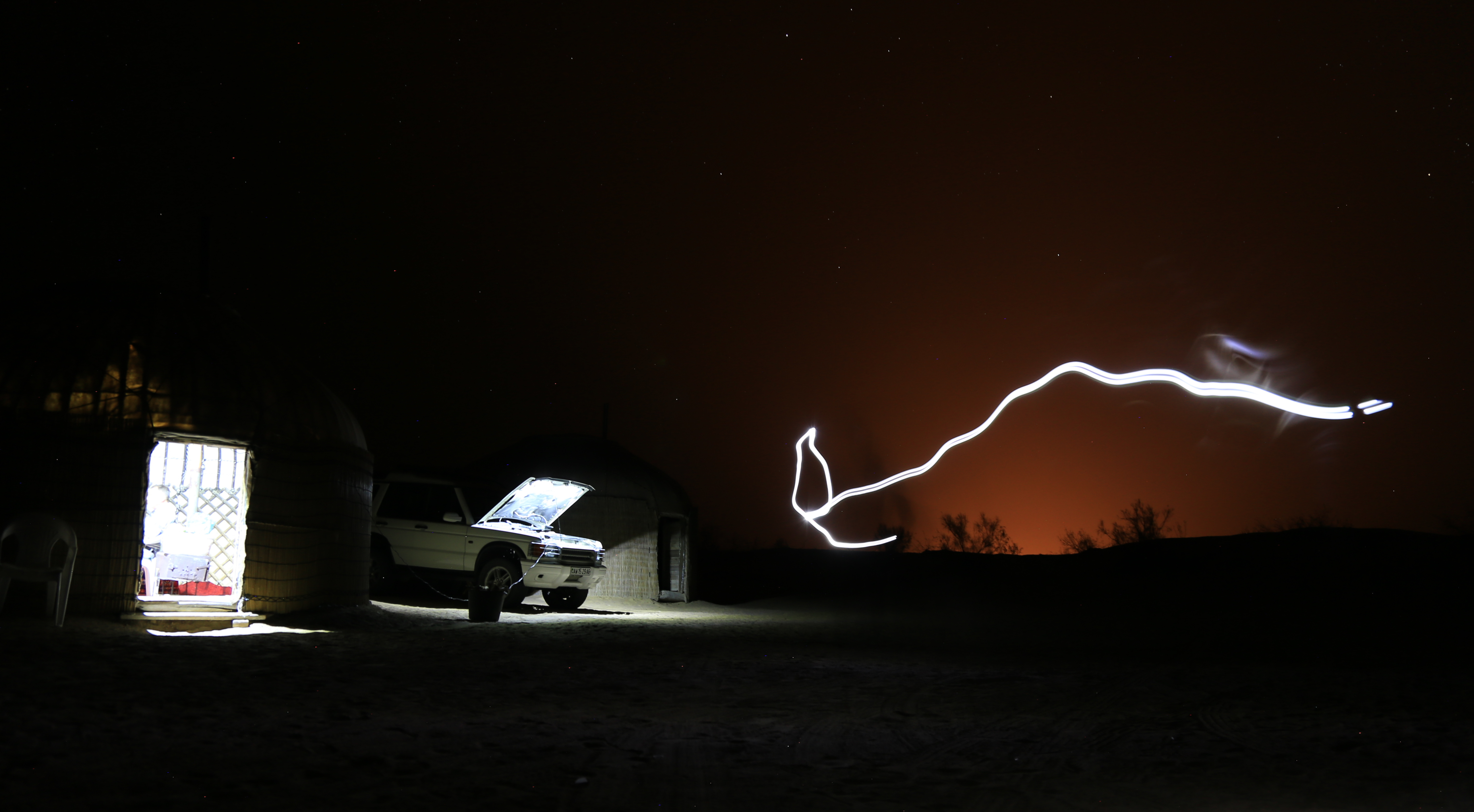
Nous allions passer la nuit dans une yourte et pour l’occasion, nos guides nous avaient préparé un grand apéro-dinatoire à base de poisson, caviar, charcuteries (donc certaines faites maison par Volodymyr), fromage, pain, shashliks (grillades) frais cuits sur des plantes du désert. Nécessairement, le tout bien arrosé de cognac turkmène et de vodka. Notre guide et notre chauffeur étaient visiblement content de partager ce moment avec nous. Le tenancier du camp de yourte s’est même joint au groupe. L’atmosphère était détendue et les blagues transculturelles fusaient. Les discussions personnelles amènent également certains moments plus sombres. Volodymyr est de nationalité turkmène, mais son fils tient de sa mère également un passeport russe. Il désire aller poursuivre ses études là-bas, mais en âge de faire son service militaire, il risque fort bien de se faire mobiliser. S’il reste au Turkménistan, il devra tout de même donner une année aux forces armées, mais apparemment, la Russie reconnaît un service militaire déjà fait à l’étranger et donne une exemption du service russe. Volodymyr tente donc de le convaincre de ne pas partir. Dans le contexte d’une offensive ukrainienne en difficultés, je doute fortement que la Russie honore encore cette règle; encore moins celle qui veut que ceux qui fassent leur service militaire ne soient pas envoyés au front…
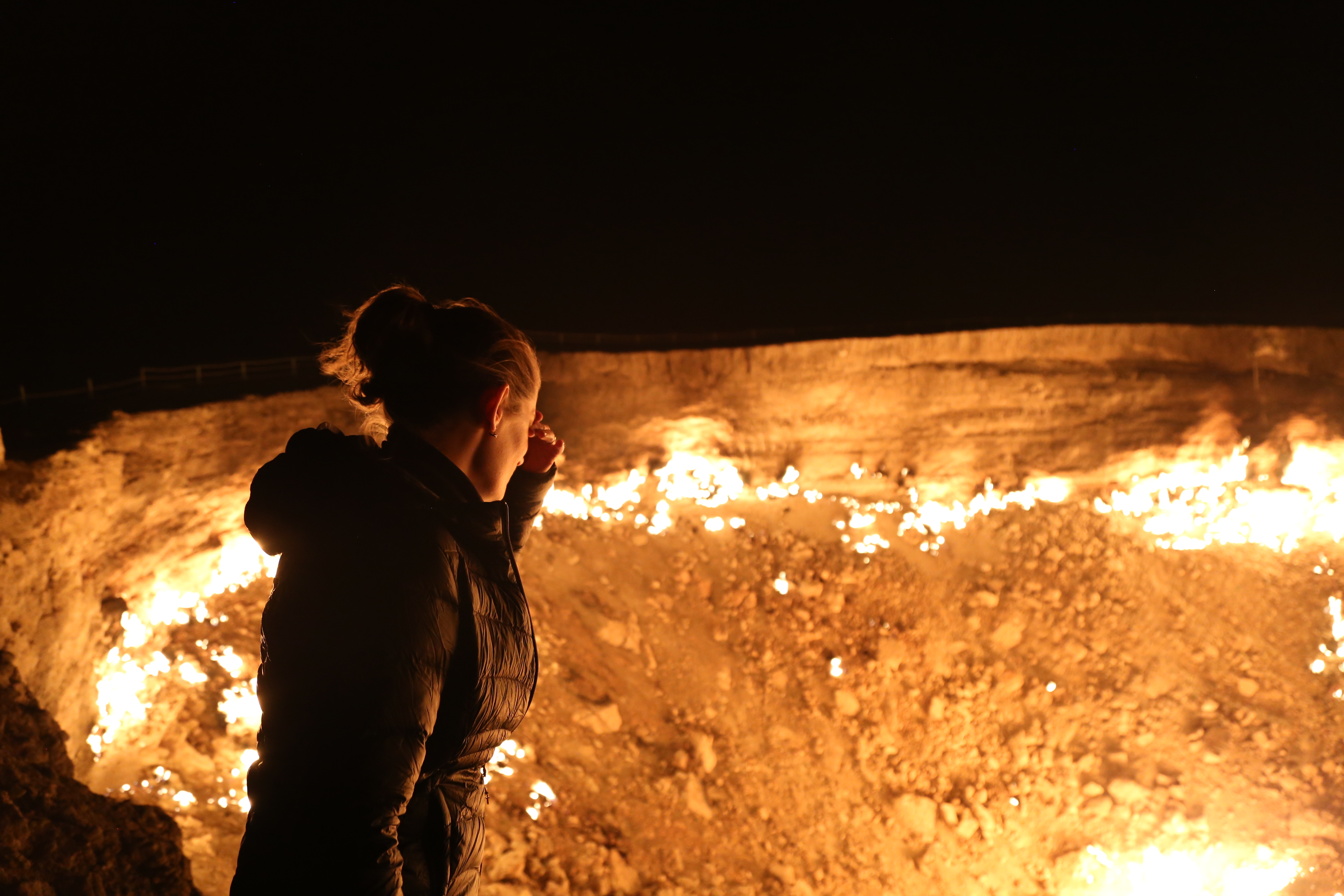
Un peu plus tard, Audrey et moi sommes repartis vers le cratère pour l’admirer de nouveau. D’un diamètre d’un peu moins de 100 mètres, il dégage une forte lumière qui illumine le désert tout autour. Dès qu’on est à proximité, le froid du désert cède à la chaleur du gaz naturel en combustion, lequel émet un grondement sourd. S’il est effectivement un endroit où l’enfer se rend jusqu’à la surface de la terre, c’est peut-être ici.
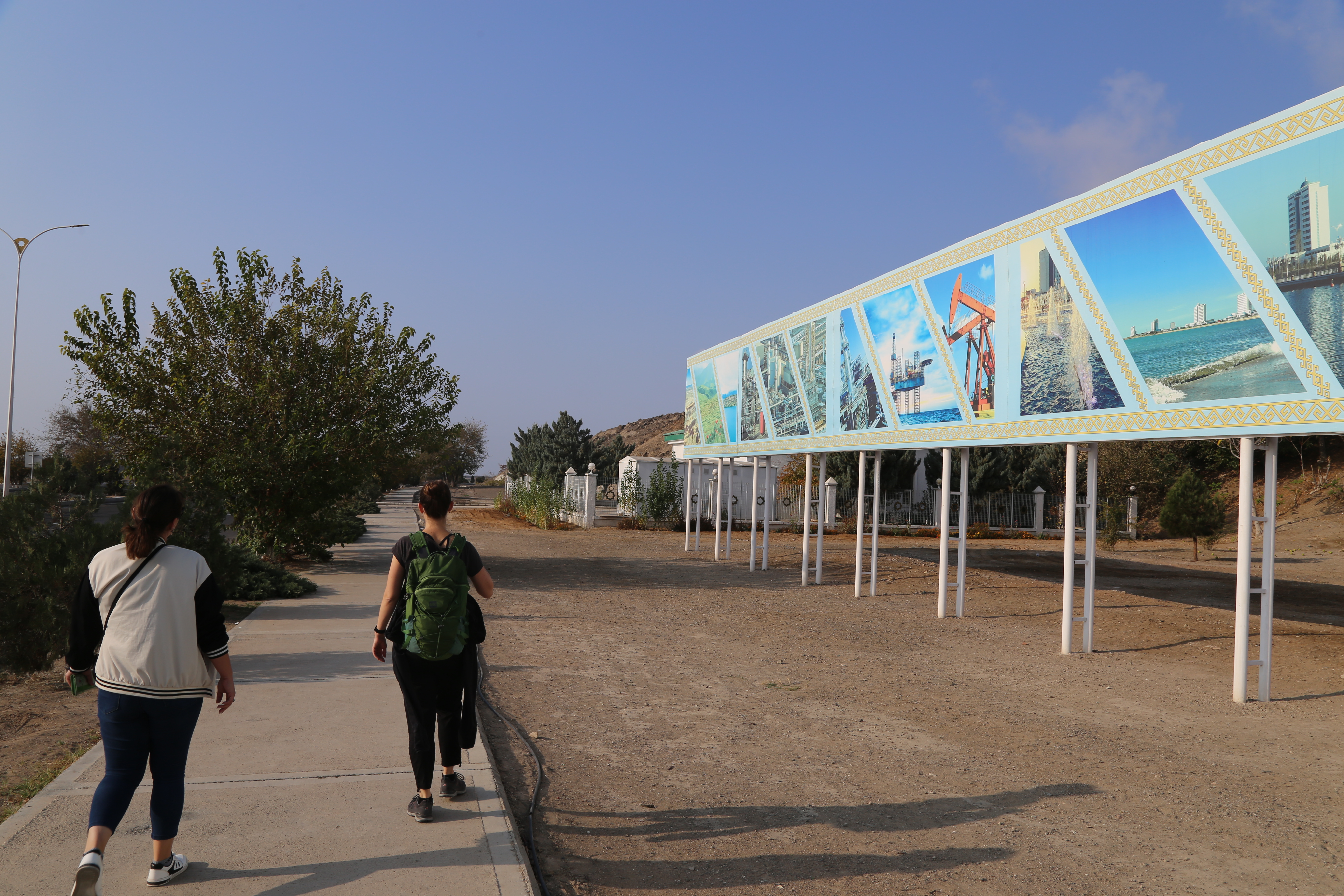
Turkmenbashi (voulant dire ” le chef des turkmènes”, aussi le nom du premier président) est une ville côtière sur la mer Caspienne. En 2017, nous voulions y passer afin de prendre le traversier vers Baku en Azerbaïdjan, mais cette fois-ci, c’était pour aller nous prélasser un brin à Avaza, un grand complexe touristique en more Riviera Maya (mais avec une touche centre-asiatique). Cela allait être l’occasion idéale de faire un peu la fête avec la haute-société turkmène.
À la toute dernière minute, on nous a informé que malheureusement Avaza n’acceptait aucun touriste étranger et que nous allions être cantonnés dans la ville de Turkmenbashi. Vu qu’il était un peu trop tard pour changer les plans, on a pris l’aventure comme l’occasion d’aller faire l’expérience d’une bourgade provinciale.
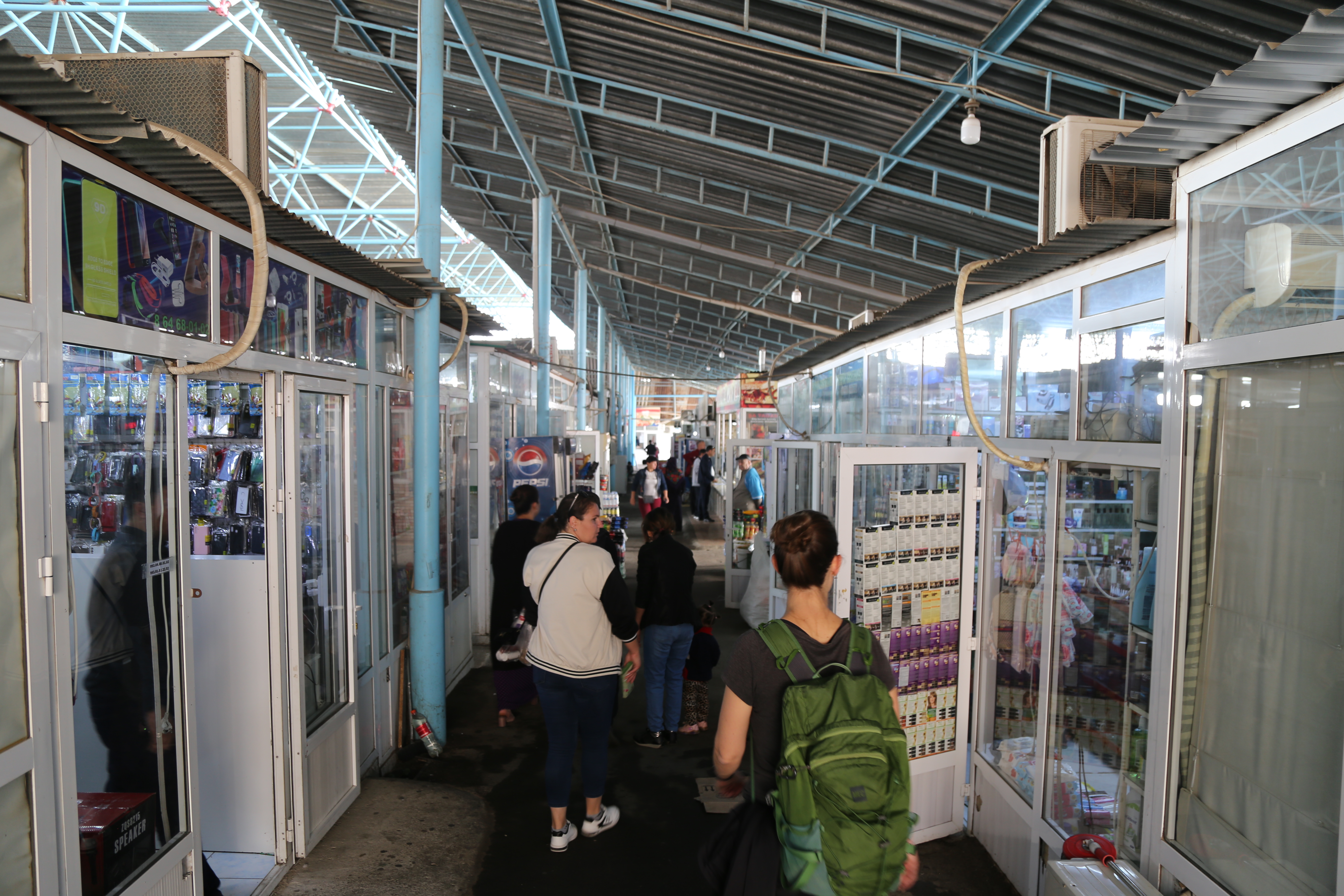
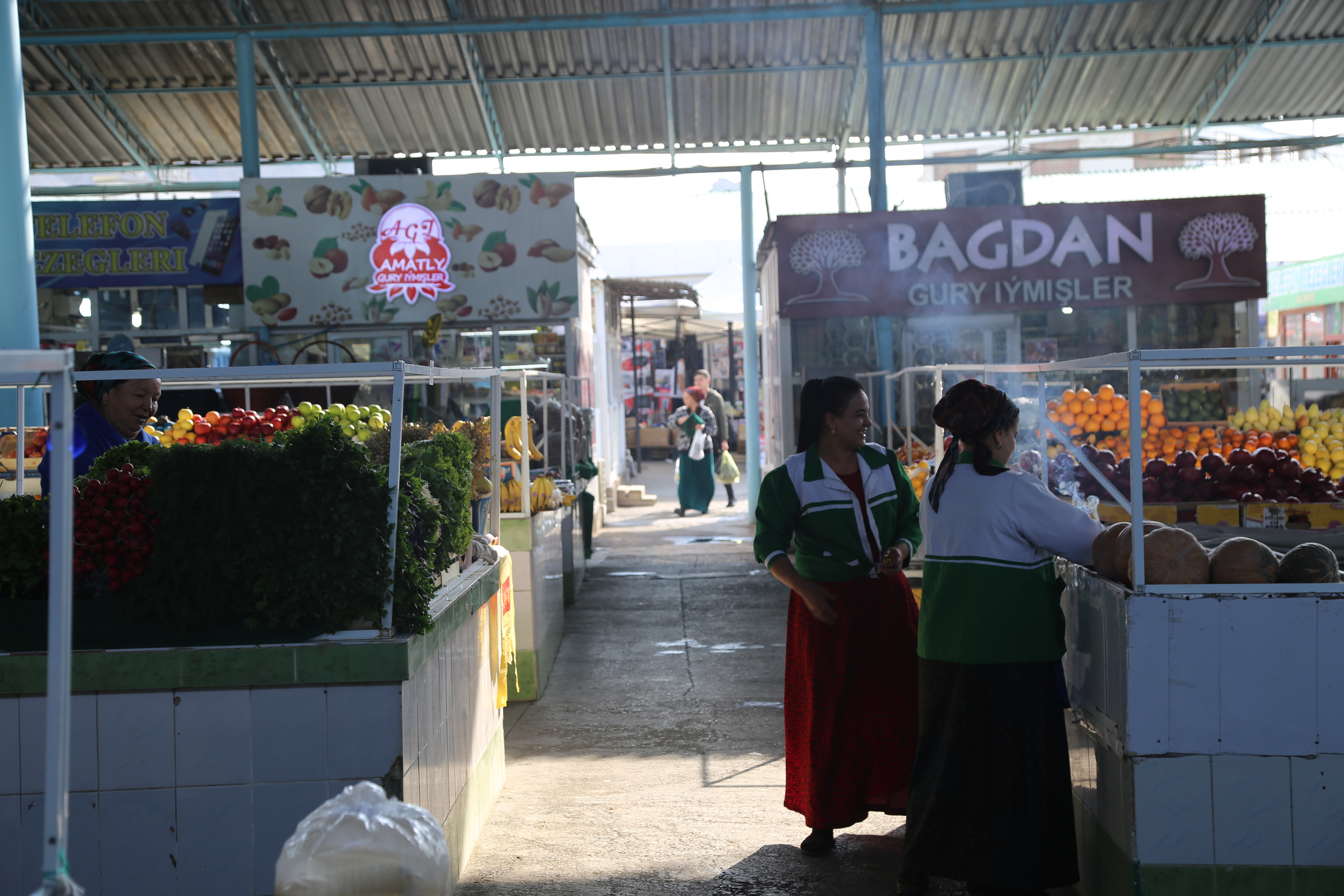
Dans le train, Audrey semble avoir somnolé pendant tout le trajet de 14h, je me suis pour ma part réveillé à minuit et ai ensuite profité du calme pour écrire assis sur un strapontin dans le couloir pendant quelques heures. Bien reposés au matin, nous sommes allés laisser nos choses à l’hôtel puis sommes aussitôt ressortis pour nous rendre au marché.
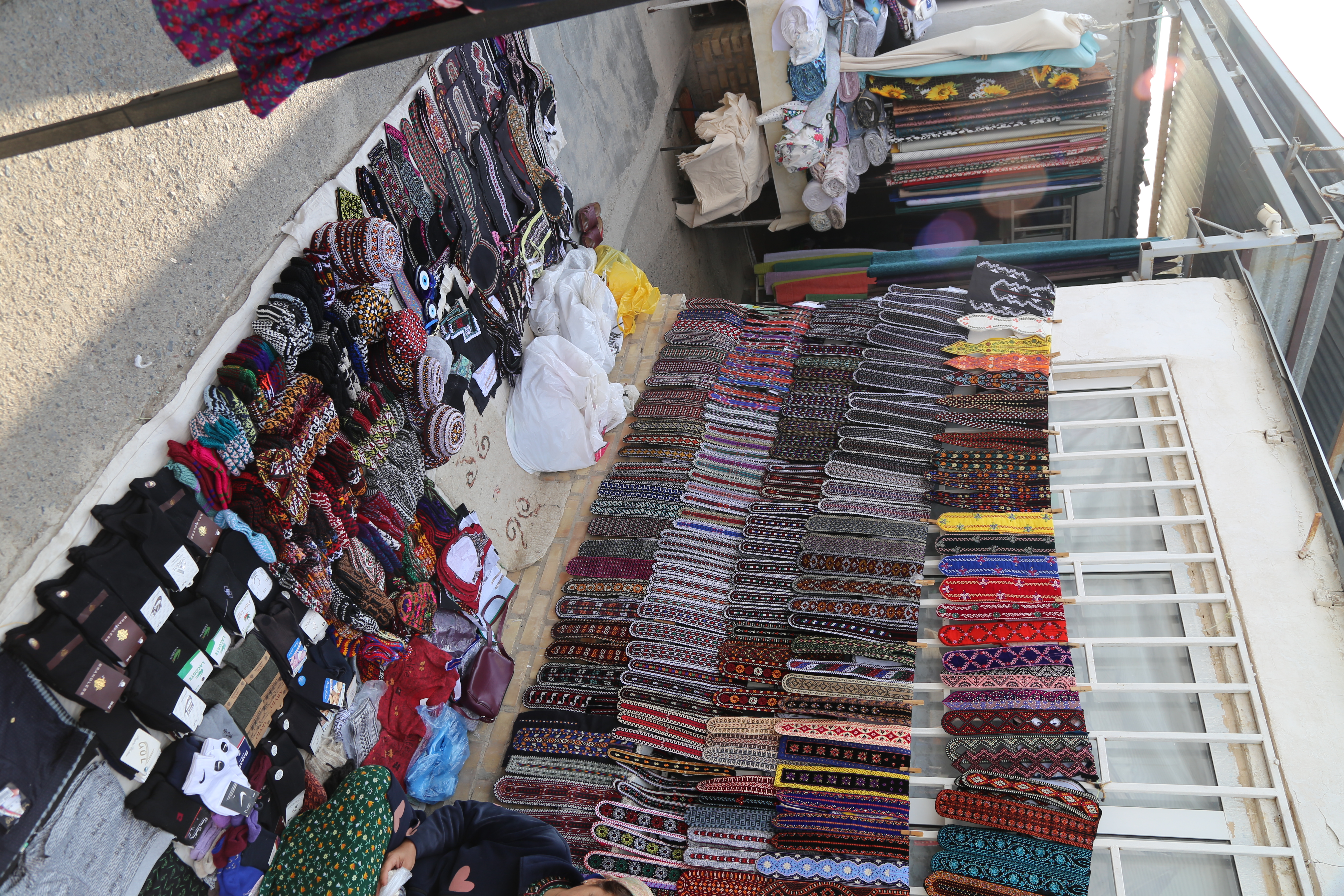
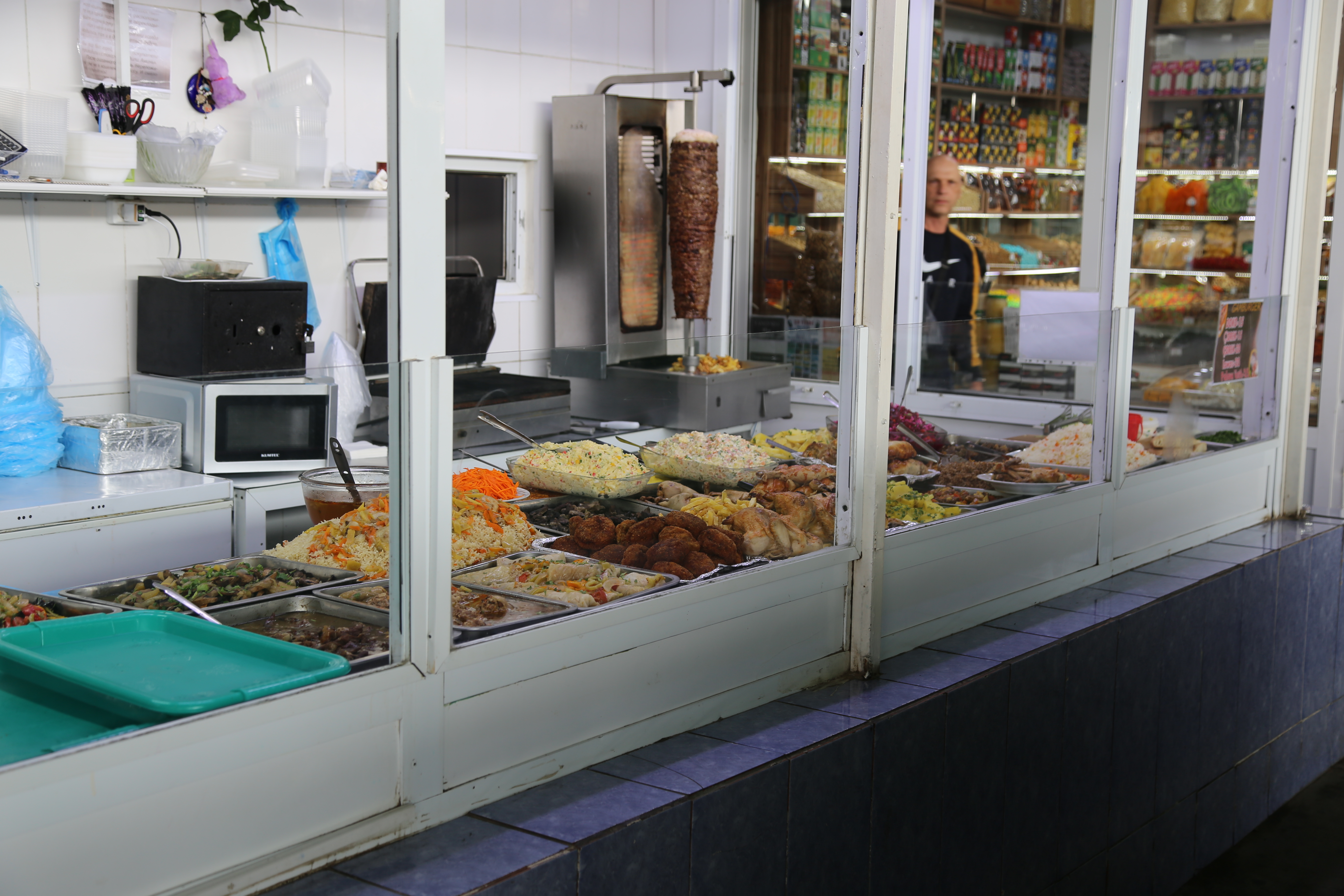
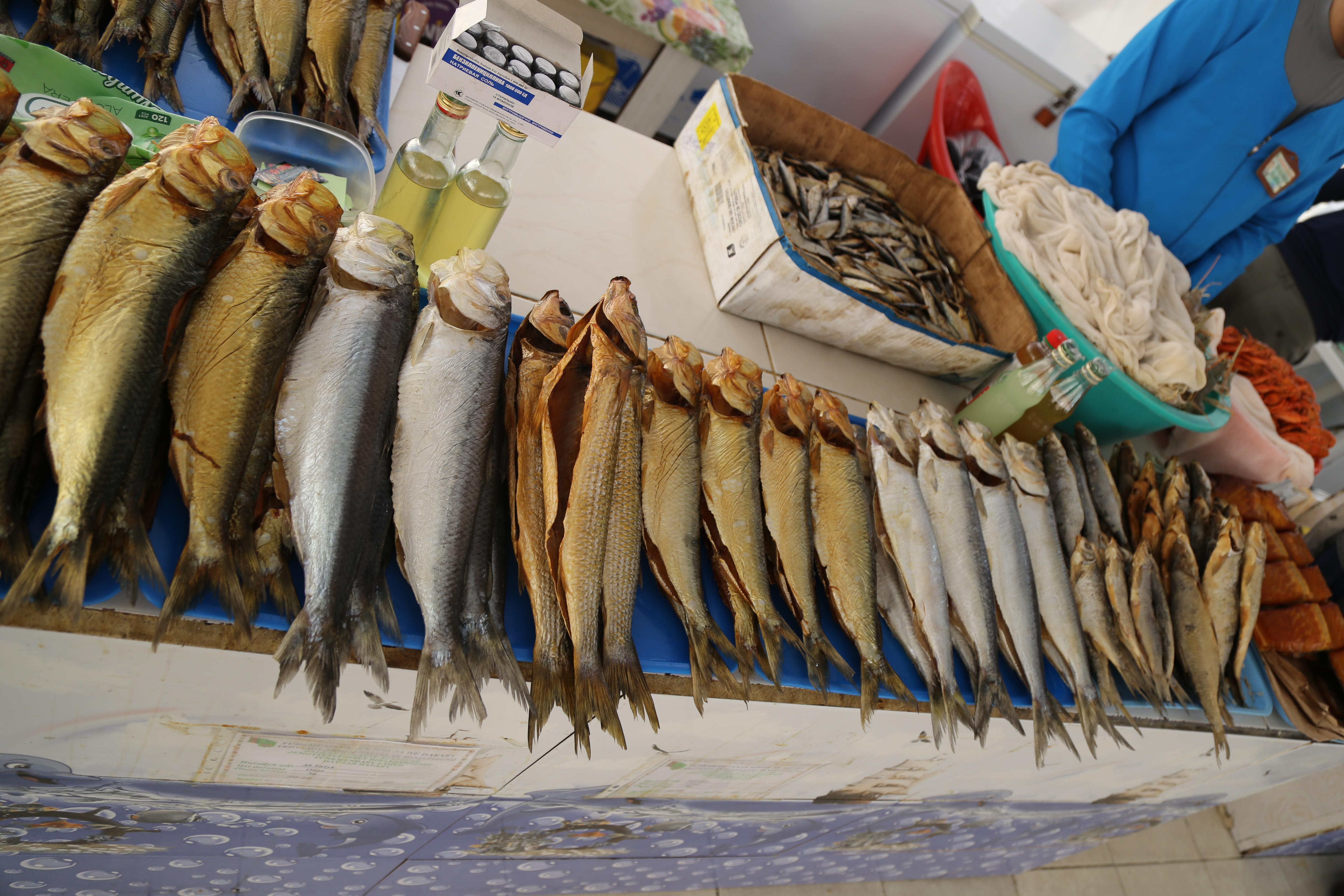
Il n’y a pas meilleur moyen de débuter une visite qu’en passant par le marché. On prend le pouls de l’endroit, on s’immerge dans la vie de tous le jours et surtout, on s’expose à de nombreuses odeurs et saveurs. Bref, on voyage par les sens. Il y avait également quelques courses à faire pour l’expédition du lendemain, notamment l’achat d’écrevisses (pour Volodymyr) et d’esturgeon fumé (pour moi). En sortant du marché, on est arrêté prendre un café, on s’est baladé dans le quartier et l’on est revenus à pied à l’hôtel pour siester un peu. En soirée, repas au restaurant sur le bord de l’eau puis sortie dans un bar de la ville avec notre guide.
Il fallait se lever tôt le lendemain pour reprendre l’avion vers Ashgabat (un petit vol de 50 minutes versus 14h de train).
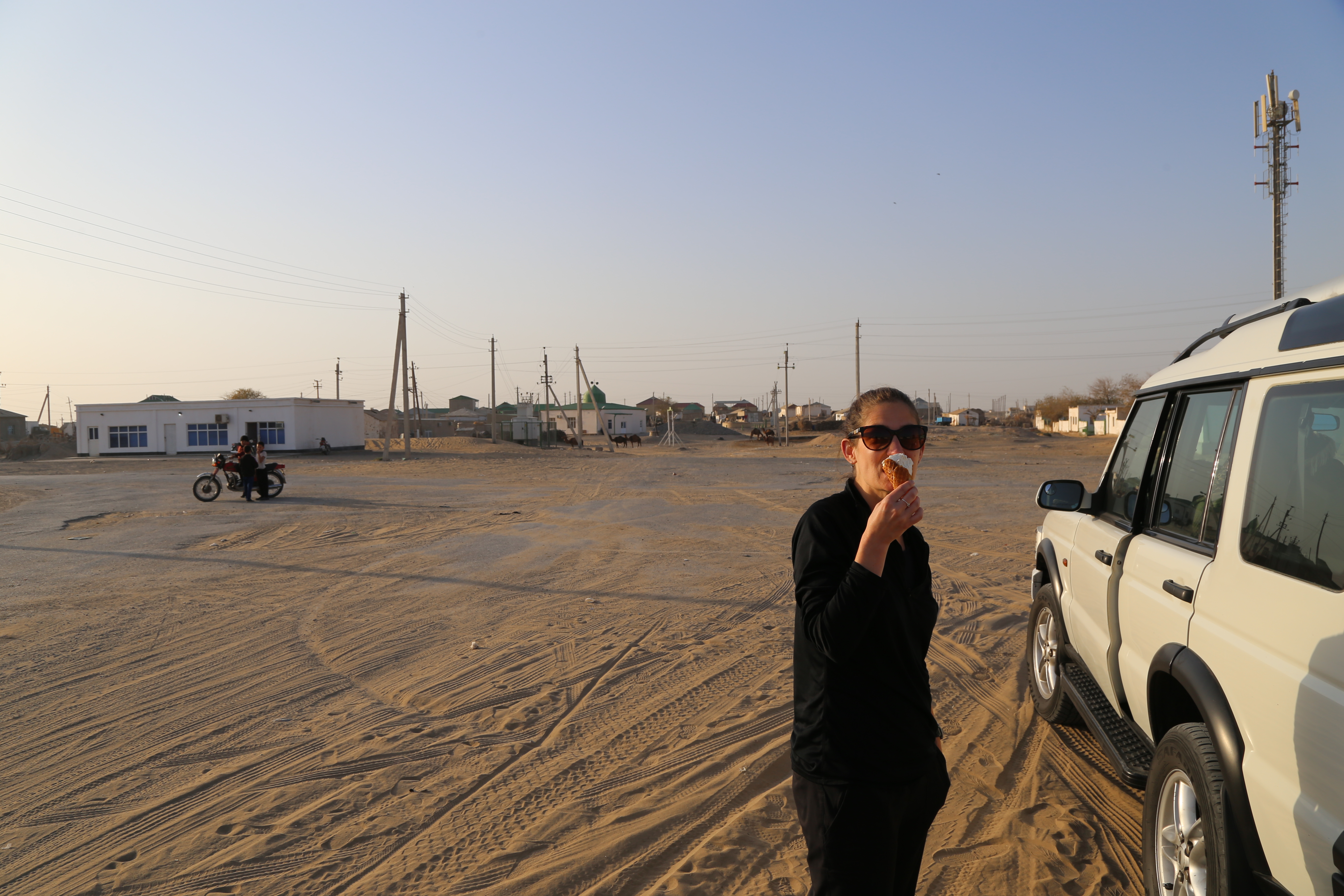
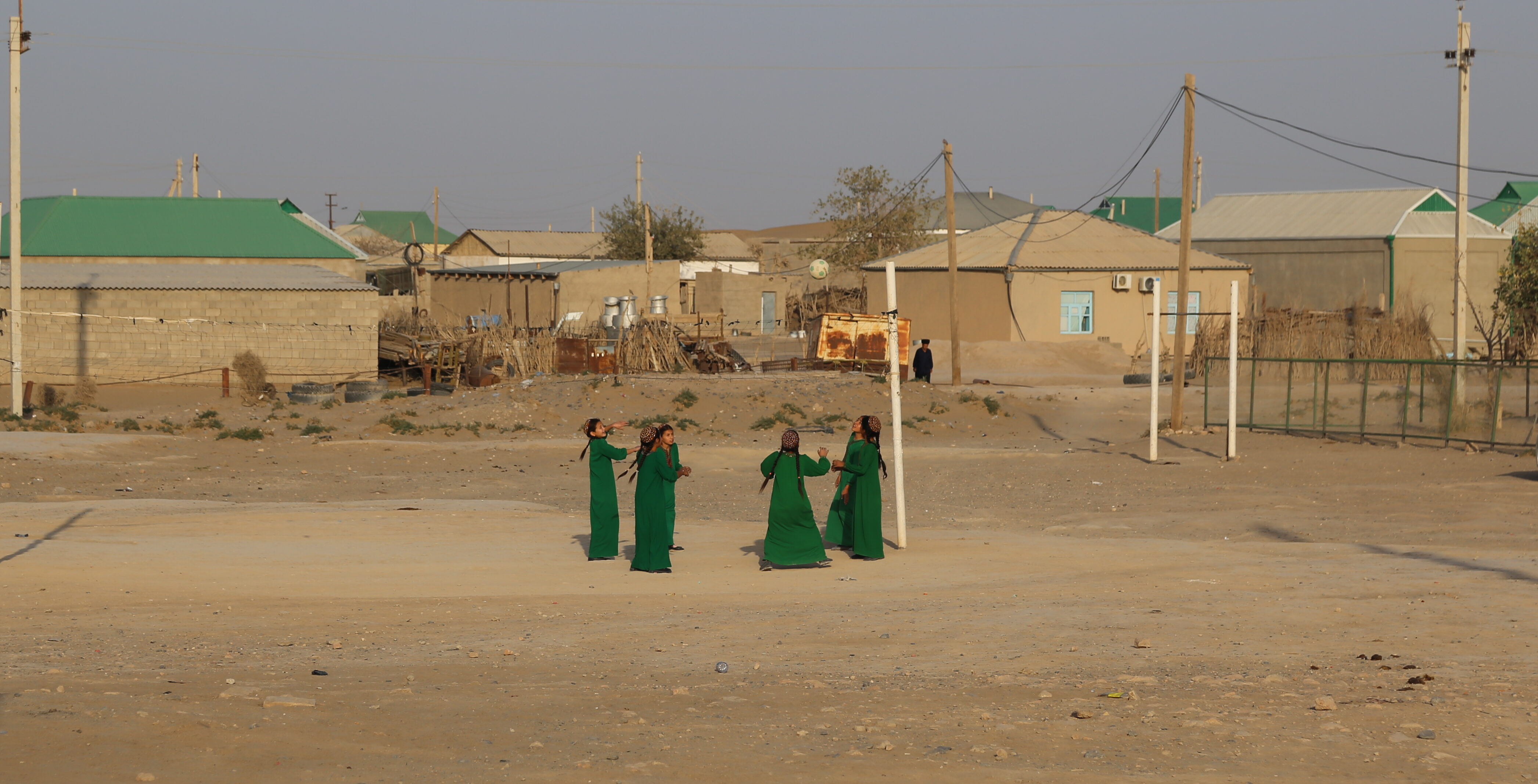
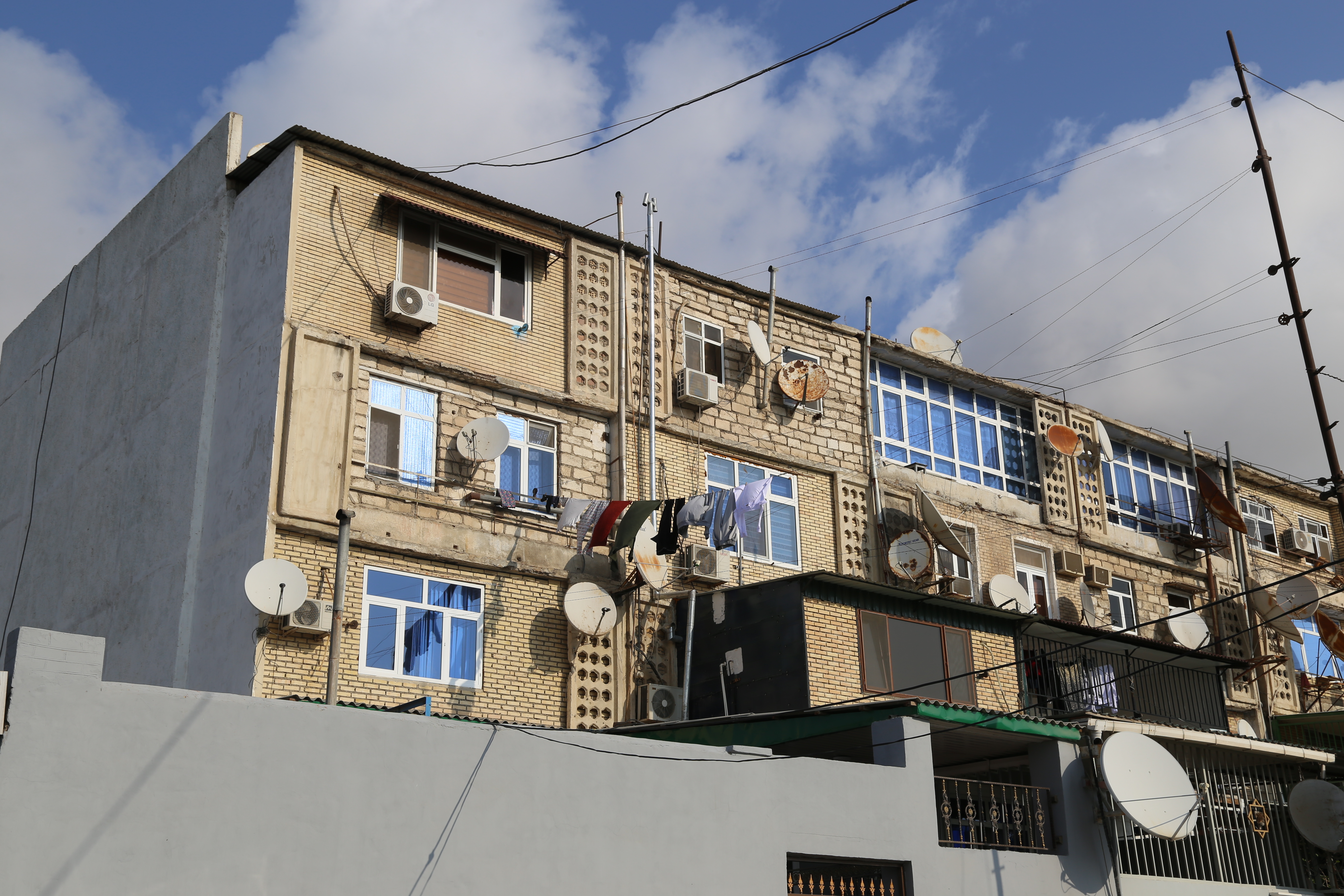
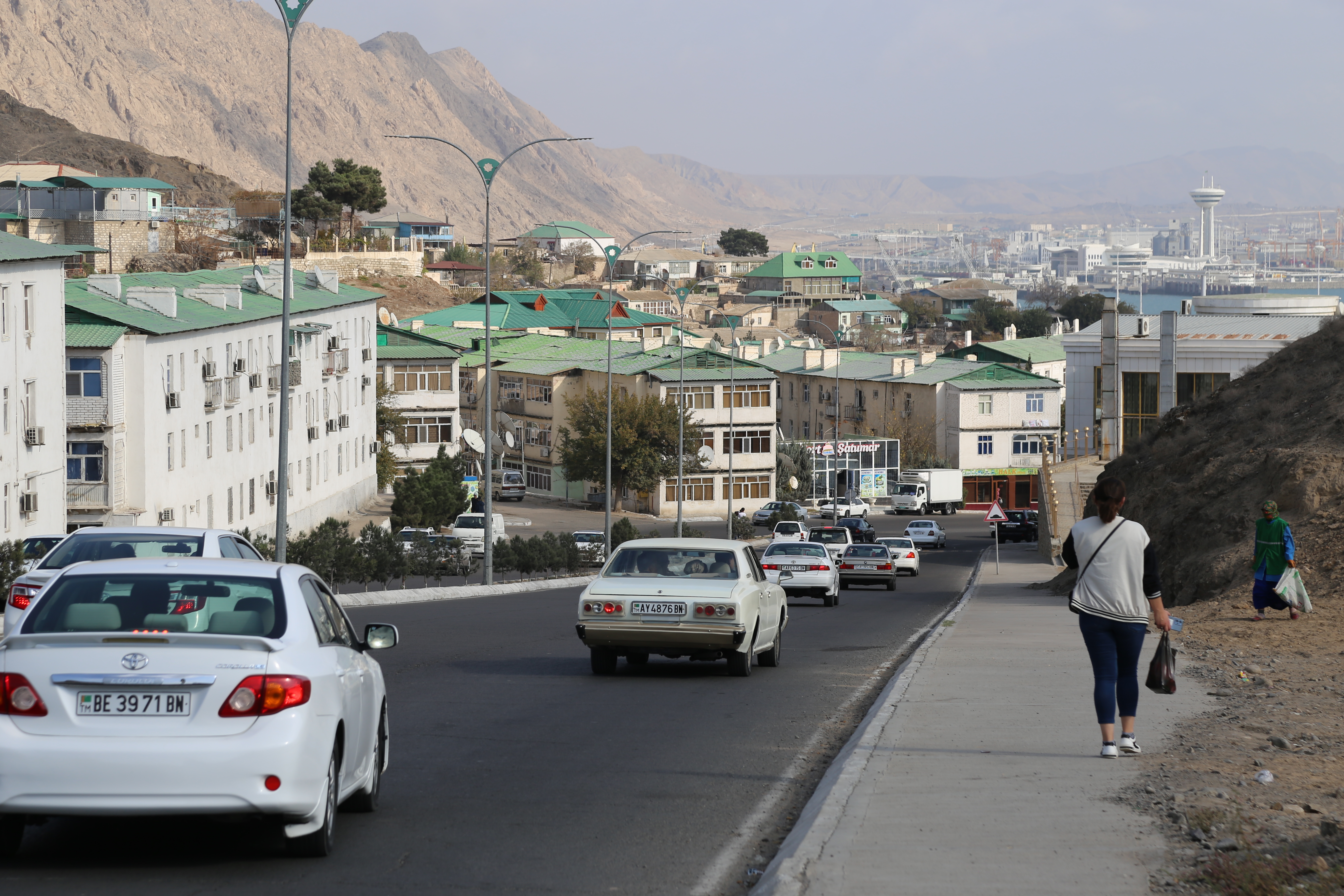
On a somme toutes pas fait grand chose à Turkmenbashi. Cependant, ni moi ni Audrey ne sommes déçus. L’endroit ressemble tout à fait à ces nombreuses villes d’Asie Centrale que nous avons croisé lorsque nous y étions en 2017. Poussiéreuses, soviétiques mais accueillantes. Tout le contraire d’Ashgabat. Cela aura donc été une occasion pour nous de nous replonger dans nos souvenirs et nous rappeler ces journées à marcher vers nul part, manger du plov et courir les aubaines sur les pièces automobiles.
 Mis à part une petite visite du chateau, pas de musées ni de ces fameux concerts / opéras. Avoir eu plus de temps, peut-être qu’on aurait dépensé les demies-journées nécessaires. Or, nous étions à Prague pour la ville et les villes se vivent à pied.