El Salvador – San Salvador

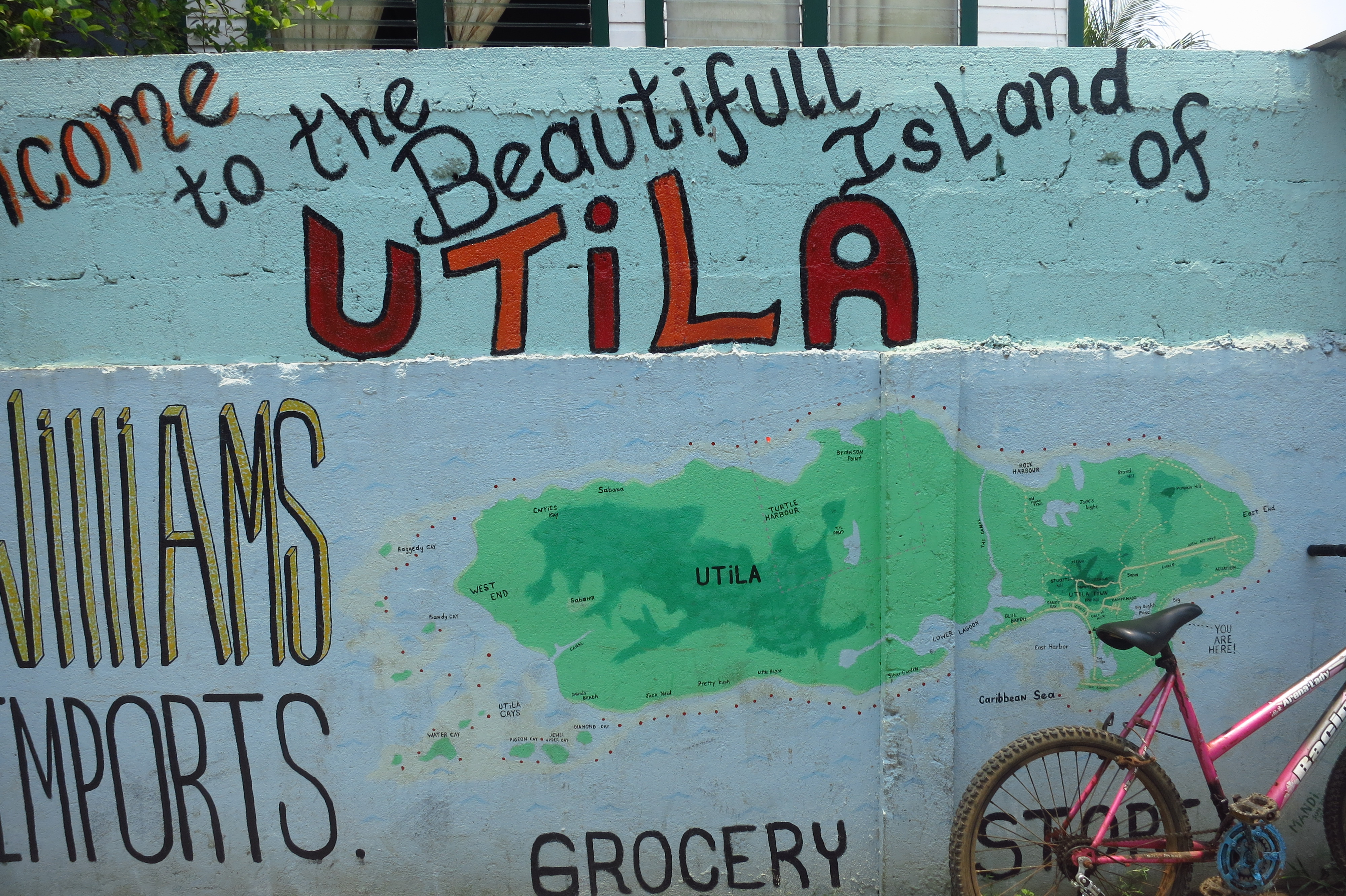
I had been in Central America before, but having spent too much time in Utila, I had to sacrifice some destinations. Sadly, little El Salvador, too much out of the way and with little (obvious) appeal, was booted off the list first. Only for a time though, because I knew I would be back and when I did, I would make El Salvador a priority.

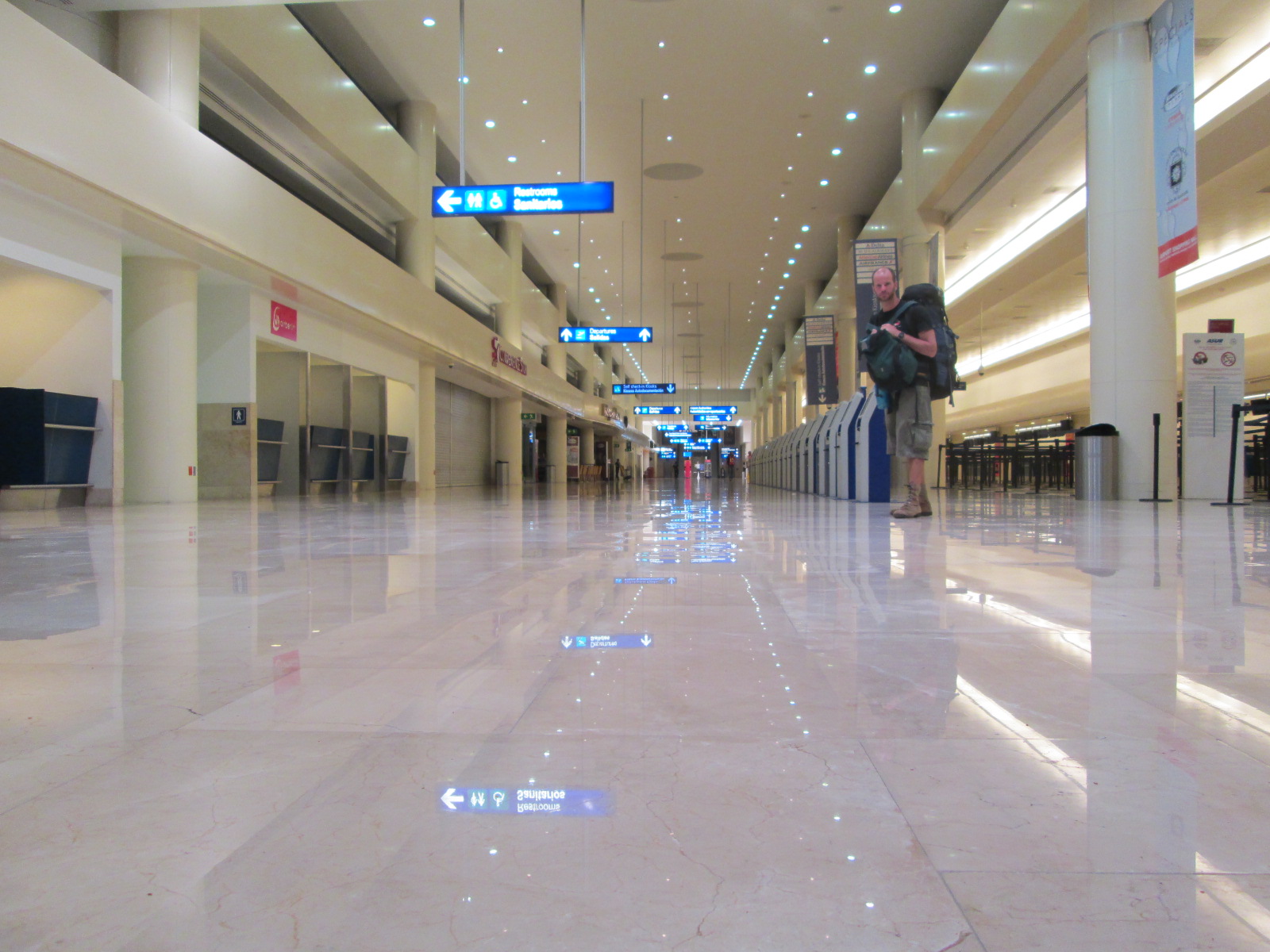
So a couple years later, here I was, in the airport with a plane ticket to San Salvador. In itself, it was not what motivated me to come back to Central America (a tec diving course in Utila is what did), but I had nonetheless made it my first destination. Normally, I would start the story on arrival at a new country but this time, its different. When checking in for my flight, the machine had asked me if I wanted to be on the “flexible passengers list” to which I had replied yes and named a price of 300$USD. That list is basically those passengers that are willing to give up their seats and for what price if the flight gets overbooked. So guess what, my flight was indeed overbooked, but when I showed up at the counter to offer my spot, the Delta employee told me they were offering a 1000$USD credit with the company if I wanted to give up my seat and take the next flight, to which I happily replied : “Of course”. The next flight was only four hours away and my original layover being a good 10 hours in Atlanta, waiting there or here in Montreal made no difference whatsoever to me. The 1000$USD however, will be put to good use, but I’ll let my girlfriend figure that one out.

So onto San Salvador, obviously the capital of El Salvador to which I arrived very late in the evening as it was pouring outside. On the taxi ride to hostel, I dusted off my Spanish discussing with the taxi driver and getting travel advice, which he happily provided. El Salvador, he told me, had everything one could hope for as a travel destination even though it is small. He was aware of the reputation his country had for being one the most dangerous places on the continent, but he assured me those days were over and things had gotten a lot safer lately. Anyway, this all had gotten me very excited and I went to bed feeling quite glad to be there and eager to get out and explore the city for the coming days.

San Salvador's central market
San Salvador’s central market

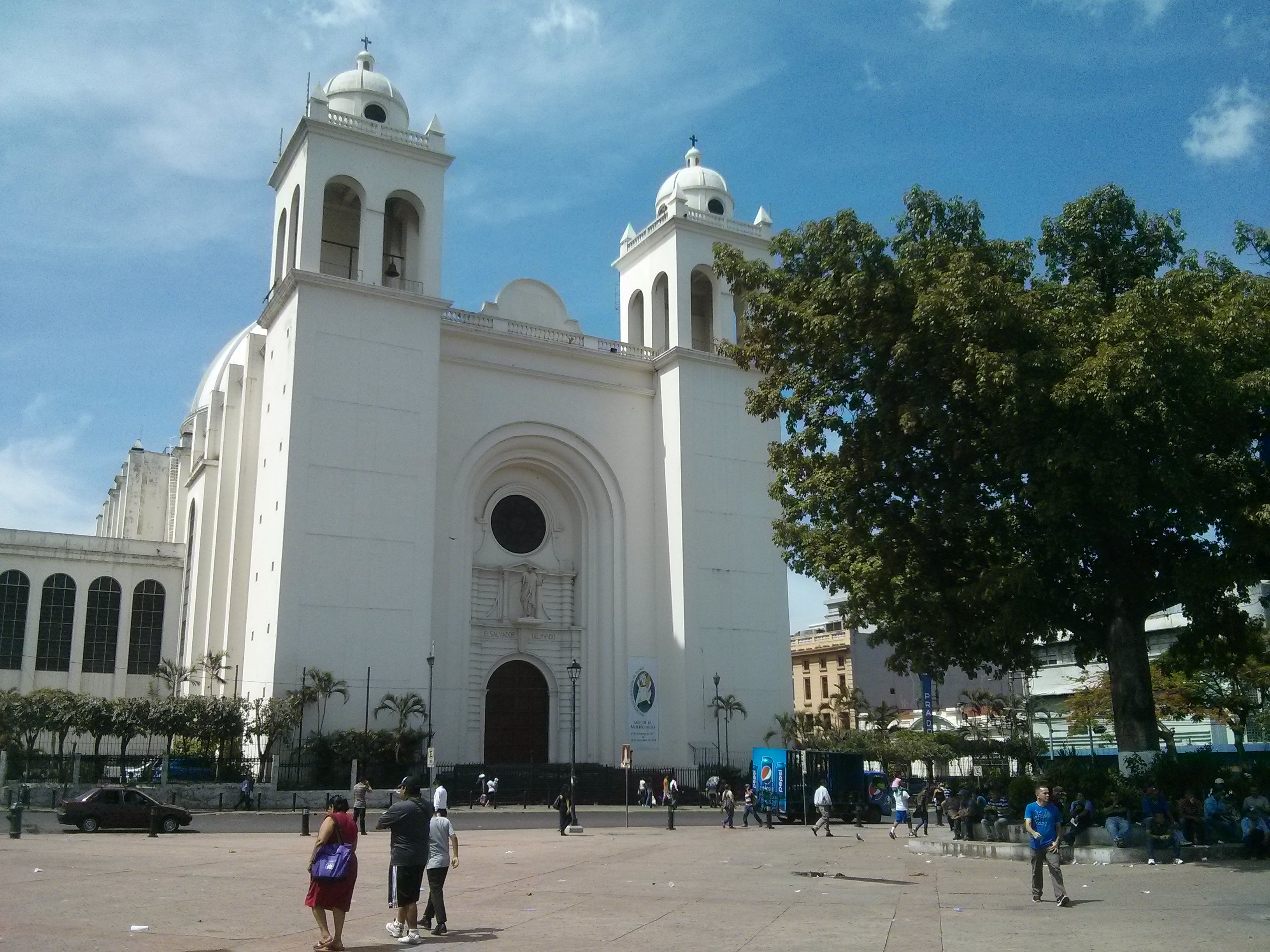
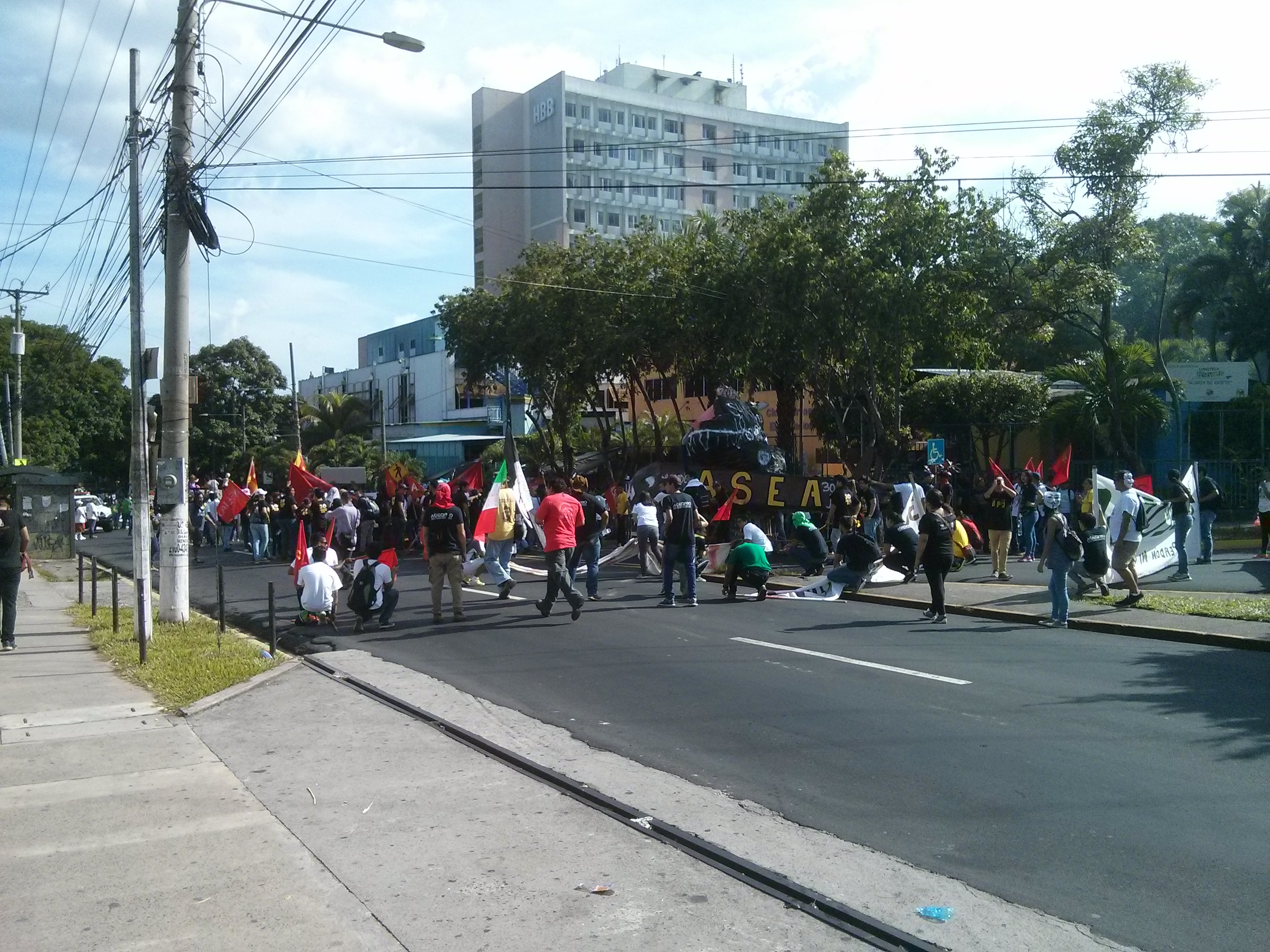
San Salvador's cathedralFirst morning, I was up somewhat late because of a pretty hefty sleep debt that I had to repay and the extremely powerful snoring of one of my roommates. So after a quick coffee, I set out and walked around for the better part of the day, only coming back when the sun was starting to set. During those couple of hours, I walked through a shopping mall (to see what the Salvadoreans are up to on a Saturday), the central market, checked out the main cathedral, encountered a very loud (with explosives the likes of which I had not seen since my time in the army) protest commemorating the murder of some university students by a repressive government in the 70s, attempted to visit the university but got turned back by guards and finally made my way back home walking through the back streets. The evening was spent having drinks and discussing politics (Brexit, Brexit and Brexit), travels and such with Felix, a German traveler passing through the country on his way from Guatemala to Nicaragua. El Salvador is definitely not on most’s people’s list.
Protest in San Salvador

Sorry for jumping subjects, but while taking a break I just had a 20 minute conversation with a Japanese man in … Spanish. Evidently, his English was not up to task so we defaulted to that language as for having spent a year here working in economic development, he was quite proficient in it, slightly more so than me. I would never have thought of that happening in my lifetime :)

So back to San Salvador. Just like any other Central American capital and even more so in some cases, it’s polluted, chaotic, loud and ugly. It has been invaded by those fast food chains that are so familiar to us to a point where they occupy prime land, are multiple stories high in pristine buildings all fenced off and guarded by armed security guards, making them the nicest infrastructure in an otherwise run down city. Speaking of security guards, they’re everywhere, standing in front of most commercial or official buildings with shotguns and pistols at the ready. As for the fast food joints, evidently, Salvadoreans, given how overweight they tend to be, enjoy their presence a lot. I entered a McDonald’s to see what was up on the menu and could not help but noticed how expensive it was, even more so than in Canada. It’s somewhat of a pity because Salvadorean cuisine appears to be much more rich and varied than it’s regional counterparts. The city is dotted with small kiosks and comedores offering a large variety of snacks and plates, only outnumbered by pupuserias, small stands serving pupusas, a national dish comprising of small tortillas filled with anything from black beans to cheese, tomato sauce and coleslaw. Plus, a single dollar will buy enough for a proper meal.

San Salvador stood out of the other national capitals of the region for its inhabitants were much more friendly and it was entirely devoid of gringos. As a matter of fact, I did not see any on my walk the first day save for two that were having a beer on a pricey terrace in the center. It did not feel dangerous and I could be out at night without fearing too much for my life. Not that I really wanted to party and come late (altough no occasion presented itself), but it’s nice to be able to go out at sundown for some pupusas.

The second day I had to wake up extra early to go diving with El Salvador Divers. Evidently, that drink with my German buddy extended itself to some whisky which I had brought from Canada so I went to bed late and was welcomed with, again, the earth-shaking snoring of my bunk mate. In total, I must have accumulated four hours of sleep and by pure luck I opened my eyes in time for my pick-up to go diving, as I had put my earphones on to use them as earplugs and had overslept my alarm. Since it was the rainy season here, there is no diving in the pacific as coastline waters are clouded with runoffs for the whole summer. Instead, we went to lake Ilopango, an ancient volcanic crater. At 80 square kilometers, it must have been quite an eruption and in fact, geologists do think so as well (it’s downfall has been found in the ice records). Nowadays though, it’s a somewhat quiet volcanic lake surrounded by villas. The top layers of the water were quite opaque because of recent raining but the visibility at the bottom was excellent. Both dives were made along a black volcanic rock cliff, which made for spectacular and unusual environment for me. Back at the hostel, I caught up on my sleep with a huge nap and woke up just in time to go to the Modern art museum. I hurried there but on showing up at the gate, I was told by the (armed) security guard that it was exceptionally closed for fumigation. Disappointed, I walked off and soon encountered huge traffic, which was inordinate I thought for a Sunday night. I traced it back to its source and came upon la feria Consuma, a festival it seems devoted to shopping. For a 1.50$, I bought my way inside a interesting piece of local life and did some people watching for some time before I headed home to study for my tec course.

El TuncoI had wanted to spend only two days in San Salvador but feeling there was a bit more to explore, I extended my stay by one night and took off early to get to El Tunco, a famous surfing beach some 40 kilometers away on the coast. Getting there took slightly longer than expected as I did not make the bus connection that I was supposed to and ended up at the wrong terminal, but eventually, I found the right bus and an hour later was dropped of at the beach. Not that I had some expectations about the place, but I was left somewhat dissapointed as all there was to it was hotels and restaurants and everything appeared to be geared towards surfing. The beach, or lack thereof, was a small stripe of rocks about a meter wide. I have to admit though, it must have been quite the spot as the waves where immense and fairly close to the coast. I had taken my bathing suit with me just in case I had wanted to rent a board, but this place was way out of my league.
La Libertad
La Libertad

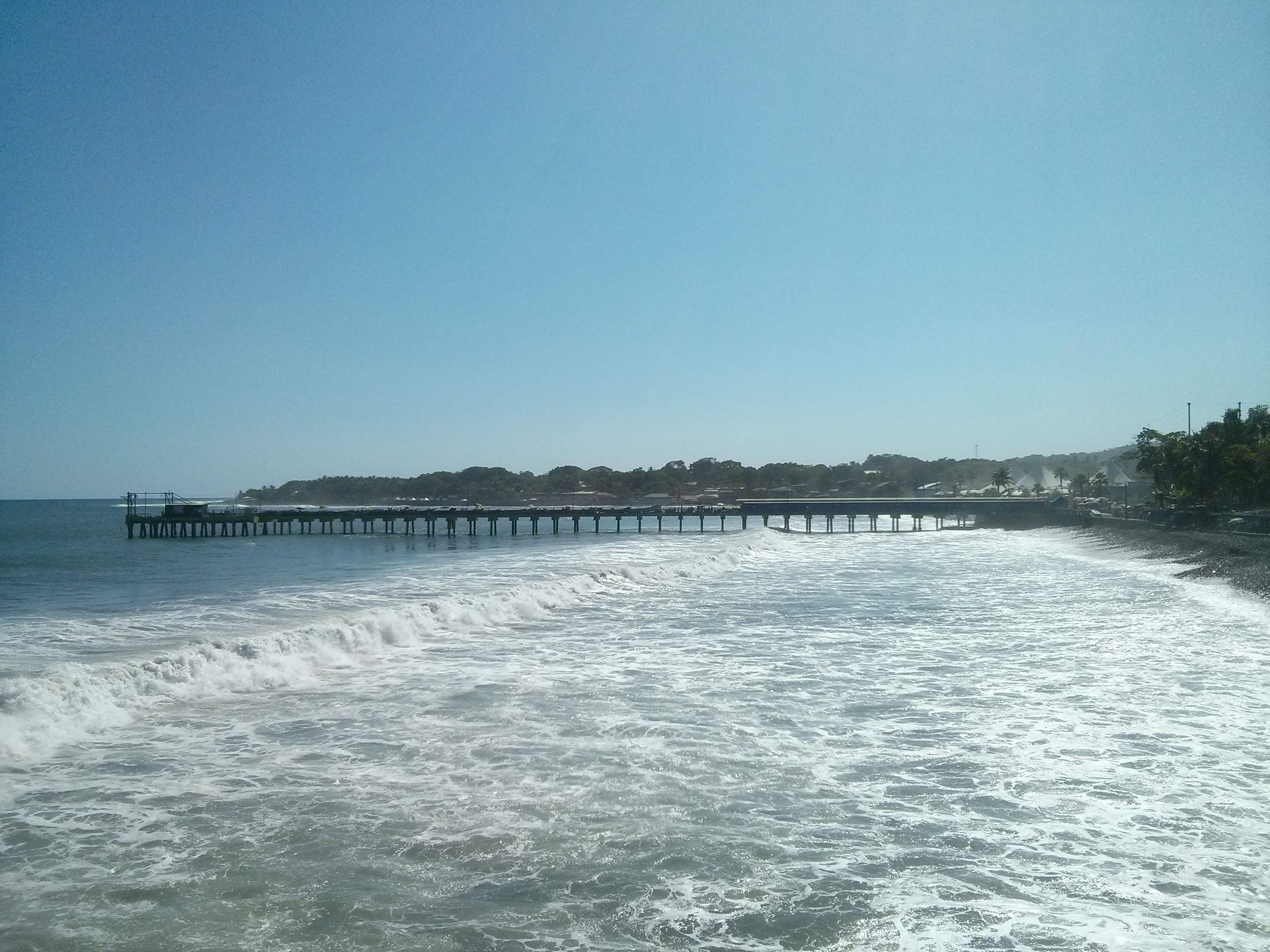
Having had enough of El Tunco, I caught a bus back to La Libertad, a port town through which I had passed on my way to my first destination. My Lonely Planet guide (from 2010) described the town as sketchy but a lot must have changed in the recent past as I would describe it as quite the opposite. It was lively: the seafront was packed with restaurants and a huge wharf featuring a bustling fish market, some ceviche stands and fishermen working on their boats after a day out at sea. Passed the restaurants, there was a nice paved walk (by Salvadorean standards) which ended at another surfing beach, where I sat for a good hour having a beer and watching some pretty talented surfers negotiating breaks several meters high. I would have stayed longer, but buses in El Salvador don’t run late so I caught the 17h30 back to the capital, had some pupusas and spent the rest of the evening on my computer.

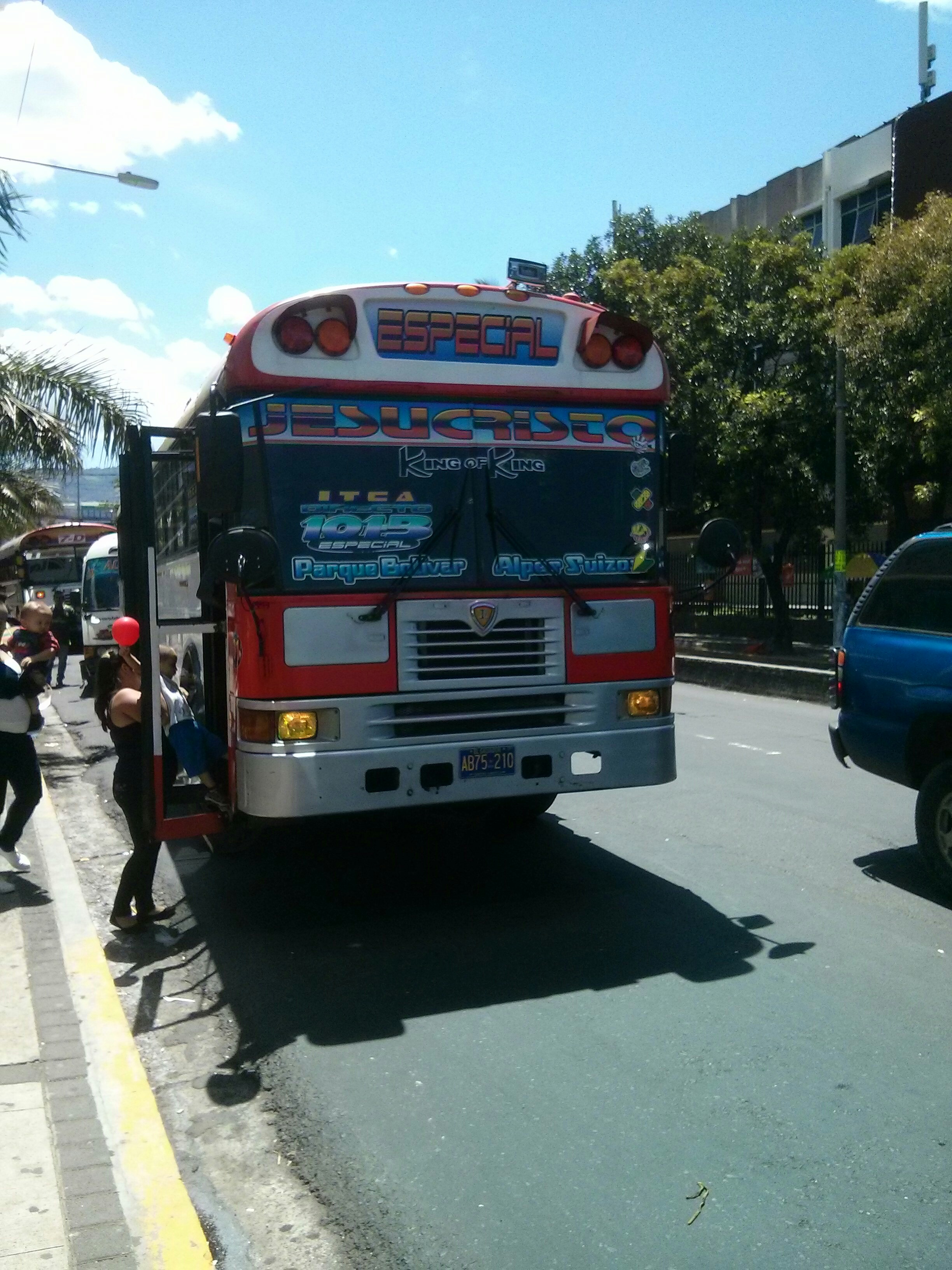
The day after, I checked out, went back to the art museum for a quick visit; took a bus; stopped at the right place to catch another bus that would take me to the terminal; waited for a while without seeing that bus; decided to walk to the terminal; while walking, finally saw the bus but omitted to ask where it was going (the same bus routes do not necessarily take you to the same place); ended up at the opposite end of the town. Normally, I would have hoped off before, but since I was carrying all my belongings, I did not want to be left in a random neighborhood and having to walk to find my way. Some ladies told me to wait until we would come across a proper bus stop so I could catch the right bus going in the opposite direction. After an hour lost circling around town, I finally arrived at the terminal where I could catch transportation to Santa Ana, my next destination. Time wasted in transportation is part of traveling and even though I’ve been at it for quite some time now, I don’t seem to get better at negotiating my way around public transport.
Pimped up bus!
Pimped up bus!


Central America – The end

The Great Blue Hole from above

From Utila, Honduras to Caye Caulker, Belize

I’ll admit that as soon as my plane ticket was bought, I sort of checked out and turned on the autopilot. I’m glad my brain did that on my behalf, because the journey was a grueling one. Numerous chicken buses, border crossings, a boat; it took two days and a half to get there. To make things a bit faster (but more complicated), we even went through Guatemala. The reason I just pushed through was that I wanted to dive the Blue Hole in Belize, some cenotes as well, and meet a friend on Isla Mujeres. That’s too bad because what the Lonely Planet said about Belize is true, it vibrates to a different tune than the rest of Central America. It is friendly, clean and boasts well preserved nature as well as loads of mayan ruins. It is well worth spending come time in but I had to press on.

The Blue Hole did not live up to its reputation and that I expected. Many people back in Utila had told me just that but I still enjoyed it since I had never ever done a dive that special and got to see sharks for the very first time as well. Otherwise, it was just a big, deep, dark, blue hole; like seeing the Eiffel tower is a must on a trip to Paris, the Blue Hole has to be dived on a trip to Belize. The two other dives afterwards were interesting and considered by most the highlight of the tour, but for me, swimming at 41 meters deep between stalactites with sharks watching us from far off into the hole is what made my day.

From Caye Caulker, Belize to Tulum, Mexico

A solid day of travelling later and I had reached my second stop, Tulum. Compared to the rest of Central America, going places on the Yucatan peninsula was a piece of cake: no chicken buses, plenty of departues and reliable services. Tulum is a popular destination, praised for its beaches and the many activities you can do around. After all it sits just at the edge of the Cancun region, a resort paradise. But beside a quick trip to the local Mayan ruins, I was not there for that, I was there for diving the cenotes.

Consider world-class diving sites, the cenotes are simply big sink holes in the jungle. As a side note, the Blue Hole is also a cenote, it just sits completely underwater now but it was formed in the same fashion before the level of the seas started raising. Little life is to be found in there, blindfishes, shrimps, small isopods, the cenotes are not popular for their fauna and flora. They are famous for their rock formations, the lighting effects you can see under the right conditions, and cave diving in general. The Yucatan peninsula lies over a huge network of underwater rivers of which the extent is not very well known, but every time a cenote opens up on the surface, a new access to that labyrinth is created. You can enter through one and come up another a few kilometers away, but that is serious cave diving and done by very few highly trained people; if you get lost, you die. I am not that crazy yet, but I feel that if I keep subjecting myself to compressed air at depth, I could get that mad eventually.

The entrance to the pit

Crystal clear water, infinite visibility, no currents, mind-blowing rock formation and being deep enough in a cavern not to be able to see the light of day make for an out of this world experience. However, the highlight of my diving there was not swimming between millions of year old limestone columns, but going down the pit, where two very impressive natural phenomenons can be witnessed: a sulfur cloud and a halocline. The sulfur cloud lies at the bottom of the pit and is the result of vegetation that has fallen down to the bottom slowly decomposing in the water. Everyone is accustomed to seeing clouds in air, but water being a different fluid, their formation takes in a different shape, especially when it is perfectly immobile. From a distance, the result is layered perfectly even and opaque clouds, as you close up, fluid dynamics patterns start emerging, disrupt (it take a few days to reform) the cloud by passing your hand through and create some more, move your flashlight around at the same time and you are in for a trip. The halocline is not as impressive but provides for another interesting effect on the way up. It is the interface between salt and fresh water and because the two have different densities they do not mix. Well, only across their fuzzy boundary, which has a varying refraction index and consequently distorts light traversing the layer that you just pass through going down but actually swim in going up (as part of the dive), making everything look blurry. A similar effect happens between cold and hot water called a thermocline, but the difference in density not being as high, the blurriness is a lot more subtle. With the halocline, you vision is severely impaired, everything you see takes the appearance of a painting from the impressionists and if it was not for the flashlight of the guide, I would have totally lost him. Best dive ever. Here are links to two images from the cenotes I dove in (they are not my own so I cannot post them here), one is from dos ojos cenote and the other is from the pit.

From Tulum to Cancun, Mexico

Initially, the only reasons I departed from Cancun was because I wanted to dive the cenotes and because the plane tickets were cheap. Back in Utila tough, I befriended Rodrigo, who worked as a dive master at Isla Mujeres, an island a couple kilometers off of Cancun, so I decided to shorten my overall way up to meet him over there.

I did two dives with him around the island which were fine, apart for the insane currents on the first one, but the highlight was supposed to be a wreck the next day, which got cancelled because the two other idiots had partied too much the night before. I was hangover myself and still showed up because I knew that operations like this need a minimum amount of people to justify going out, but apparently they did not and decided to sleep in. Quite frustrating. My plane was leaving the next day early in the morning (as usual, I slept at the terminal) so I could not dive in the afternoon and was stuck killing a full day’s worth of time on the island, which is extremely touristic. After 4 months of travelling and being so close to the end, I was not in the mood to enjoy it, all I wanted was to get home.

This is it. That was the end of this Central America trip.

Oh Utila! (Central America month 3 and 4)

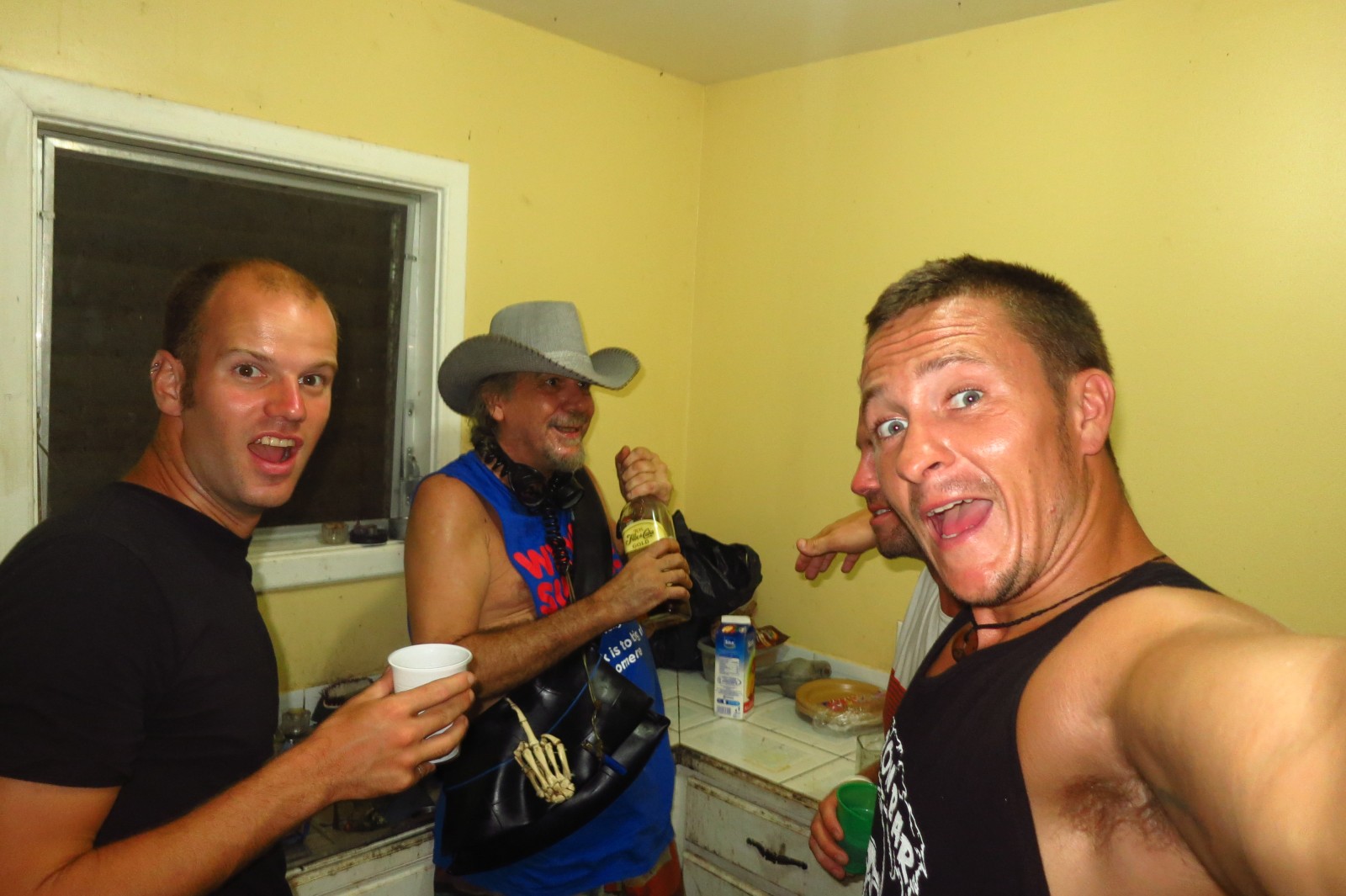
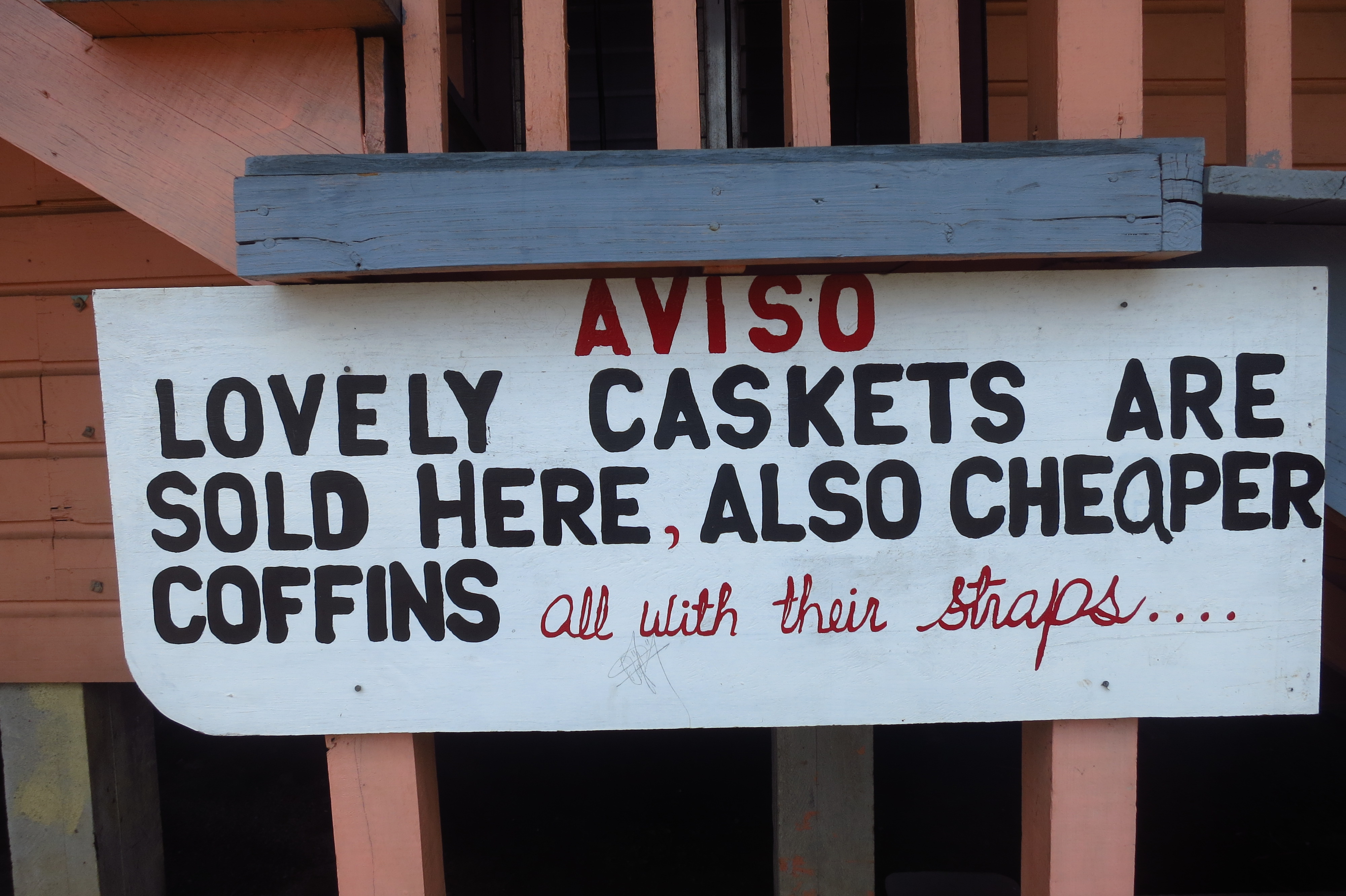
“Would you like to hold a fetus?” Doctor John said. Where am I ? I was at a birthday party ten minutes ago, now I am drunk out of my mind sitting on a casket next to a skeleton with a dried-up human fetus in my hands.

“If you shake it you can hear its brain rattling inside its skull”. I must have taken a wrong turn somewhere. Dive master Dave and Trav seem not to be grasping what just hit them. Screw it! Mighty interesting Dr. John, now can I have some of that rum?

A crazy island full of awesome people

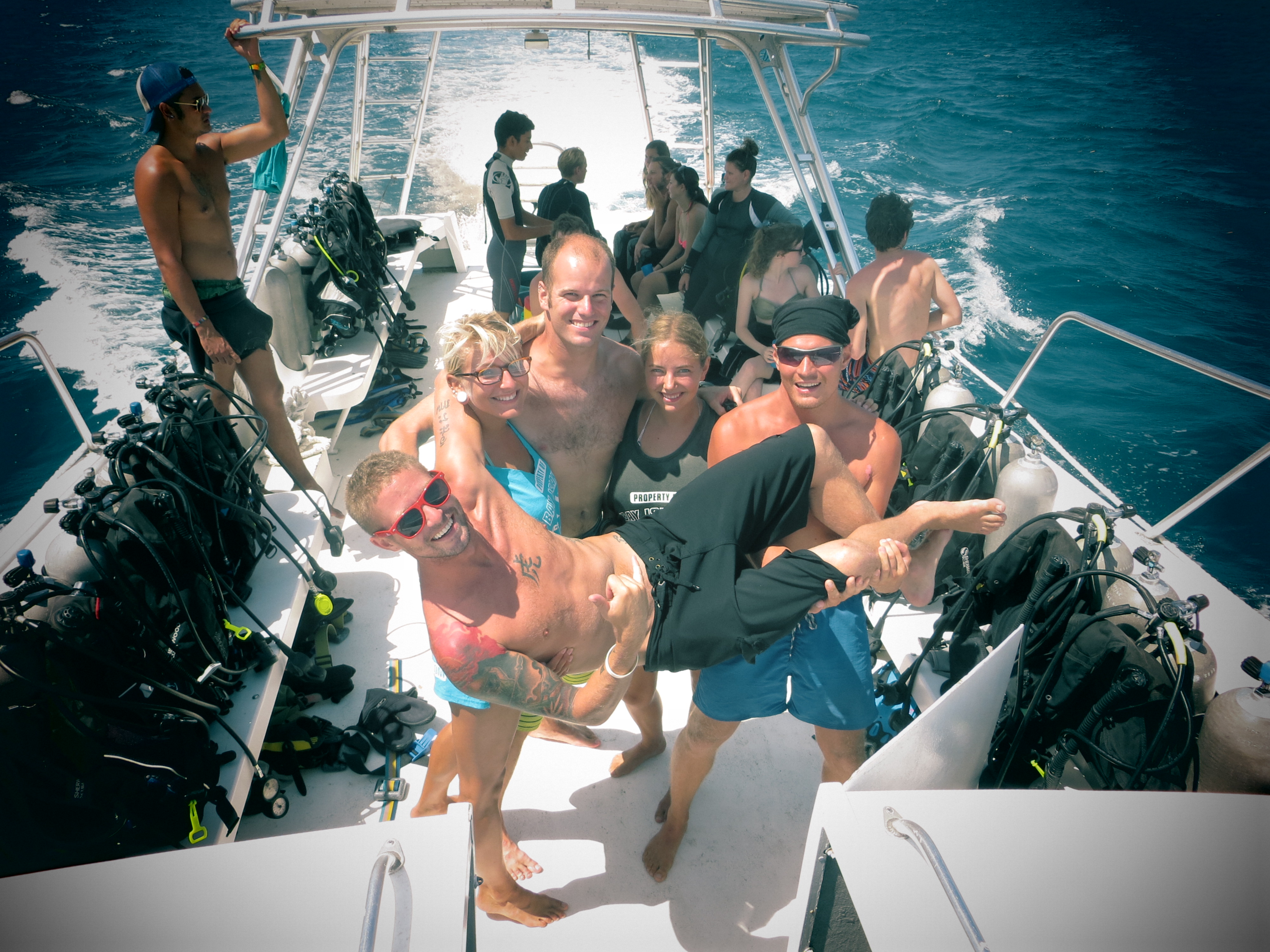
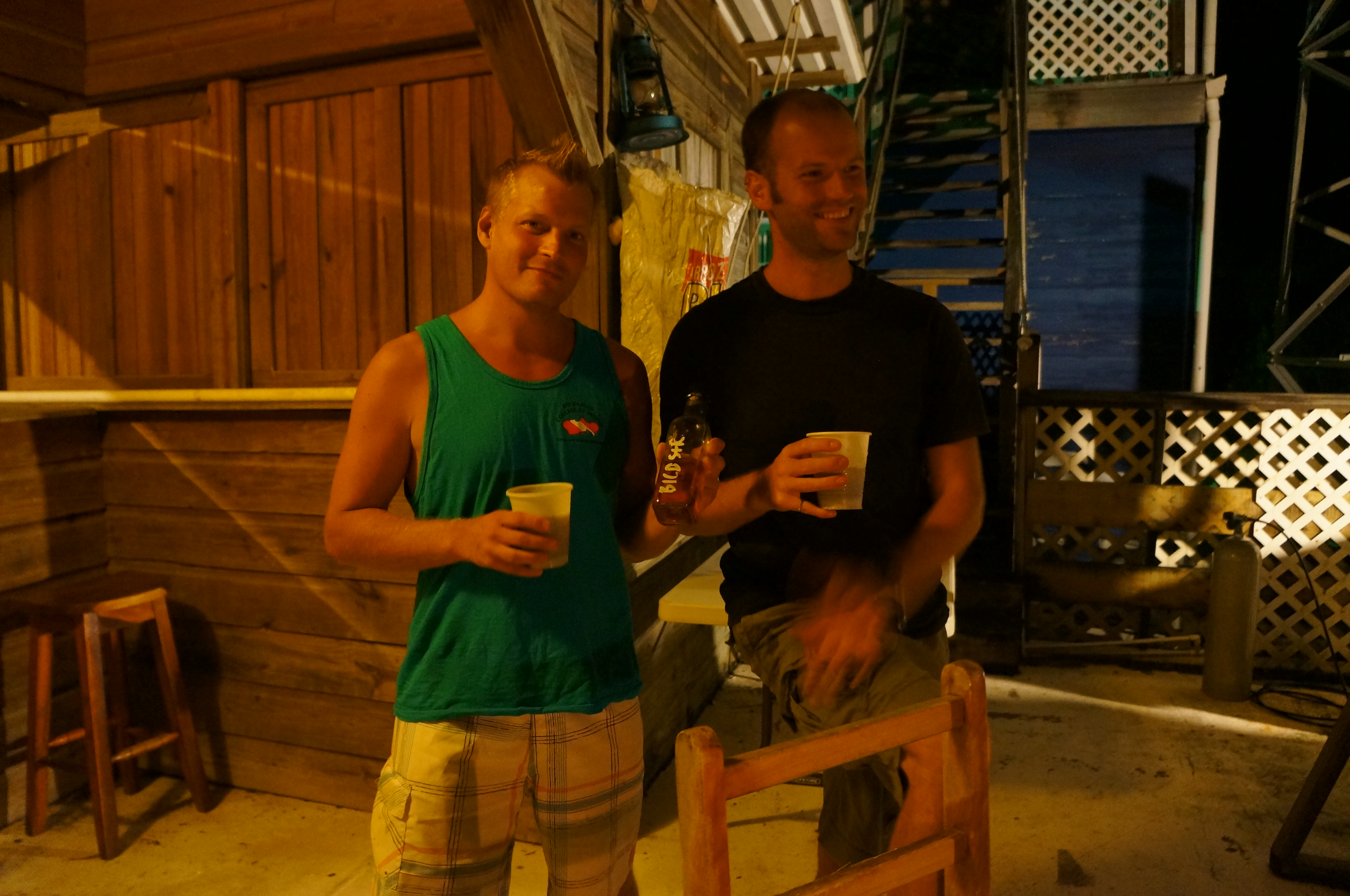
The people I was diving with

Utila had its three lies way before Bocas del Toro. The island is about two things and two things only: drinking and diving. Bars are as abundant as are dive shops and the partying is unending and relentless. Every day you (do) dive, every day you (can) drink. Janne’s blog post struck a point, it is excessive, shallow and quickly you reconsider choosing this destination, but in no time you make friends and realize that no too deep beneath your hangover neighbor lies an awesome person. Other divers, your instructors, the boat captain, the local baleada lady, you get into a routine, the old man sitting in front the corner store says hi everytime you walk by.

Doctor John’s place

The diving industry has this particularity where almost no one that works in it ever thought they would ever become divers. For the majority, it is a second, third or fourth career and as a result this brings a huge variety of backgrounds together in the same place under the same ideal: to have fun and to share it with others.

Consequently, many get sucked in the “vortex”. Travis only wanted to do his open water course and ended going all the way to divemaster. Dave quit his job over the phone. Nora and Meta decided to miss their flight back home so they could stay here longer. I wanted to visit El Salvador and Guatemala.

I never saw that coming

Sometimes, life has other plans for you, all I wanted was to dive: maybe do one or two courses, do some fun-dives, get a t-shirt and move on with my travelling. Problems started when I met Rebecca in Nicaragua, the boss or Bay Island College of Diving (BICD) (she did not tell me at the time), I told her I wanted to be under water and she was quick to convince me that I should just go ahead and take the divemaster course because with it comes free diving for life. The maths are pretty simple, the formation is more expensive, but paying for each individual dive I would get to do over there would cost me many thousands of dollars more.

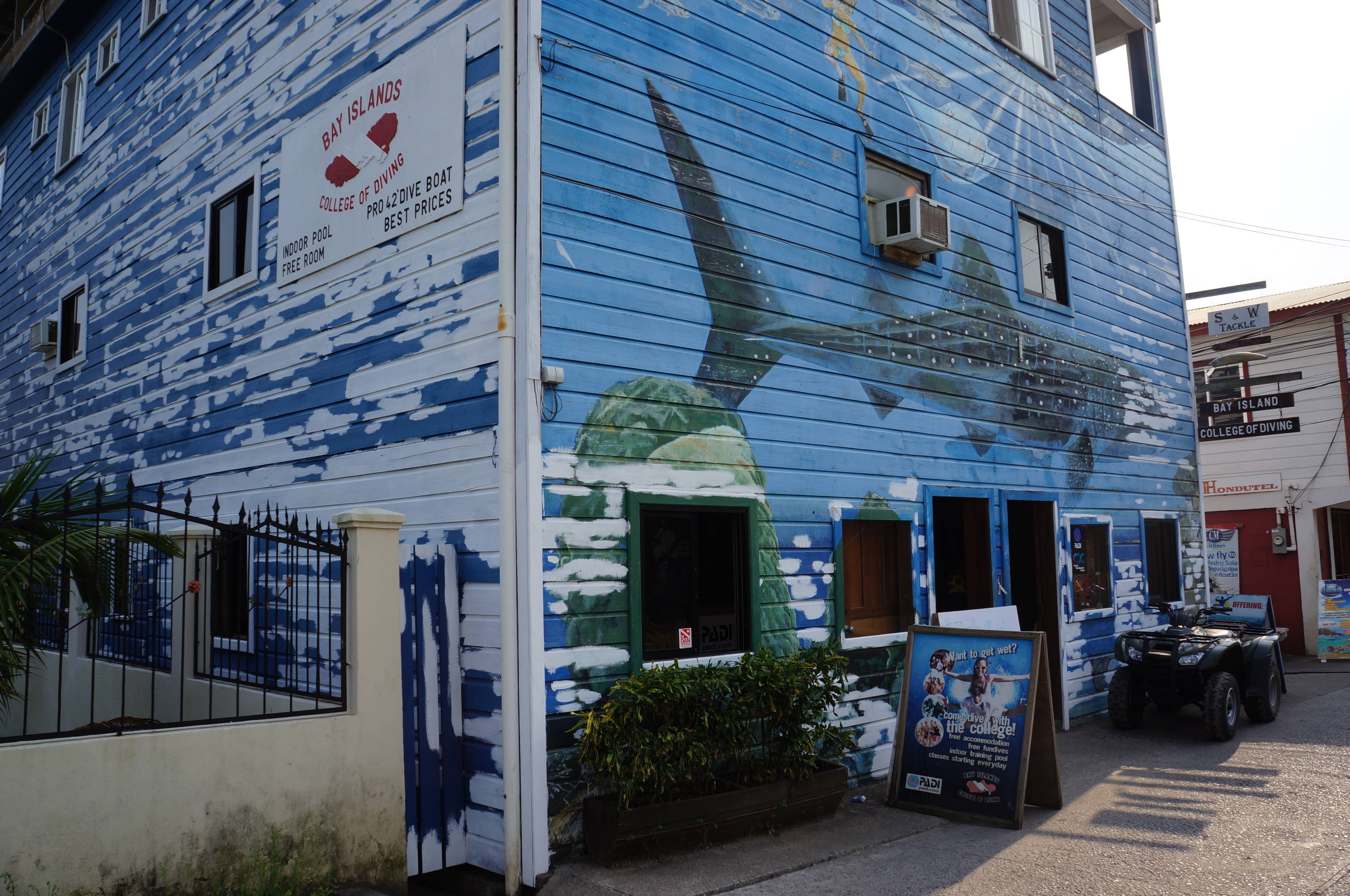
The Bay Island College of Diving

Two days of chicken bussing north, a night in Tegucigalpa (not much to write about it except that it is super sketchy) and the next day I was starting on my advanced and then rescue diver courses. Rebecca told me that I would be starting the divemaster with Janne, “someone” from Finland. She did not specify the sex of that person, so I was left thinking my diving buddy for the coming weeks would be a Finnish lady. Wrong! Janne is actually a man’s name. I knew I was dreaming in colors. In the end Janne made up for his lack of feminine features through awesomeness in many aspects of his personality, but I felt sort of dissapointed. Anyway, with our catching up done, we joined Travis, Dave, Nora, Meta, Reba and John aboard the divemaster program at BICD.

Things were starting to pick up and already I was starting to wonder why I was doing this and what I was doing here. All I wanted was to dive.

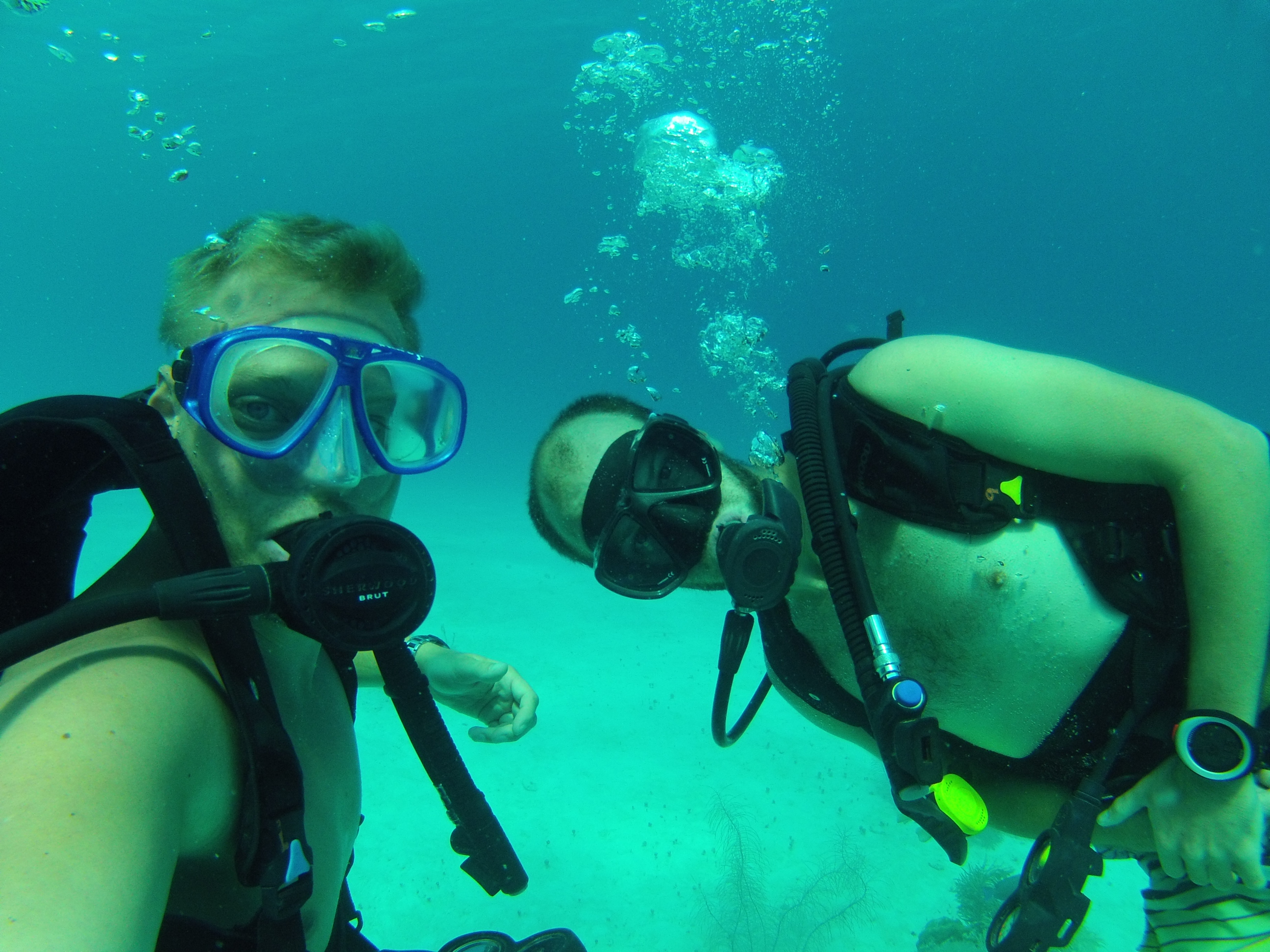
Underwater fun

A divemaster is basically a diving guide. He equips you, takes you diving around, shows you pretty wildlife and brings you back to the boat all while making sure you are safe and enjoying the experience. Diving in itself is a risky activity for the very simple reason that while all life forms started in the water, the many hundred million years we have spend out of it has made us completely incapable of staying lengthy periods of time under it. Technology has filled the gap (SCUBA: self contained underwater breathing apparatus) by making this possible again, but not without risks. Breathing compressed air under water without training or careful supervision is extremely hazardous but if done correctly, it is about as dangerous as golf.

The risks cannot be overstated, but through relentless quality management and research, the diving community has made the sport (in its recreational form) extremely safe. As a divemaster, you become a central part of this risk mitigation effort, but that takes training and experience, which the  course is here to provide by teaching you a wide array of skills and knowledge such as diving theory, search and rescue techniques, leading dives, wildlife identification and so on.

Having all this responsibilities makes diving sound more serious and it does, but it also makes it more enjoyable. As a beginner diver, you crave the adventure, but most of your attention is devoted to maintaining buoyancy, monitoring your air and depth and keeping whoever is leading the dive in sight. As a dive master, you lead the dive, which comes with a moral duty of course, but the confidence and the experience transform what is an extreme activity for most into a sort of meditative experience, something otherworldly.

Diving is really all about fun

Relaxation techniques tell you to concentrate on your breathing, to inhale and exhale slowly, to empty your mind. Under water, this is exactly what you are taught do. SCUABA equipement adds resistance to your breathing so it has to deep and slowly. Your hearing is not that useful, you cannot talk, your sense of touch gets overwhelmed by the contact of surrounding water. All that is left is sight and luckily, coral reefs are among the most spectacular environments on this planet. It has to be experienced to be understood. Everything down there is mesmerizing in its own right. Hovering still in mid-water, watching an hawksbill turtle gnawing at a piece of coral not minding your presence at all sort of gives you the feeling that for that  brief moment you are underwater you are part of it all. Fish are generally no too scared of divers: a squid will acknowledge your presence by turning black, but it will not flee. Everything is captivating, the rules or nature are very different than on land.

Some creatures are extremely hard to find, somehow turning diving into a game of pokemon. I found a toadfish today ! I have only ever seen a batfish ! For some others, its a game of luck, they see you but you will only be able to see them if they choose so, such as is the case with the elusive octopus. I cannot think of something more gracious and beautiful to look at underwater, it is a show of colors and shapes, one moment it is looking at you all bright red in color, the other moment, it turns a shade of gray and tries mimicking a coral bush. Lose sight of it and it will most likely vanish forever. The right creature can turn an ordinary dive into a memorable experience. It takes patience and it takes luck. Some clueless idiots come diving expecting to spot an eagle ray. Sorry for you, but the only places where you are guaranteed to see animals are zoos and aquariums. Do not feel disappointed because you failed to spot that special creature, you just spend 45 minutes breathing underwater, that is also cool.

Getting ready for a staff night dive at the wreck.

There is more to diving than wildlife spotting, especially when done with friends. Explore the hulk of an old cargo ship at night. Get chased by and green moray eel. Map a dive site. Drive a spear through the skull of an unsuspecting lionfish. Come back up on the surface and seal in that memorable dive around a conversation with your buddies.

Island fun

Good times were abundant on the island as much as they were underwater, albeit with reduced options compared to the mainland. Of course, you had a beach, a few possible hikes (freshwater caves), you could rent kayaks, but in all truthfulness, much of the entertainment revolved around the consumption of alcohol and other types of drugs. And the going out was good. Most people came over to take their open water course, which limited their stay to only a couple days, but some faces would always come back and soon you would realize that they either work there or got stuck just like you. You made friends fast.

There was the bar scene, which was limited to only a handful of places. At the dive shop we had a thing called Thirsty Thurdays, which usually started as a casual barbecue and ended in a night of heavy drinking. Once in a while (in normal time that is quite often), there would be the odd memorable event. One of those was a water caye trip which turned into a massive rescue operation.

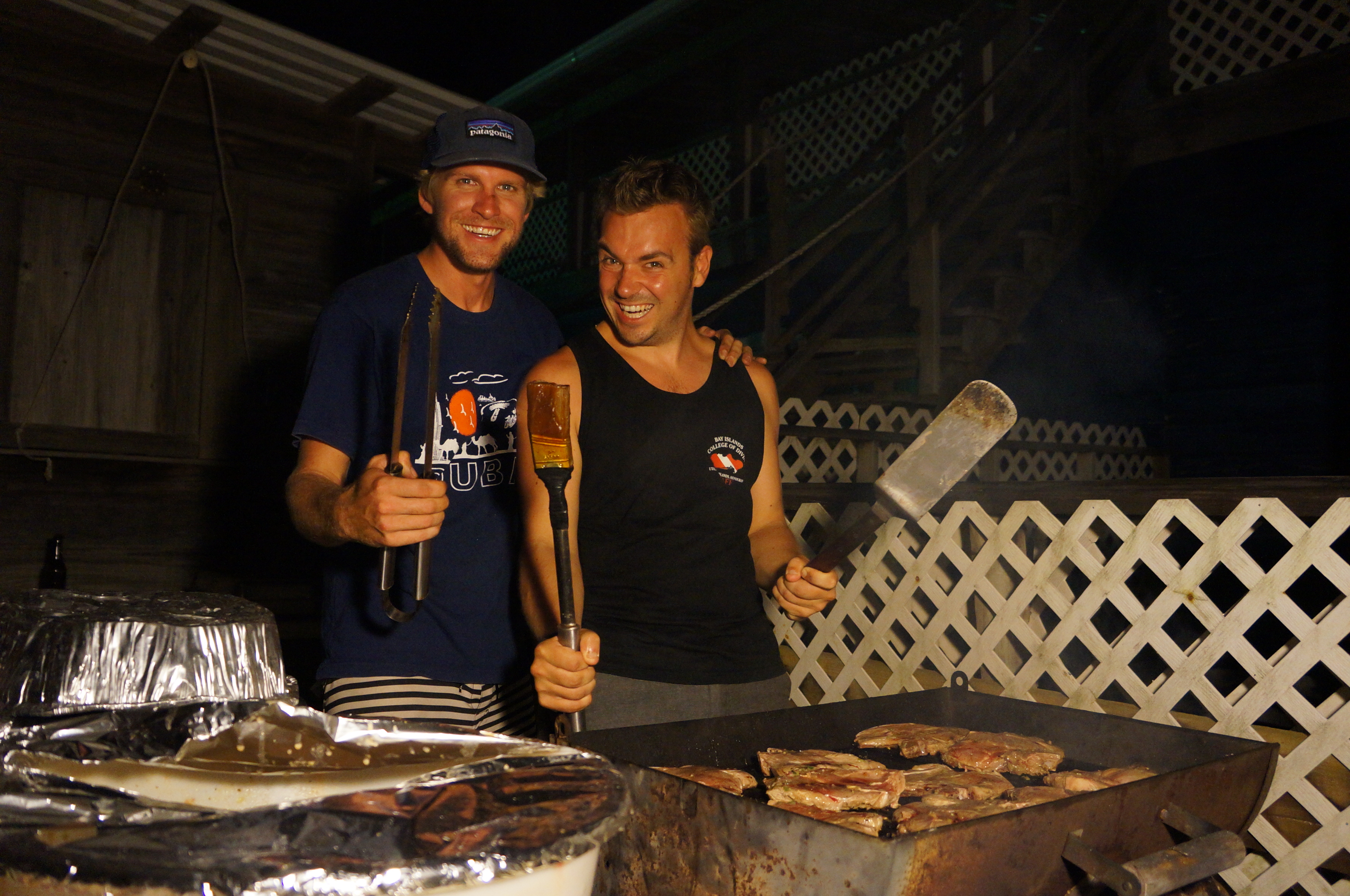
Thirsty Thursdays

Every two sunday afternoon a bar on the island would organize an afternoon of partying on a deserted island half-an-hour boatride away from town. That sunday started out like every other one, but due to miscommunication about which boat were to take what people and everyone’s desire to spent as much time as possible on the caye, about forty individuals were left stranded there. The ball got passed around a few times until Rebecca, the manager at BICD decided we should be the heroes for that night. With but an hour to sober up from an afternoon of adult fun, I was back on a boat with divemaster Dave and Chad who, all excited by the perspective of saving all those pretty topless girls from a night with the sandflies, actually kept on sipping a bottle a rum they snuck aboard. The sun had set, the sea was a lot rougher that on the way back and finally, the ride was a lot slower because had to take a much larger boat that would fit everyone. The island having no dock, this also meant that it would not be possible to beach that boat. Upon our arrival there, I remember hearing a loud cry of relief before chaos ensued. We could not get closer than about 50 meters from the island and the seafloor was too loose for the anchor to take hold, so we had to yell to everyone there they had to swim to us.

This had to be done in a couple waves as the boat was getting pushed towards shore but in the end, everyone got onboard. Reflecting back on the event, we were extremely lucky it went without incidents: everybody was drunk/high, some were poor swimmers, it was dark, the sea was rough. We were praised more than once on the way back, with promises of free thank you drinks and everlasting gratefulness. None of that would ever be fulfilled.

At the end of the day, it all blends together. At the end of the day, it was just another crazy Utilian adventure.

Learning Finnish

Every time I would be out doing some “serious drinking” with Janne I would ask him for a new Finnish word. Every time he would question my interest in learning his language and my reply would always be that I love the sound of it and find learning languages passioning. For posterity, I shall write down the extend of my vocabulary before it slips my mind. Mistakes are intentionally left uncorrected, Finnish, like Spanish, is written like it is spoken, but it being so foreign still makes it hard to guess the correct orthograph.

  • moi: hello
  • kiitos: thanks (that I learned when I was in Finland)
  • yksi, kaksi, kolme: one, two, three
  • bisse: beer
  • bessi: water (good in between bisse)
  • rarra: money (necessary for purchasing bisse and bessi)
  • koira: dog
  • liahpulla: Finnish meatballs (its what they brought to the “pot luck at cell block C (aka my house)”)
  • minnu nemene on: my name is
  • vissu ma on kandessi: fuck I’m drunk (became extremely useful during that snorkel test night)
  • kiippis: cheers!
  • uva uaatta: good night

Motherfuckin sand flies

All is not fun and games on Utila. Spending so much time high on life makes the landing back into physical reality somewhat rough. For some it is ear infections from diving every day, for me it was sand flies. At dawn especially they are a big issue. A lucky few appear to be immune but I was not part of them; my legs were soon full of bites and the urge to scratch was unbearable. Nothing I would be concerned with normally, the woulds were very superficial, but it got infected. It could be the constant wetness or grey water runoffs directly in the sea or both, I do not know, but what was merely scratches turned into pus oozing deep crater like wounds. Only after a few weeks without any improvements did I decide it was time to act. I got antibacterial cream, pulled out my first-aid kit and made it an habit of disinfecting and putting cream on them once I was out of the water.

Then something else occured, twice. I only remember feeling a small prick on my heel on my way home on night but two days later, a massive extremely painful blister with swelling radiating all around my foot had grown from where the small prick was, leaving me limping quite badly. After a week it went away and I was just starting to recover full mobility when something similar stuck the side of my foot, turning again into the same type of blister but this time a lot more painful and swollen. Now it was time to go see Doctor John.

Apparently he was hangover that day but I was taken care of by his Austrian nurse. “This is not pretty”, yes I know. “No diving for a couple days for you” shit. “This is a staph infection, we will have to scrape it off” shit. I usually am pretty ok with me or other people conducting medical procedures on my body but that time, I had to ask for a glass of water for it felt like I was about to faint, especially when she started cutting away the blister on my foot to uncover what was under: a gnarly infection.

The next day I already felt a big improvement, not only on my wounds but also on my general level of well-being. My immune system was really at war, thank you modern medicine. Concerning the two blisters on my right foot, I am still in the unknown. Staph infections do spread to nearby skin lesions, but this was something different. My first theory was that it was a spider bite and Nick suggested it could have been a brown recluse spider. However, according to Wikipedia, they are not found in Central America. .

This whole story left pretty obvious marks on my legs. Some get tattoos to remind them of places and events, I got scars. Regardless, the jungle is a mean place, if something is wrong, better act quick before it gets out of hand.

Got stuck

I wanted to make this trip about visiting every single country in Central America. Having spent much more time that planned for in Utila, this is not going to happen, I will have to leave mainland Honduras, Guatemala and El Salvador for another voyage. Is that a bad thing? No. Am I dissapointed? No. The fact that I could choose to stay in Utila is a perfect example of the range of freedom allowed with no-time-limit trips. Not to forget that staying somewhere for extended duration also counts towards travelling, which some aspects are meant to be experienced this way. Like friendships, which take a while to build. Like ecosystems, which takes a long time to explore. Like baleada places, all which you should try a couple times to truly find your favorite one.

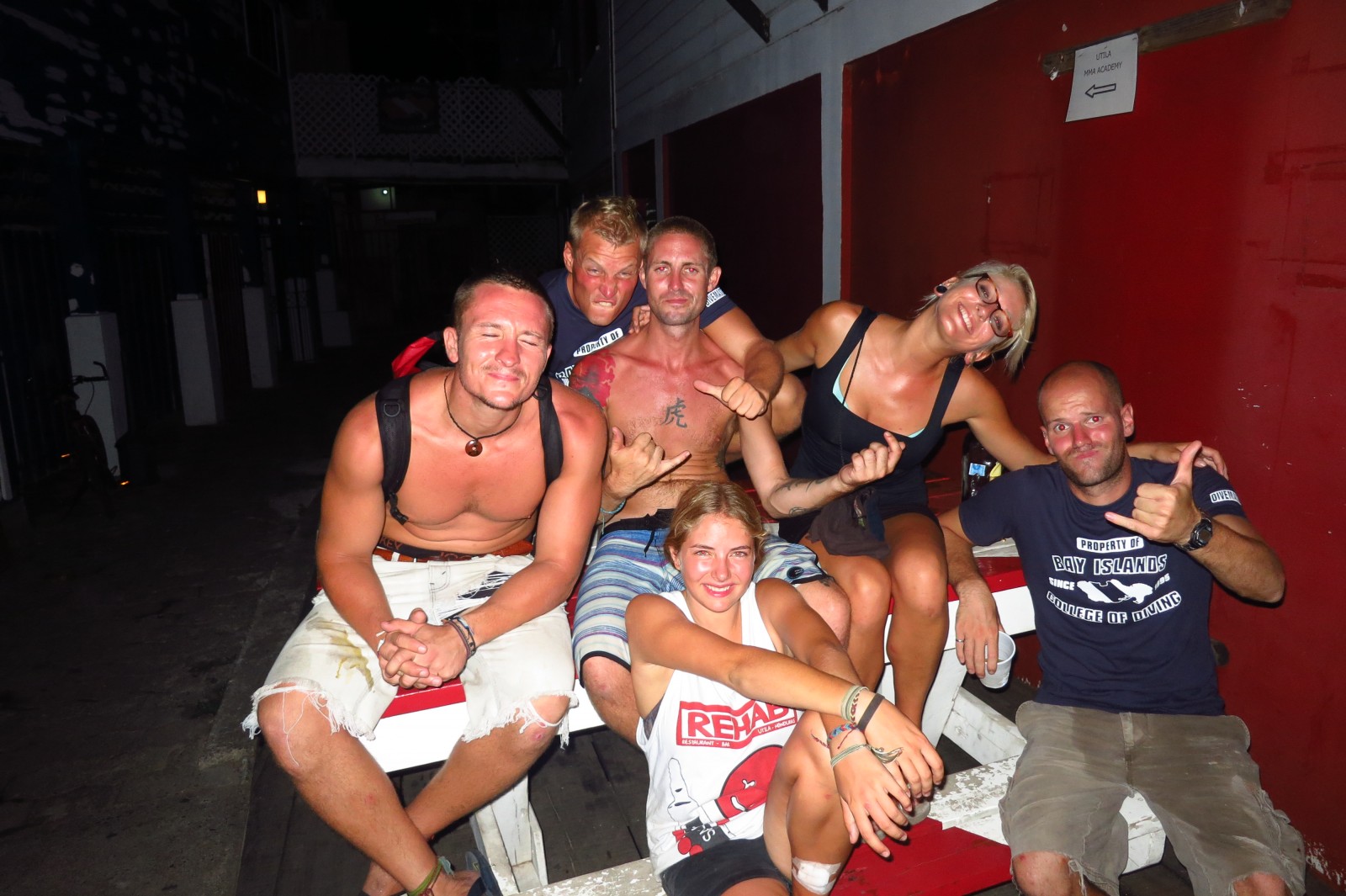
Janne, Dave, Travis, Nora and Meta, spending those two months with you was beyond awesome. Rebecca, Vanessa, Nick, Rimas, Heather, Fern, Kelsey and Captain Seth, you are the reason this was so much fun. For some of you this is only a good bye, as I will most likely come back to take technical diving courses, for the rest, farewell.

Now I need to find a way to put this divemaster thing to good use…

Spearing lionfish

A couple of lionfish (pterois) having a casual hangout on a lazy carribean Thursday afternoon. Just chilling there, enjoying time with friends under a rocky outcrop. We come around and spear three of them. Big Willy gets two, Nick gets one. The others finally notice what is going on and dart inside the closest cavity. Sad of having had their afternoon ruined.

To those unfamiliar with them, they are one beautiful fish, an amazing encounter during a dive. To those who now them, they are pest and must be exterminated. Incredibly hard to kill, three pointy end of an Hawaiian sling through the head and more often than not, they will manage to escape (albeit with massive brain damage). The trick is to spear them once and then impale them again a few times through the skull with another spear.

Sounds violent ? It is.

What justifies it is that lionfish, are an invasive species and posing a serious threat to reefs. The story goes that they were introduced some years ago when an aquarium in Florida broke during a hurricane and set loose all its foreign residents in the ocean. Ever since, having no natural predators, they have been spreading all over the Carribean sea and the Atlantic coast of the United States, eating other endemic fishes by the ton and compromising the fragile reef ecosystems they invade.

Efforts to curb the growth of their population are underway everywhere they can be found, but they are most likely in vain as the lionfish reproduces really fast. The least we can do is try to hunt them as much as we can until we find a way to teach sharks and big groupers that lionfish are in fact, tasty. So much so that they have been made part of the menu at some restaurants in Utila, Honduras. A popular fixture on the island, they have been mostly eradicated by the divers, but around sea mounts further out, they still thrive.

The dive shop I was working at is affiliated with a resort that features lionfish on its menu (the “save the reef” burger), so once in a while, they send a boat out to uncharted sites to hunt them. I was blessed to go on two occasions. It is a lot fun but somewhat technical. You dive outside of the limits of recreational diving:  you can be far apart from your buddy, you go up with little air left (and you consume a lot because of the adrenalin) and in order to take a shot at them, you need to get dangerously close.

Lionfish are extremely poisonous. A single prick from the six spines on their back or from one they have on every fin will make whatever body part affected inflate to three times its size and leave you in agonizing pain for a while. It has been compared to getting your fingers caught in a car door someone just slammed with full strenght. Since long spears are illegal to fish with, you have to get your hand very close to them in order to release the spear with enough force. Needless to say that this is not the time to tune up your buoyancy control. Lionfish will not flee, except those who have had a previous encounter with a hunting diver, they still think they are the king of the reef and will simply make themselves look big as you get closer. But miss them once and they are gone. In spite of the massive display of fins they lug around, they are incredibly fast.

Once the catch is made, the dead lionfish is carefully stored into a plastic tube as its spines are still dangerous. However, they are quite safe to fillet later on because the absence of blood pressure actually makes the venom retracts in the spines. Once in the kitchen, they make delicious ceviche.


Getting stuck

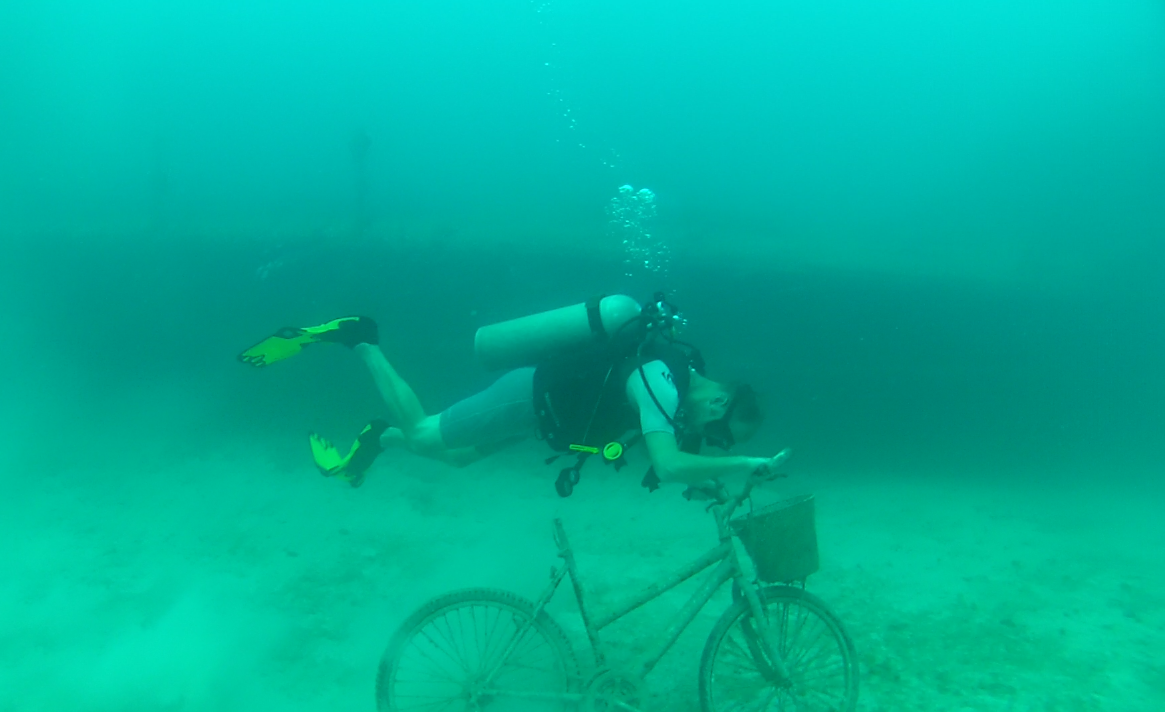
Cycling at 30 meters deep, with the wreck of the Haliburton in the background.

Over my travels I have encountered a great number of places where people get stuck. Places where they spend a lot more time in that originally planned for, sometimes ending their trip there, sometimes even coming back to establish themselves in a more permanent manner.

Not so common in Europe or in America, where tourism is generally done among cities or in their vicinity, but in Central America, these persons are abundant  It can be because of the climate, because of the proximity to a favorite activity (surfing…) but more generally, its the people you meet and the friends you find that make leaving so hard. It’s the stark contrast with a life back home in a society that is evermore criticized for its individualism and consumerism.

I am in such a place now. The island of Utila, where you come to dive and you stay for the vibe (and the diving too). Easily a third of the island are gringos and quasi every single employee in my dive shop is an expat. They all left at one point but they came back. Spending too much time here had sort of alienated them from the life they left and their old acquaintances  On the island, it’s diving every day and socializing at night. In spite of all the tourism, there is a prevalent sense of community. The job is hard, the hours are long, but everyone come to this little piece of land to go underwater and is happy to be there doing so. There are no bad days.

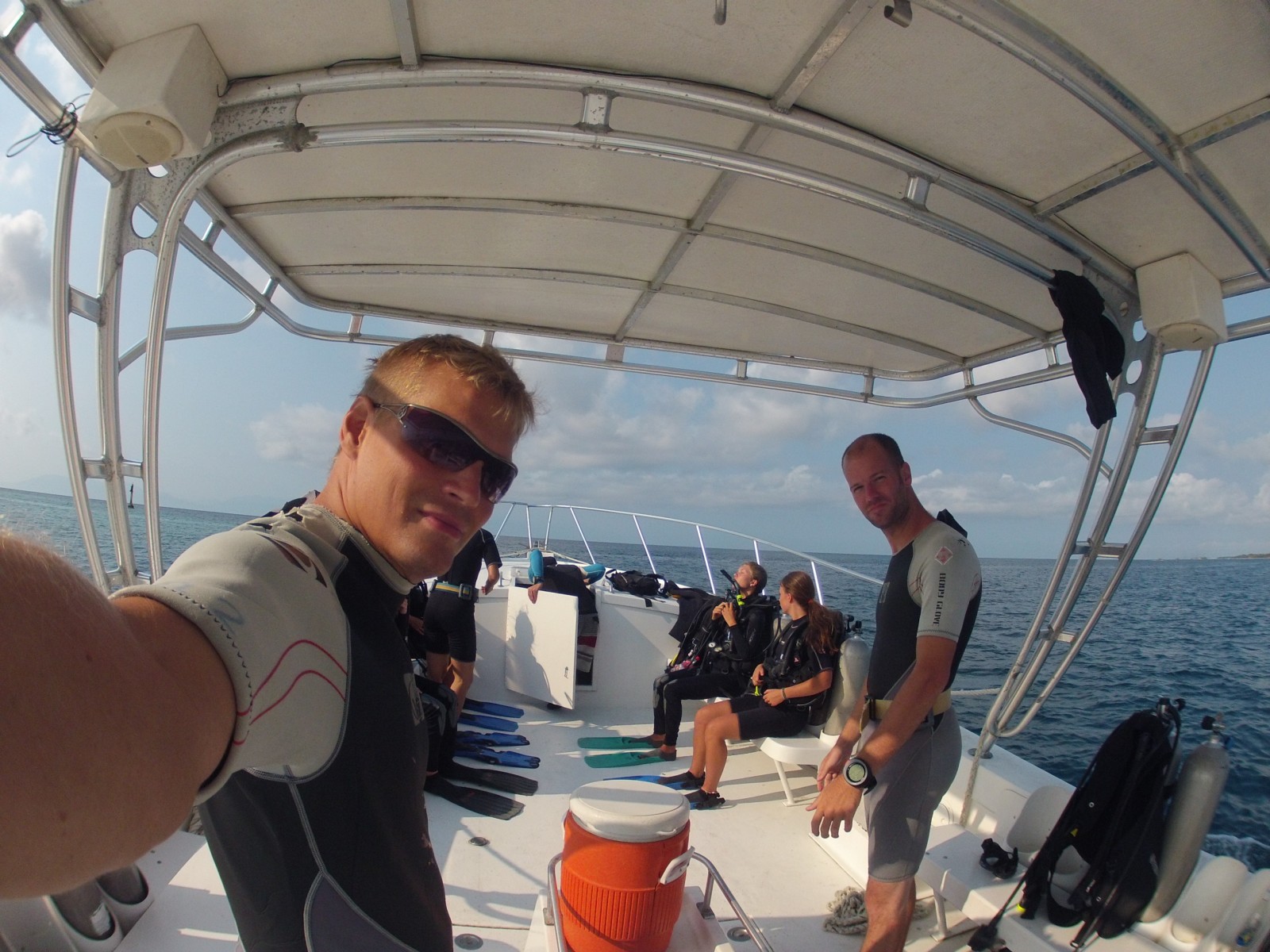
Going on a dive aboard the Neptune in Utila, Honduras.