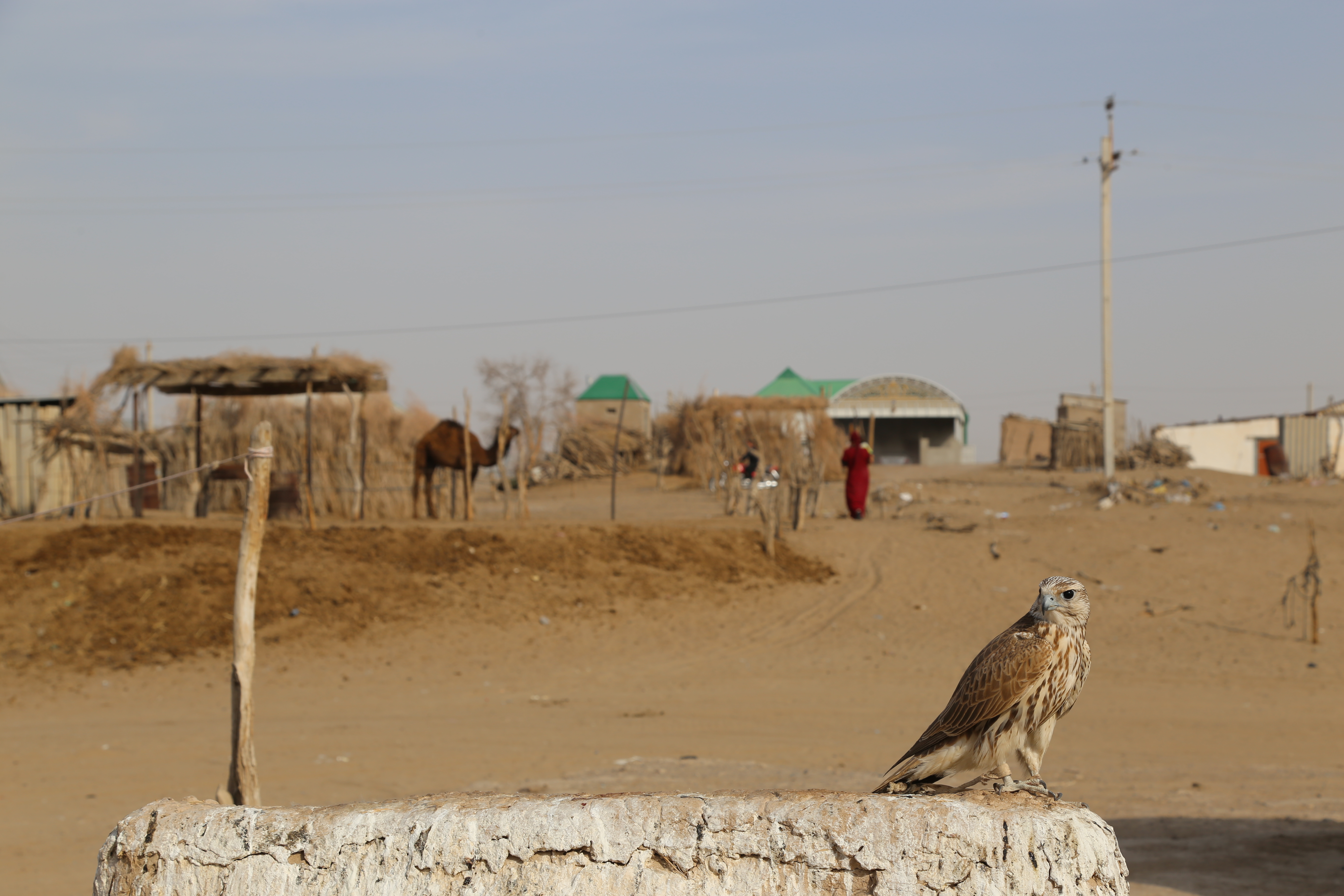
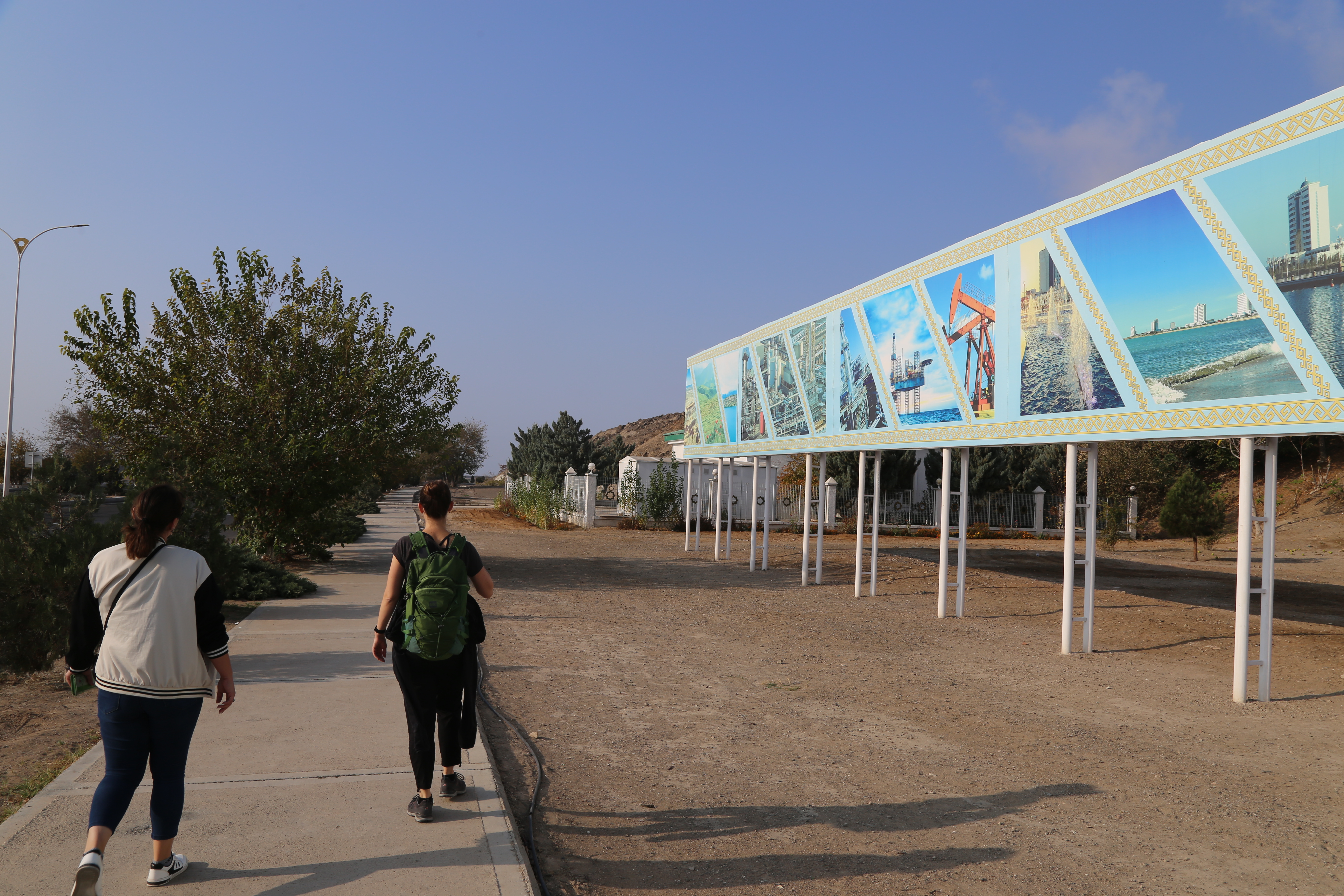
Réveillés de bonne heure, nous nous sommes enfilés un déjeuner rapide pour ensuite reprendre la route vers Ashgabat. Deux arrêts à d’autres cratères (l’un rempli d’eau et l’autre d’un peu de boue) et une tentative infructueuse de trouver un ami de Voldymyr pour qu’il nous présente ses faucons de chasse ont fait que l’on est arrivé quand même tard en ville. À peine de le temps de faire le plein de souvenirs et l’on nous reconduisant à notre hôtel. Nous avions un petit deux heures avant de rejoindre notre guide au restaurant. Cette fois-ci, pas de chauffeur, nous tenions à nous y rendre à pied. Un peu à reculons, elle a acquiescé à notre demande (Ashgabat est truffée de caméra de toute manière, alors les touristes peuvent s’y promener seuls).
Il n’y paraît par sur la carte, mais la ville est absolument immense. Malgré un départ hâtif, il nous a fallu terminer le trajet en taxi pour être à l’heure. Le repas a été fort agréable et bien arrosé, notre guide partageant en fascinants détails sa vie au Turkménistan et ses quelques tentatives infructueuses de quitter le pays pour s’établir ailleurs. Le retour, nous sommes parvenus à le couvrir à pied sans trop de problème vu que nous n’avions plus de contrainte temporelle.
J’aurais adoré rester une ou deux journées de plus ici pour explorer la ville un peu plus en autonomie. Or, notre vol de retour vers Istanbul quittait vers 4h du matin. Voldymyr est passé nous prendre à notre hôtel après une petite sieste d’une heure pour aller nous conduire à l’aéroport en forme d’aigle. Demain matin, il reprenait son travail de technicien à l’usine d’embouteillage d’eau. Les adieux furent sincères et accompagnés d’un généreux pourboire pour nous deux accompagnateurs qui, il faut le dire, ont fait un excellent travail.
Ici se termine donc une aventure débutée en 2017. Le Turkménistan, dernier pays de l’Asie Centrale et non le moindre était maintenant visité. Dans certains aspects tout à fait particulier, il était néanmoins tout à fait asie-centralesque (pour reprendre les mots de Audrey); sa visite, une expérience inoubliable aura été ponctuée de moments de nostalgie ou nous nous remémorions nos nombreuses journées passées dans cette région de l’autre bout du monde, unique, riche et fascinante.
Je m’attendais en quelque sorte à une expérience analogue à la Corée du Nord. Les effigies du président à tout va et l’omniprésence de la propagande n’ont pas manqués de nous rappeler le régime politique dans lequel nous nous trouvions, mais au delà de ça, la société turkmène peut se vanter d’être bien plus accueillante. Au lieu de monuments et de musées à saveur belliqueuse et rancunière, tout est toujours dans le positif. Le Turkménistan veut être votre ami. Pourquoi ne s’ouvre-t-il pas davantage au monde dans ce cas ? C’est peut-être là qu’on tombe réellement dans les dessous plus sombre de la dictature: les élites veulent garder le pouvoir.
Volodymyr nous attendait à la sortie de l’aéroport d’Ashgabat. Encore une fois, j’ai été très impressionné par sa devanture d’aigle déployant ses ailes (forme qui pourrait compliquer un futur projet d’extension). En après-midi, nous allions quitter pour Darvaza mais avant, une nouvelle dose de monuments et de places dans la capitale.
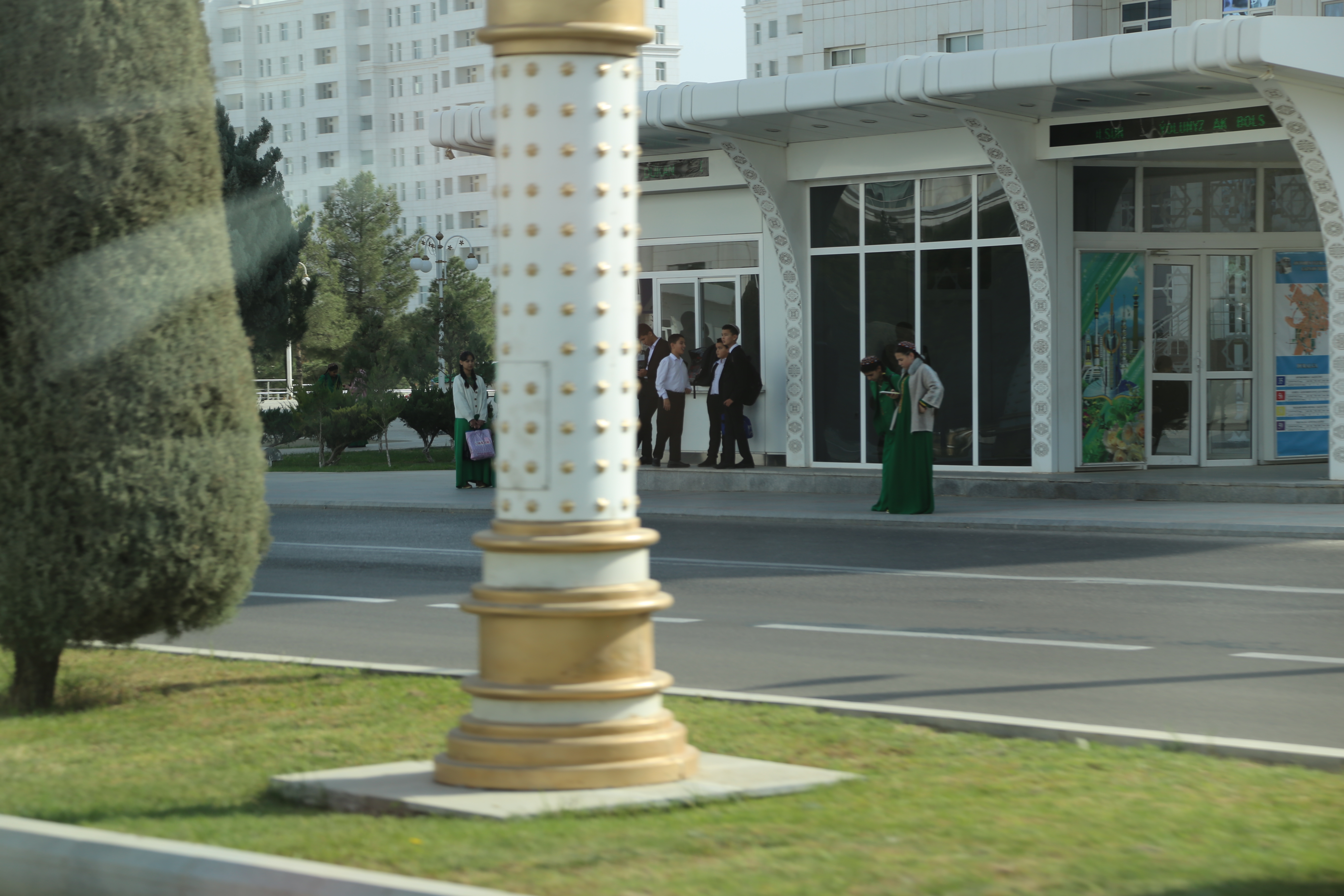
Un arrêt de bus, remarquez les uniformesVue depuis le palais des marriages
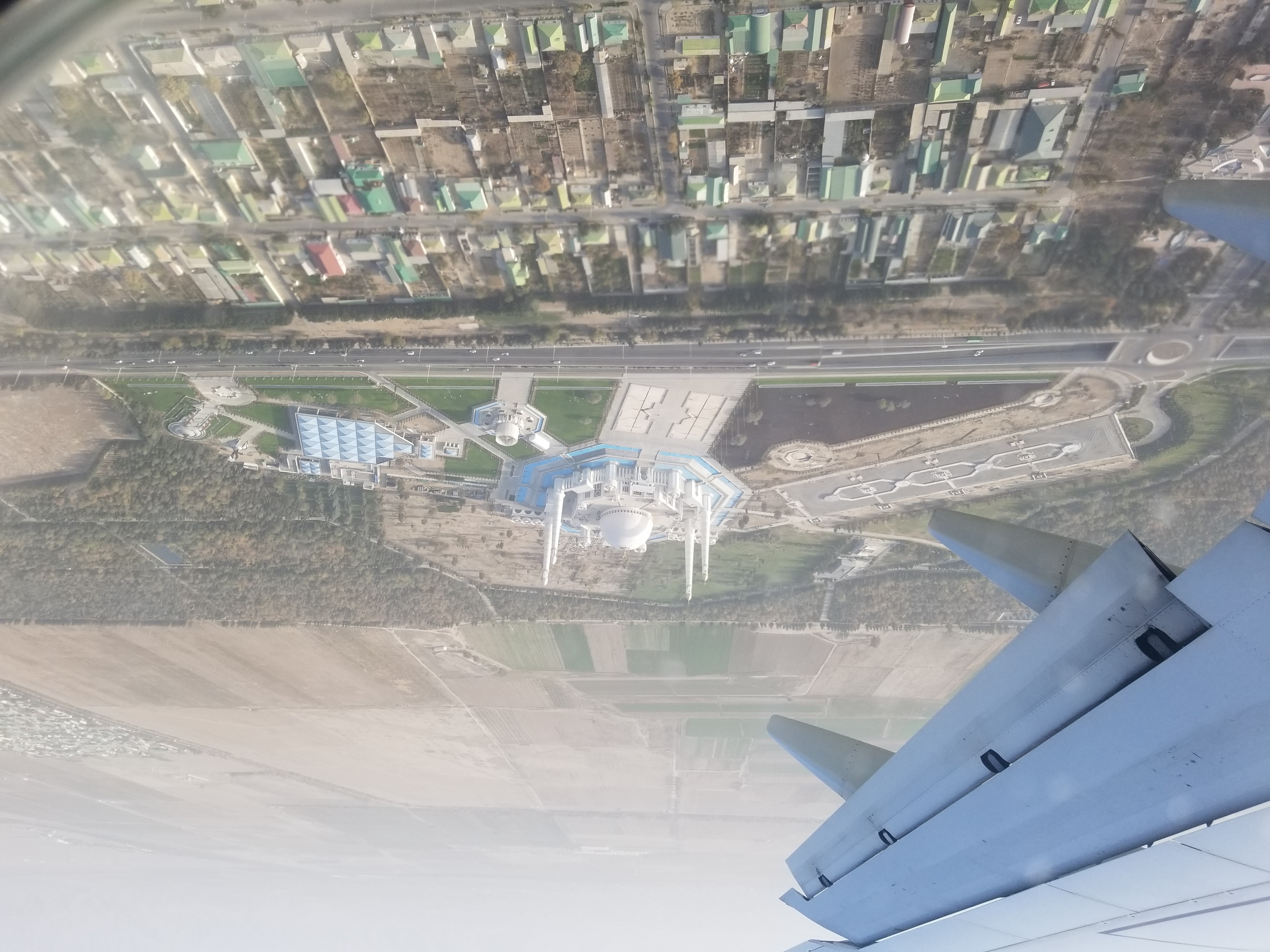
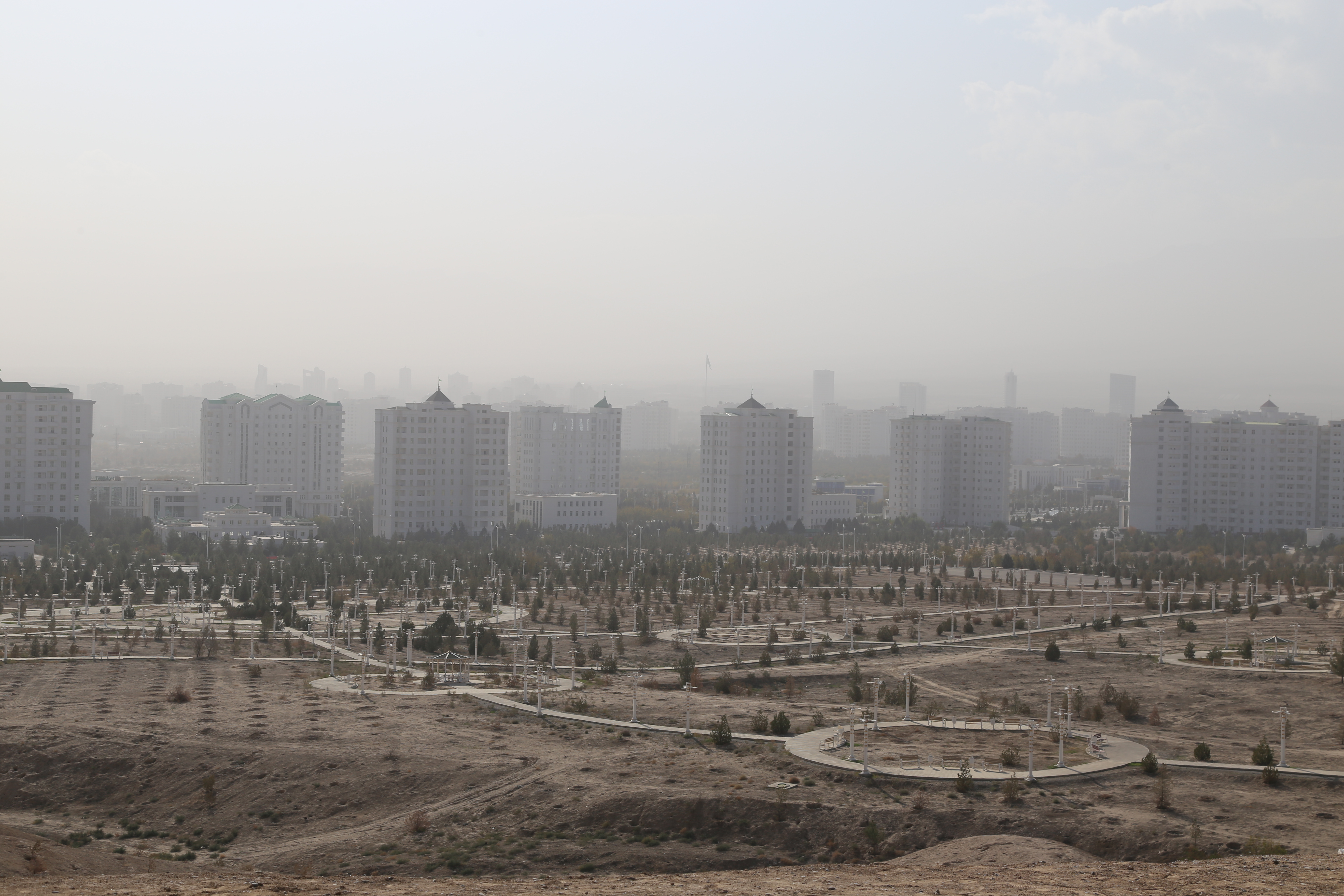
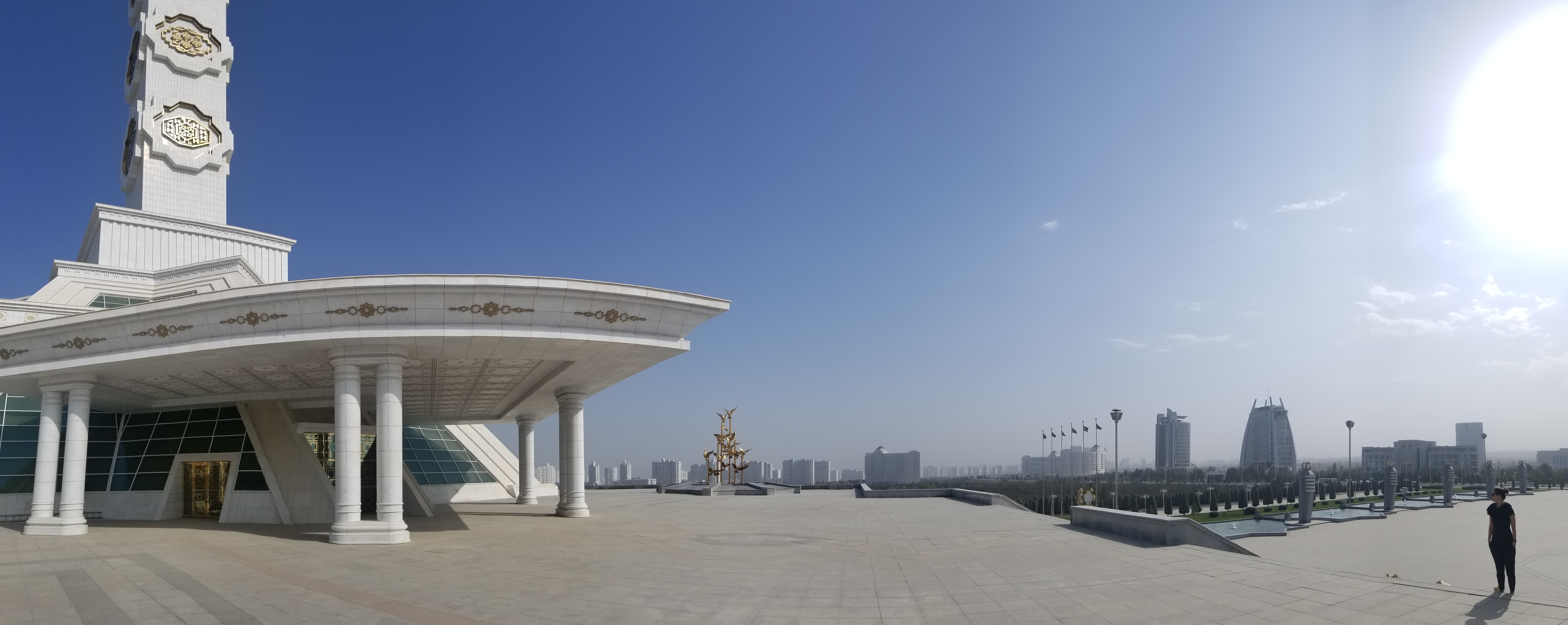
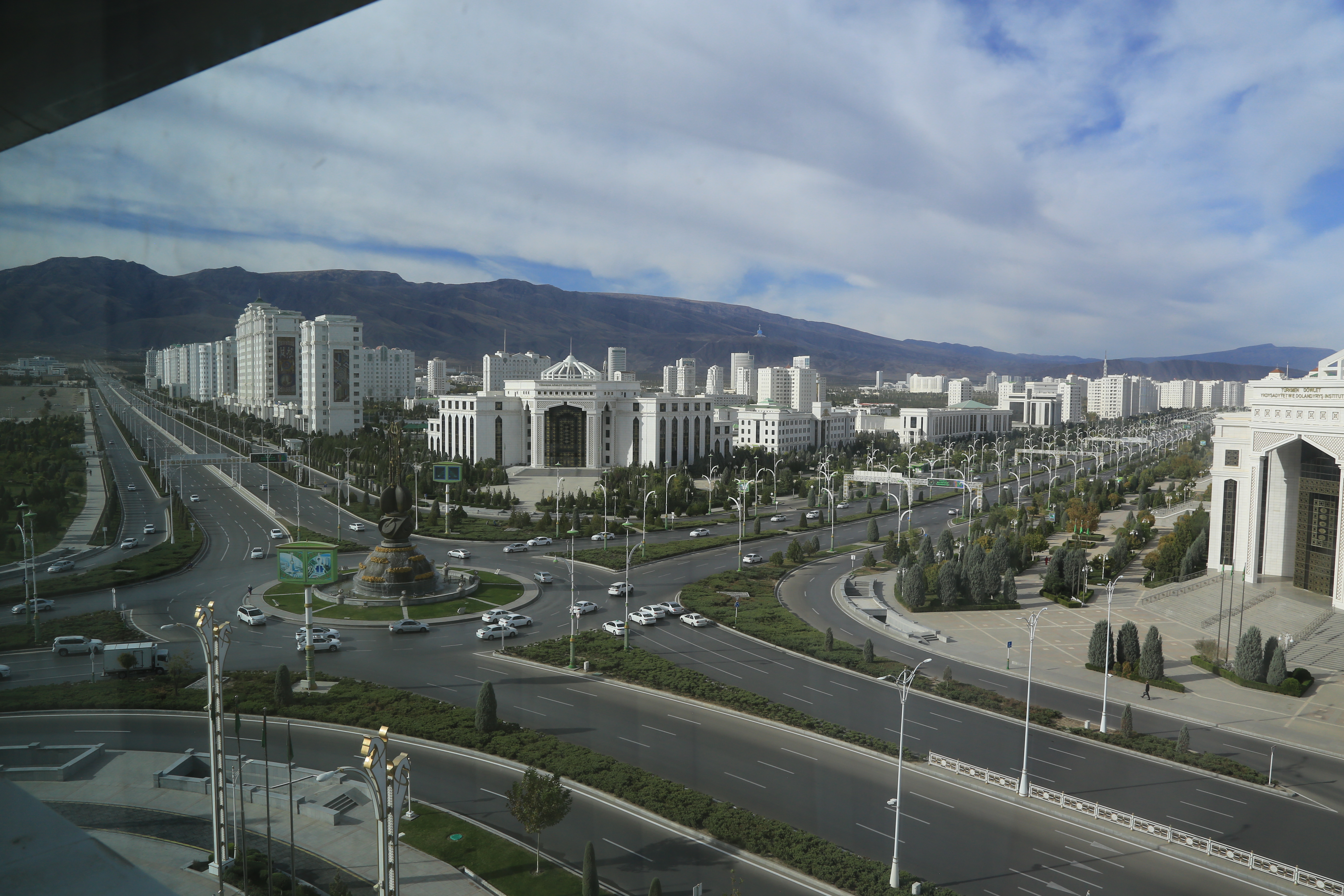
Le palais des marriages et l’endroit dans la ville où tous les couples, après avoir faits leurs voeux, viennent signer le registre civil. Il domine le paysage et vous le constaterez, est d’une forme tout à fait inusitée. Apparemment, il contient des restaurants et des salles de banquets somptueusement décorées. Mes efforts pour convaincre Nadin d’y entrer auront été vains.
Le palais des marriagesVue depuis le palais des marriages
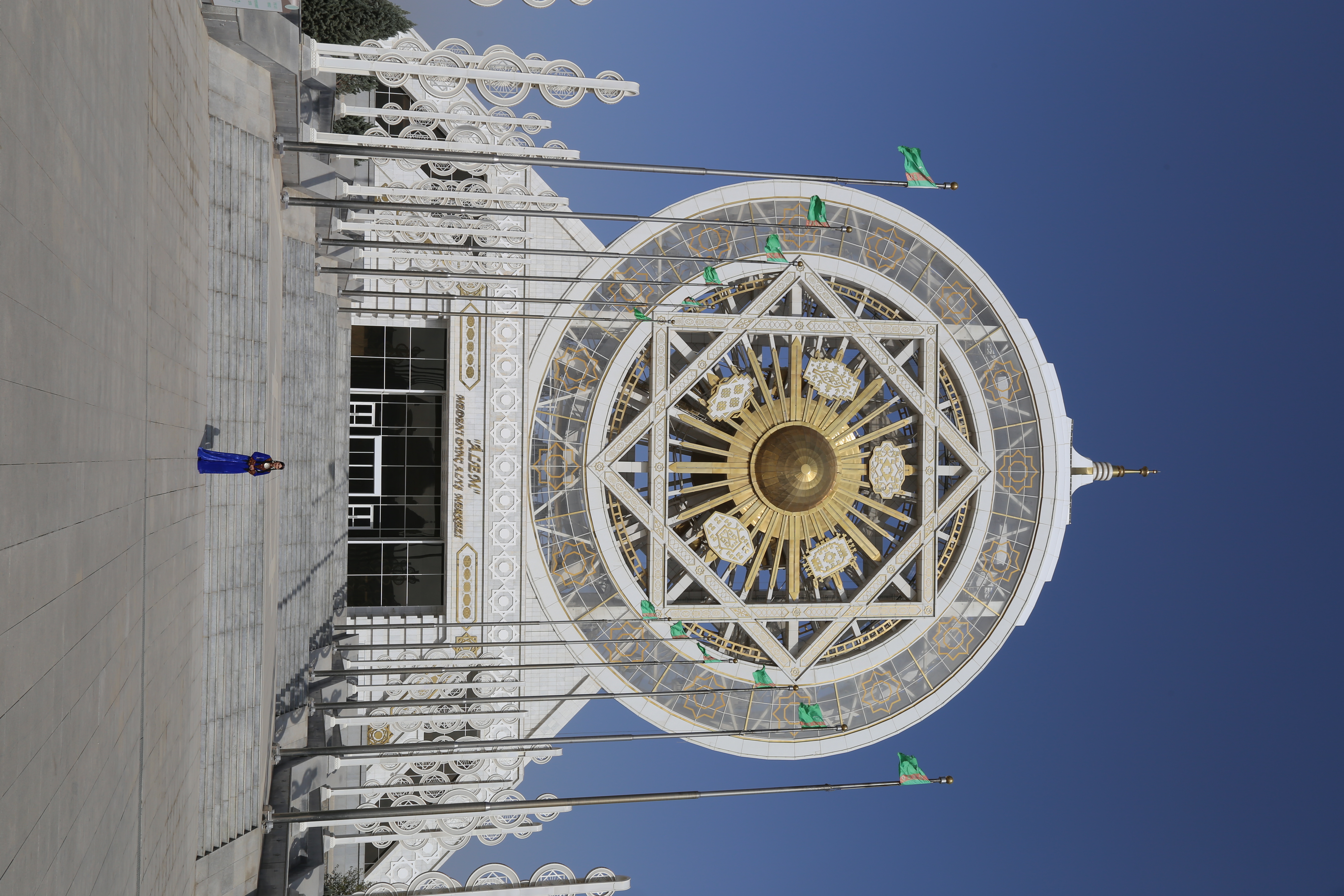
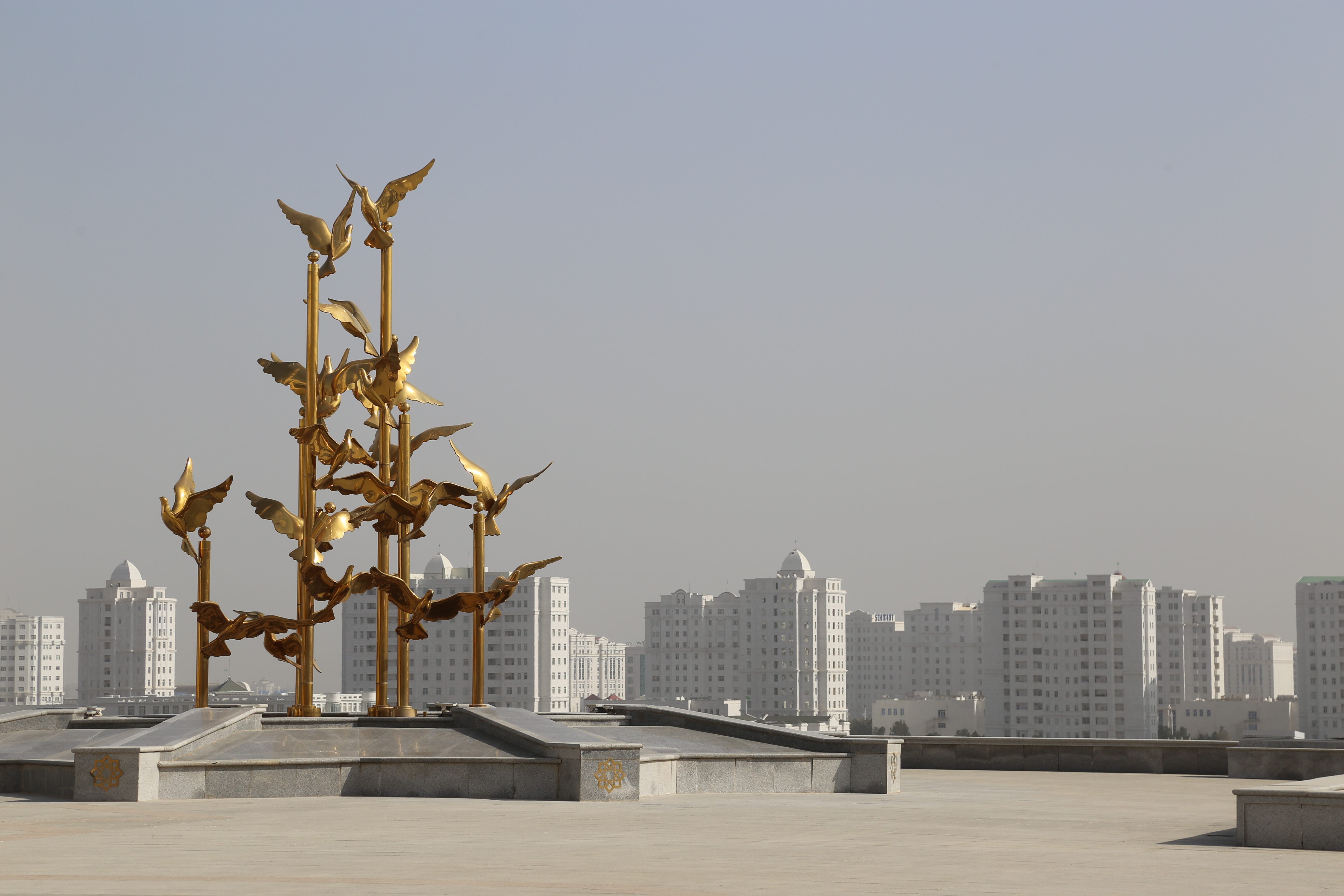
Quelques grands boulevards vides plus loin, l’on trouve le Centre culturel d’Alem. En son centre, la plus grande roue intérieure au monde … en panne depuis un certain temps. La place qu’il surplombait, absolument massive, donnait sur le parlement turkmène.
Place devant le Centre culturel d’Alem
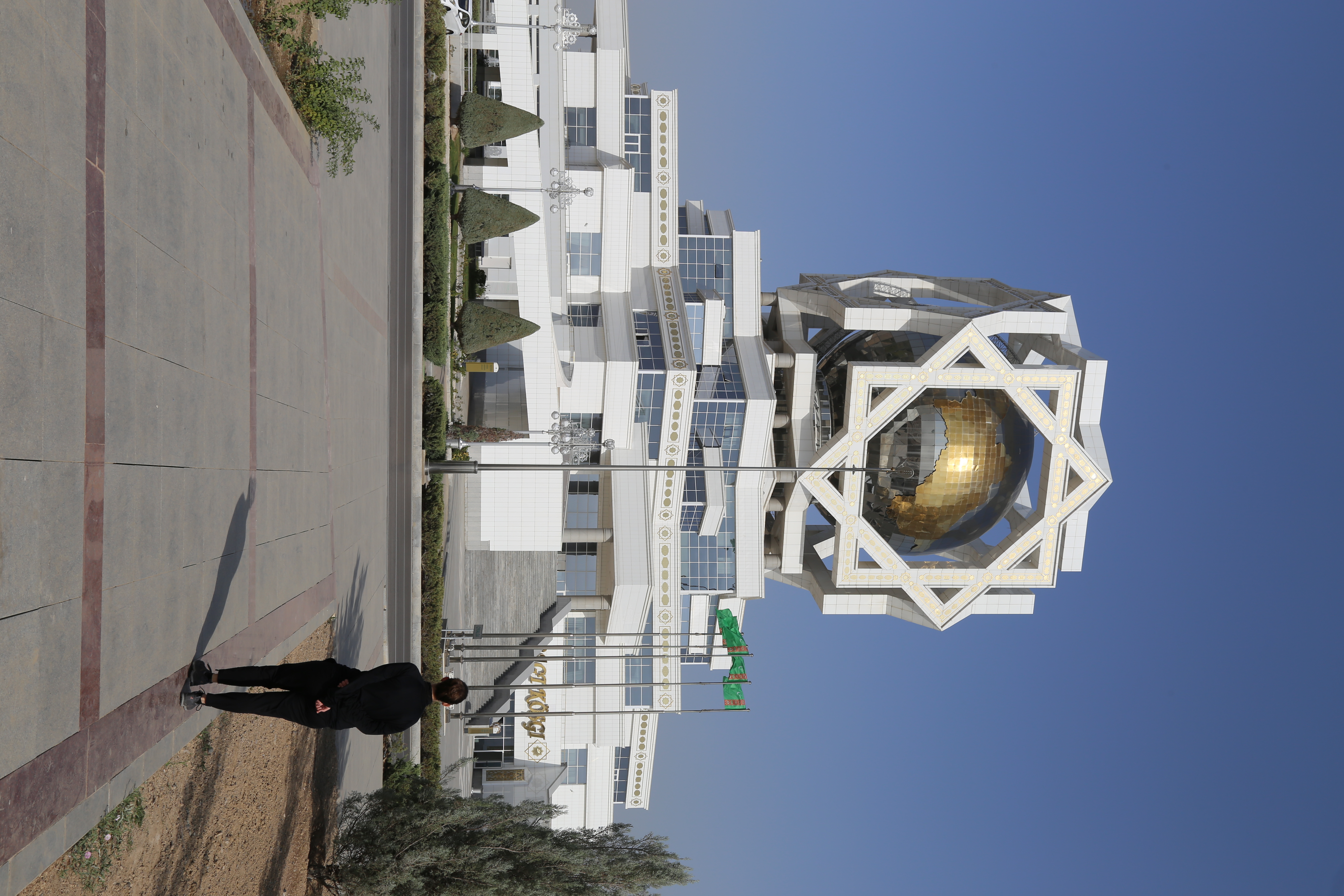
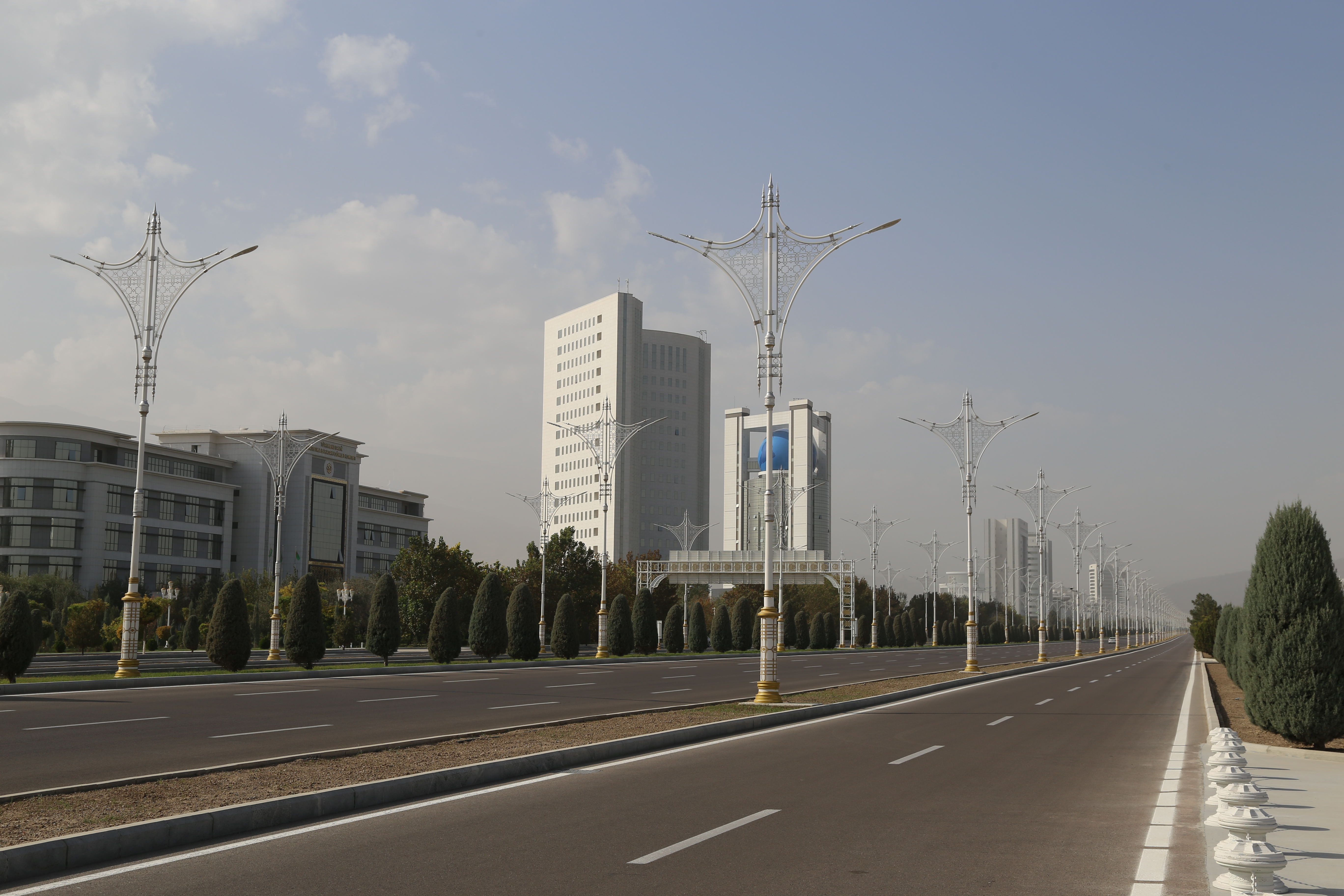
Le boulevard sur lequel était situé ce monument était en fait le principal axe gouvernemental de la capitale, on y retrouvait toute sorte de ministères et de bâtiments officiels. Mentions spéciales au ministère de l’éducation, en forme de livre ouvert et au ministère des affaires étrangères, coiffé d’un large globe terrestre.
Grand boulevard de ministères à Ashgabat, éducation et affaires étrangères sont visibles.
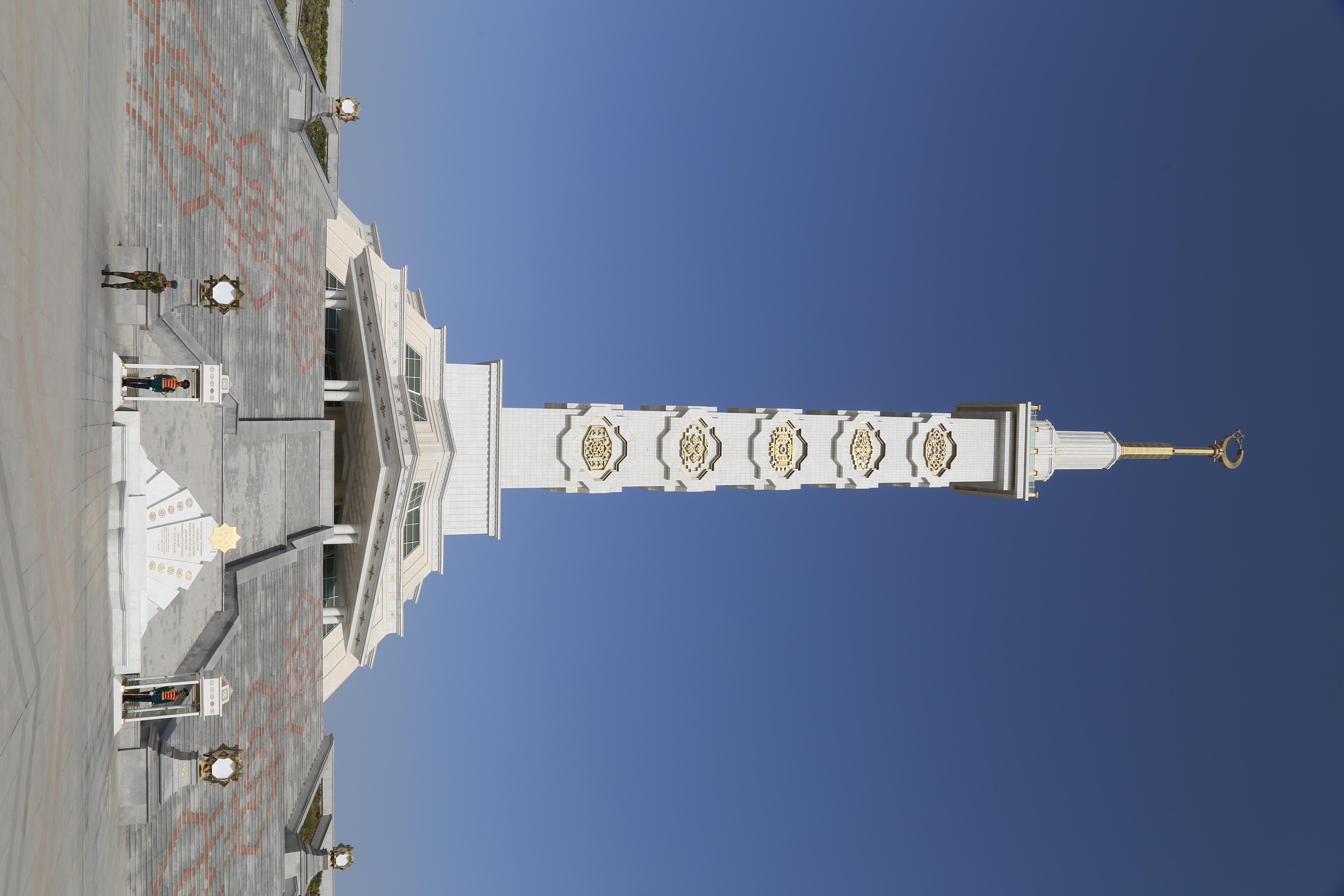
Devant le monument de la constitution (dont l’intérieur n’était encore une fois, pas accessible) se trouvait un bâtiment sosie du parlement: le sénat. Comme pour beaucoup de monuments, des soldats montaient la garde devant. Ces soldats sont souvent de jeunes hommes en service militaire. Combien de touristes ont-ils vu passer ce jour ? Je ne serais pas surpris si nous avions été les seuls visiteurs.
Monument de la constitution
Après un copieux repas de plov, Volodymyr nous a ramassé. Pendant que nous étions à Turkmenbashi, il avait préparé toutes les victuailles pour notre expédition vers le cratère de Darvaza. Pour s’y rendre, il fallait un bon 4h de route sur une chaussée aux standards de l’Asie Centrale, c’est à dire dans un état désastreux. Notre guide et notre chauffeur n’ont pas manqués de s’excuser pour les bosses et le louvoiement entre les cratères. Je leur ait répété plusieurs fois qu’on était habitué et que comparé à la route Khorog – Dushanbe (3 jours pour faire 150 kilomètres), celle-ci n’était vraiment pas si mal.
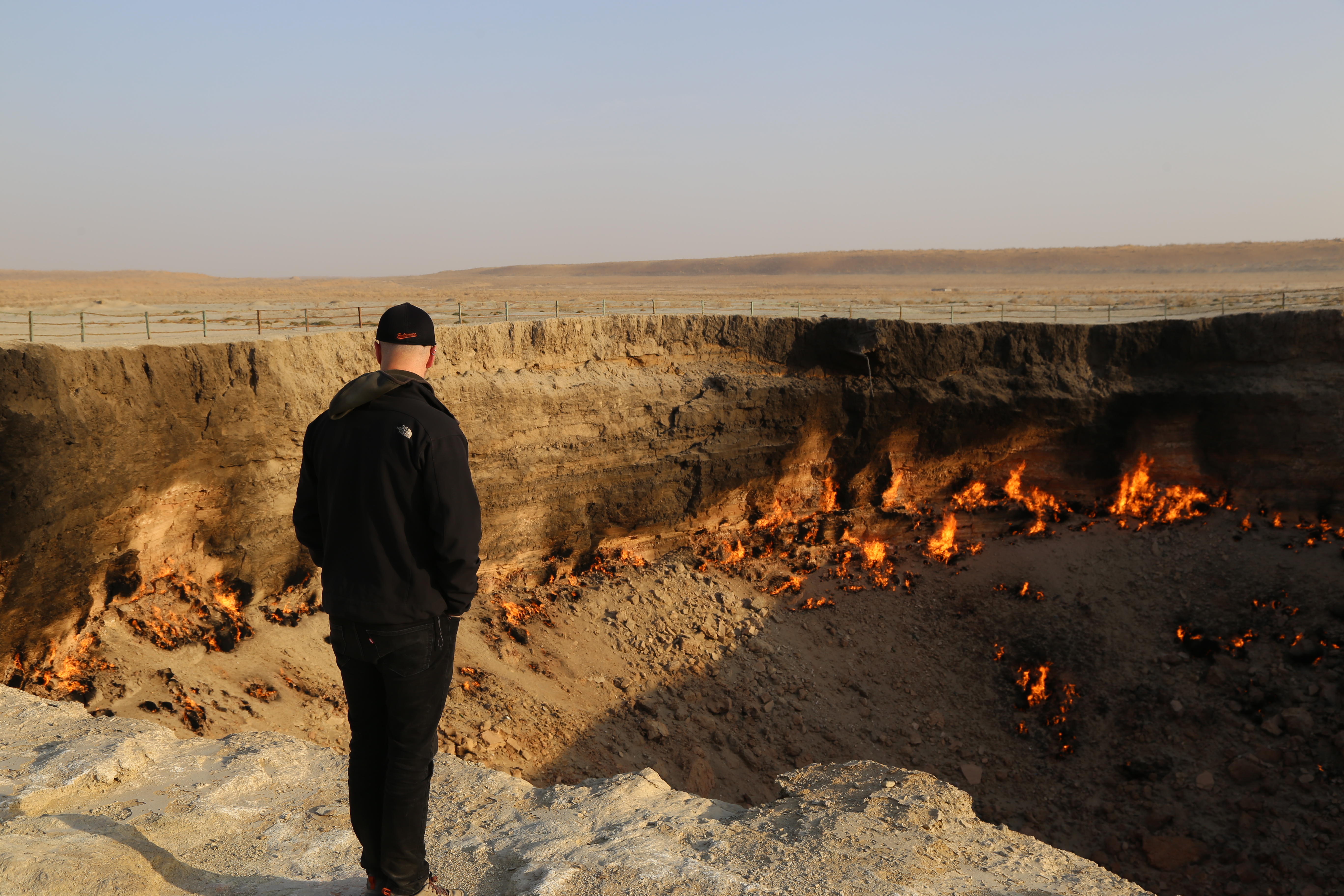
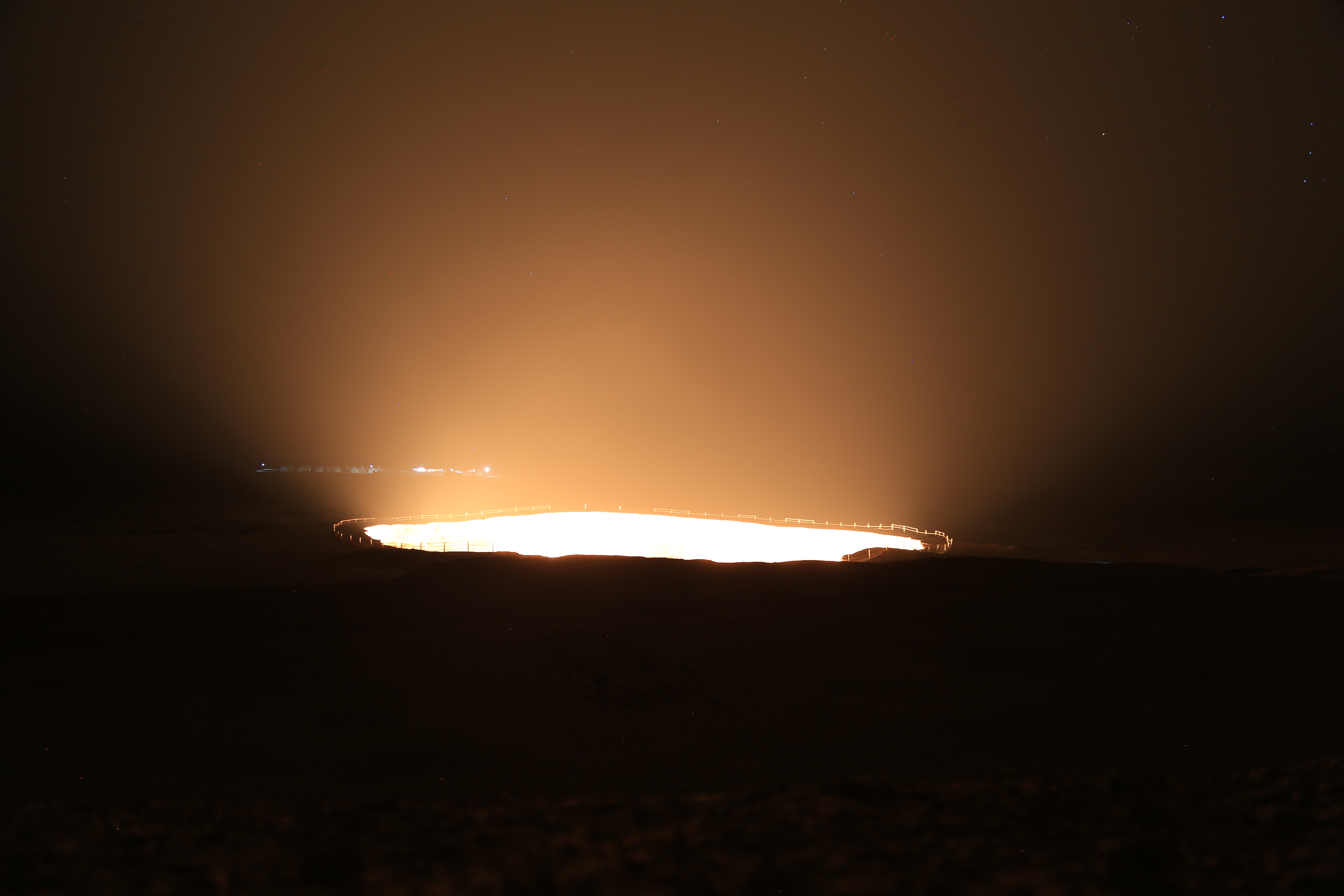
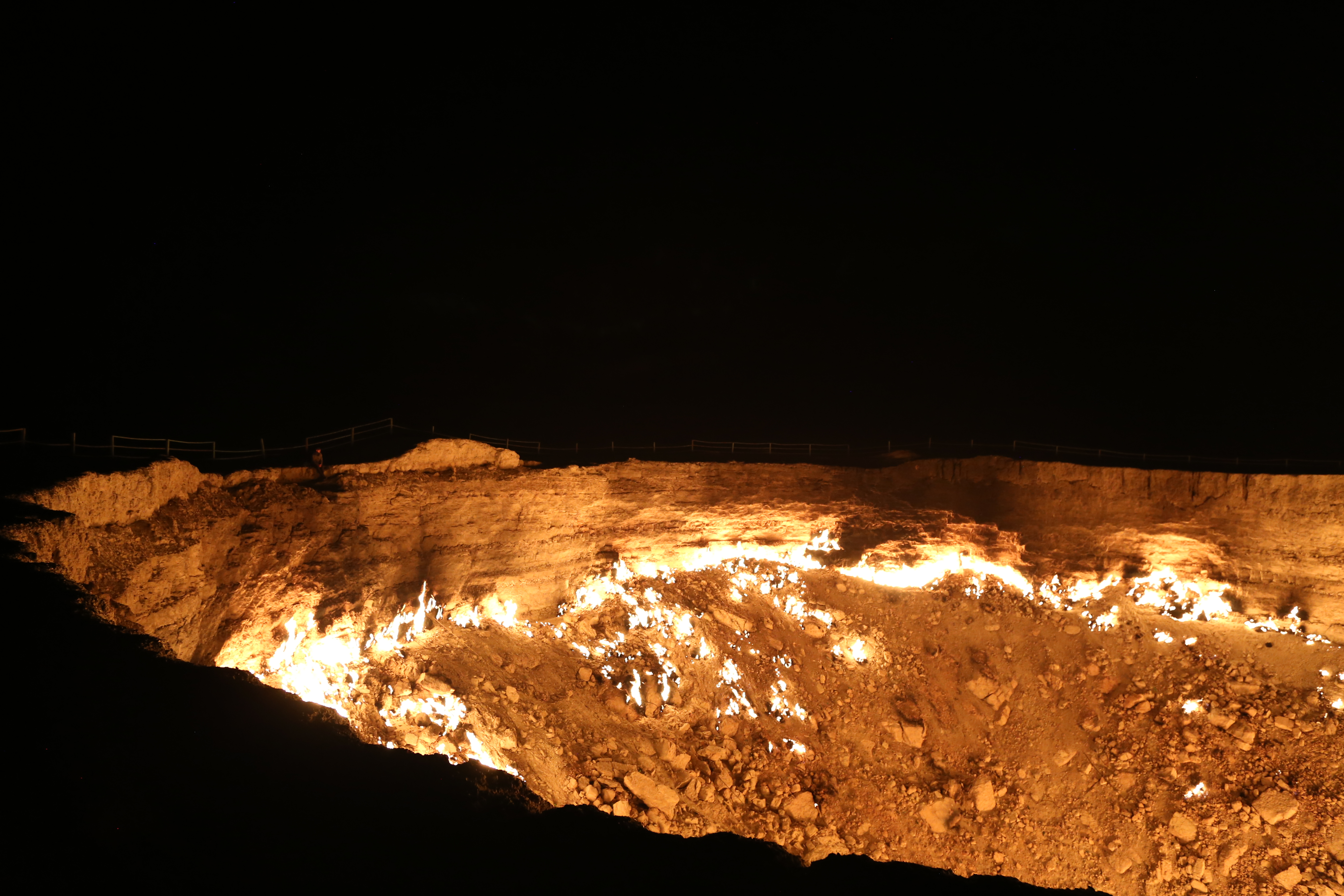
La nuit bien engagée alors que le 4×4 se baladait à vive allure dans les dunes, nous avons vu une lueur poindre à l’horizon. Il y a 50 ans, les Russes, en prospectant la région pour des combustibles fossiles, ont fait exploser un puit de gaz naturel. Devant l’importante fuite et le risque posé pour un village avoisinant, ils y ont mis feu. Croyant qu’après quelques mois, le gaz allait s’être consommé, ils ont quitté la zone. Le puit brûle encore aujourd’hui et a été adéquatement surnommé: Les portes de l’enfer. Après Ashgabat, c’est probablement l’un des endroits les plus fameux du pays.
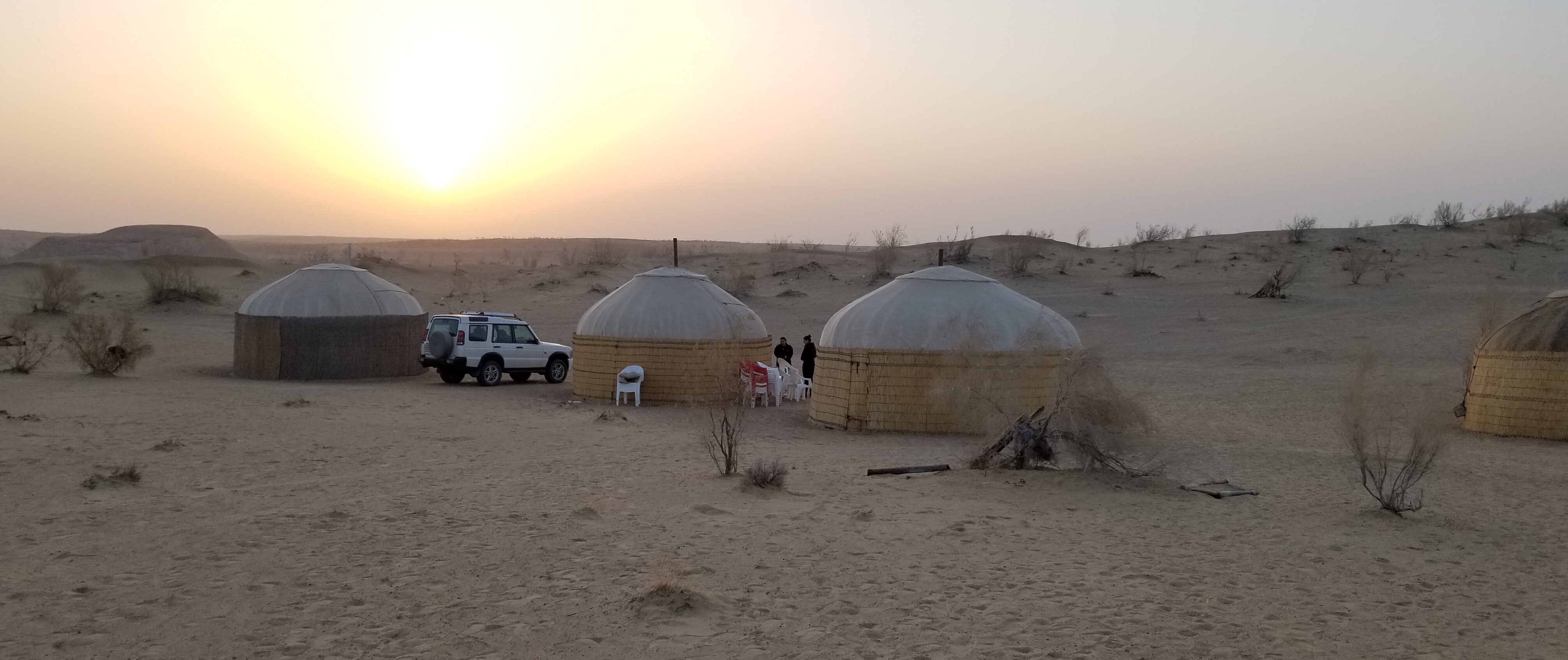
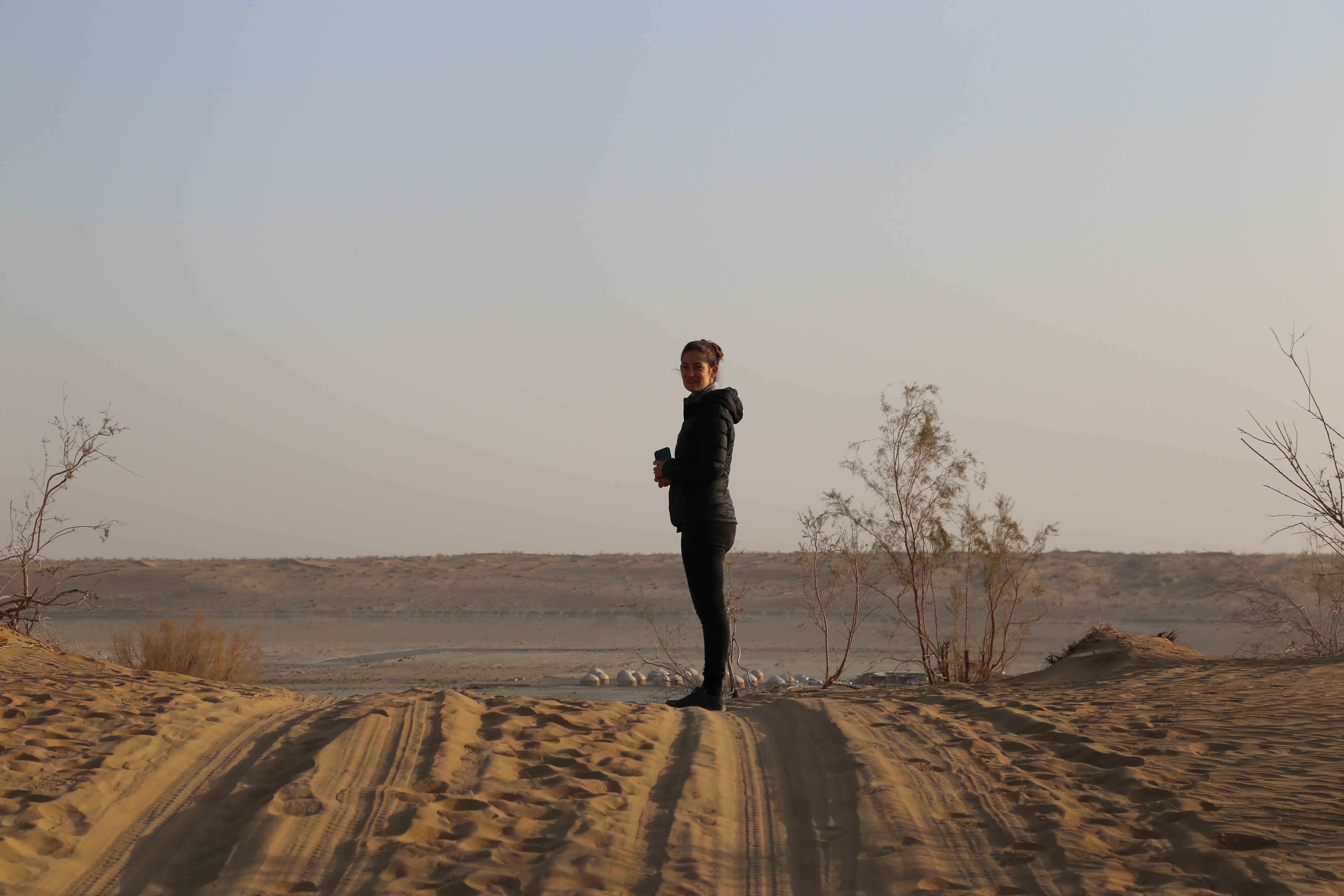
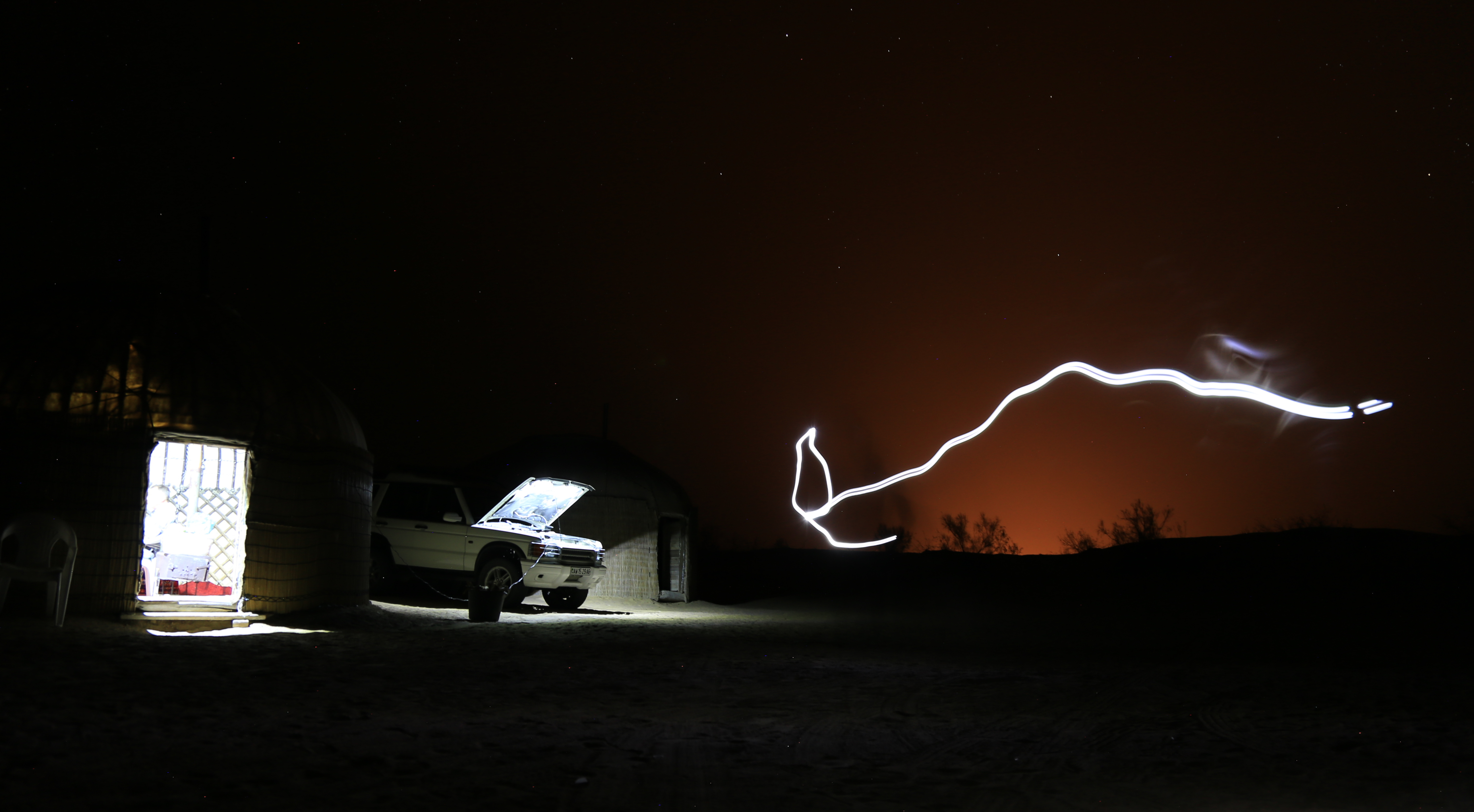
Nous allions passer la nuit dans une yourte et pour l’occasion, nos guides nous avaient préparé un grand apéro-dinatoire à base de poisson, caviar, charcuteries (donc certaines faites maison par Volodymyr), fromage, pain, shashliks (grillades) frais cuits sur des plantes du désert. Nécessairement, le tout bien arrosé de cognac turkmène et de vodka. Notre guide et notre chauffeur étaient visiblement content de partager ce moment avec nous. Le tenancier du camp de yourte s’est même joint au groupe. L’atmosphère était détendue et les blagues transculturelles fusaient. Les discussions personnelles amènent également certains moments plus sombres. Volodymyr est de nationalité turkmène, mais son fils tient de sa mère également un passeport russe. Il désire aller poursuivre ses études là-bas, mais en âge de faire son service militaire, il risque fort bien de se faire mobiliser. S’il reste au Turkménistan, il devra tout de même donner une année aux forces armées, mais apparemment, la Russie reconnaît un service militaire déjà fait à l’étranger et donne une exemption du service russe. Volodymyr tente donc de le convaincre de ne pas partir. Dans le contexte d’une offensive ukrainienne en difficultés, je doute fortement que la Russie honore encore cette règle; encore moins celle qui veut que ceux qui fassent leur service militaire ne soient pas envoyés au front…
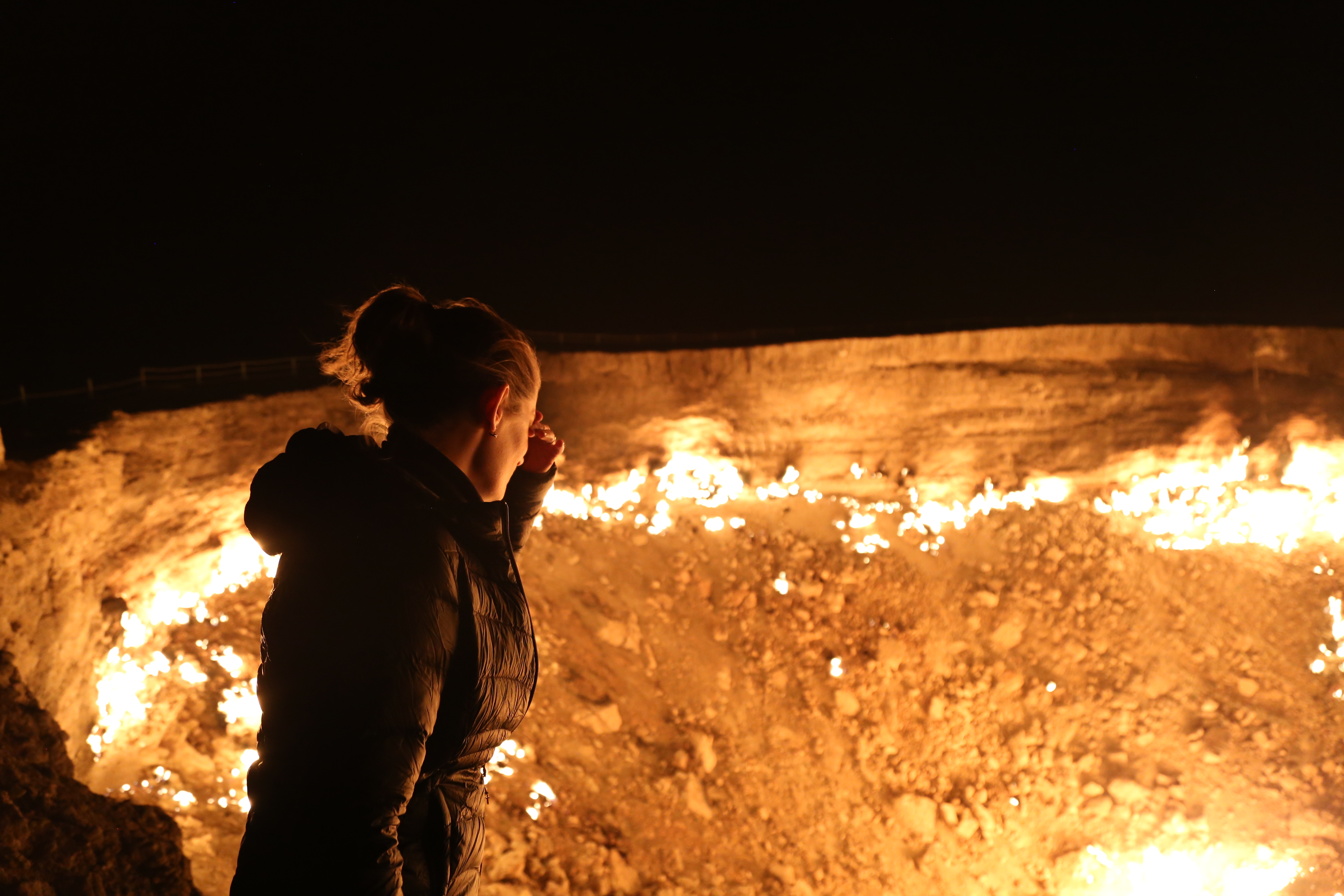
Un peu plus tard, Audrey et moi sommes repartis vers le cratère pour l’admirer de nouveau. D’un diamètre d’un peu moins de 100 mètres, il dégage une forte lumière qui illumine le désert tout autour. Dès qu’on est à proximité, le froid du désert cède à la chaleur du gaz naturel en combustion, lequel émet un grondement sourd. S’il est effectivement un endroit où l’enfer se rend jusqu’à la surface de la terre, c’est peut-être ici.
Turkmenbashi (voulant dire ” le chef des turkmènes”, aussi le nom du premier président) est une ville côtière sur la mer Caspienne. En 2017, nous voulions y passer afin de prendre le traversier vers Baku en Azerbaïdjan, mais cette fois-ci, c’était pour aller nous prélasser un brin à Avaza, un grand complexe touristique en more Riviera Maya (mais avec une touche centre-asiatique). Cela allait être l’occasion idéale de faire un peu la fête avec la haute-société turkmène.
À la toute dernière minute, on nous a informé que malheureusement Avaza n’acceptait aucun touriste étranger et que nous allions être cantonnés dans la ville de Turkmenbashi. Vu qu’il était un peu trop tard pour changer les plans, on a pris l’aventure comme l’occasion d’aller faire l’expérience d’une bourgade provinciale.
Dans le train, Audrey semble avoir somnolé pendant tout le trajet de 14h, je me suis pour ma part réveillé à minuit et ai ensuite profité du calme pour écrire assis sur un strapontin dans le couloir pendant quelques heures. Bien reposés au matin, nous sommes allés laisser nos choses à l’hôtel puis sommes aussitôt ressortis pour nous rendre au marché.
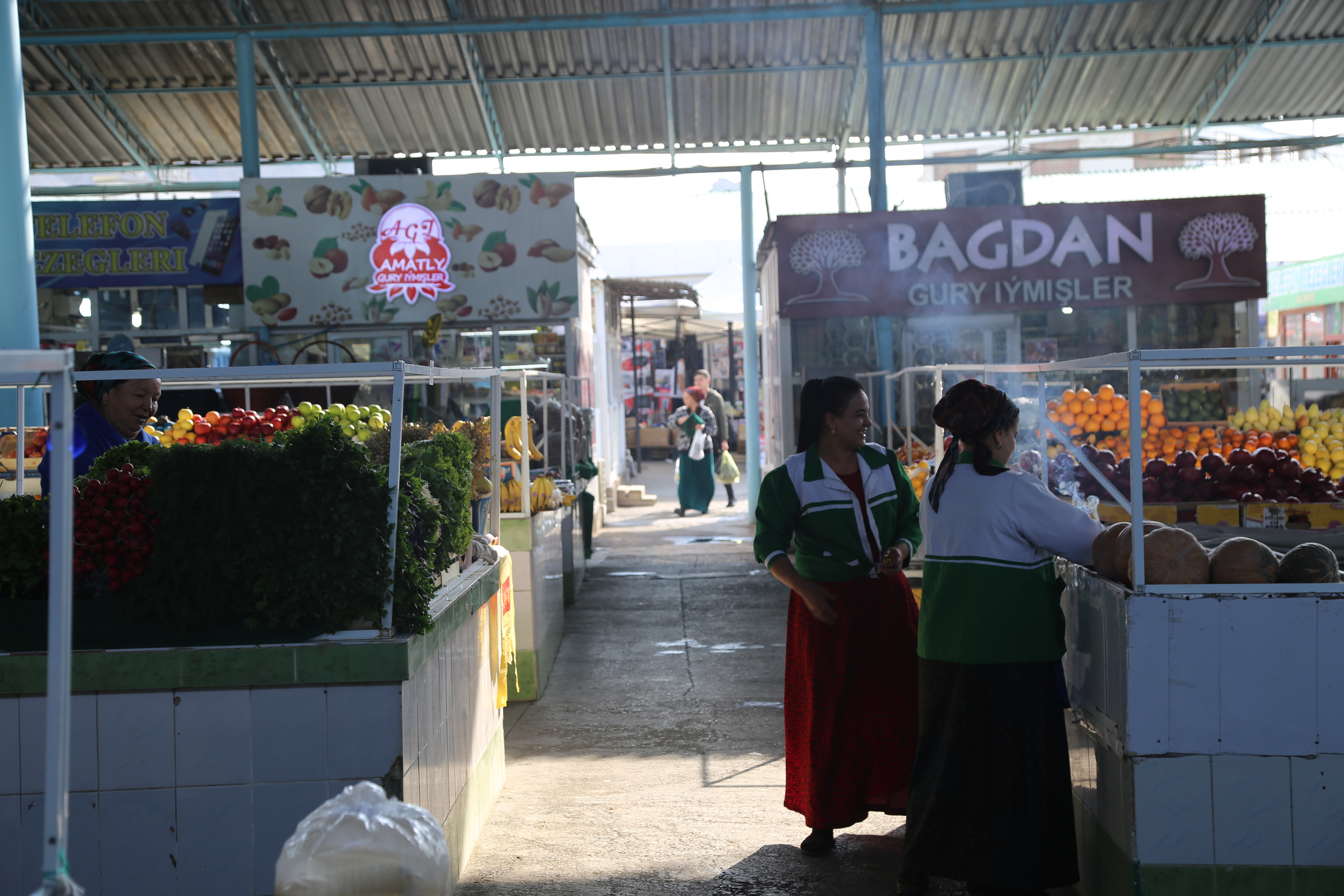
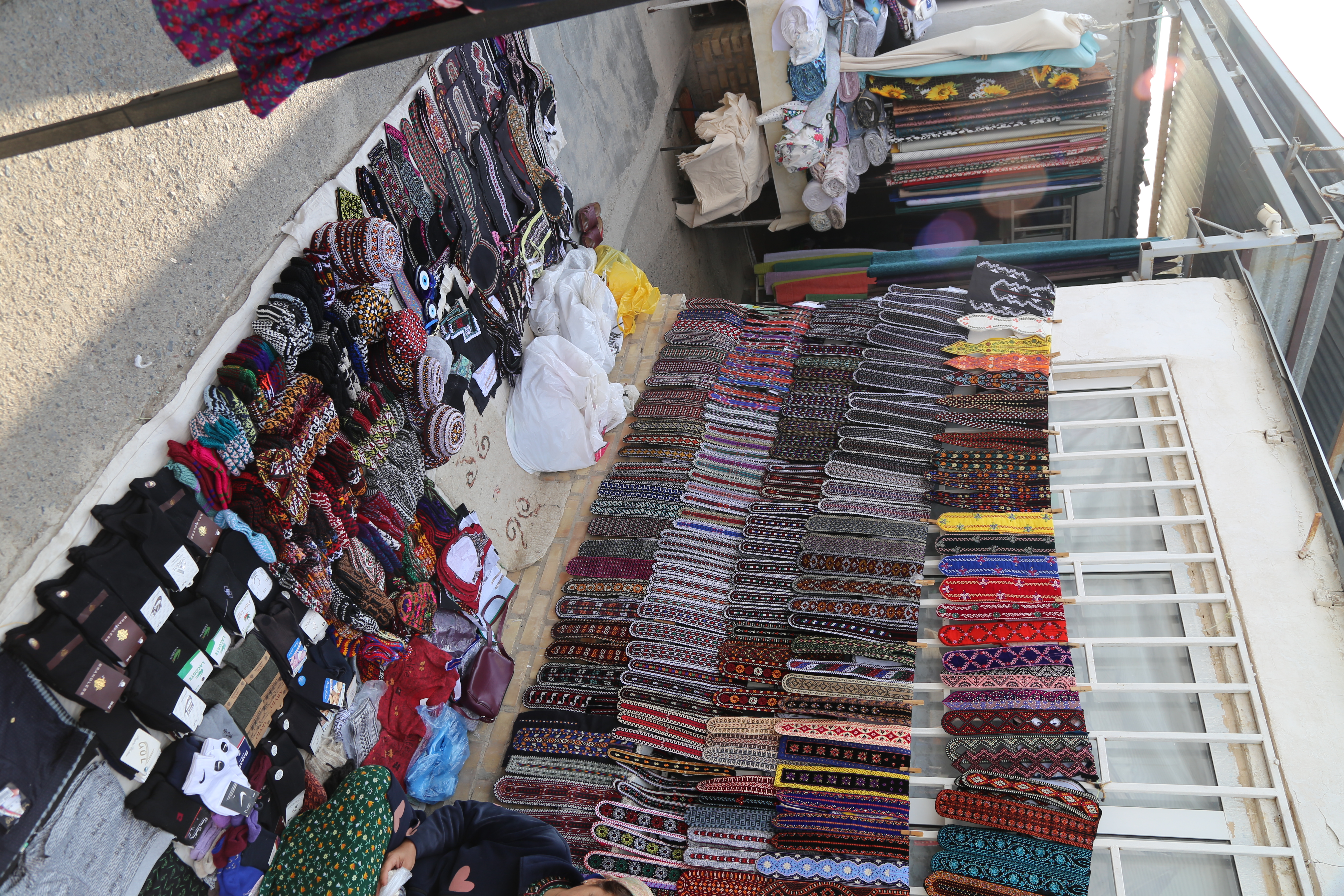
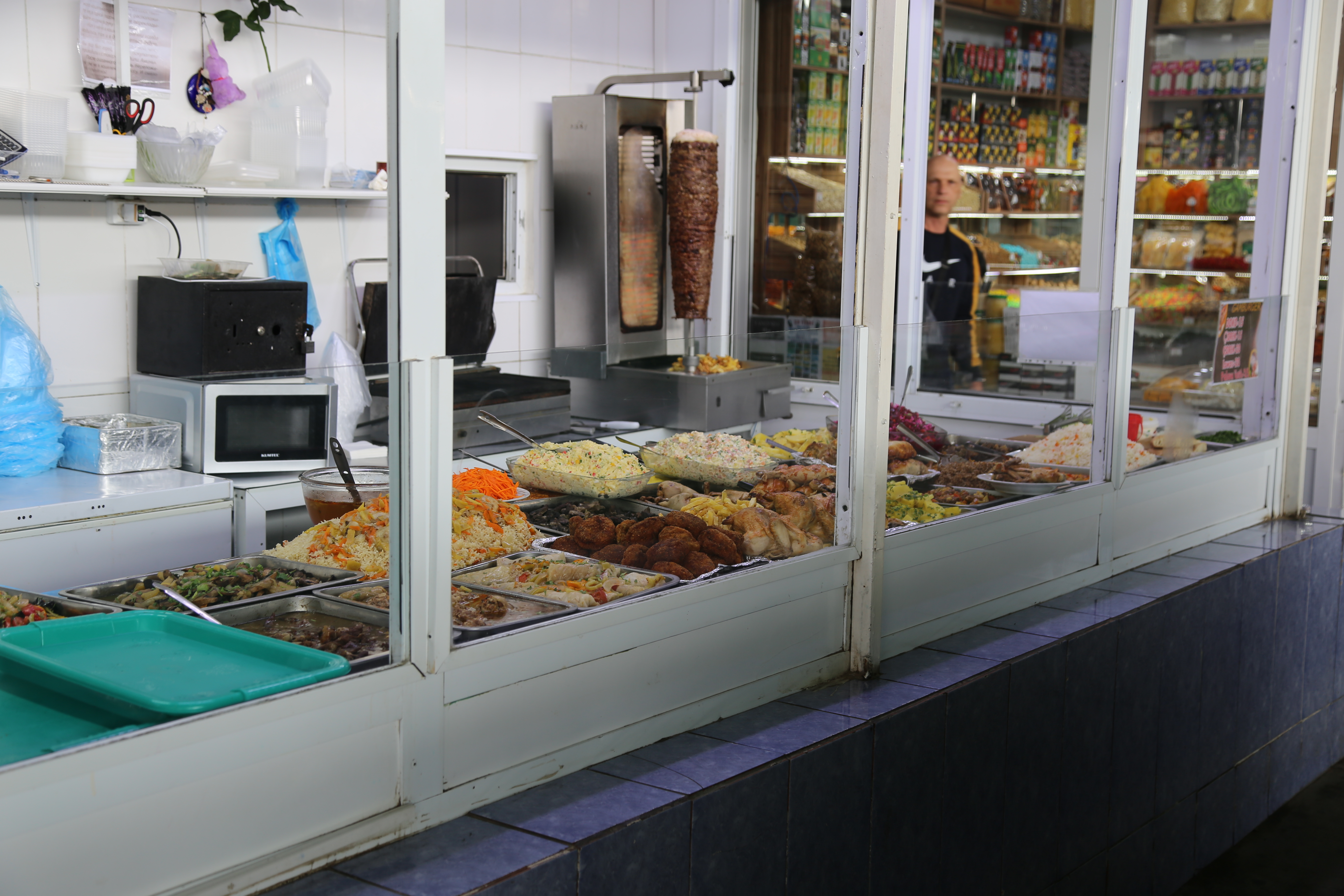
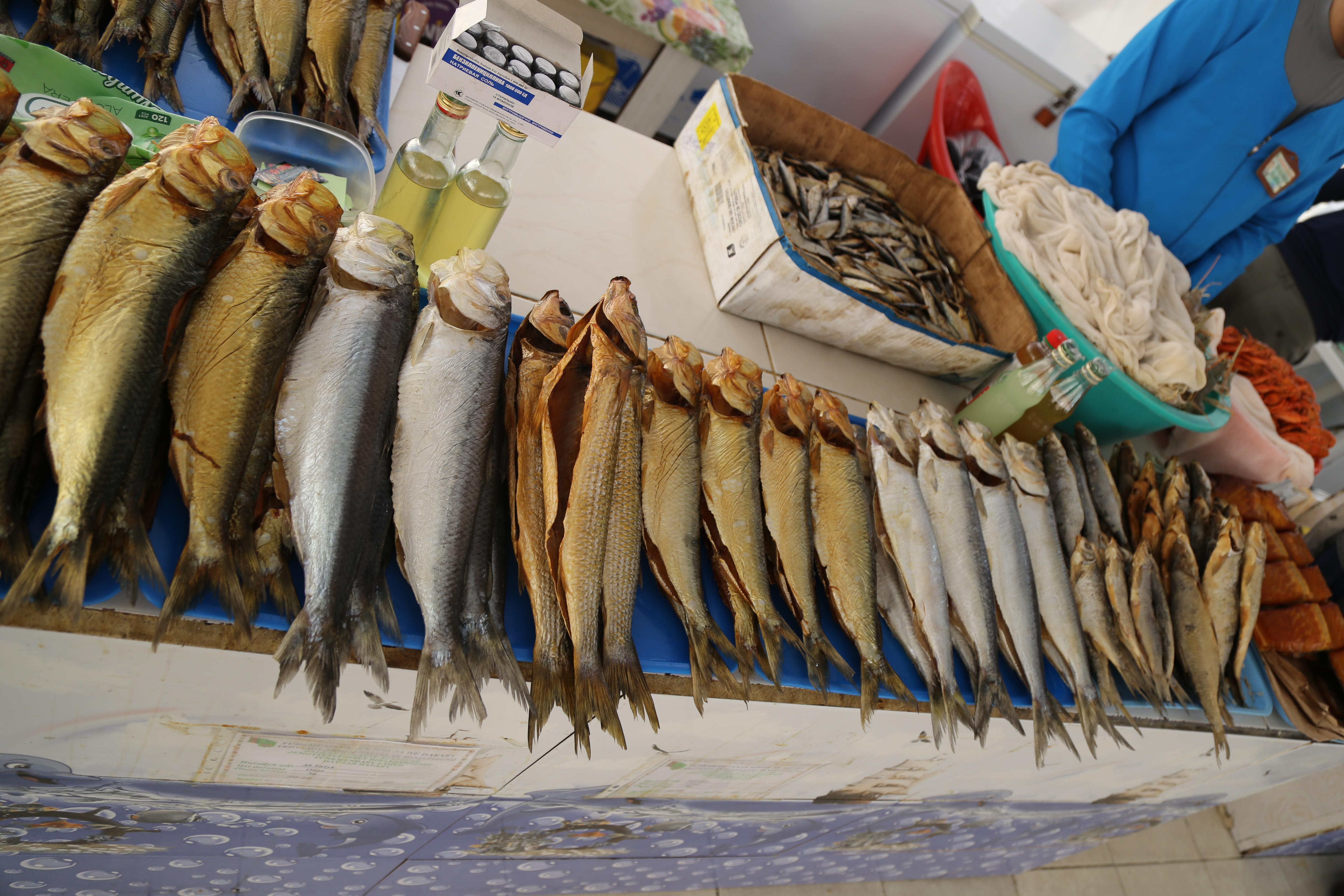
Il n’y a pas meilleur moyen de débuter une visite qu’en passant par le marché. On prend le pouls de l’endroit, on s’immerge dans la vie de tous le jours et surtout, on s’expose à de nombreuses odeurs et saveurs. Bref, on voyage par les sens. Il y avait également quelques courses à faire pour l’expédition du lendemain, notamment l’achat d’écrevisses (pour Volodymyr) et d’esturgeon fumé (pour moi). En sortant du marché, on est arrêté prendre un café, on s’est baladé dans le quartier et l’on est revenus à pied à l’hôtel pour siester un peu. En soirée, repas au restaurant sur le bord de l’eau puis sortie dans un bar de la ville avec notre guide.
Il fallait se lever tôt le lendemain pour reprendre l’avion vers Ashgabat (un petit vol de 50 minutes versus 14h de train).
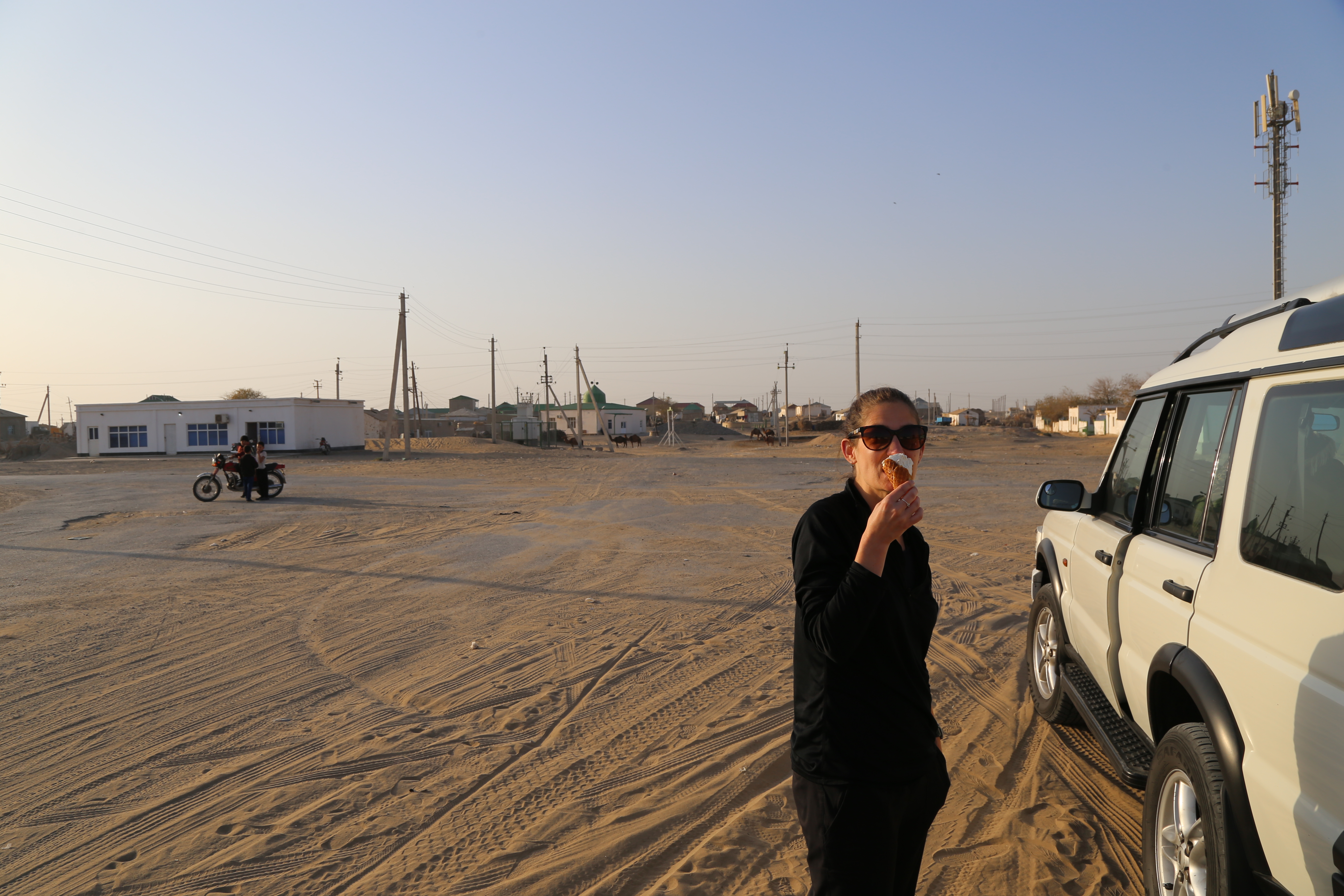
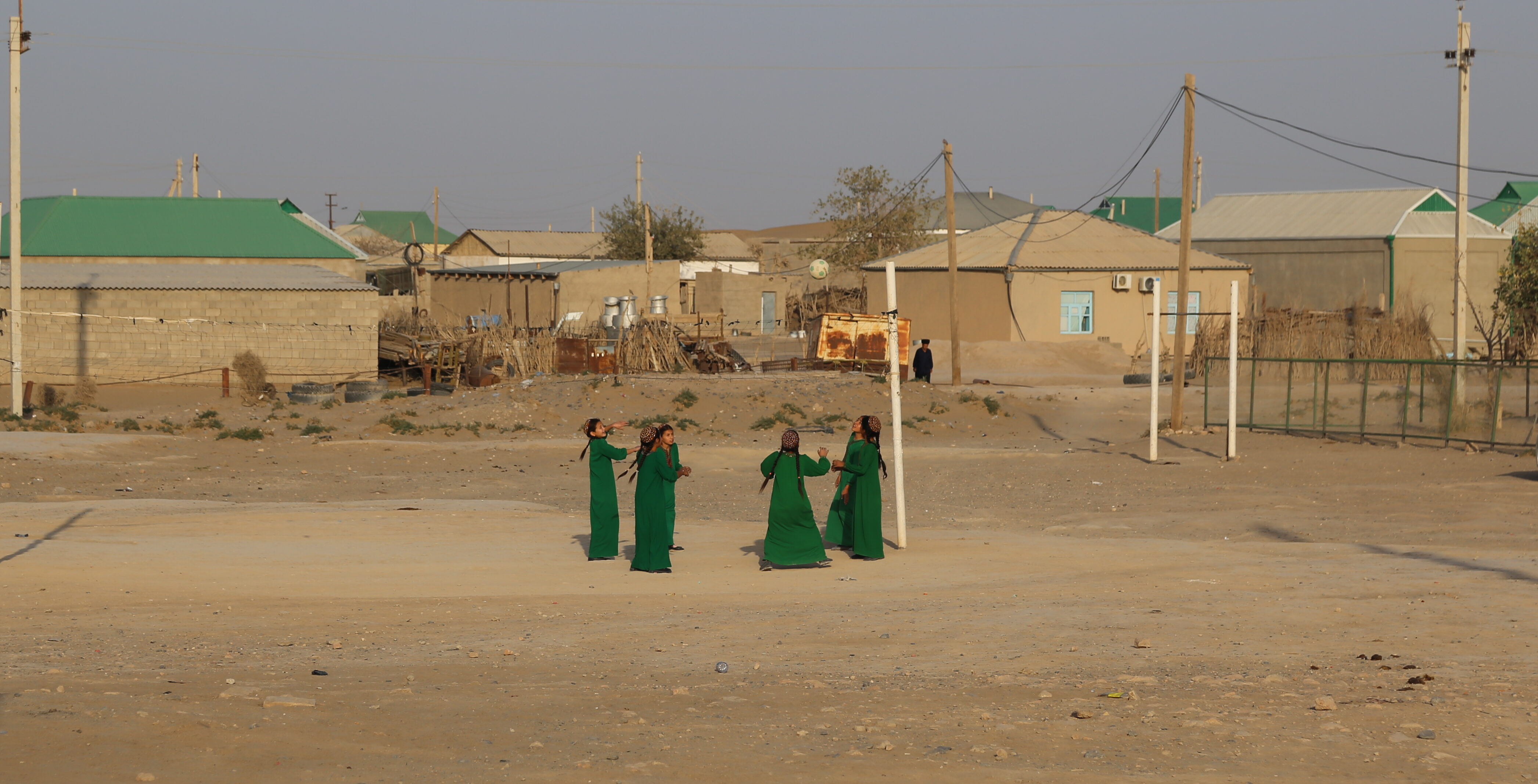
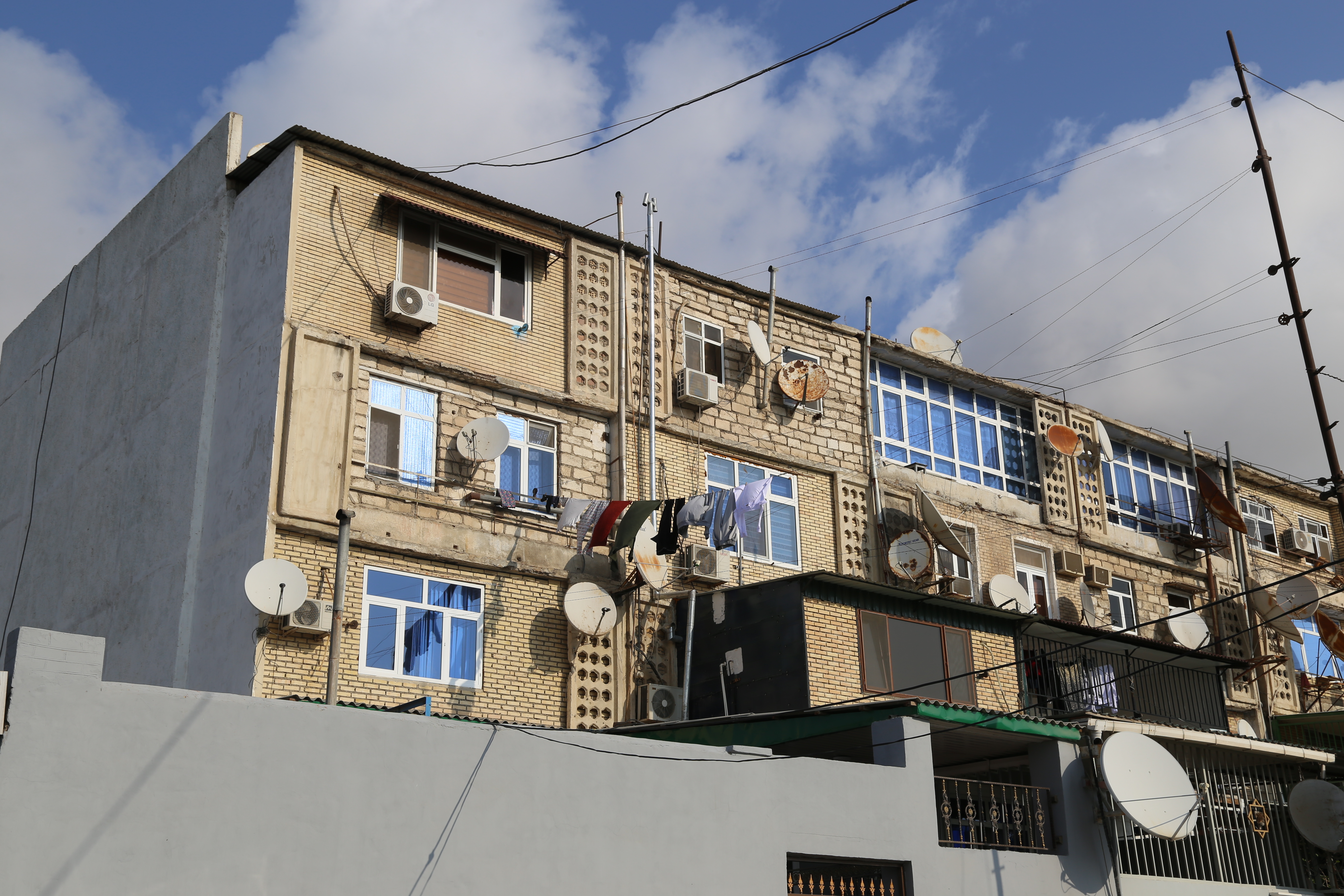
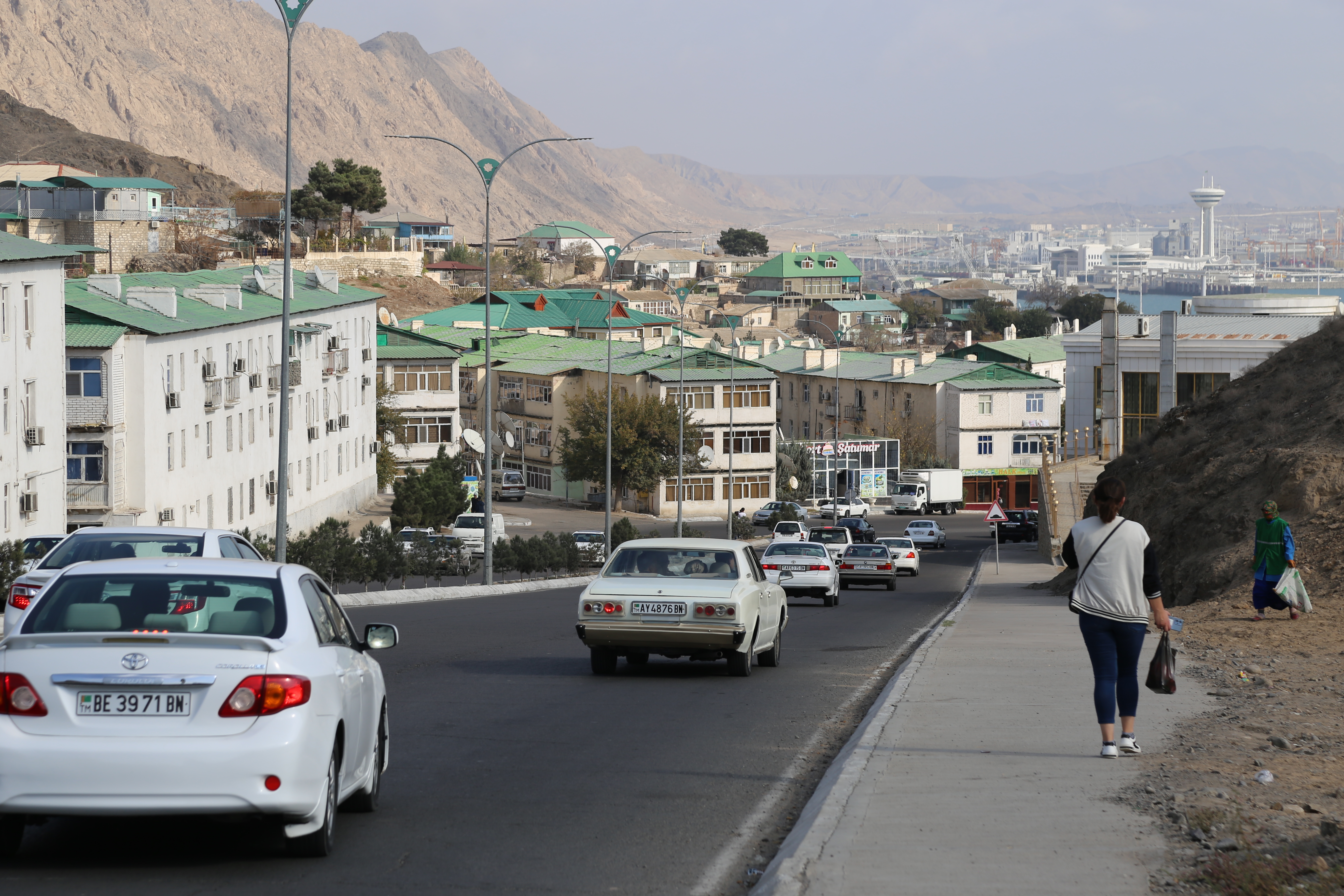
On a somme toutes pas fait grand chose à Turkmenbashi. Cependant, ni moi ni Audrey ne sommes déçus. L’endroit ressemble tout à fait à ces nombreuses villes d’Asie Centrale que nous avons croisé lorsque nous y étions en 2017. Poussiéreuses, soviétiques mais accueillantes. Tout le contraire d’Ashgabat. Cela aura donc été une occasion pour nous de nous replonger dans nos souvenirs et nous rappeler ces journées à marcher vers nul part, manger du plov et courir les aubaines sur les pièces automobiles.
Note au lecteur: beaucoup de choses n’ont pas pu être prise en photo. La règle du pouce était qu’il ne fallait pas imager les militaires et les policiers … plutôt nombreux dans ce genre de contrées.
Jour 1
Du haut de airs la nuit, Ashgabat a l’apparence de Disneyland. Dans son terminal aéroportuaire tout orné de fioritures, les couleurs officielles (le vert, le blanc et l’or) sont omniprésentes. Le regard n’est attiré par quasiment aucune publicité, autrement omniprésentes dans ce genre d’endroit.
Le processus pour finaliser les formalités est fastidieux mais aux final, un homme en uniforme nous rendra notre passeport avec un beau visa étampé. Une petite demi-heure d’attente supplémentaire à la sécurité (qui fouille et ouvre tous les bagages) et le tour sera joué. Nous ferons aussitôt sortis la rencontre de Volodymyr, notre chauffeur qui baragouine un anglais cassé mais compréhensible. En sortant du terminal, j’indique à Audrey de se retourner. Ce dernier a la forme d’un aigle aux ailes déployées (vous irez voir des photos). Je cache mon excitation car intérieurement je jubile d’être ici.
Il est cinq heures du matin mais même là, les immenses boulevards sont particulièrement déserts. Pendant que Volodymyr nous indique la vocation des nombreux bâtiments et monuments que nous passons, Audrey et moi admirons le spectacle qui se déroule sous nos yeux. Tous illuminés en couleurs, ce sont d’imposantes structures dans un style tout à fait particulier qui se succèdent. Le complexe sportif, complété en 2017 à temps pour les jeux asiatiques, possède un monorail, d’innombrables pavillons pour loger les athlètes, des gymnases et un imposant stade dominé par la tête d’un cheval. Notre hôtel, construit pour l’occasion, est attenant à cet énorme complexe. Son intérieur est neuf mais d’un kitsch qui détonne même en Asie Centrale.
Peu reposés de notre sieste de quelques heure, nous retrouvons le lendemain Volodymyr et Nila, laquelle sera notre guide. L’anglais de Nadine est nettement meilleur et rapidement nous prenons confiance à la questionner sur la vie et son pays, dans une certaine limite bien sûr car le Turkménistan est après tout une dictature répressive où les opinions politiques qui divergent de la norme ne sont pas les bienvenus. C’est comme au Canada en fait, vous diront les convoyeurs de la libarté.
Nila et Volodymyr sont tous deux issus de la minorité russophone du pays (3-4% et en déclin selon eux). Enfants d’immigrants Russes, leur famille s’est établie dans ce pays au temps de l’URSS. Volodymyr doit avoir la cinquantaine, mais il est né ici et tout comme son père. C’est son grand père qui est arrivé dans la région (volontairement?) pour participer aux efforts de reconstruction d’Ashgabat, alors en ruine suite au tremblement de terre de 1948.
Le monument de l’indépendance
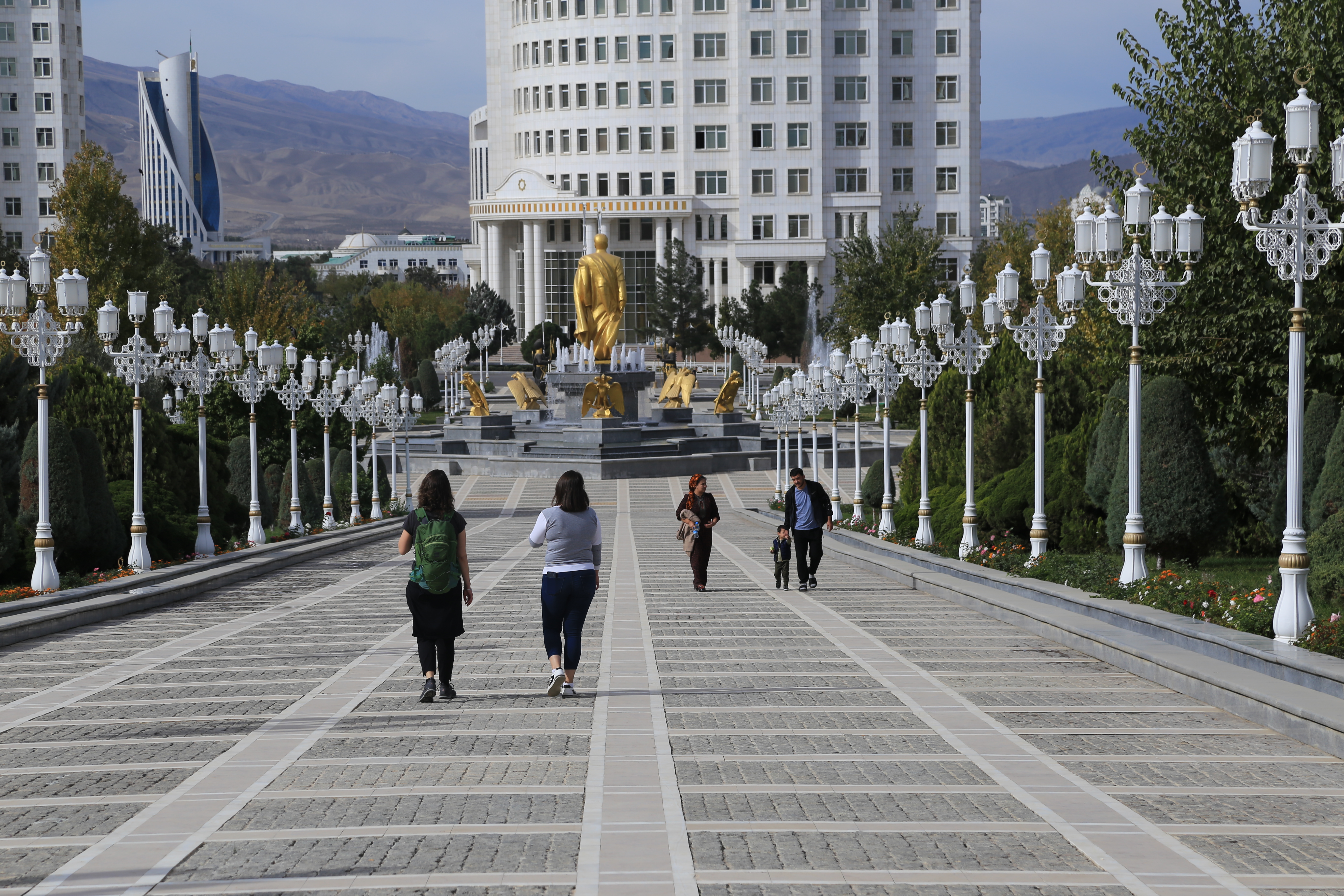
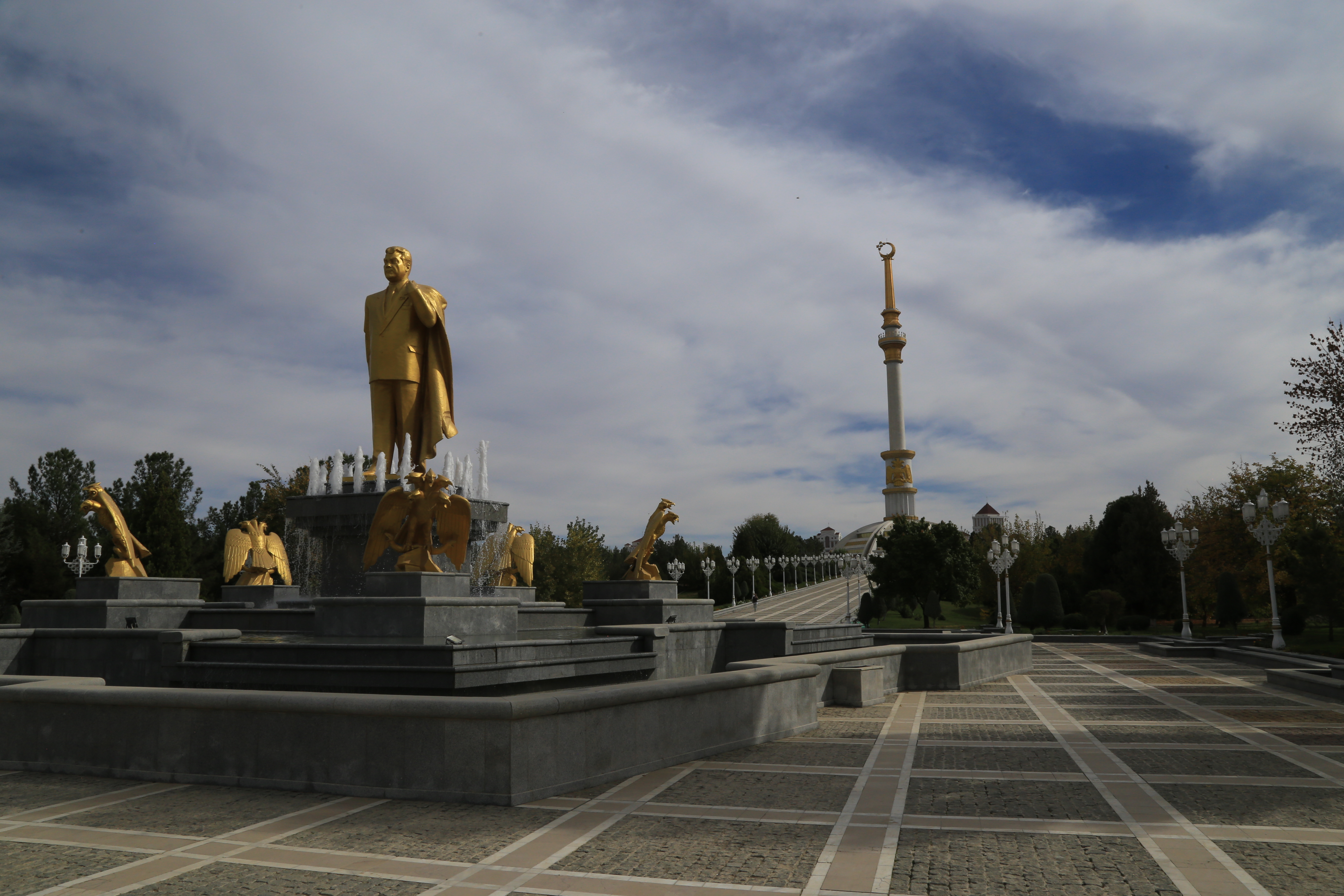
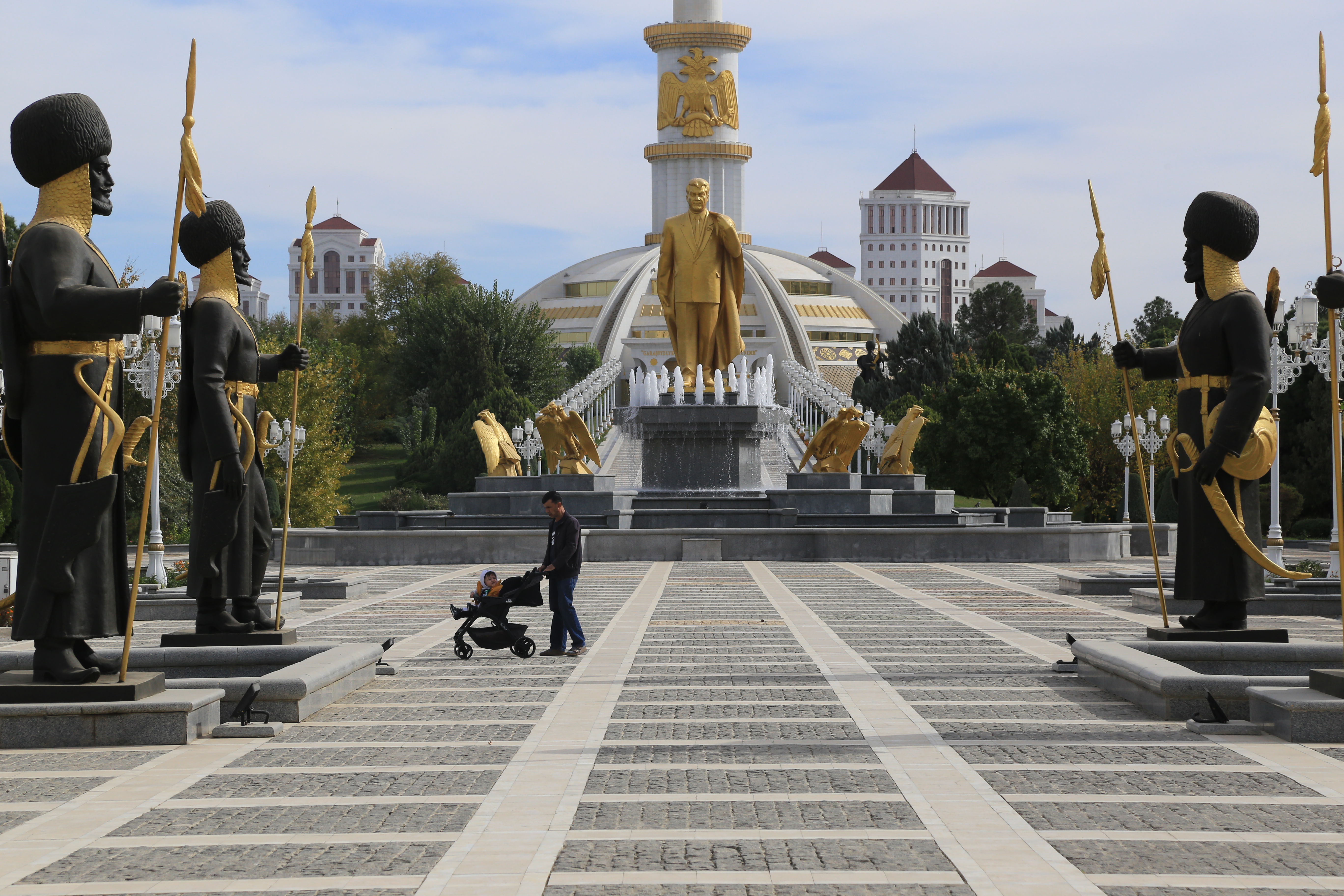
Premier arrêt, le monument de l’indépendance. Tout doré et flanqué de statues des nombreux souverains passés de la région, il est gardé par des soldats et la zone est pratiquement vide de vie, exception faite de ces dames dont la tâche est de garder l’espace public propre et en ordre. Omniprésentes et travaillant sans relâche, Ashgabat peut se vanter grâce à elles d’être le lieu le plus rangé de la planète. Pas une feuille morte au sol ni déchets. Encore moins des mégots de cigarettes, car fumer en public est interdit au Turkménistan. Les contrevenants recevront une amende salée. Or, une grande partie de la population fume … en cachette.
Deuxième arrêt, le musée d’histoire où pendant une heure, un guide ennuyeux nous a recraché les moments phares qui on marqués les époques dans la région. Le premier étage du bâtiment regorgeait de trophées et de panneaux de propagande sur la présidence. Dur d’établir significative exacte de ces trophées mais aux dires de notre guide, le gouvernement se les avait octroyés pour se féliciter de ses accomplissements. Devant ce musée, un imposant drapeau du pays. Jadis le plus haut du monde selon notre guide. Selon moi il pourrait être désormais troisième. Le plus haut étant en Corée du Nord et le deuxième en Azerbaïdjan.
L’arche de la neutralité
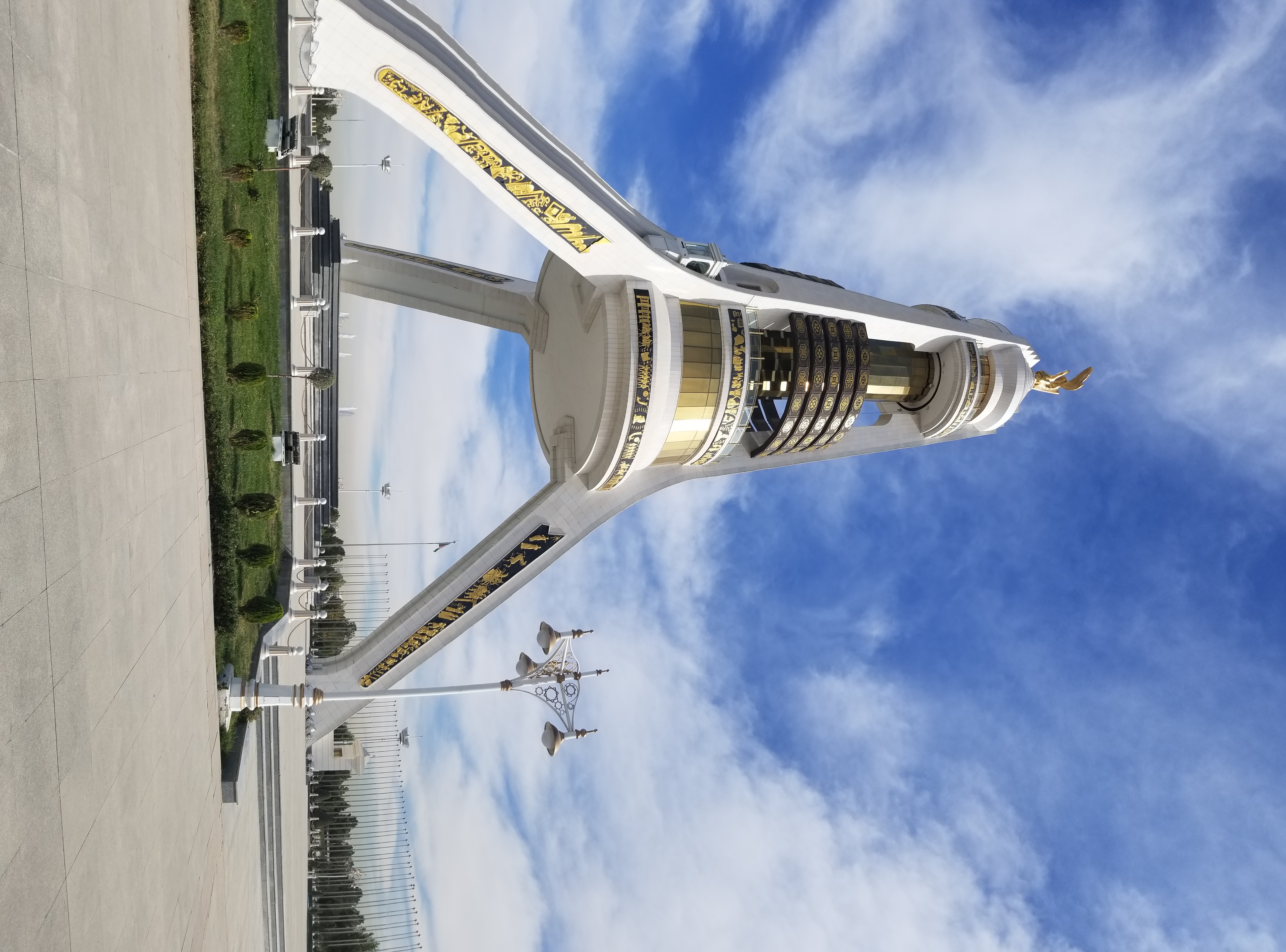
Direction ensuite à l’Arche de la neutralité, imposant monument érigé en consécration de la non interférence du Turkménistan dans les affaires des autres pays. Position d’ailleurs officialisée par une résolution des Nations Unies (et récompensée d’un trophée dans le musée) à ce qu’il paraît. L’arche de la neutralité est coiffée d’une statue en or de 12 mètres de haut du premier président. Avant que le monument ne soit déplacé pour faire place au gros complexe sportif des jeux asiatiques (je pense), le socle de la statue tournait pour que le président pointe constamment le soleil.
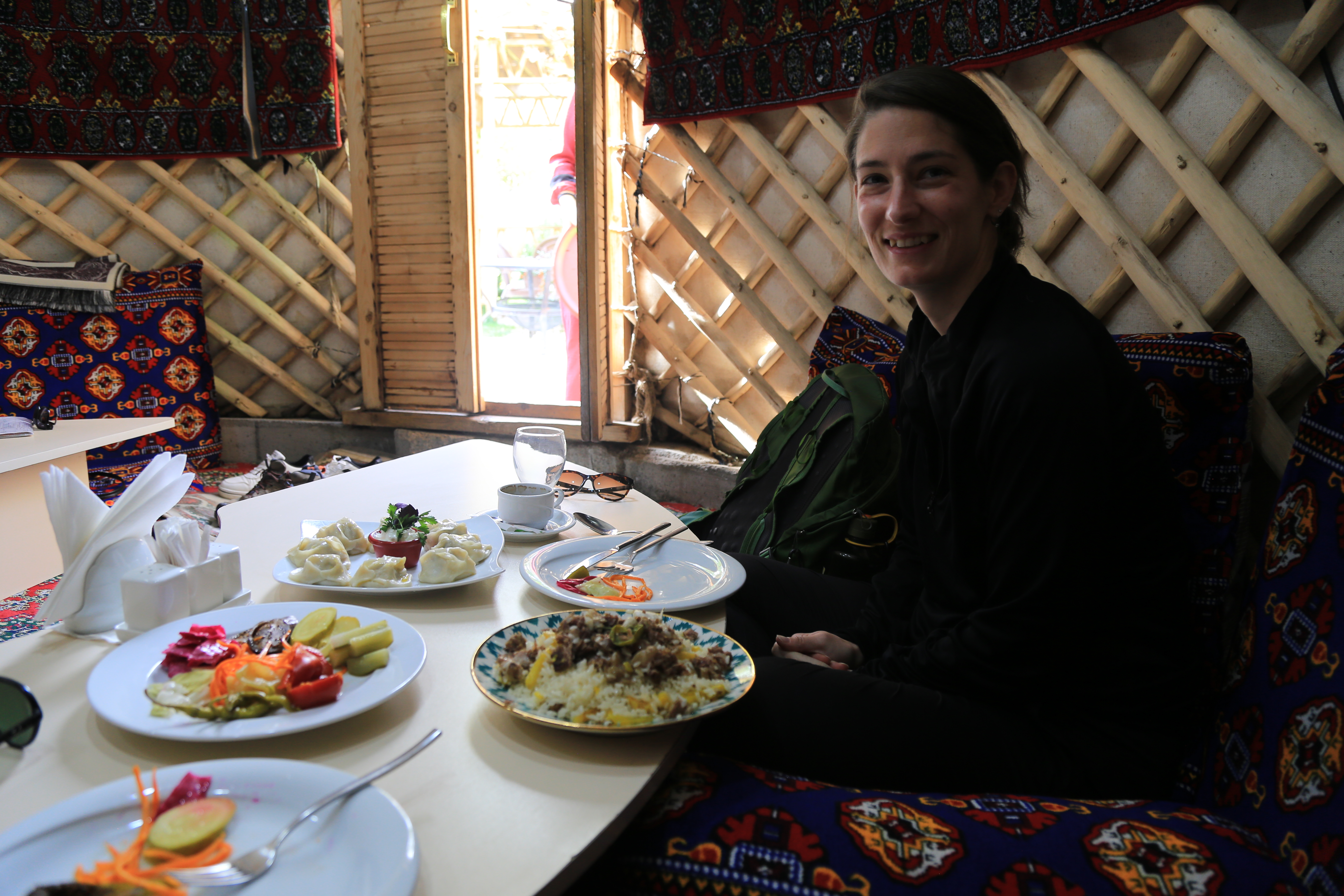
Comme il commençait à faire faim, notre tour s’est poursuivi dans un excellent restaurant turkmène où nous avons pu retrouver des variations locales de ces excellents plats traditionnels de l’Asie Centrale. Mon plov et mes mantis, je les attendais depuis des semaines.
Le Turkménistan peut être une destination très coûteuse ou pas du tout (exception faite du guide obligatoire) selon le taux de change utilisé. Officiellement, c’est environ 3,5 manats pour un dollar US. Sur le marché noir, c’est 19-20 pour un. Toute petite différence.
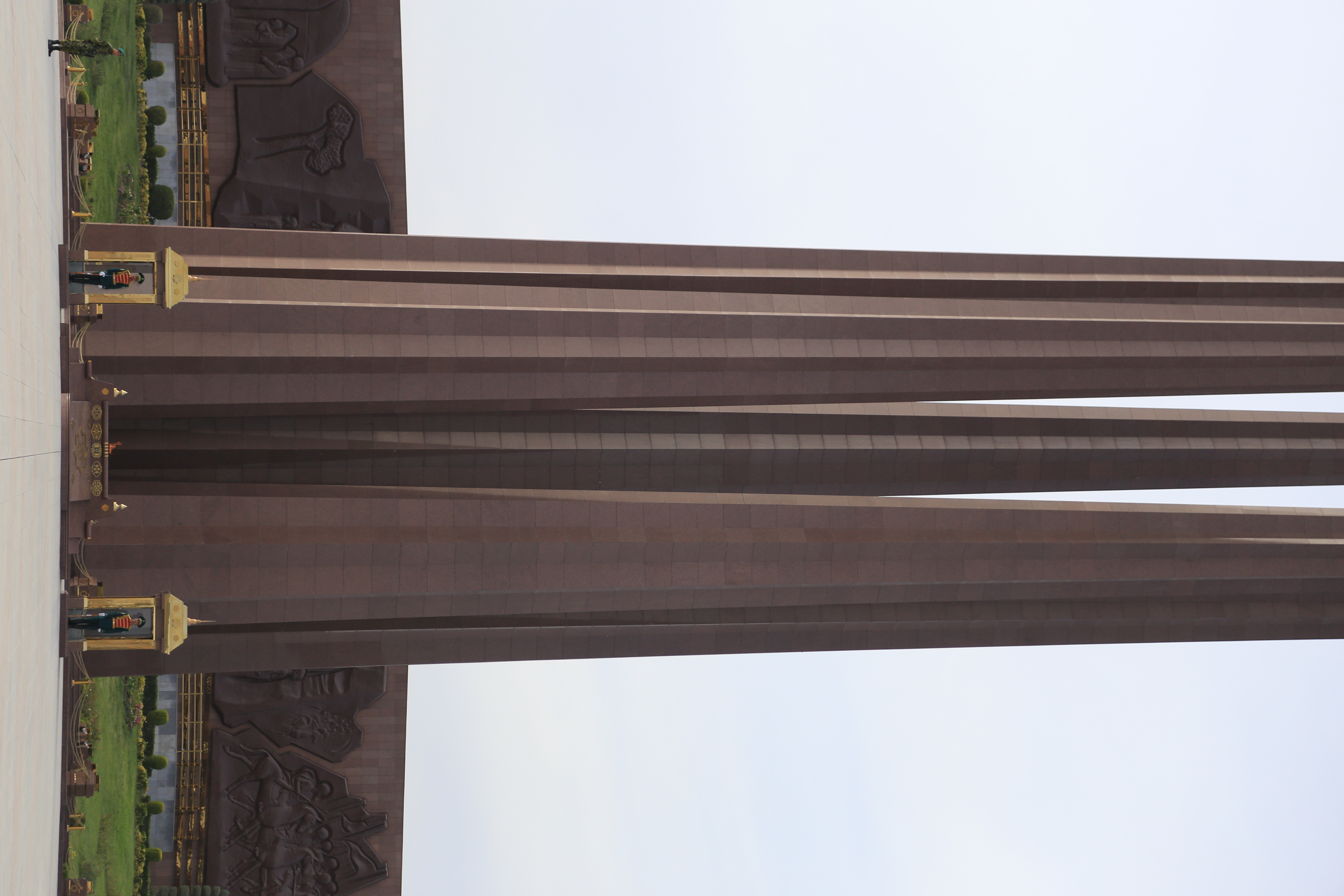
Le repas complété, l’après midi s’est poursuivi vers le monument à la deuxième guerre mondial et au tremblement de terre de 1949. Encore une fois, ces pièces ont été déplacées pour faire place à d’autres projets de développement. Je dois avouer que ce coup-ci, le résultat était quand même spectaculaire. Contrairement à ses congénères tout de marbre blanc, de dorures et d’extravagance, celui-ci était sobre et de marbre rouge.
Le monument de la deuxième guerre mondiale
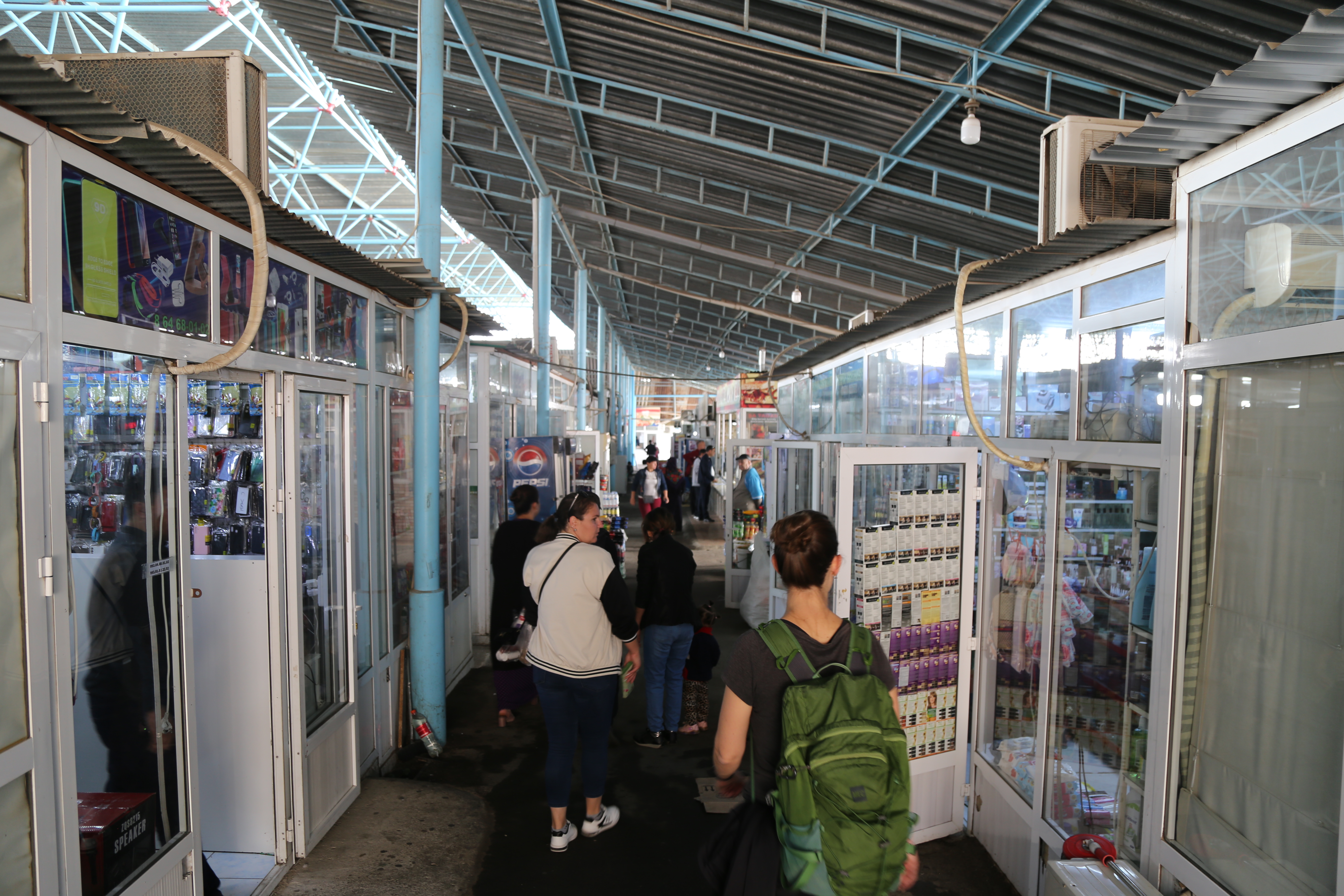
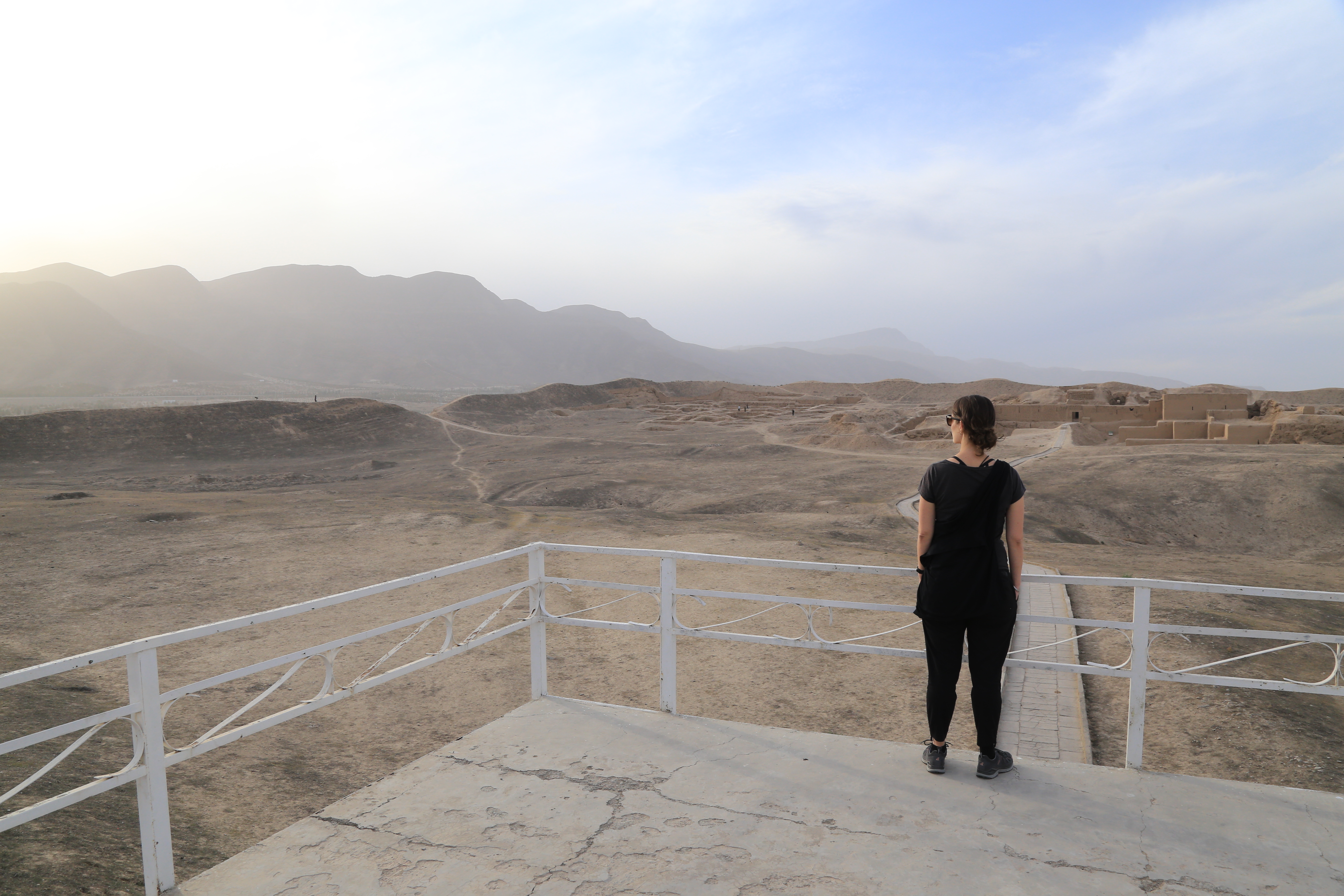
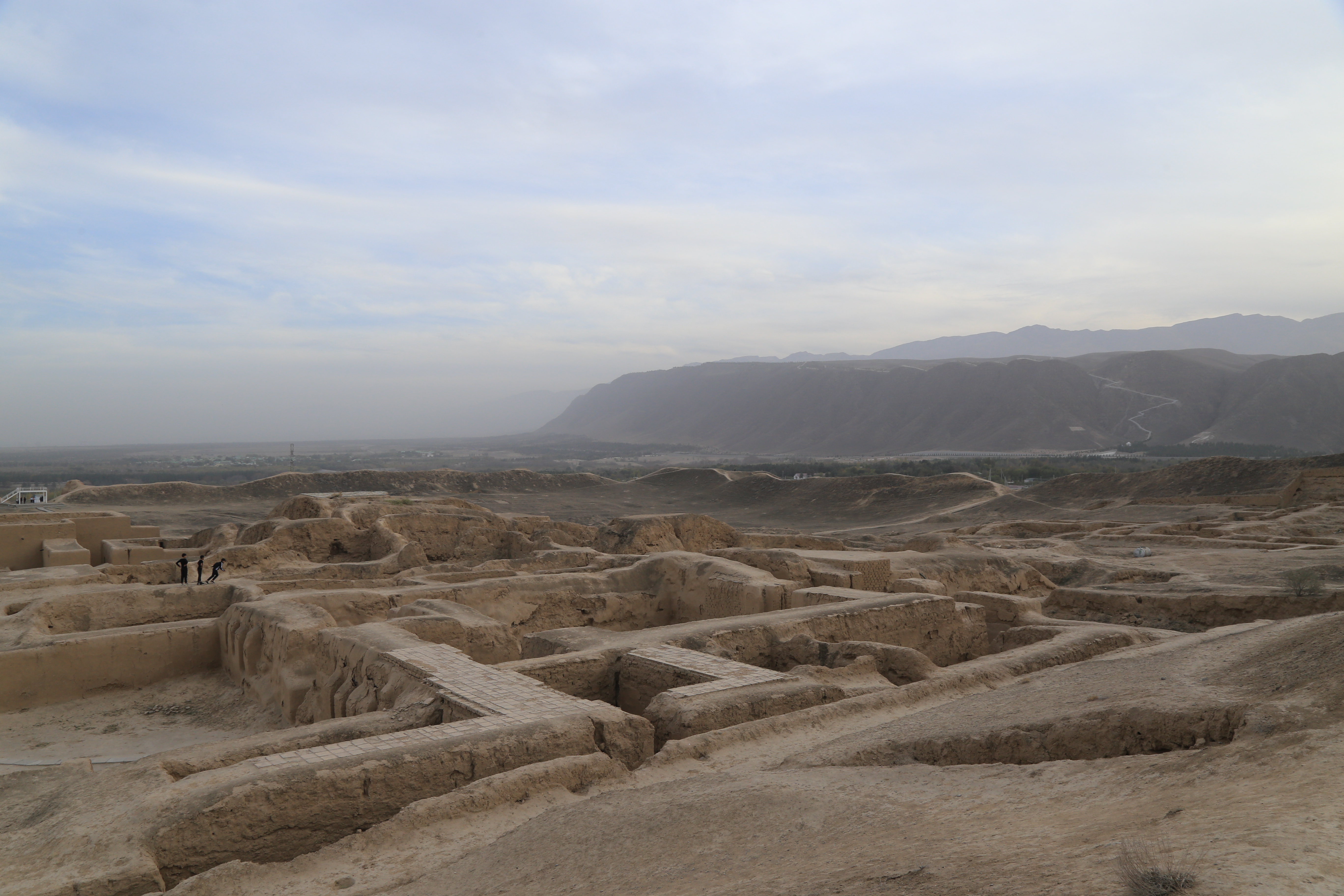
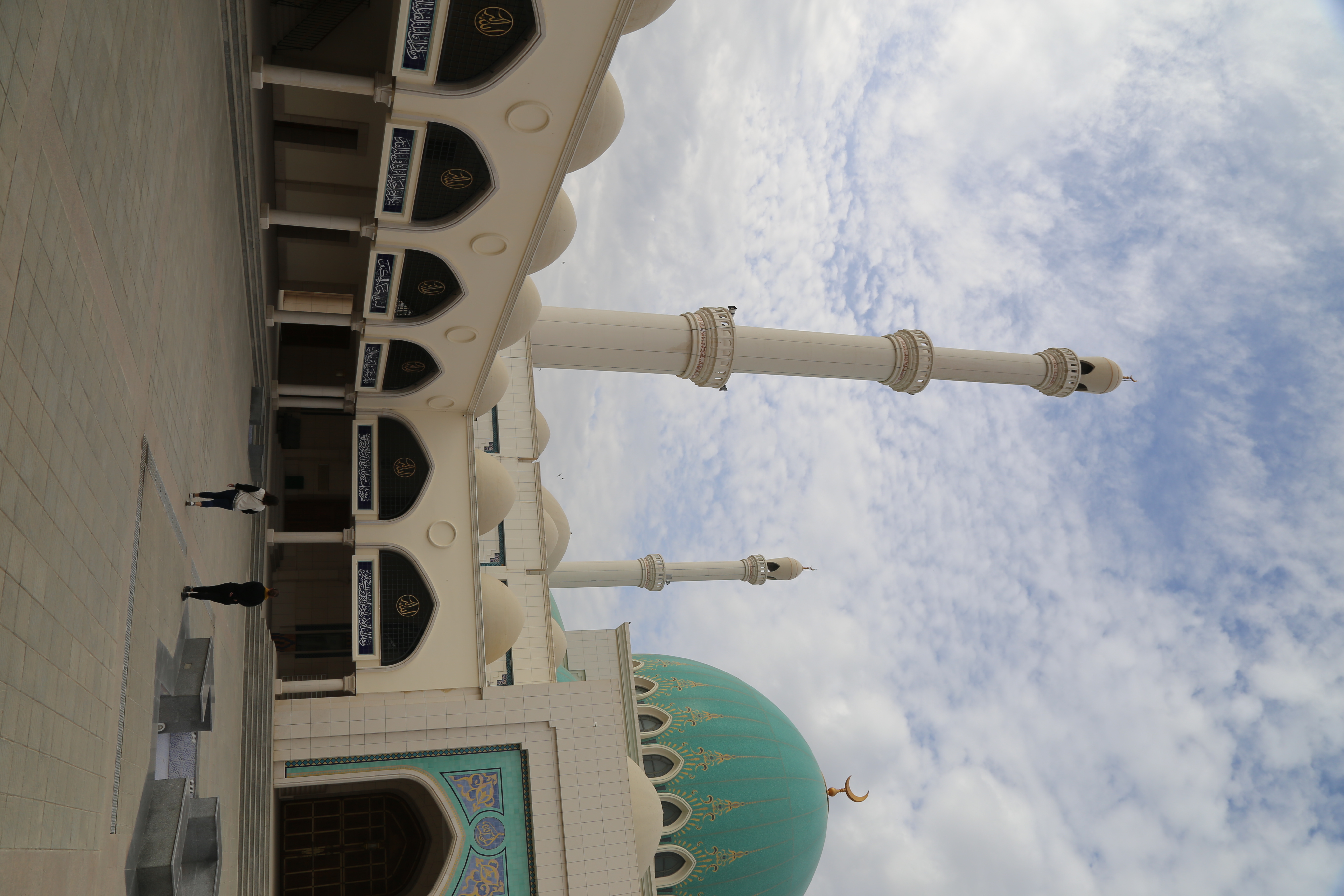
Après, passage sur les ruines de l’ancienne Nisa, une cité Parthe du lointain passé. Ensuite, arrêt par une mosquée (don de la Turquie et bâtie à l’image de la Mosquée Bleue d’Istanbul [tant mieux, Audrey ne l’avait pas vue]) puis arrêt par le bazar russe qui n’était pas sans nous rappeler ces marchés couverts soviétiques très fréquents dans la région.
Les ruines de la vielle NisaLes ruines de la vielle Nisa
Fatigués d’une si courte nuit la veille, nos accompagnateurs nous ont laissés à notre hôtel. En quête de quelque chose de simple, nous sommes allés nous restaurer dans un restaurant à l’occidentale dans le centre d’achats d’en face qui lui aussi, était bien à l’occidentale. La nourriture était quand même chère quoi que pas mauvaise et autour de nous de nombreuses familles de l’élite turkmène passaient leur vendredi soir à consommer.
Jour 2
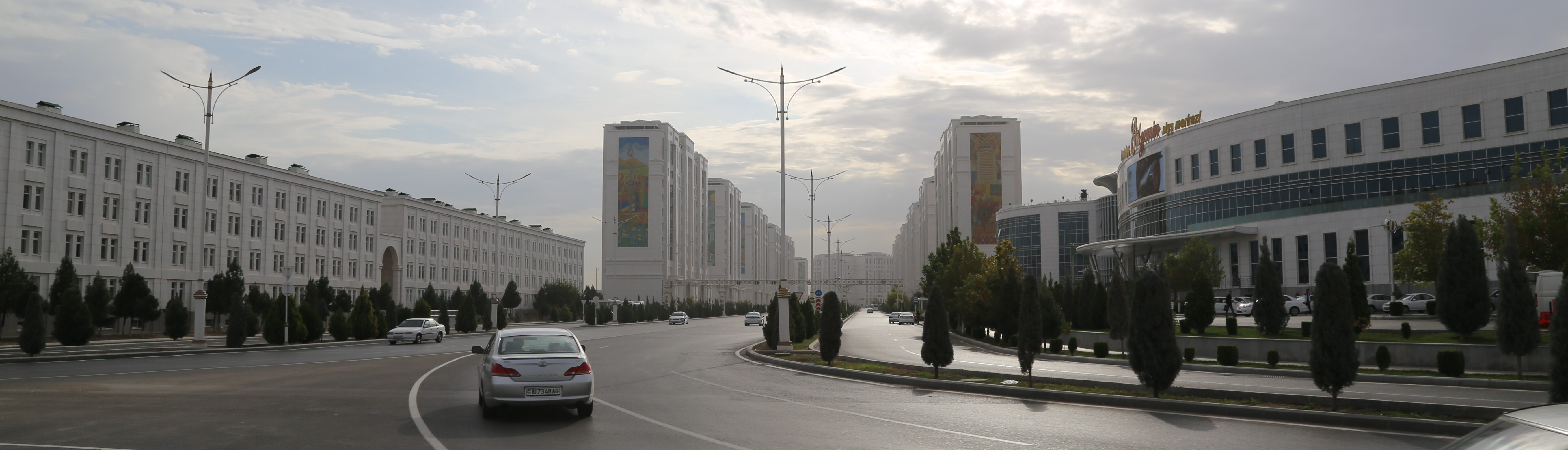
Parmi les nombreux aspects tout à fait frappants du paysage urbain d’Ashgabat, nommons les véhicules et l’architecture.
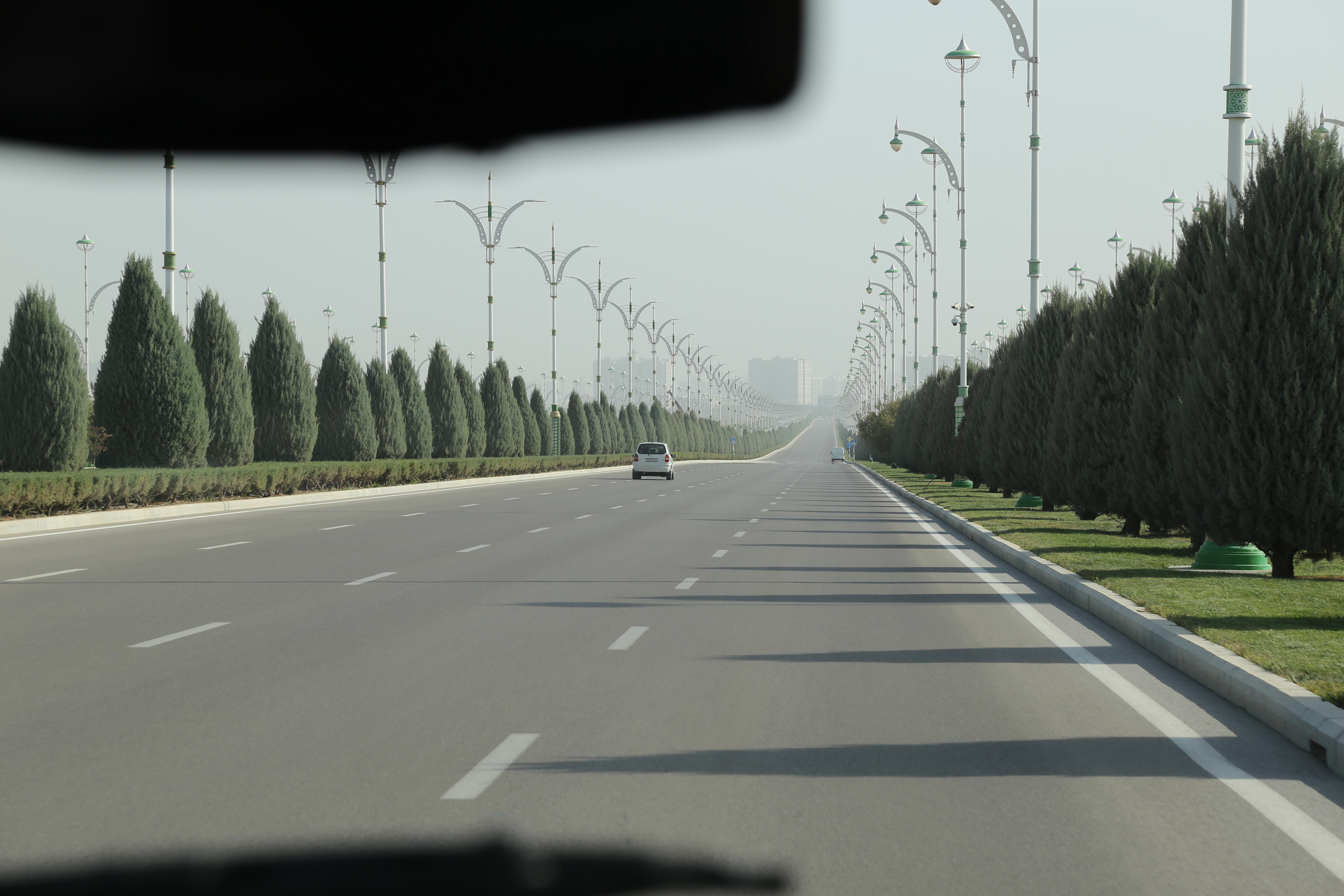
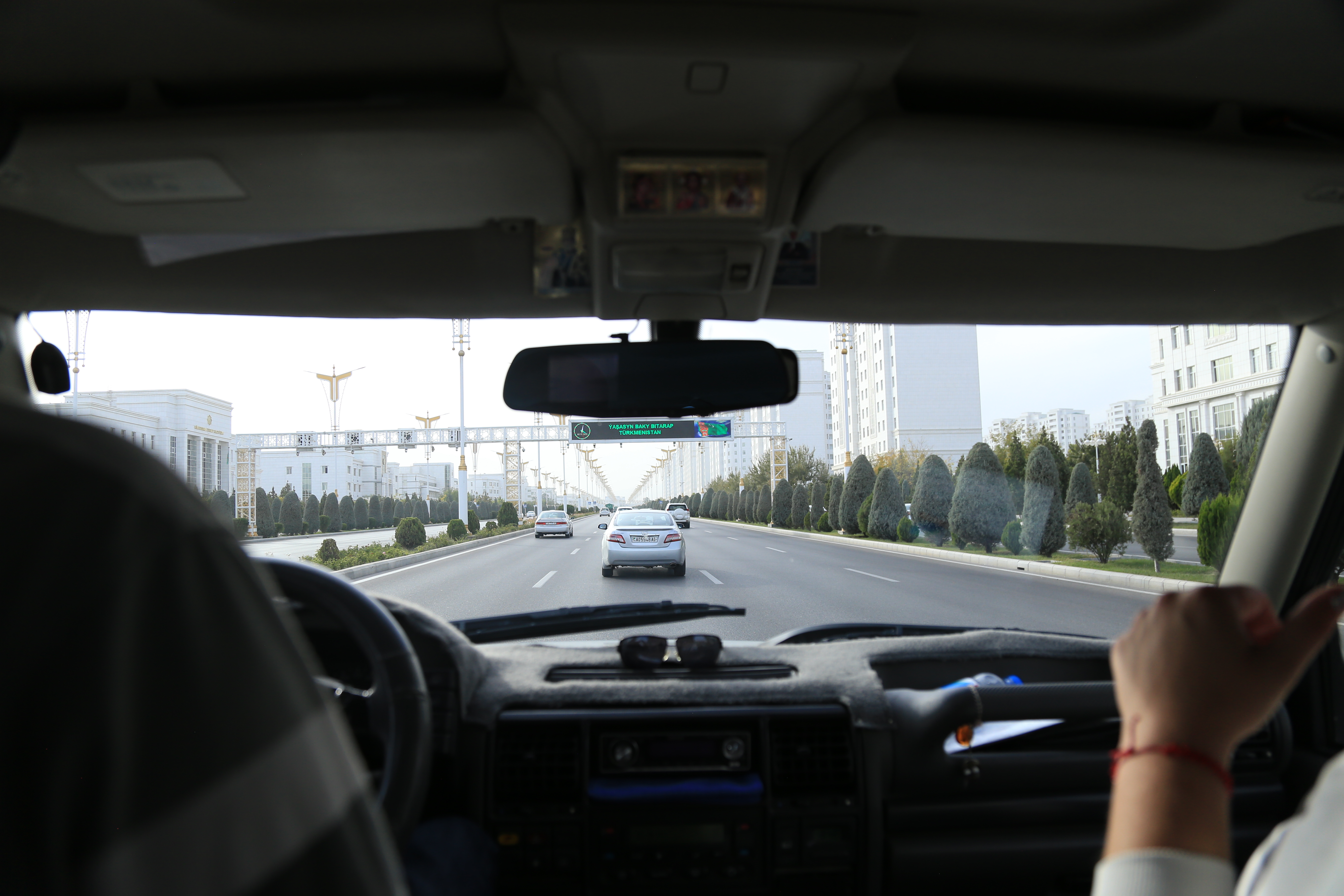
Sauf quelques exceptions, toutes les voitures dans la ville sont blanches. Notre chauffeur nous a fait d’ailleurs remarquer que c’était la loi. Cela donne un air particulier aux nombreux boulevards à 10 voies qui quadrillent la ville, décidément trop spacieux pour les besoins routiers. Pays riche en combustibles fossiles, l’essence coûte 1,5 manats le litre. Autour de 0,42 $US le litre au taux officiel ou 0,075 $US au taux du marché noir. Il faut dire par contre qu’elle est largement subventionnée. Malgré tout, les autobus sont nombreux et selon Nadine qui ne possède pas de voiture, Ashgabat est bien déservie par les transports en communs.
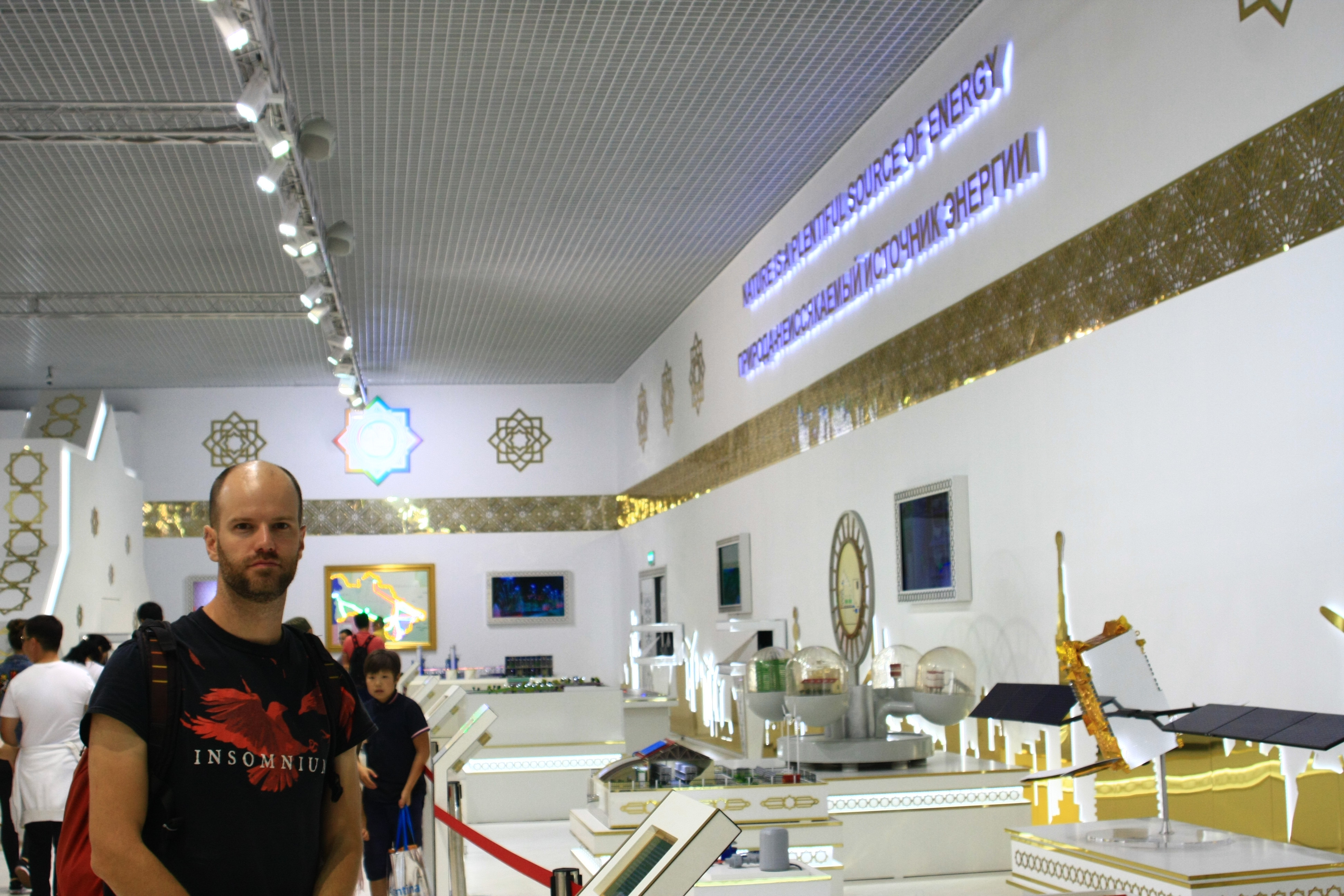
Les bâtiments à Ashgabat sont aussi tous blancs et de surcroît faits en marbre importé d’Italie. Je me rappelle du pavillon du Turkménistan à l’exposition universelle d’Astana en 2017 où l’état se targuait que sa capitale était l’endroit sur terre avec le plus de constructions en marbre. Cette exposition, on s’en rappelle, avait comme thème l’environnement et le développement durable. Nos guides nous ont répétés souvent, dans cet espèce de cynisme sarcastique tout à fait russe, que Ashgabat était la ville de tous les records Guinness et de tous les monuments. L’architecture y est d’une uniformité impressionnante et d’un style que je qualifierait de classique-moderne avec de nombreux clins-d’oeil au passé nomade des turkmènes et à la symbologie qui s’y rattache (notamment les motifs sur les tapis). Pour avoir vu de nombreuses villes dans mes différents voyages, Ashgabat est tout à fait unique en son genre. La seule autre ville qui selon moi pourrait s’en rapprocher est Astana (maintenant Nur’sultan), capitale du Kazakhstan. La nuit, ces constructions sont toutes ornées de lumières qui scintillent au couleur de l’arc-en-ciel, donnant un effet Las Vegas (mots de notre chauffeur).
Notez les bâtiments ornés de motifs que l`on retrouve sur les tapis
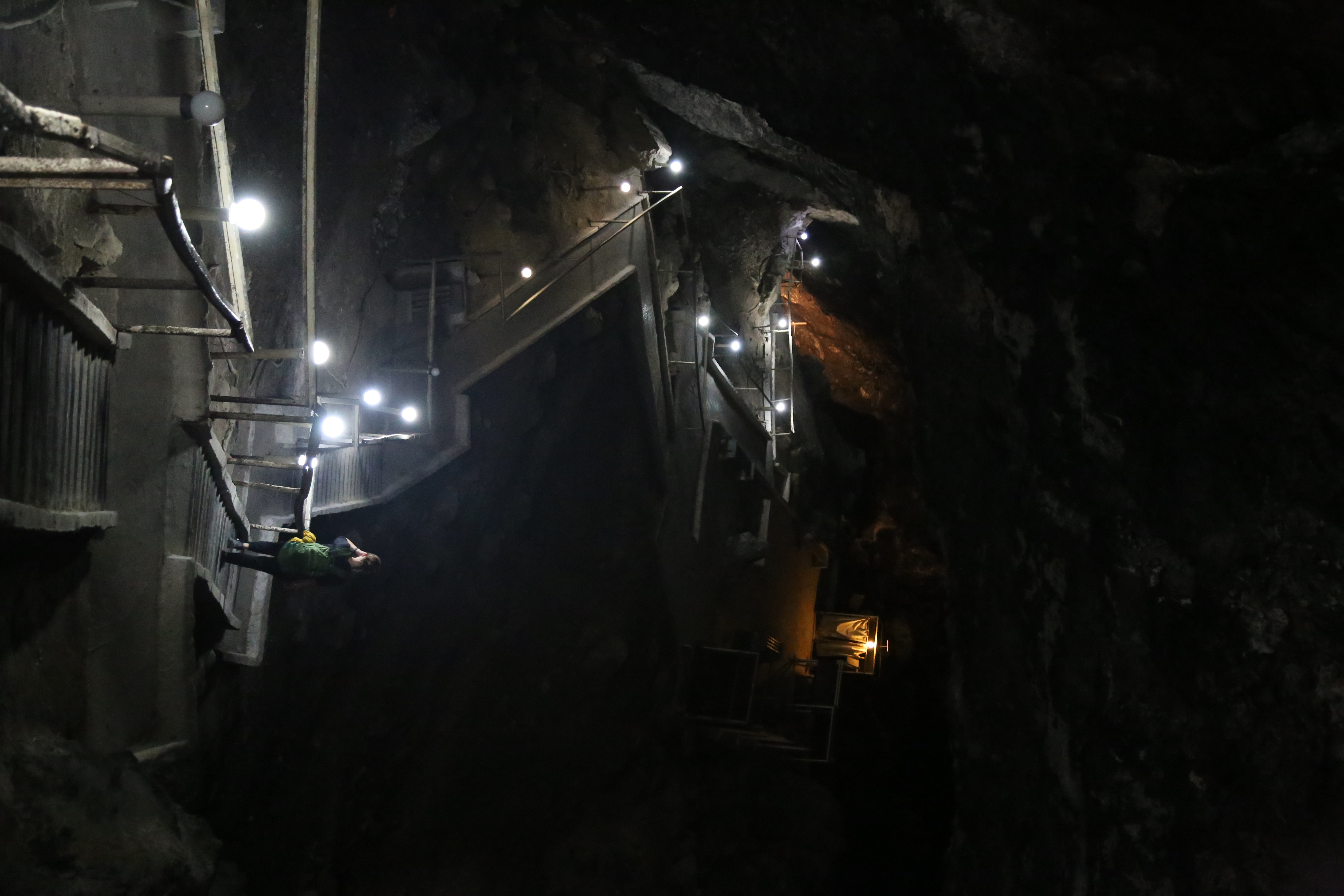
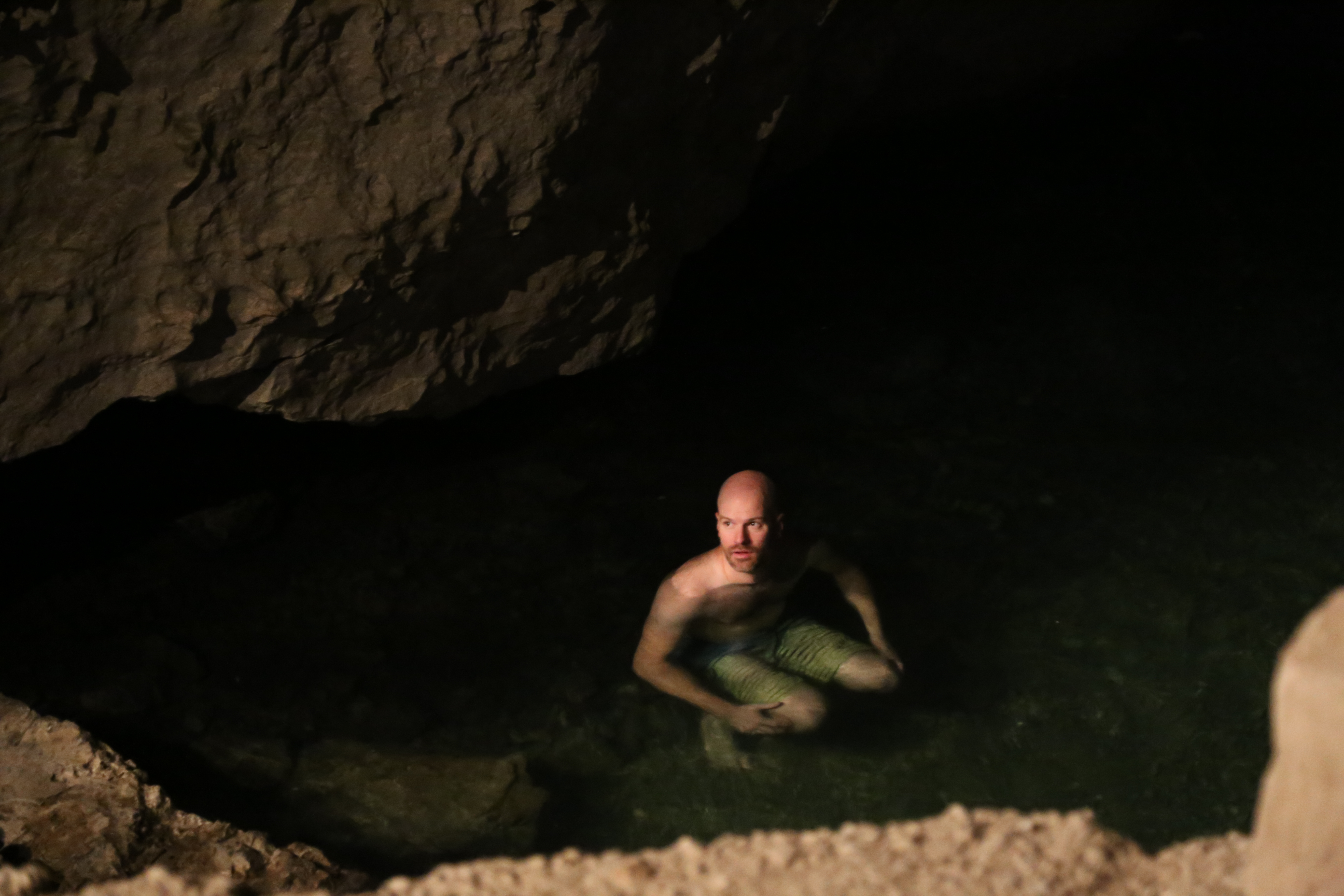
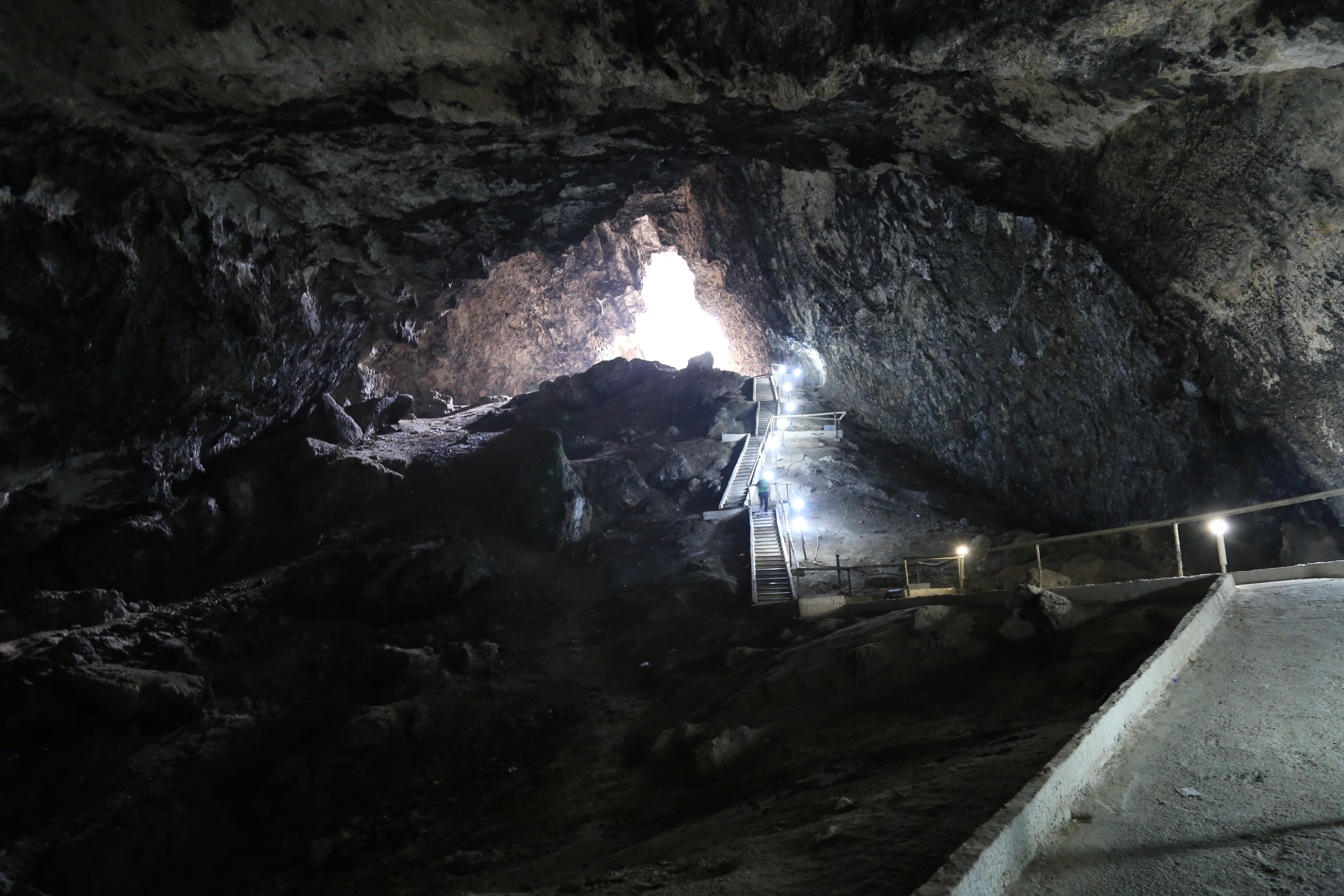
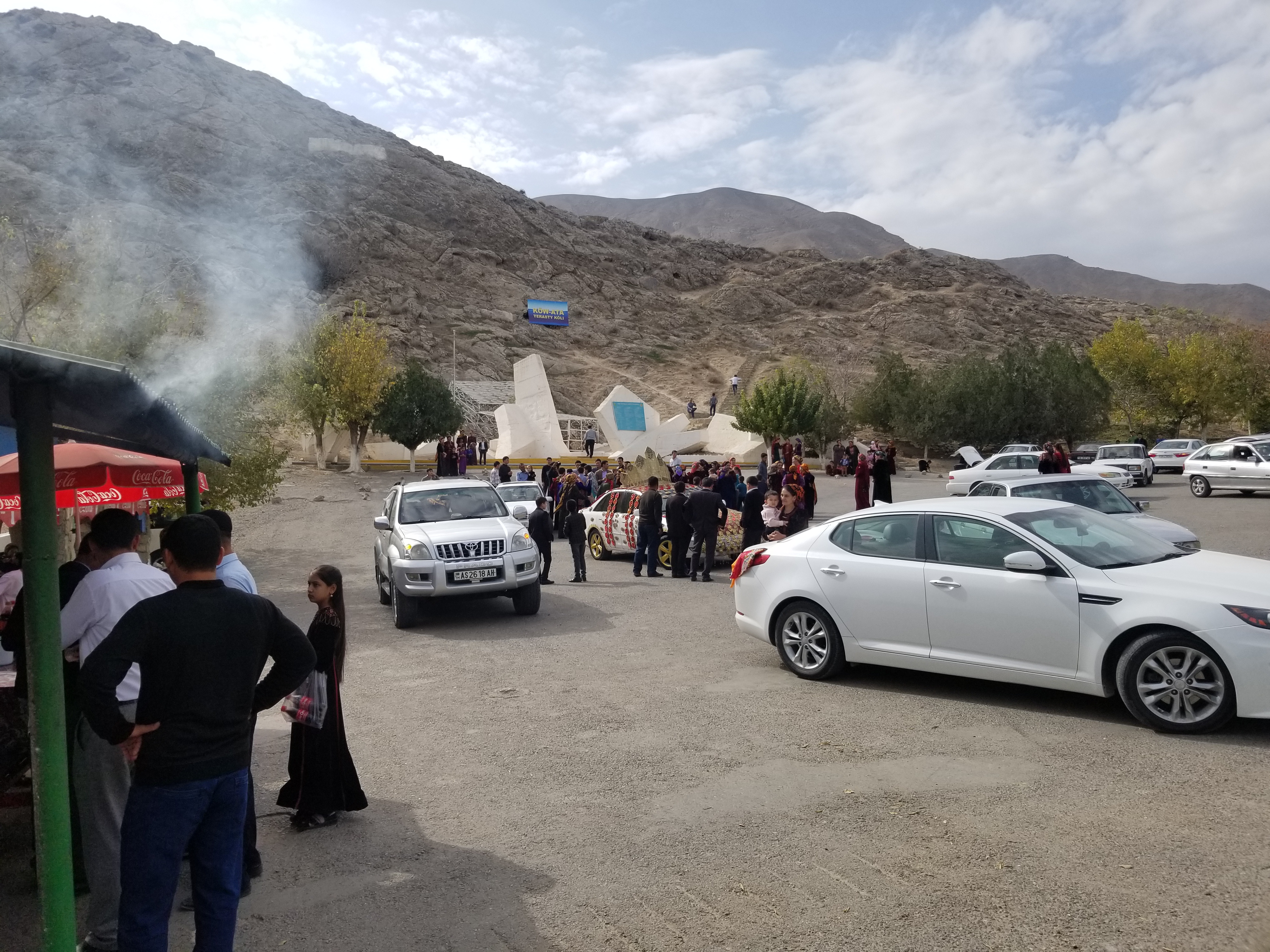
Au programme pour la journée, petit passage par une mosquée puis la visite du lac souterrain de Kow Ata (dans lequel je n’ai pas manqué de me baigner). Au moment ou nous dégustions notre shaslik du midi (brochettes de viande), un énorme cortège nuptial s’est invité sur le site. La mariée était tout aussi décorée que sa voiture avec d’imposants bijoux et draperies et derrière, deux véhicules avec des hauts-parleurs criaient des airs du Turkménistan pendant qu’au bas mot une centaine de personnes se trémoussaient au son de la musique.
Un cortège de mariage à Kow Ata
Comme tout bon régime politique du genre, le Turkménistan honore ses dirigeants présents et glorifie à outrance ses despotes passés. Si l’on se fie à nos visites précédentes des mausolées de la place Rouge en Russie et aux Kims grand-père et père à Pyongyang, celui du premier président du Turkménistan (nommé le Turkmenbashi) devait être quelque chose d’exceptionnel. À mon grand désarroi, ce dernier était en rénovation et non visitable. Notre guide nous a indiqué que des ouvriers étaient en train de refaire la couverture de son toit de feuilles d’or. Les feuilles d’or donc, probablement moins résistantes aux intempéries et au soleil que le bon vieux bardeau d’asphalte.
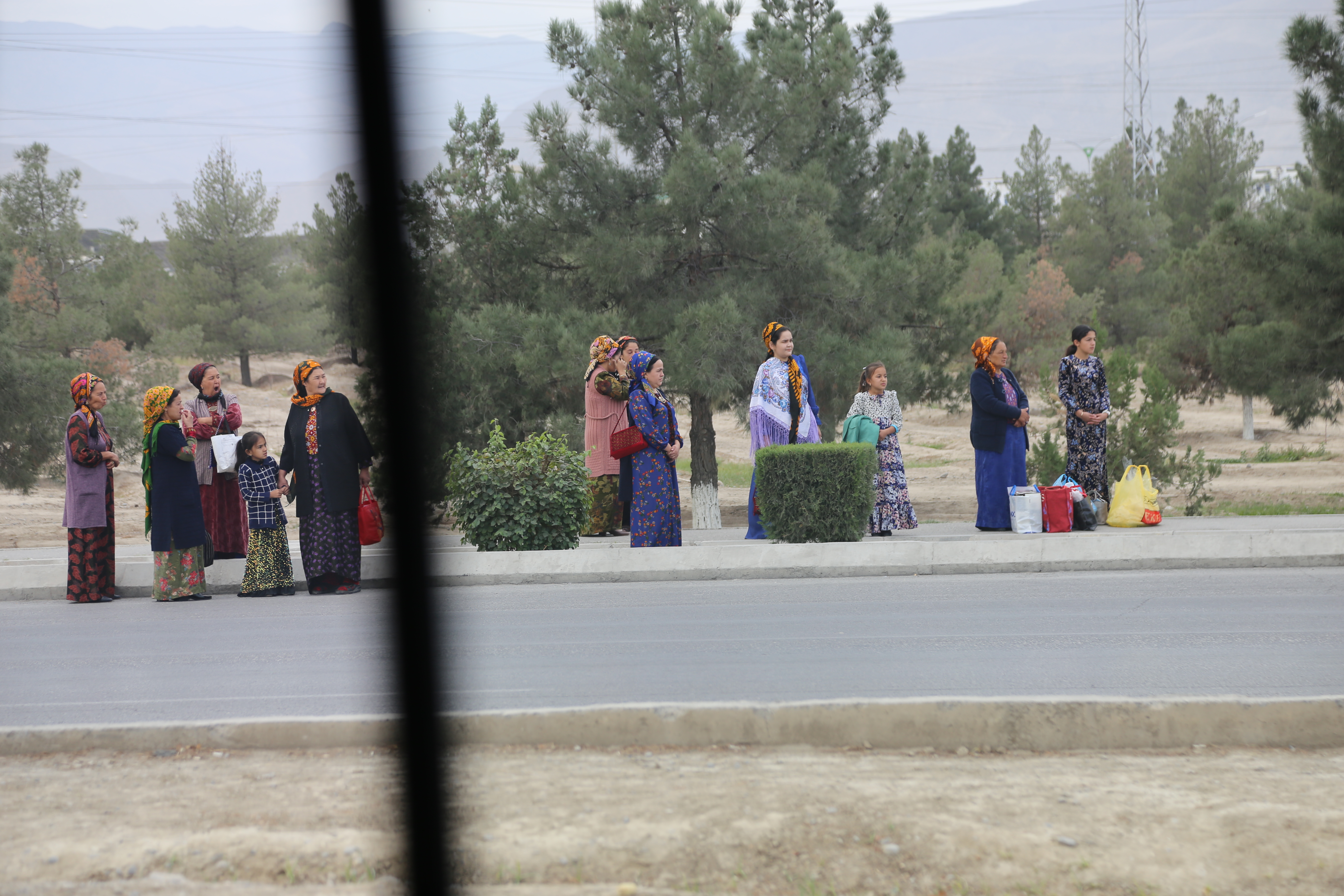
Des femmes turkmènes attendant l’autobus (la population était difficile à prendre en photo). Les accoutrements que vous voyez ici est très représentatif de la majorité. Rares étaient celles habillées à l’occidentale.
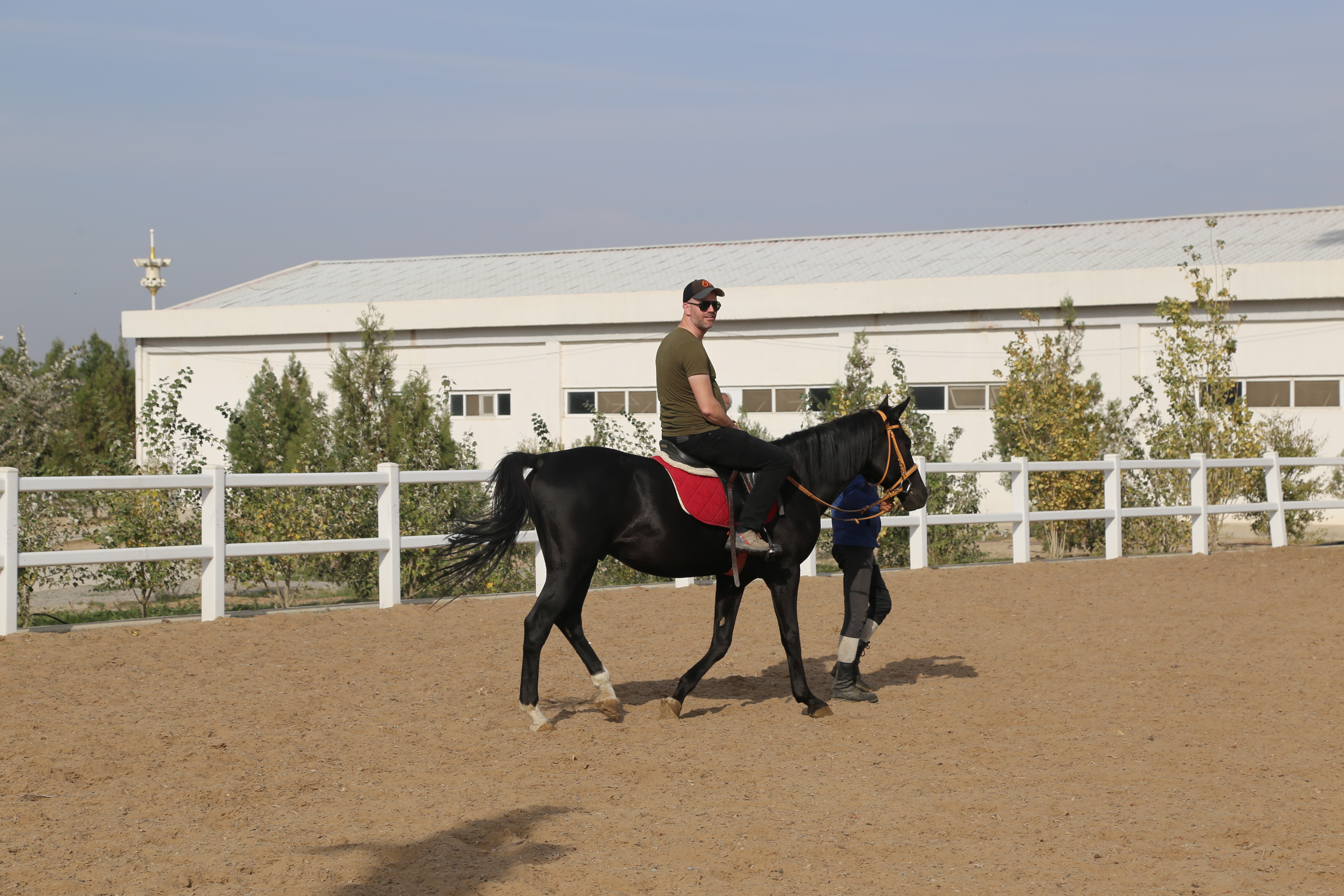
Par la suite, arrêt aux écuries officielles de la ville pour chevaucher l’un de ces fameux cheval Akhal-Teke. De renommée mondiale (à ce qu’il paraît, je n’y connais rien), ils sont réputés pour leurs lignes sveltes qui leurs confèrent une rapidité hors du commun. Ces chevaux sont à ce point importants pour la nation turkmène qu’ils sont leur propre ministère (le ministère des chevaux) et que le stade national est coiffé d’une énorme tête équine.
Vu que nous devions prendre le train de 17h50 vers Turkmenbashi, les visites du jour furent peu nombreuses. Il n’y a malheureusement pas photos de la gare, car … on avait pas le droit.Audrey (plus que moi) apprécie particulièrement le transport ferroviaire. On s’installe dans notre banc un livre à la main et l’on regarde le paysage se défiler sous nos yeux. Dans les trains, il se crée aussi des opportunités d’interactions privilégiées avec les locaux. Notre voisine de cabine d’ailleurs a tenu à faire nos lits et nous a gardé bien nourris en brioches. Nous n’avons échangé avec elle que des sourires et des mercis. Évidemment, personne ne parle anglais.
Notre relation avec ce simple pays de l’Asie Centrale que personne ne connaît débute en 2017. Ayant visité la région de fond en combe, il était tout naturel d’ajouter un séjour dans cet endroit mystérieux. Pour faire une histoire courte, énormément d’efforts ont été déployés pour obtenir des visas et à deux reprises elles se sont soldées par des refus pour moi (Audrey a toujours eu son visa). Acceptant cette décision qui de toute manière était hors de notre contrôle, nous avons passé à autre chose. D’autres destinations nous attendaient.
Cet été, assis sur la terrasse de la Souche dans Limoilou, nous nous questionnions sur nos prochaines destinations pour le mois de vacances à venir. Passant en revue tout ce qui était réalisable en terme de logistique, aucun endroit ne semblait se démarquer sauf peut être le Rwanda, mais le temps allait probablement nous manquer pour cette destination à la logistique complexe.
Devant ce manque d’inspiration, Audrey a lancé à la blague l’idée de réessayer le Turkménistan. Après un petit moment de réflexion, le projet m’a paru réalisable si bien qu’après discussion, nous avons mis notre collimateur sur un retour en Asie Centrale pour tenter à nouveau la visite de ce pays. D’autant plus que ses frontières venaient tout juste de réouvrir post pandémie.
Ce n’était pas gagné d’avance. Quelles étaient les raisons du refus initial de mes visas? Aucune idée. Cependant, mon passeport n’avait pas changé et le système pouvait très bien me refuser l’accès à nouveau. Il fallait le tenter alors nous avons contacté une agence de voyage locale (ce pays ne se visite pas en autonomie) pour organiser notre visite. À notre grand bonheur, nous avons reçus quelques semaines plus tard notre lettre d’invitation officielle du gouvernement turkmène.
À ce stade, vous vous demandez peut être ce que le Turkménistan peut avoir de si particulier pour que l’on se donne à ce point du mal à y aller? Vous le comprendrez au fil des prochaines publications. Ce pays est spécial comme aucun ne l’est sur la planète. Une aberration dont on comprend tout à fait bien le comment, mais dont le pourquoi reste très nébuleux.
En 2017, dans le pavillon du Turkménistan à l’exposition universelle d’Astana